Sedgwick Guth

Sedgwick Guth Finds the World Within
Artist Spotlight · The Collection Editorial
Something is quietly shifting in the conversation around American painting, and Sedgwick Guth is at the center of it. His works on paper, dense with layered mark making and threaded with literal fiber, have begun to attract the sustained attention of collectors who sense that a genuinely original voice is emerging. In a moment when the art world is hungry for artists who bring both conceptual seriousness and sensory warmth, Guth delivers both in abundance. His is a practice that rewards patience and repays close looking.
Sedgwick Guth
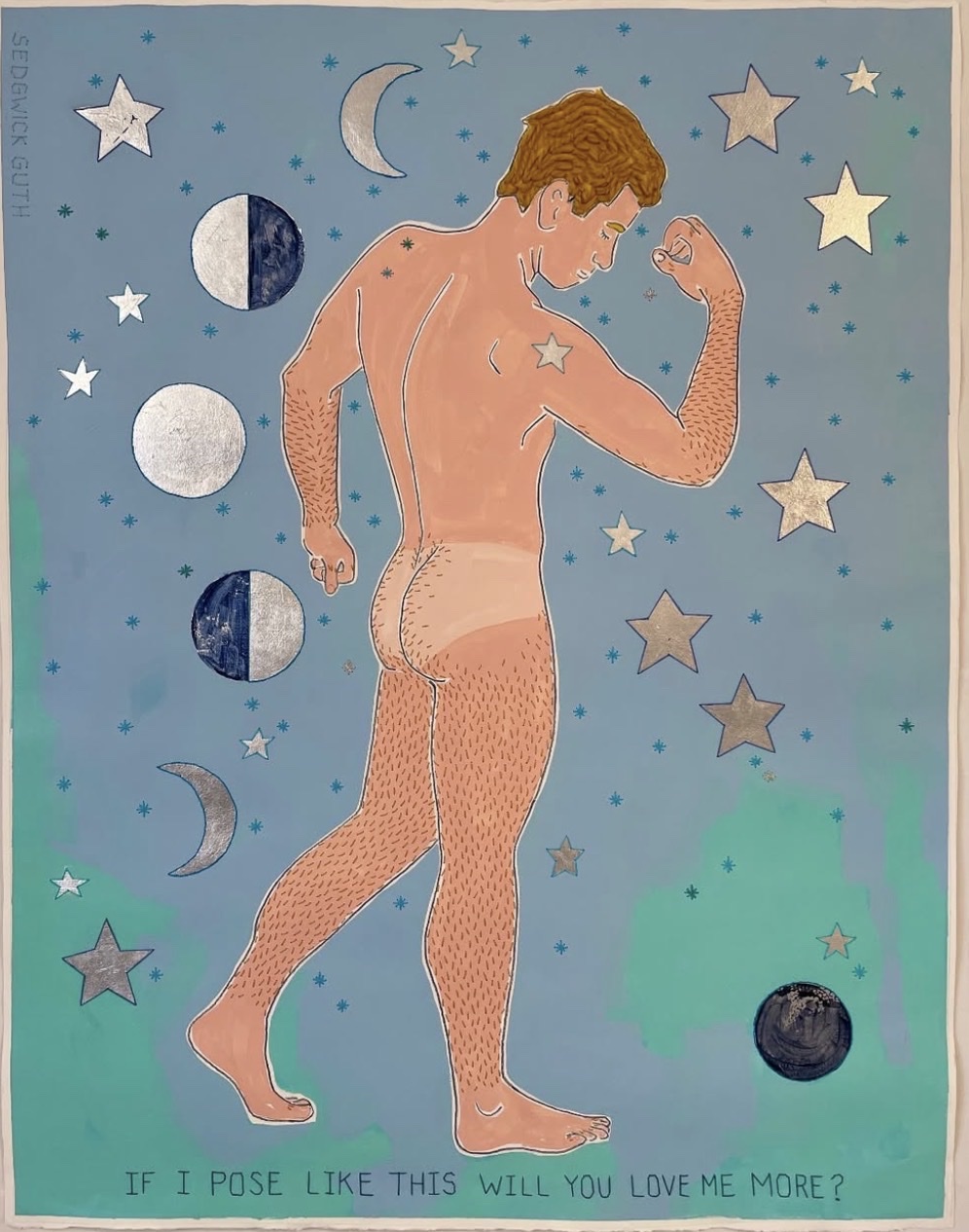
If I Pose Like This Will You Love Me More?
Guth is an American artist whose formation carries the hallmarks of someone shaped by place as much as by institution. His work suggests deep roots in the American landscape tradition, that long line running from the Hudson River painters through the Abstract Expressionists and into the lyrical, place conscious abstraction that flourished in the latter half of the twentieth century. Yet Guth is unmistakably a contemporary sensibility. His materials include embroidery floss, yarn, metallic thread, and acetate alongside the more expected tools of acrylic, graphite, and color pencil.
These are not merely technical choices. They speak to an upbringing and a worldview in which the handmade and the domestic are not separate from the serious and the beautiful. The development of his visual language has been gradual and deliberate, the kind of artistic evolution that builds on itself rather than reinventing with each cycle of trend. Guth works primarily in painting and works on paper, and within that focused range he has carved out a territory that feels genuinely his own.
Sedgwick Guth
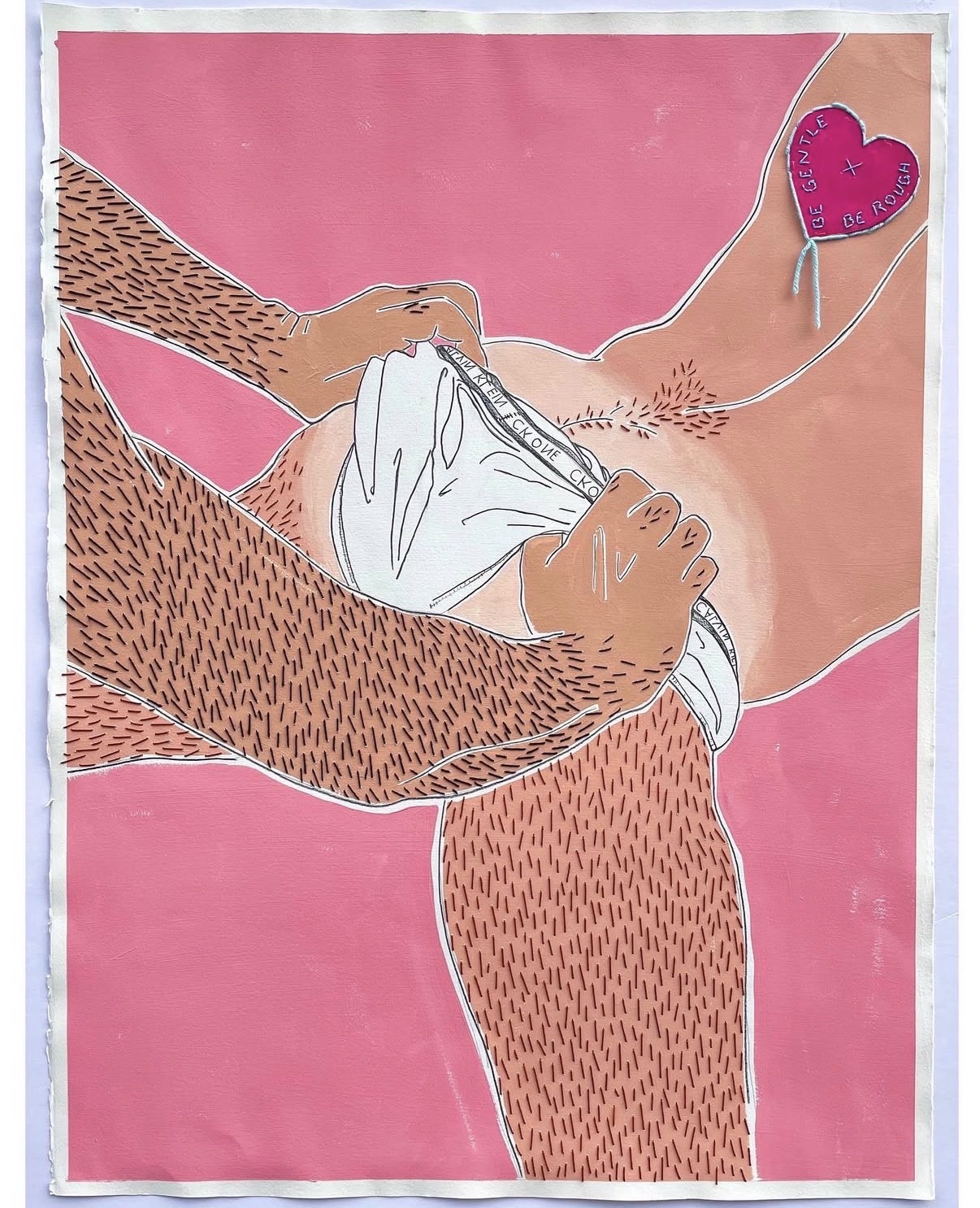
afternoon sonnet (be gentle, be rough), 2021
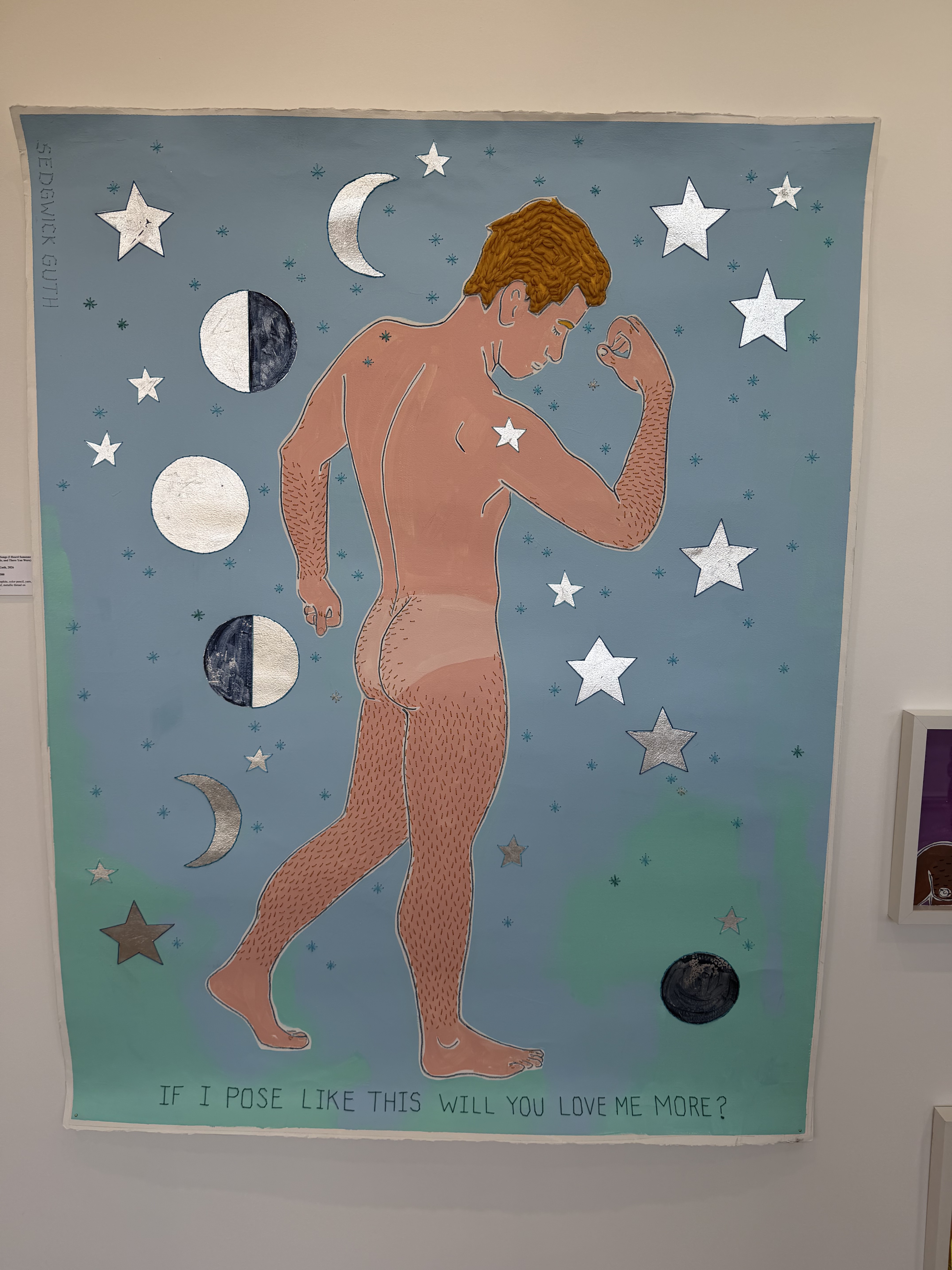
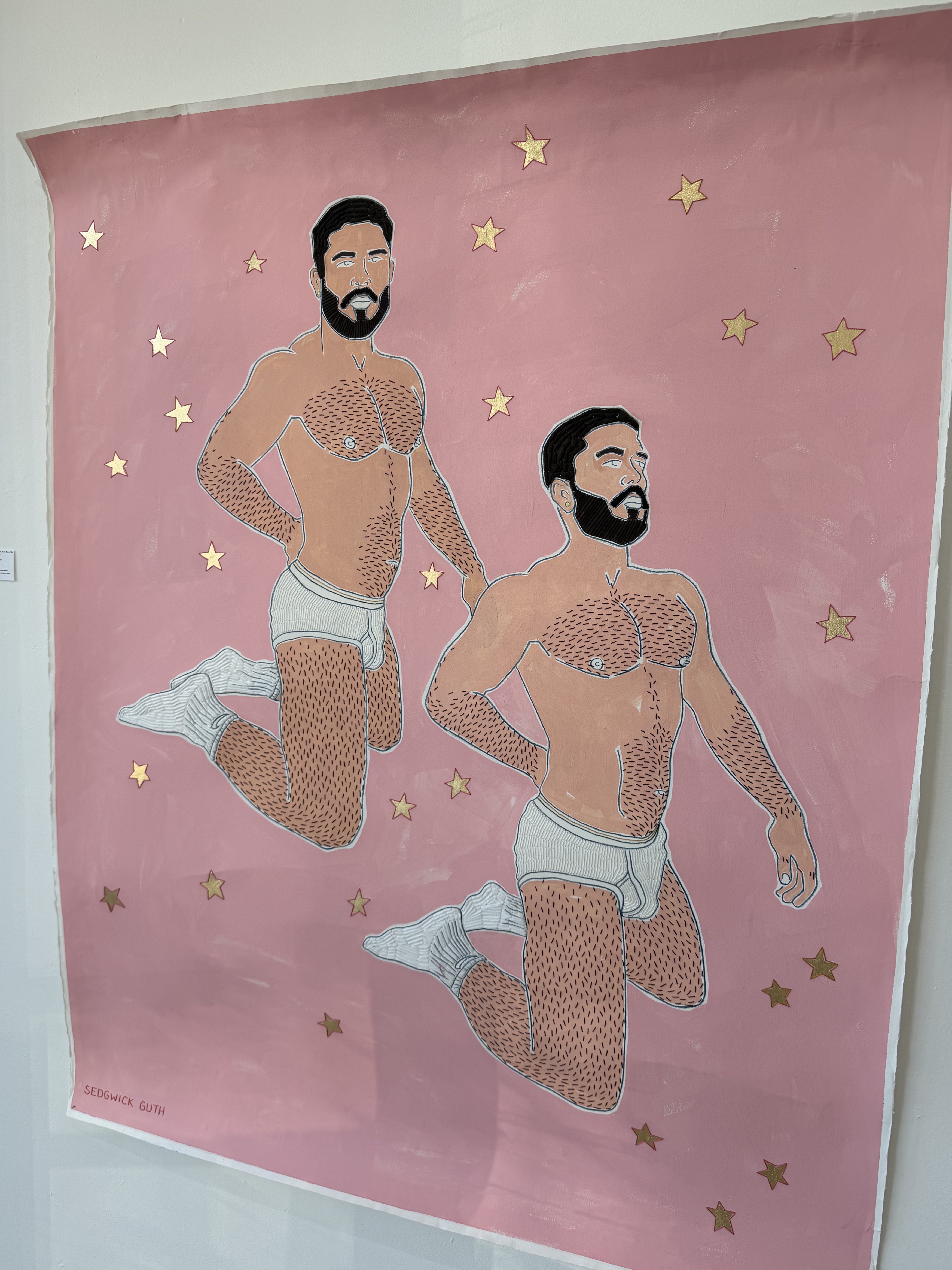
He layers marks and textures in a way that evokes accumulation over time, the way a landscape holds centuries of weather, the way a room holds the presence of everyone who has ever stood in it. His practice sits at the intersection of gestural abstraction and observational attentiveness, refusing to choose between the two. The result is work that feels both immediate and ancient. His recent works from 2026, including "Tin Stars and Consoling Songs (I Heard Someone Whisper, Please Adore Me, and There You Were)" and "Watching You From Other Rooms, You Have Me Singing (2 Johns)," represent a notable maturation of his approach.
Both works are executed on Arches Huile 140 lb paper, a support with a particular tooth and weight that holds his mixed media combinations with authority. Silver leaf and gold leaf appear alongside yarn and embroidery floss, and the effect is neither craft nor fine art in any reductive sense but something genuinely hybrid. The titles themselves are doing significant work here, long and lyrical and confessional, drawing from the traditions of both poetry and popular song. They suggest an artist who is thinking about desire, presence, longing, and the way memory performs itself through objects and images.
Sedgwick Guth
Tin Stars and Consoling Songs (I Heard Someone Whisper, Please Adore Me, and There You Were), 2026
The 2021 work "afternoon sonnet (be gentle, be rough)" introduced the use of acetate as a layering element, a translucent surface through which earlier marks remain visible, a literal metaphor for the way the past persists beneath the present. For collectors, Guth represents a compelling opportunity at precisely the right moment. His works on paper combine visual sophistication with material richness in a way that photographs well but rewards the in person encounter even more fully. The mixed media surfaces, threaded with actual fiber and illuminated by metallic leaf, create a physical presence that is unusual in works of this scale.
Collectors drawn to artists working in the tradition of lyrical abstraction, or to the broader American landscape conversation, will find Guth's work intellectually satisfying and aesthetically distinctive. His titles and his materials suggest a private emotional world made visible, which is one of the qualities that tends to create lasting attachment between a work and its owner. He is classified as an emerging artist, which means that the window for collecting at this stage of his career remains open, though perhaps not indefinitely. In terms of art historical context, Guth's work invites comparison with several significant figures.
Sedgwick Guth
Watching You From Other Rooms, You Have Me Singing (2 Johns), 2026
His use of layered mark making and his engagement with memory and place echo the concerns of artists like Joan Mitchell, whose fields of gestural color were always rooted in observed landscape even at their most abstract. The incorporation of fiber and domestic materials recalls the boundary testing of artists associated with the Pattern and Decoration movement of the 1970s, figures like Miriam Schapiro who insisted that materials coded as feminine could carry serious aesthetic weight. More recently, Guth's work resonates with artists like Amy Sillman, whose paintings also move fluidly between figuration and abstraction while maintaining a sense of emotional urgency. His commitment to works on paper as a primary rather than secondary medium aligns him with a growing number of contemporary artists who have recognized the particular intimacy and directness that paper affords.
What ultimately makes Sedgwick Guth a figure worth watching, and worth collecting, is the sense that his practice is in full and confident development. His work does not feel like it is searching for a direction. It feels like it has found one and is moving deeper into it. The emotional registers he explores, longing, memory, the texture of love and attention and time, are universal, but his visual means of approaching them are genuinely personal.
In a landscape of contemporary American painting that can sometimes feel crowded with competent stylists, Guth's work has the rarer quality of feeling necessary. He is making something that only he could make, from materials and experiences and imaginative resources that are distinctly his own. That is the beginning of a real artistic legacy, and it is visible in every layered, luminous, fiber threaded sheet he places before us.