Sebastião Salgado
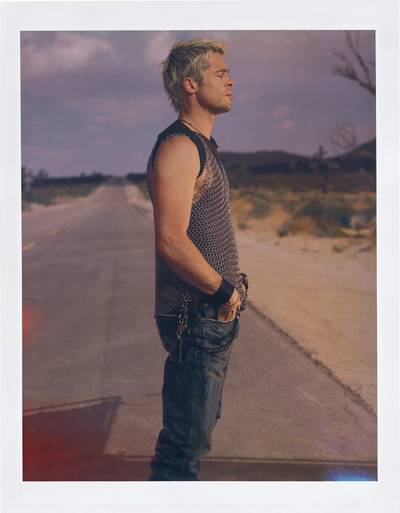
Sebastião Salgado: A Vision That Transforms the World
Artist Spotlight · The Collection Editorial
“Photography is not objective. It is deeply subjective, and my subjectivity is Marxist.”
Sebastião Salgado, interview with The Guardian
In 2023, the Foundation Cartier pour l'art contemporain in Paris presented a landmark retrospective of Sebastião Salgado's work, drawing tens of thousands of visitors who stood in reverent silence before prints that seem almost impossible in their scope and tenderness. That same year, his photographs continued to command extraordinary attention at auction houses and in private collections worldwide, affirming what curators and collectors have understood for decades: Salgado is not merely a photographer. He is one of the defining visual artists of our era, a figure whose images have genuinely altered the way the world sees itself. Born in 1944 in Aimorés, a small town in the state of Minas Gerais in Brazil, Salgado grew up on a cattle ranch, an upbringing that gave him an intimate understanding of land, labor, and the rhythms of rural life.
Sebastião Salgado
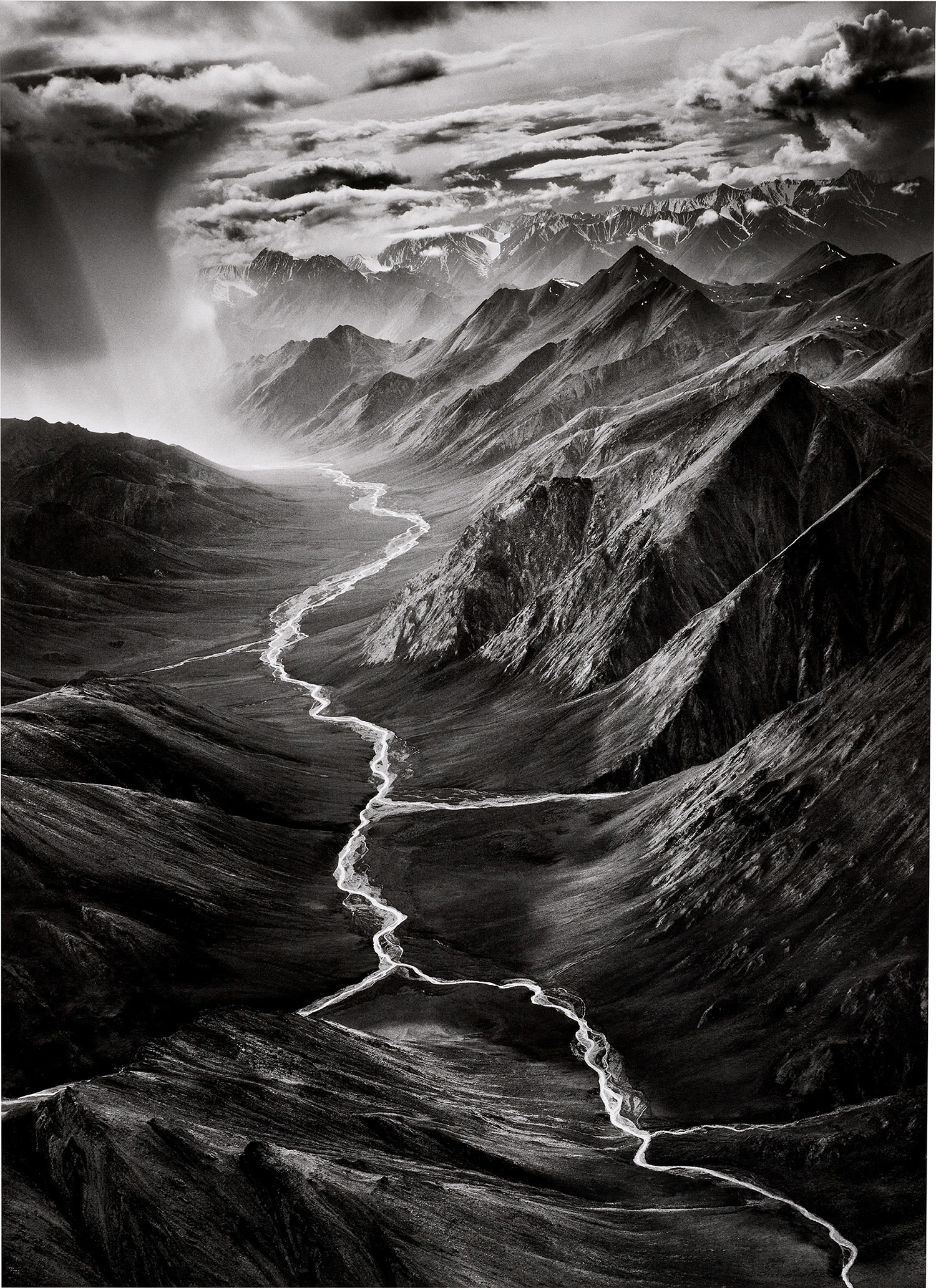
Eastern Part of the Brooks Range, Alaska
He initially pursued a career in economics, earning a doctorate and working for the International Coffee Organization in London during the early 1970s. It was during this period, on assignment in Africa, that a borrowed camera changed everything. He enrolled at the photography school of the Agence Sygma in Paris, and within a few years had begun contributing to Gamma and later Magnum Photos, the legendary cooperative agency he joined in 1979. His shift from economist to photographer was, in retrospect, not so dramatic a turn: both vocations demanded a rigorous understanding of systems, of how human beings organize themselves in relation to land, capital, and survival.
Salgado's early career brought him into contact with the great conflicts and crises of the late twentieth century. He covered wars in Angola and Mozambique, the famine in the Sahel, and the attempted assassination of President Ronald Reagan in 1981. But his vision always moved beyond the immediate event toward something more sustained and searching. He resigned from Magnum in 1994 to found his own agency, Amazonas Images, alongside his wife and creative partner Lélia Wanick Salgado, who has served as the editor and designer behind virtually all of his major publications and exhibitions.
Sebastião Salgado
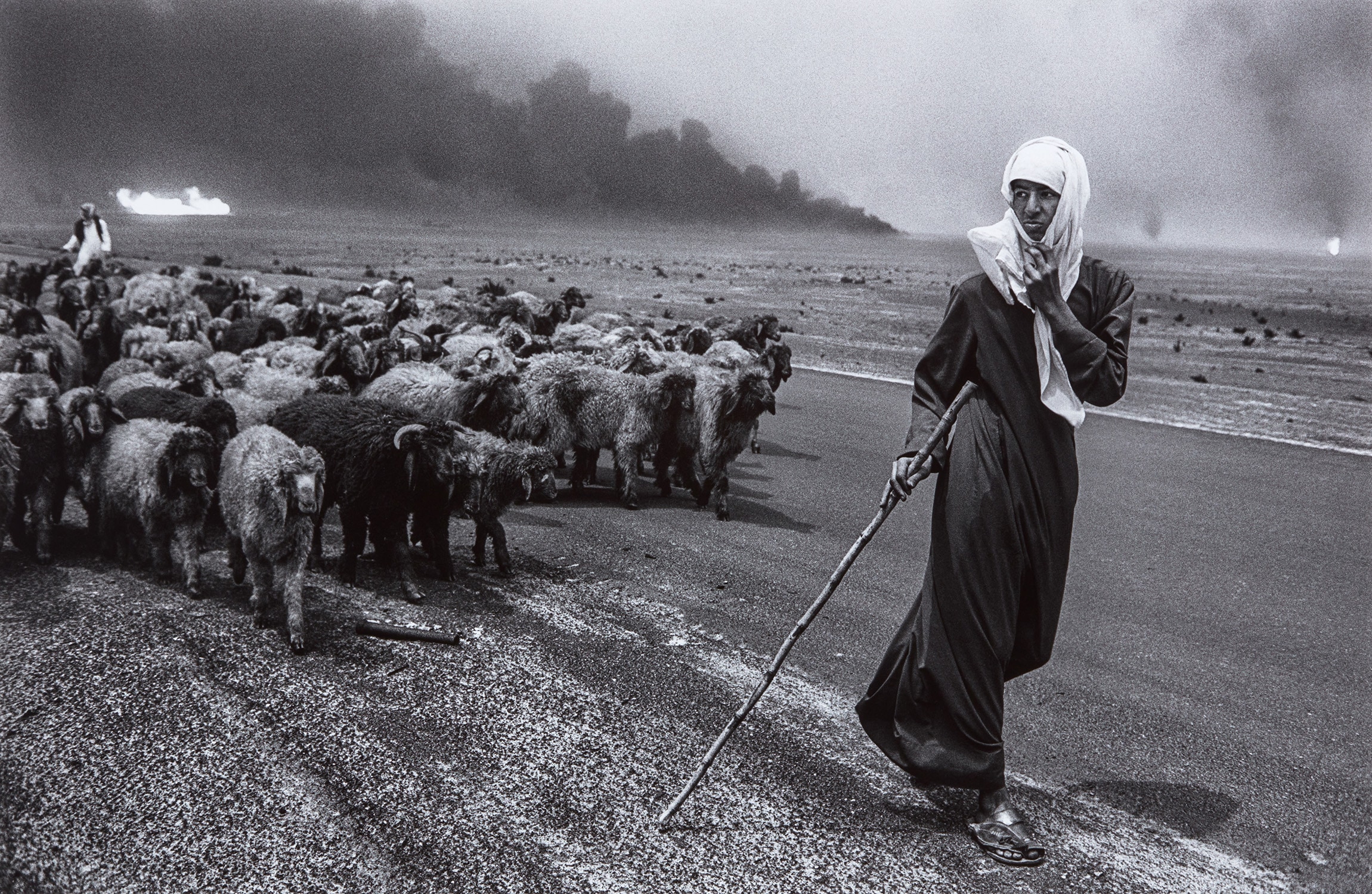
Shepherd and sheep, Kuwait
Their collaboration is inseparable from the work itself: Lélia's curatorial sensibility has shaped the sequencing, the book design, and the exhibition architecture that make Salgado's projects so immersive and emotionally coherent. The three great long term projects that define Salgado's legacy are "Workers" (1993), "Migrations" (2000), and "Genesis" (2013). "Workers" documented the final generation of manual industrial labor across the world, from the Serra Pelada gold mine in Brazil, where tens of thousands of men clawed at the earth in scenes of almost mythological intensity, to sugar cane cutters in Cuba and shipbreakers in Bangladesh. The Serra Pelada images in particular have become iconic: vast human ant hills of mud and effort, bodies reduced to and simultaneously elevated by their labor.
“I am not a photojournalist. I am an author of long term projects. My work is much closer to literature than to journalism.”
Sebastião Salgado, interview with Time
"Migrations" turned its attention to the displaced, to the tens of millions of people forced from their homes by war, famine, and environmental collapse in the 1990s, producing a document of collective human resilience that remains heartbreaking and essential. "Genesis," the culmination of eight years of travel to the most remote corners of the planet, including Antarctica, the Amazon basin, Namibia, and the Galápagos Islands, represented a profound pivot toward the natural world and a deeply felt meditation on what the earth looked like before industrial civilization reshaped it. Salgado works exclusively in black and white, and this choice is not nostalgia or affectation. It is a philosophical position.
Sebastião Salgado
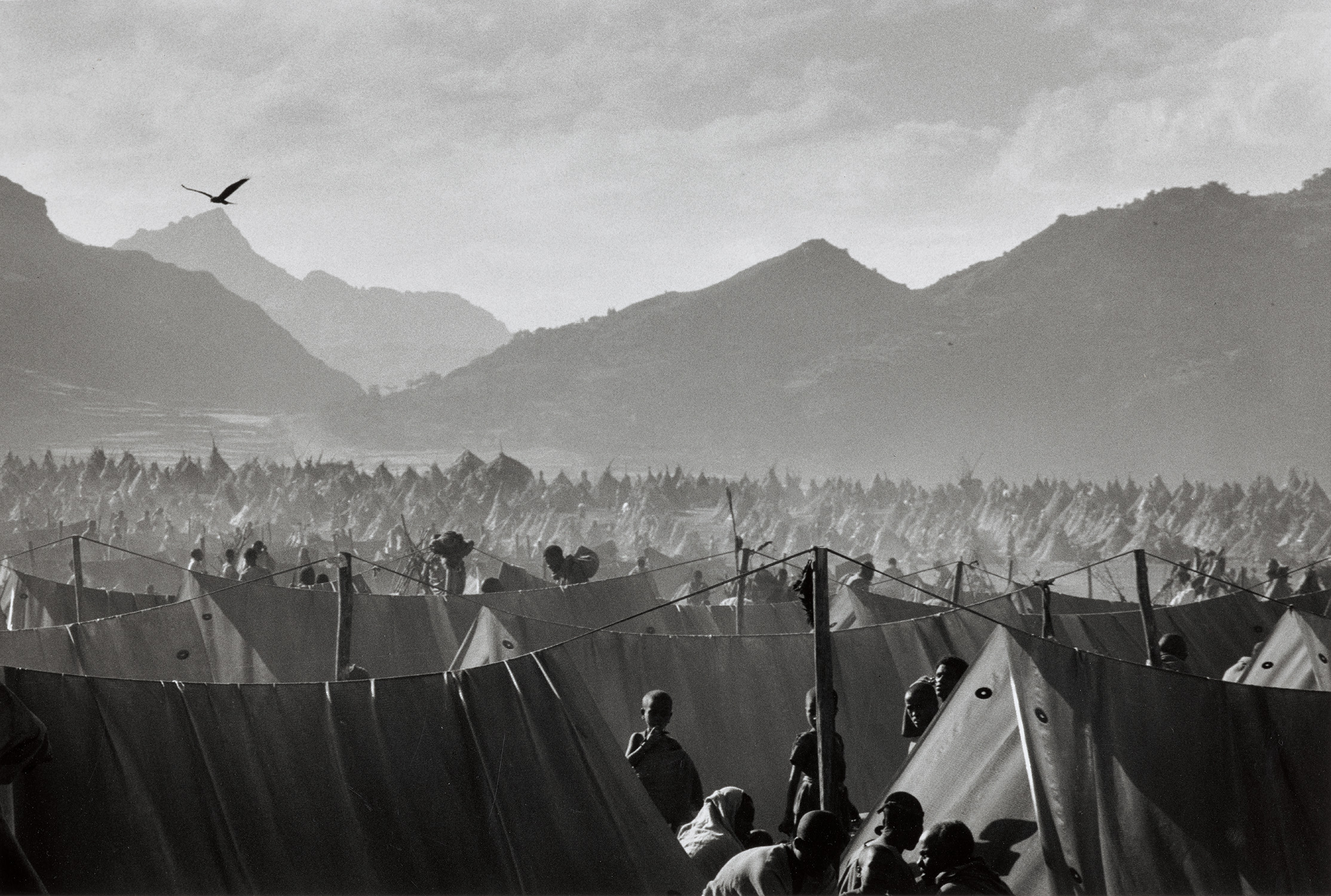
The Refugee Camp of Korem, Ethiopia
By removing color, he asks the viewer to look past the surface accidents of the world and attend to form, light, and human presence. His prints, typically large format gelatin silver prints made with meticulous attention to tonal range, have a painterly depth that places them in direct conversation with the great humanist photographers of the twentieth century. One thinks of Henri Cartier Bresson's instinct for the decisive moment, of Dorothea Lange's unflinching compassion, of W. Eugene Smith's willingness to embed himself completely in a story.
“The planet is not ill. It is we who are ill. We must reconnect with nature.”
Sebastião Salgado, TED Talk, 2013
Salgado belongs to that lineage but extends it into an almost cinematic register: his images are never single moments but chapters in longer narratives, frames from an ongoing argument about what human beings owe one another and what we owe the planet. For collectors, Salgado's work occupies a particularly compelling position in the photography market. His prints exist in carefully controlled editions, and the provenance of each work is well documented through Amazonas Images. Works from the Serra Pelada sequence and the Ethiopian famine coverage of the mid 1980s, including the haunting images from the Korem refugee camp, represent some of the most historically significant photographs of the twentieth century, and demand for them has grown steadily as institutional collections and private collectors alike recognize their importance.
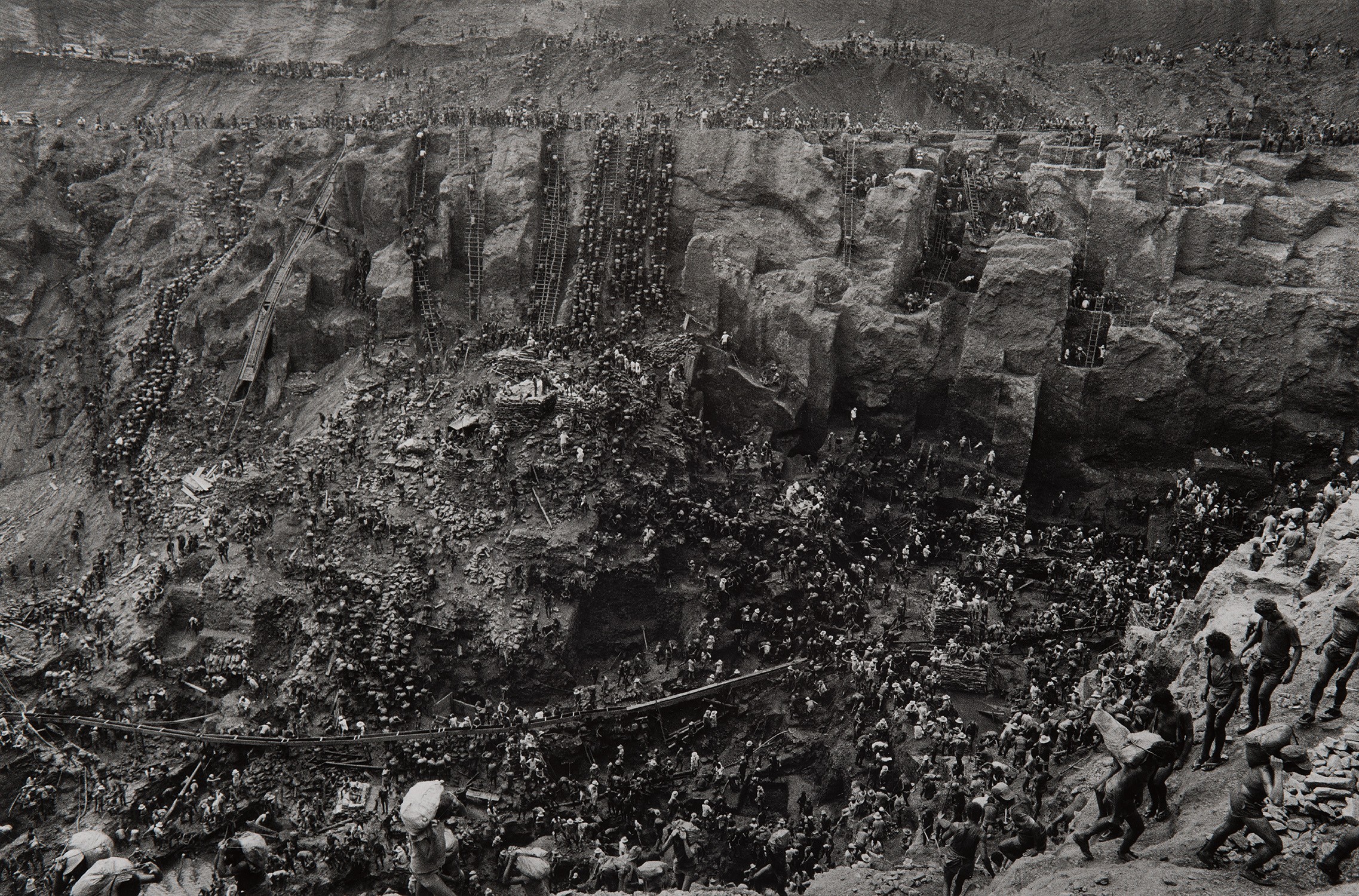
Sebastião Salgado
Sebastião Salgado
His Antarctic and Namibian landscapes from the "Genesis" series have attracted a newer generation of collectors drawn to the grandeur of his natural world imagery, from the monumental icebergs drifting between Paulet Island and the Shetland Islands to the mountain zebras photographed in the Hoanib River Valley of Damaraland. Gelatin silver prints produced in his lifetime, particularly those printed later under his direct supervision, are considered the most desirable and collectible editions. The artists with whom Salgado most naturally converses include his Magnum contemporaries Steve McCurry and James Nachtwey, as well as earlier masters such as Walker Evans and August Sander, whose systematic approaches to documenting entire classes and communities anticipated Salgado's own epic method. In the broader art historical conversation, his work intersects with social documentary painting of the twentieth century and with the tradition of the photo essay as art form rather than mere journalism.
Galleries including Howard Greenberg Gallery in New York have long championed his work, and museum collections from the Museum of Modern Art in New York to the Victoria and Albert Museum in London hold significant holdings of his prints. Salgado's legacy is inseparable from the Instituto Terra, the environmental organization he and Lélia founded in 1998 on the land of his childhood farm in Minas Gerais. After years of witnessing global devastation, they returned to find the land deforested and the rivers dry. Over two decades, they replanted more than two million trees and restored an Atlantic Forest biome, an act of environmental repair that parallels the restorative intention behind the "Genesis" project.
This connection between the photographic work and real world action is central to who Salgado is: an artist for whom beauty is never passive. To collect his work is to own a piece of that larger project, a commitment to seeing the world with both unflinching honesty and abiding hope.
Explore books about Sebastião Salgado
An Uncertain Grace
Sebastião Salgado, Fred Ritchin
Workers: An Archaeology of the Industrial Age
Sebastião Salgado
Migrations: Humanity in Transition
Sebastião Salgado, Françoise Fonde
The End of Polio
Sebastião Salgado
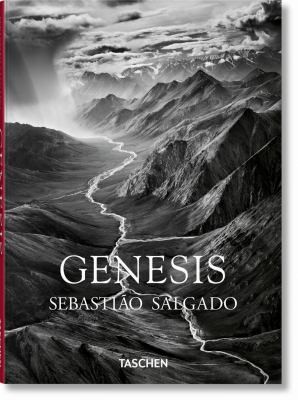
Genesis
Sebastião Salgado
Sebastião Salgado: The Photographer
James Stanfield
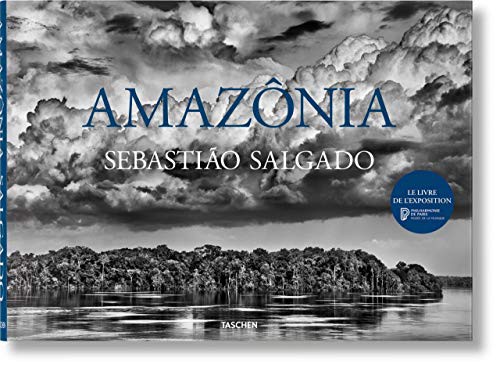
Amazonia
Sebastião Salgado, Lélia Wanick Salgado