Scot Heywood
Scot Heywood: Light Made Brilliantly Still
Artist Spotlight · The Collection Editorial
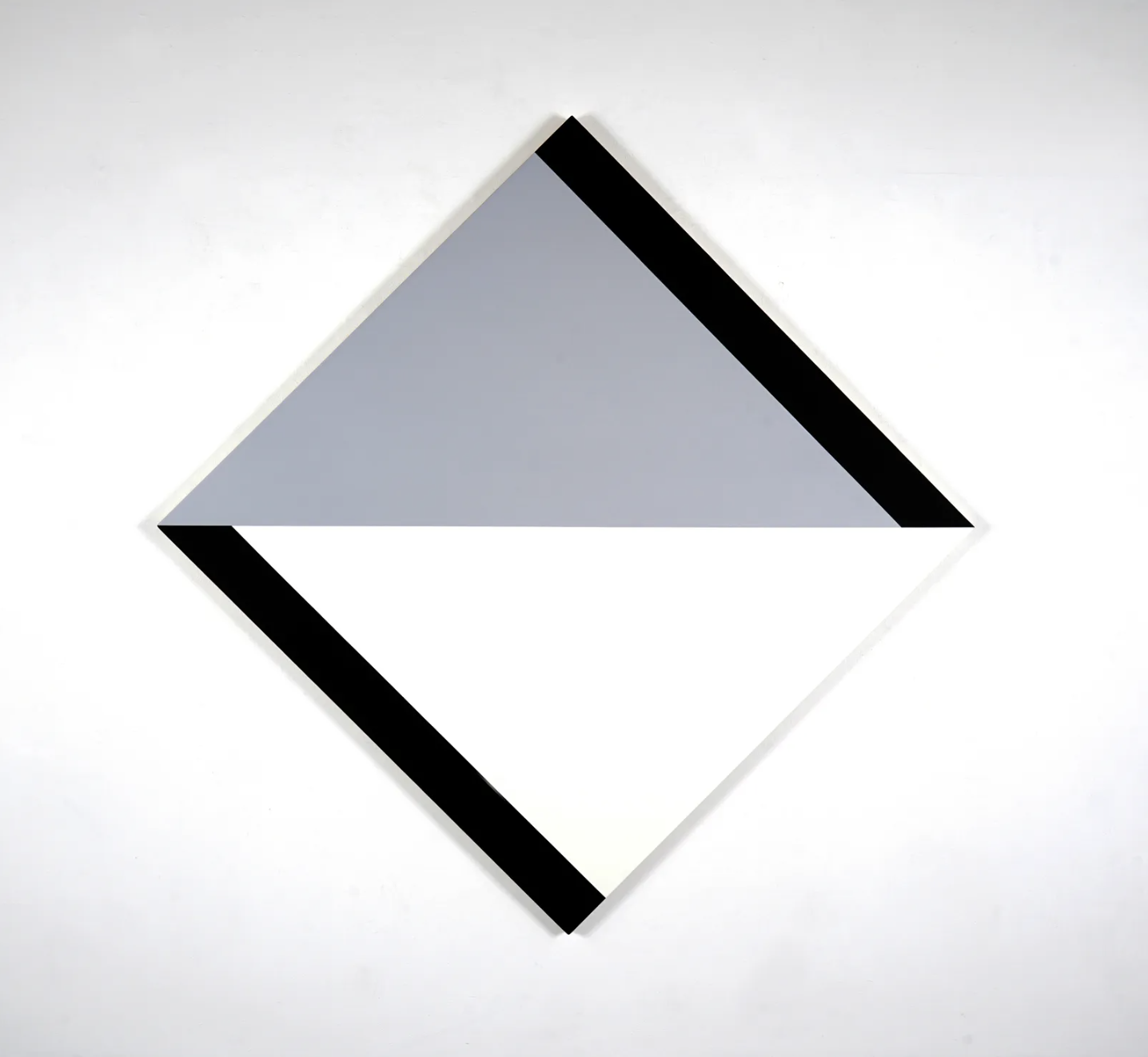
There is a particular kind of attention that defines the finest realist painting, a quality that goes beyond technical skill into something closer to devotion. Scot Heywood possesses that quality in abundance. In 2024, his newest work on canvas, "Diamond: Gray, White, Black," arrived with the quiet confidence of an artist at the height of his powers, demonstrating a refined geometric sensibility that has been building across decades of serious, committed studio practice. The painting signals not a departure but a deepening, evidence that Heywood continues to push his own formal boundaries while remaining anchored to the principles that have made him one of the more thoughtful voices in contemporary American painting.
Scot Heywood
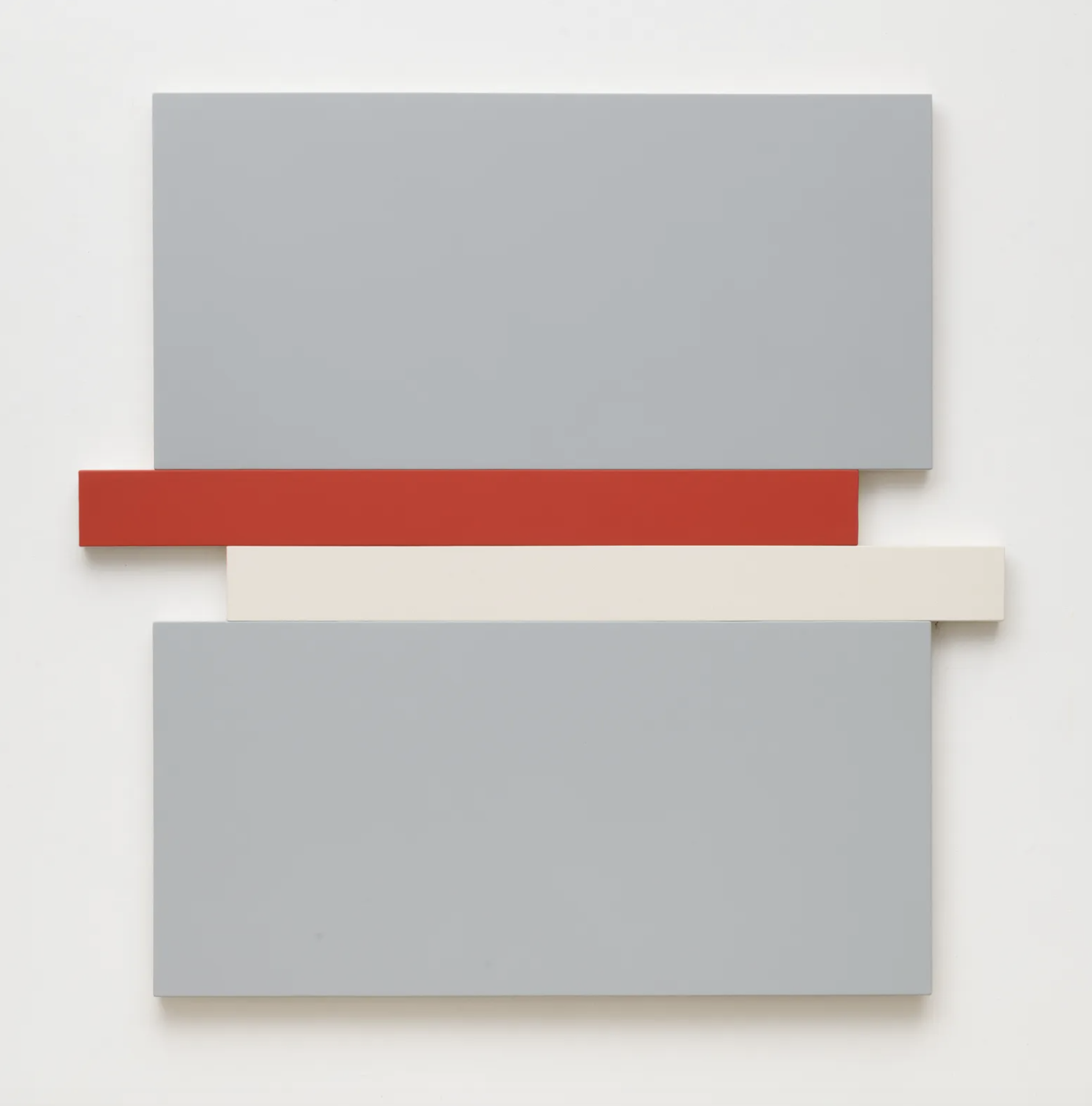
Compression: Gray, Red, Canvas, 2017
Born in 1962, Heywood came of age during a period of extraordinary tension in American art. The dominance of abstraction was giving way to pluralism, and a new generation of painters was quietly reasserting the value of looking carefully, of rendering the visible world with patience and intelligence. Heywood absorbed these currents and found his footing in the traditions of representational painting, drawing inspiration from the Old Masters whose work demonstrated that technical rigor and emotional resonance are not competing ambitions but complementary ones. His formation reflects the seriousness of an artist who understood early on that craft is not a limitation but a form of freedom.
The arc of Heywood's artistic development reveals a painter who has never been content to repeat himself. His work moves fluidly between figurative and still life concerns, and in more recent years has engaged with shaped canvases and geometric abstraction in ways that complicate any simple categorization. The 2017 work "Compression: Gray, Red, Canvas" is a compelling example of this evolution. Executed in acrylic on shaped canvas panels, the piece demonstrates Heywood's willingness to question the very support on which he works, turning the canvas itself into an expressive element rather than a neutral ground.
Scot Heywood
Diamond: Gray, White, Black, 2024
This kind of formal curiosity, grounded in deep knowledge of art history, is what separates a technically accomplished painter from a genuinely interesting one. What makes Heywood's signature works so compelling to live with is the quality of his attention to light. Whether working in oil or acrylic, whether depicting a composed interior or engaging with pure form, Heywood orchestrates illumination with the care of a cinematographer. Shadows are never merely dark; they carry color, warmth, and information.
His palette in the "Diamond" series leans into restraint, favoring grays, whites, and blacks that reward sustained looking with extraordinary subtlety. There is a meditative quality to this work that feels particularly resonant in contemporary culture, an invitation to slow down and inhabit a visual experience rather than consume it. For collectors, Heywood represents a particularly compelling proposition. He occupies a meaningful position between the rigorous figurative tradition associated with painters like Odd Nerdrum and the cooler geometric abstraction of artists who came out of the minimalist lineage, yet he is entirely himself.
His academic training gives his work a structural integrity that holds up over time, both physically and intellectually. Works like "Compression: Gray, Red, Canvas" have the rare quality of revealing new details upon each viewing, which is precisely what makes a painting a lasting companion rather than a decorative object. Collectors who have come to Heywood early are acquiring work by an artist whose reputation is still building, which is among the most satisfying positions a collection can occupy. In the broader context of contemporary American painting, Heywood belongs to a lineage that includes artists who have championed technical excellence without sacrificing conceptual seriousness.
His affinity with classical technique places him in conversation with the long tradition of European academic painting, from the Dutch Golden Age masters whose still lifes explored the relationship between abundance and transience, to the nineteenth century realists who elevated everyday subjects to the status of serious art. Yet his formal experiments with shaped canvases and geometric composition also place him in dialogue with twentieth century American art, acknowledging the legacy of abstraction without being defined by it. This synthesis is not easy to achieve and is rarer than it might appear. The question of legacy is always a delicate one for a mid career artist, but in Heywood's case the foundations are unmistakably solid.
He has built a body of work characterized by coherence, ambition, and genuine visual intelligence. His paintings do not shout for attention; they earn it. In an art world that frequently rewards novelty above all else, there is something genuinely valuable about an artist who returns to the studio each day committed to the discipline of seeing and rendering with honesty and grace. As new audiences encounter his work through platforms dedicated to serious collecting, Heywood's singular contribution to contemporary American painting will only become clearer and more widely appreciated.