Sanya Kantarovsky
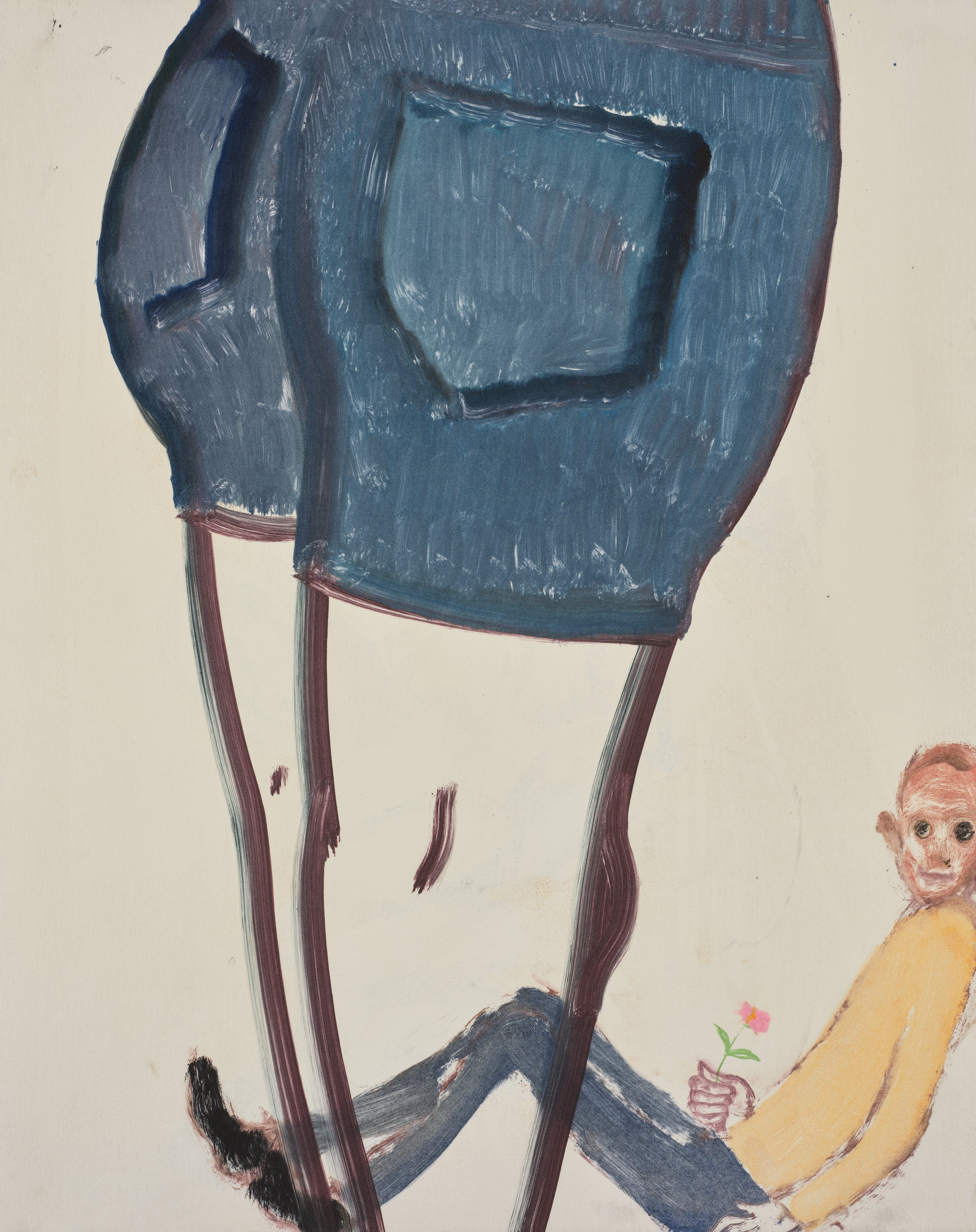
Sanya Kantarovsky: Figures Full of Feeling
Artist Spotlight · The Collection Editorial
When Tate St Ives presented work by Sanya Kantarovsky, it confirmed what a growing community of collectors and curators had sensed for years: this Russian American painter occupies a singular, irreplaceable position in contemporary figuration. His canvases arrive at you sideways, catching you off guard with their humor before their deeper, more unsettling beauty sets in. The institution's endorsement, combined with MoMA's decision to bring his work into a permanent collection that defines the arc of modern and contemporary art, signals that Kantarovsky is no longer a discovery to be whispered about. He is a cornerstone of the conversation about what painting can do right now.
Sanya Kantarovsky
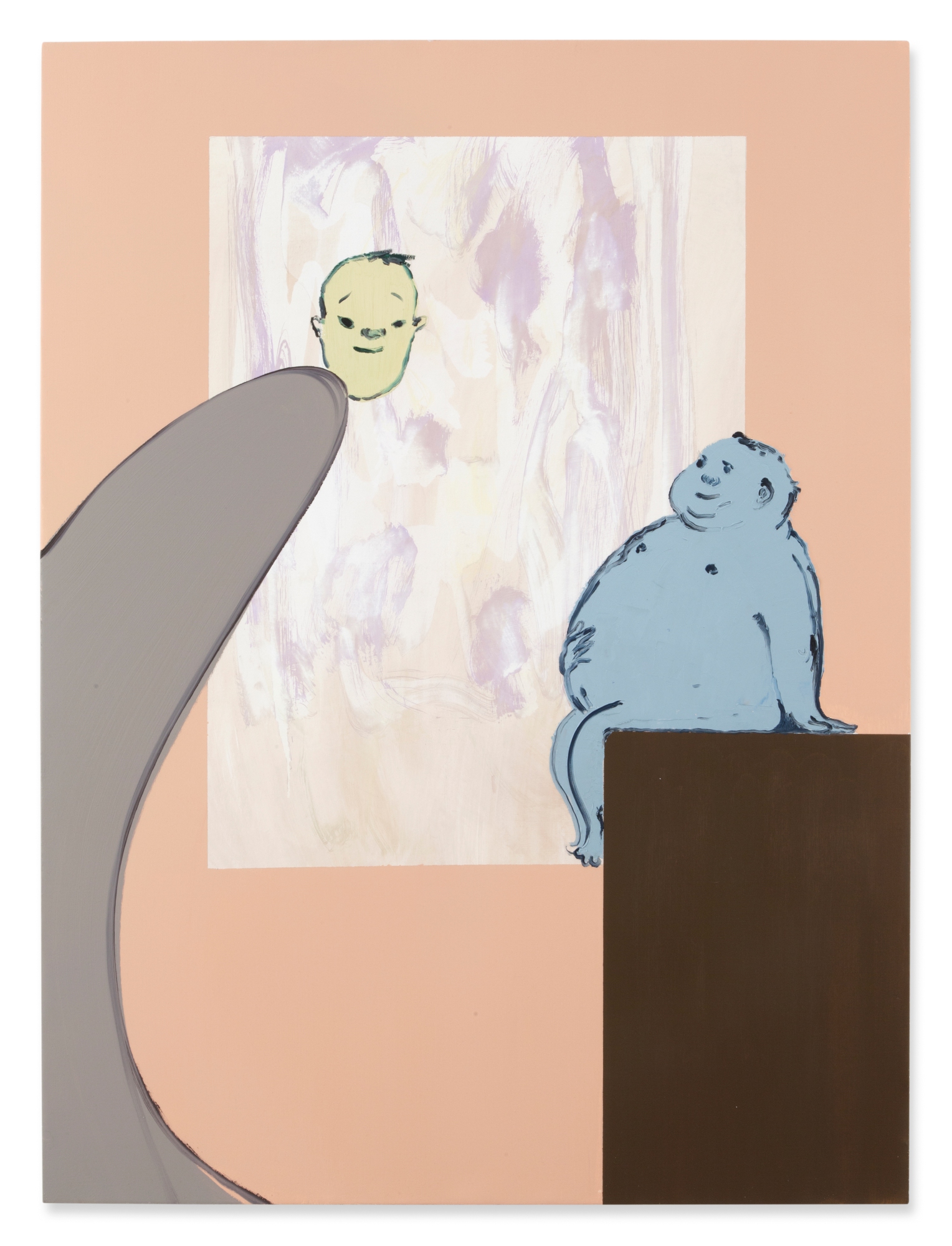
Accents, 2015
Kantarovsky was born in Moscow in 1982 and came of age during one of the most turbulent and transformative periods in Russian history. The collapse of the Soviet Union, the chaotic rush of the 1990s, the collision of ideologies and images that flooded into post Soviet culture: all of this forms an invisible but persistent pressure in his work. He eventually settled in the United States, and the hyphenated identity he carries, Russian and American, insider and outsider, nostalgic and ironic, became not a burden but a generative engine. His formation drew on the long tradition of Russian graphic arts and illustrated literature alongside the Western canon, giving his visual language a richness that is genuinely difficult to place and therefore impossible to forget.
His artistic development reflects a restless intelligence that refuses to settle into a single mode. Early works showed a painter already comfortable with allegory and with the peculiar power of distorted bodies to carry emotional weight. Over time his palette grew more assured, his compositions more layered, and his willingness to mix media became central to the work rather than incidental to it. He moves fluidly between oil on linen, watercolor on paper, woodcut, and monotype, treating each medium as a different register of the same ongoing investigation into how people inhabit their own skins and navigate the social worlds that press in on them.
Sanya Kantarovsky
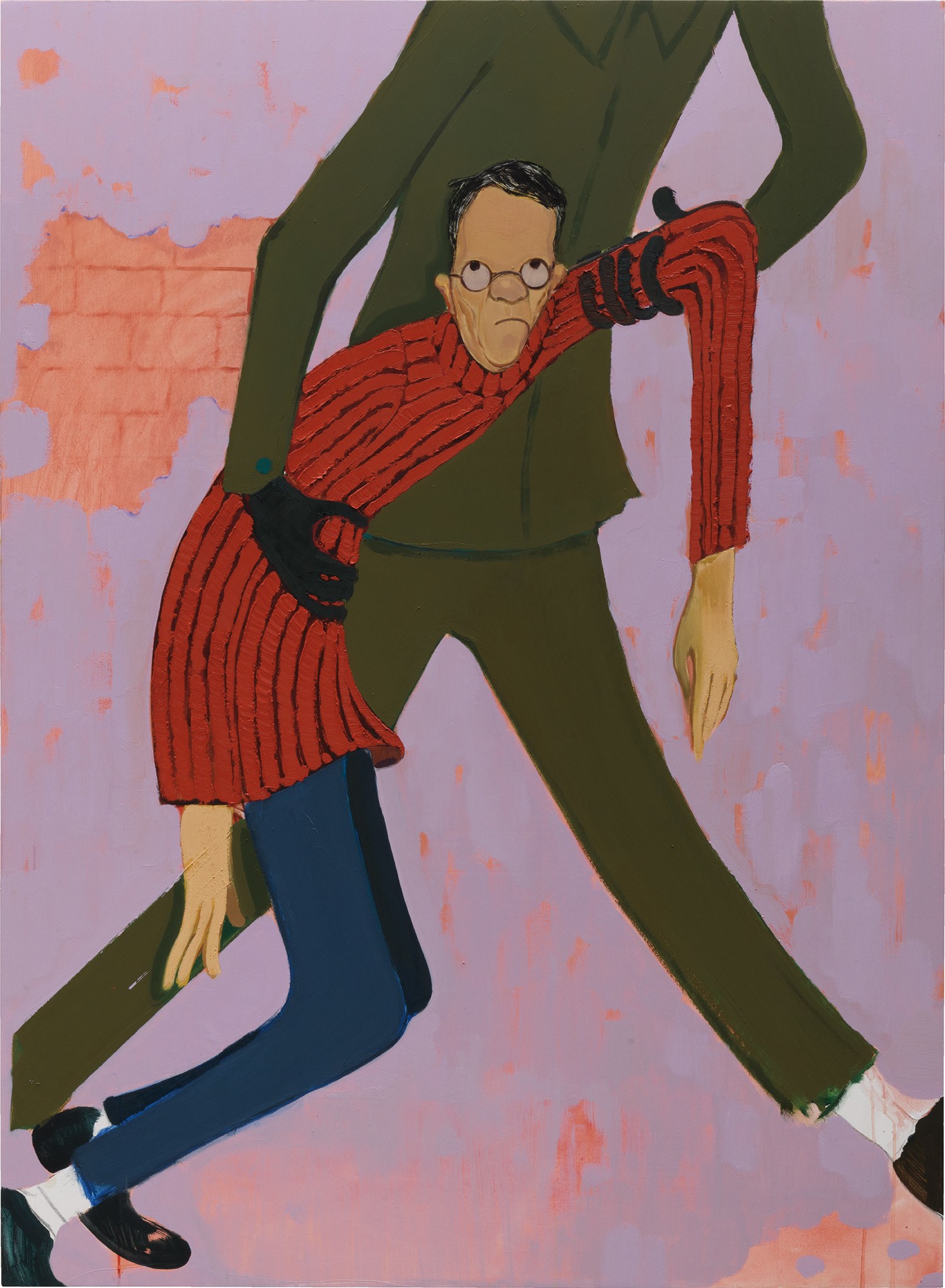
Lavender Arrest, 2015
The variety of supports and techniques in his practice is not eclecticism for its own sake; it is the mark of a painter who understands that the right material is inseparable from the right meaning. Among the works that best illuminate his vision, "Accents" from 2015 stands out as a kind of manifesto in paint. Created in oil, watercolor, oil stick and pastel on linen, it is a work that rewards prolonged looking, layering incident upon incident until the surface feels inhabited rather than merely decorated. "Lavender Arrest" from the same year, also on canvas and worked in the same mixture of materials, demonstrates his ability to hold tension between tenderness and unease without resolving it in either direction.
"Panels" from 2018, rendered in oil on linen, reveals his interest in pictorial structure as a carrier of meaning, while "Daisy Dukes" from 2018, a monotype, shows the range of his printmaking sensibility. The 2013 work "Untitled (You Are Not an Evening V)," constructed from wood, fabric, watercolour, ink, oil, bleach, gesso on canvas in two parts, demonstrates that his thinking extends beyond the single rectangle and into questions of installation and object making. Each of these works rewards the collector who spends time with them, because they give more the longer they are lived alongside. From a collecting perspective, Kantarovsky presents one of the more compelling propositions in the current market for contemporary figuration.
Sanya Kantarovsky
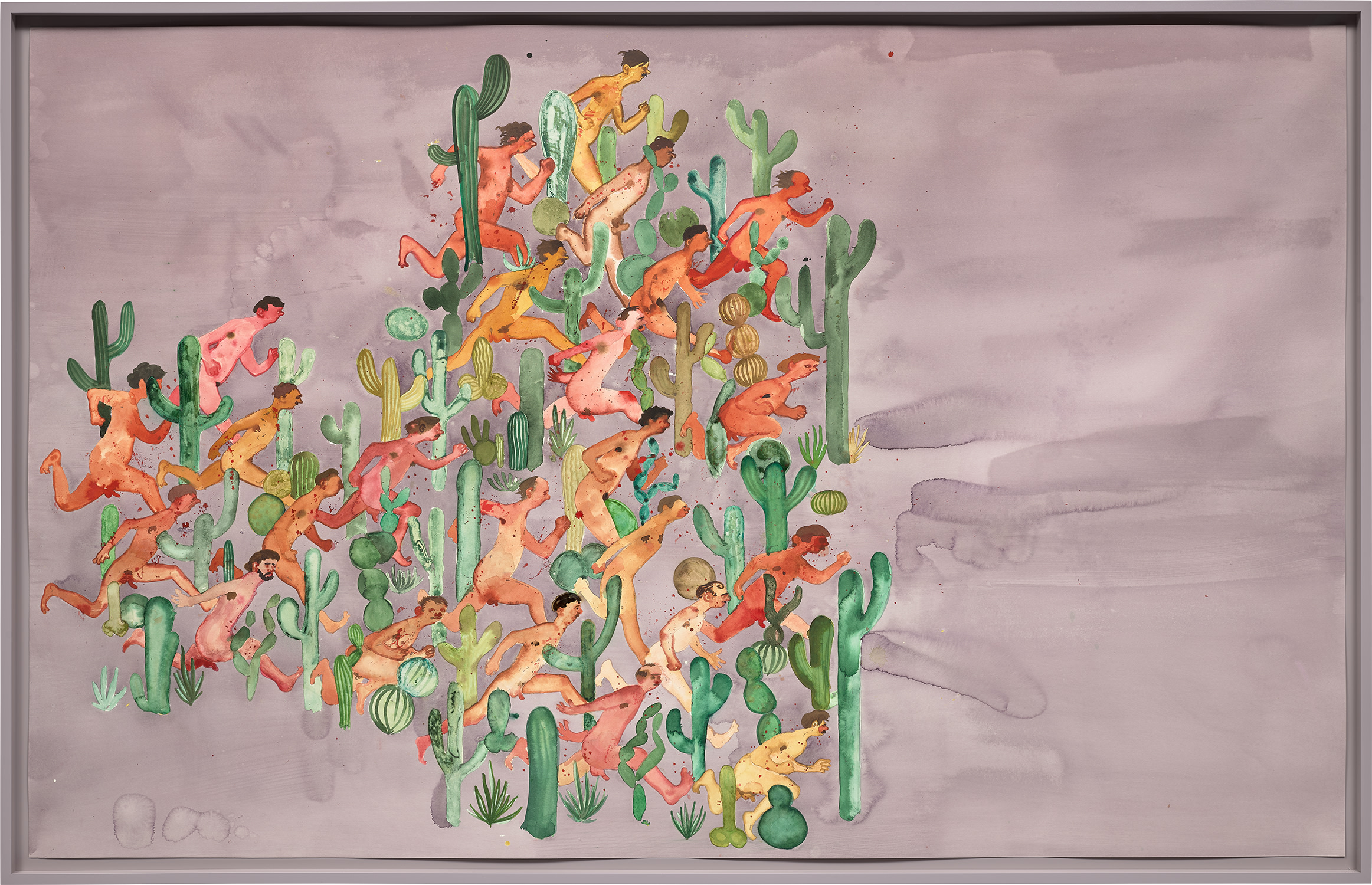
Infinitely Repeating Pattern III, 2017
His works exist in multiple media and at various scales, making it possible for collectors at different levels of the market to find a meaningful entry point. The works on paper, including watercolors and prints such as the woodcut "Proximity II" on BFK Rives paper, offer an intimacy and a freshness that complements the larger painted works. Collectors who have built holdings in this area tend to think about the works not as individual trophies but as a sustained argument, a body of thought that accrues meaning when pieces are seen in relation to one another. The institutional validation from MoMA and Tate St Ives is not merely a status signal; it is a reliable indicator of an artist whose work will continue to be studied, exhibited, and sought after.
Kantarovsky belongs to a generation of figurative painters who collectively reasserted the power of the painted body at a moment when that power was very much in question. His conversations with art history are wide ranging and seriously held. The influence of German Expressionism is present but never slavishly followed. There are echoes of Philip Guston in the way cartoon adjacency and existential weight coexist on the same surface.
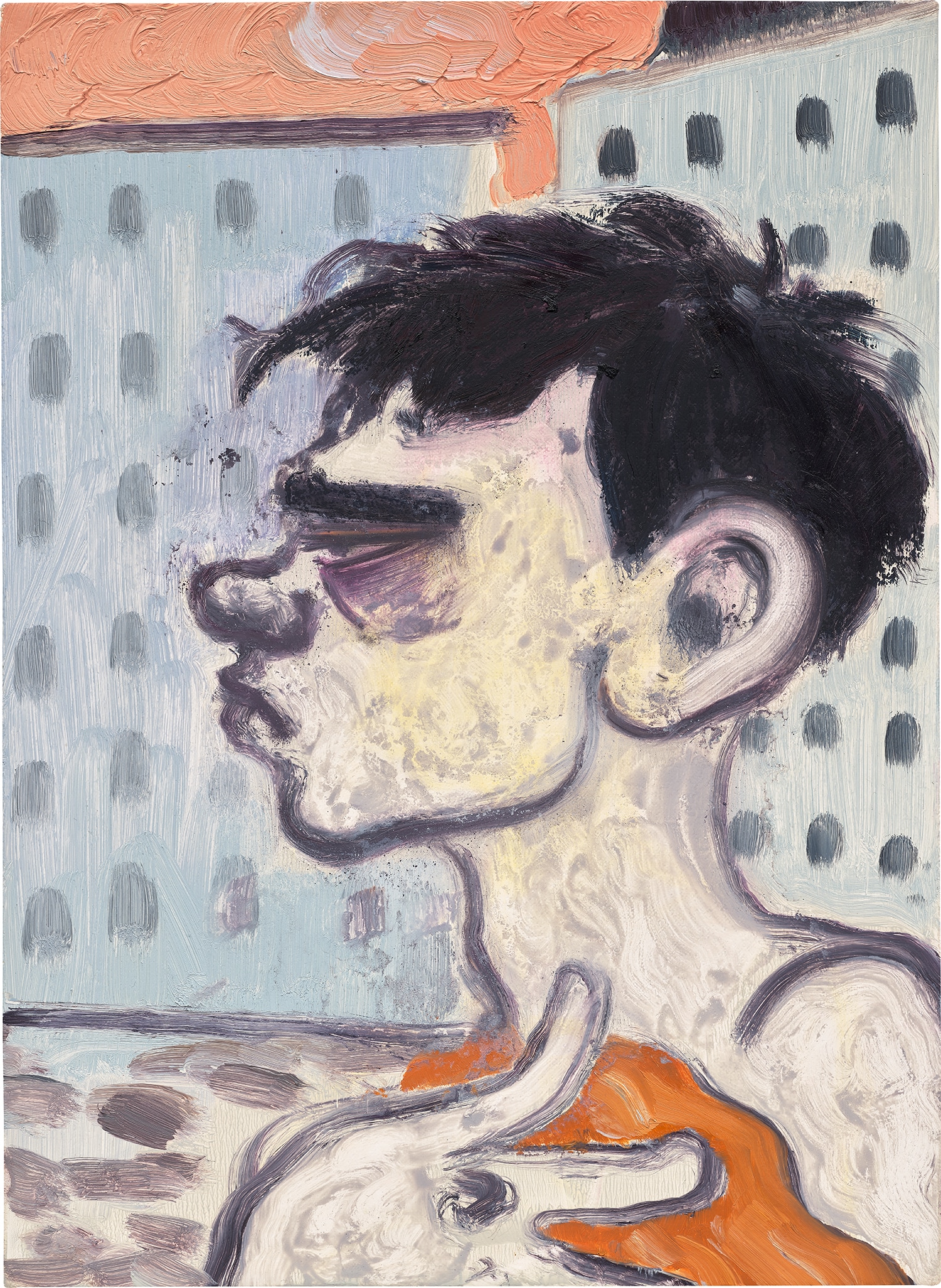
Sanya Kantarovsky
Panels, 2018
The tradition of Russian illustrated books and socialist graphic art runs beneath the imagery like a current. Collectors who admire Neo Rauch, Peter Doig, or Cecily Brown will find in Kantarovsky a painter who shares their commitment to the figure as a vehicle for complexity, while charting his own genuinely distinct course. What makes Kantarovsky matter today, beyond the market signals and the institutional stamps of approval, is the quality of attention he demands and rewards. We live in a period saturated with images that flatten feeling, that reduce psychological complexity to a recognizable icon.
His paintings work in the opposite direction. They use the tools of dark humor, of narrative ambiguity, of bodies pressed into unlikely postures, to open up space rather than close it down. A Kantarovsky painting stays with you because it refuses to tell you exactly how to feel about what you are seeing, and in that refusal it trusts you as a viewer in a way that feels increasingly rare and increasingly precious. For collectors who want their walls to keep thinking alongside them, his work is an extraordinary companion.