Saint Clair Cemin
Saint Clair Cemin, Sculptor of Luminous Mysteries
Artist Spotlight · The Collection Editorial
There is a particular kind of attention that gathers around Saint Clair Cemin's sculptures in a gallery space. Visitors slow down, circle back, reach instinctively toward surfaces they are not permitted to touch. That magnetic pull is not accidental. It is the result of a practice built over five decades, one that fuses philosophical inquiry with sensuous material intelligence in ways that remain genuinely rare in contemporary sculpture.
Saint Clair Cemin
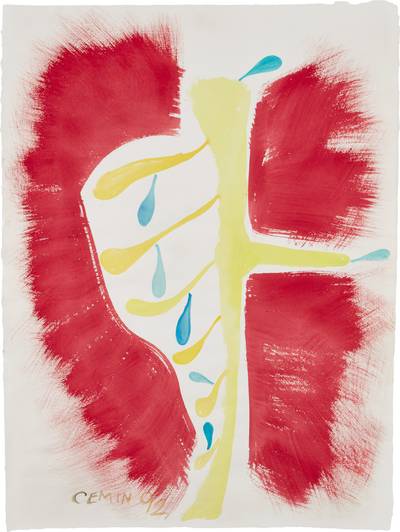
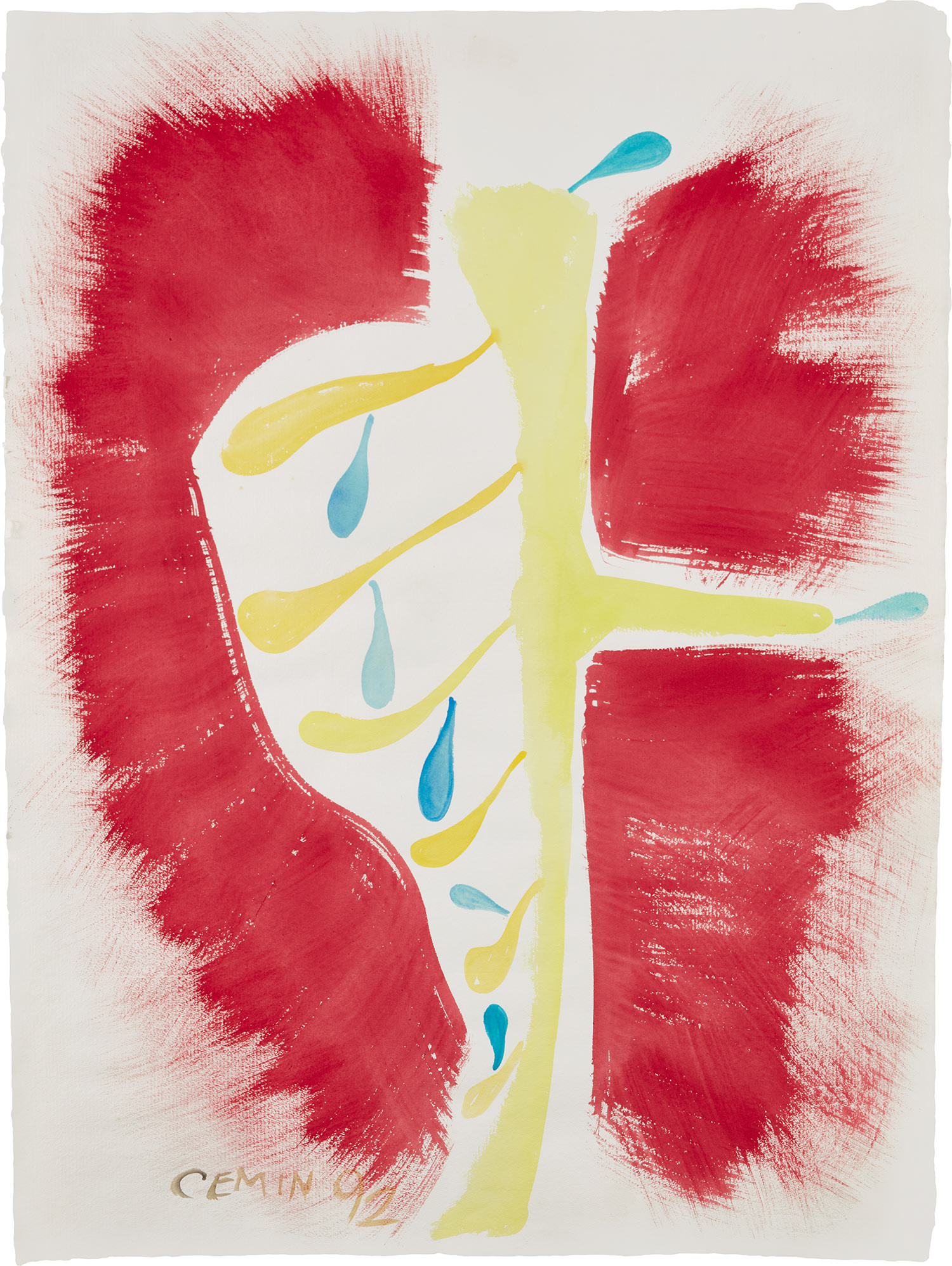
Digestion
In recent years, renewed institutional interest has brought Cemin's work to broader audiences, with major collections in Europe and the Americas deepening their holdings and a new generation of collectors discovering him through platforms dedicated to serious collecting. The timing feels right to take a considered look at one of the most original sculptural minds working today. Cemin was born in Cruz Alta, in the southern Brazilian state of Rio Grande do Sul, in 1951. The cultural landscape of mid century Brazil was alive with modernist ambition, and the country's particular synthesis of indigenous, African, and European traditions gave artists a richly layered inheritance to work with or against.
Cemin left Brazil to study in Paris at the École Nationale Supérieure des Beaux Arts, where he encountered the full weight of the European tradition up close. That education gave him technical rigor and historical fluency, but it also sharpened his awareness of what European modernism tended to exclude: the mythological, the erotic, the cosmological, the frankly strange. He arrived in New York in the late 1970s, a city then combusting with energy, and he brought with him a sensibility that was already formed around questions larger than style. New York in the 1980s was the crucible in which Cemin's distinctive voice emerged.
Saint Clair Cemin
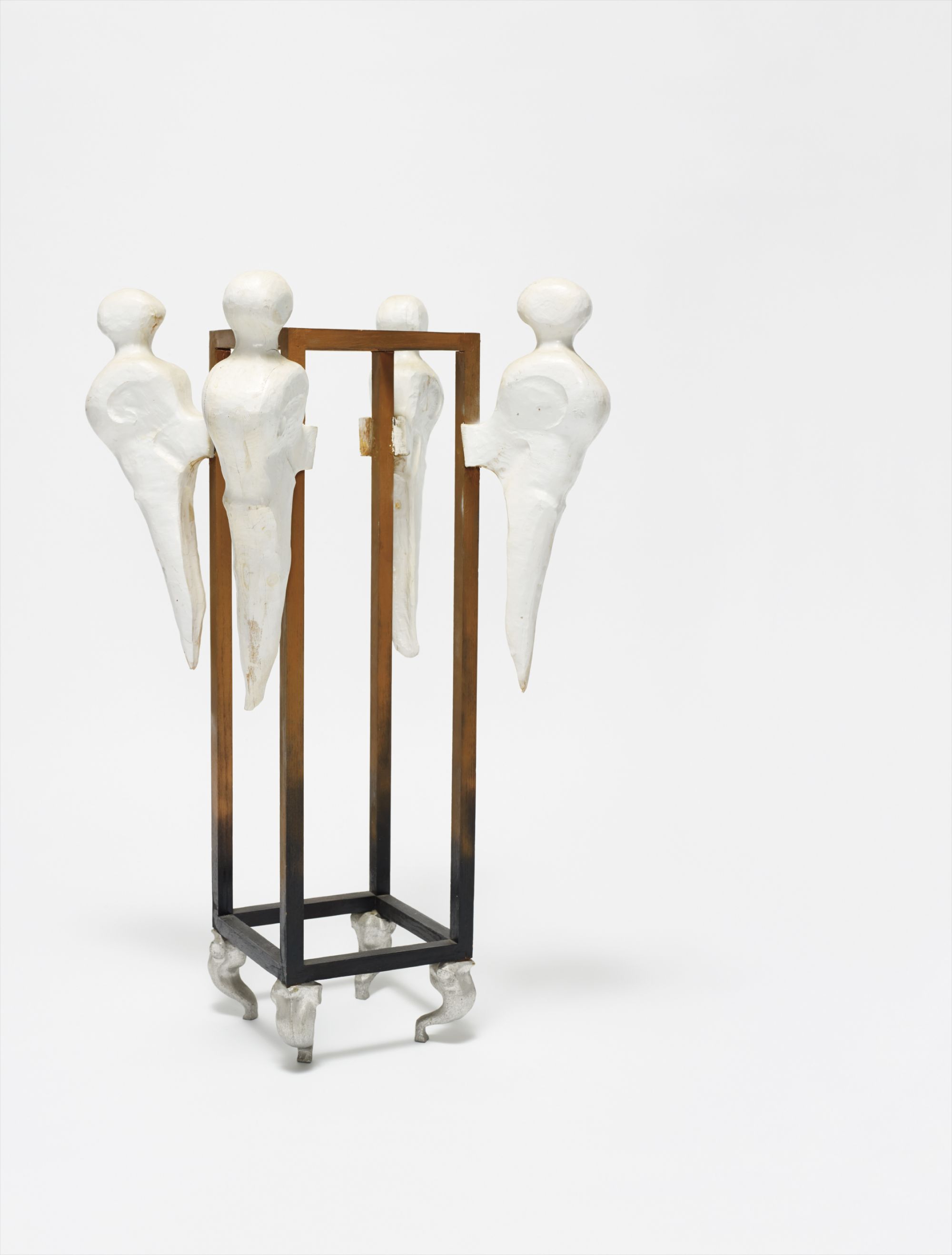
Guarded Closet
He became associated with a generation of artists who were pushing back against the austerity of minimal and conceptual art, reaching instead toward figuration, allegory, and a pleasure in making objects that had been largely declared off limits by the dominant critical discourse. Alongside figures such as Jeff Koons, Ashley Bickerton, and Haim Steinbach, Cemin showed with Sonnabend Gallery, one of the most consequential commercial galleries of the period, and his work attracted serious critical attention from the outset. Yet Cemin was never fully legible through the lens of Neo Geo or commodity critique. His concerns were older and stranger, rooted in desire and metamorphosis, in the way objects seem to breathe with interior life.
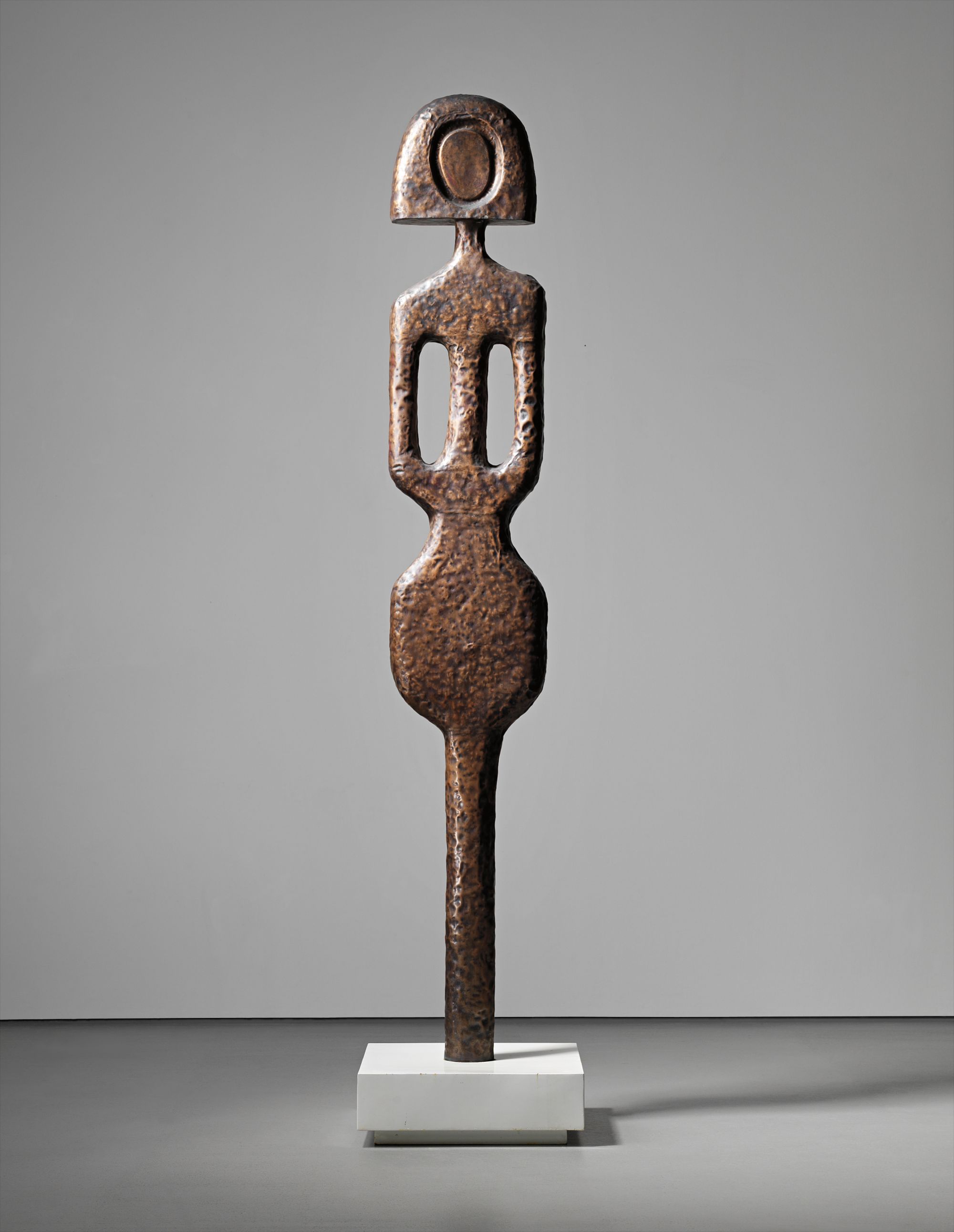
The range of materials Cemin has worked with over the course of his career is itself a statement of artistic philosophy. Bronze, copper, ceramic, wood, alabaster, and marble have all served his purposes at different moments, and he moves between them not out of restlessness but out of a belief that each material carries its own metaphysics. His bronze castings often have a biomorphic fluency that recalls Brancusi's belief in the essential life of form, while his ceramic works bring an earthier, more intimate register to similar preoccupations. Works such as Aphrodite, rendered in copper on a white painted metal base, demonstrate how Cemin can take one of Western art's most loaded subjects and render it strange and newly felt, stripping away the classical veneer to find something more primal underneath.
Saint Clair Cemin
Aphrodite
His Bell, cast in bronze, exemplifies his gift for making functional or familiar forms resonate with almost ritualistic significance. Cemin's works on paper deserve particular attention as windows into his imaginative process. Digestion, a watercolor drawing executed on Richard de Bas paper, reveals a draughtsman of considerable sophistication, someone for whom drawing is not preparation for sculpture but a fully realized mode of thinking. Richard de Bas is itself a storied French papermaking mill with a history stretching back to the fourteenth century, and Cemin's choice of such a material signals his awareness of the entire chain of craft and history that supports a mark on paper.
His sculptural installation Guarded Closet, constructed from oak, aluminum, and pine, shows another dimension of his practice: the architectural, the domestic, the uncanny space between furniture and monument. These works reward the kind of slow, attentive looking that the best collecting always involves. For collectors, Cemin occupies an interesting and genuinely advantageous position in the market. He has the institutional credibility that serious collectors require, with works held in significant permanent collections and a critical history that stretches back to the height of the New York art world's most culturally generative decade.
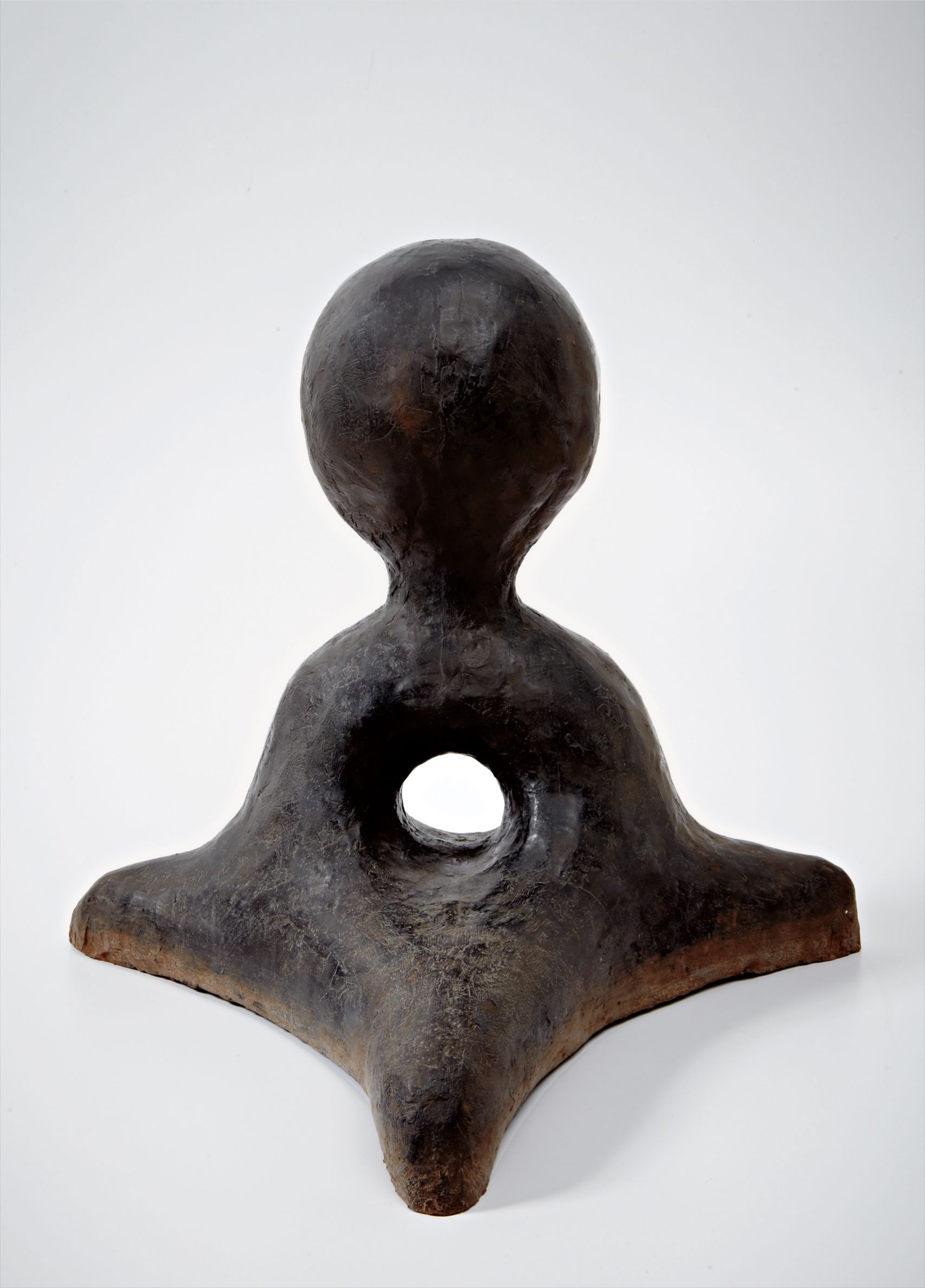
Saint Clair Cemin
Saint Clair Cemin
At the same time, his work has not been subject to the speculative inflation that has distorted the market for some of his contemporaries, meaning that acquiring Cemin today represents both aesthetic pleasure and clear eyed value. His sculptures in bronze and copper, in particular, have the material permanence and the conceptual density that reward long term stewardship. Collectors drawn to the tradition of surrealism, to artists such as Louise Bourgeois or Hans Bellmer, or to the biomorphic lineage running from Arp through Noguchi, will find in Cemin a contemporary practitioner who takes that inheritance seriously and extends it with genuine originality. Within the broader history of postwar and contemporary sculpture, Cemin occupies a position that resists easy categorization, which is itself a mark of significance.
He shares with Kiki Smith a commitment to the body and its transformations. He shares with Thomas Houseago a willingness to court mythological and spiritual registers that more ironic artists tend to avoid. He shares with Bourgeois an understanding that sculpture can hold psychological complexity without illustration or explanation. What distinguishes him is a particular quality of warmth, a sense that his objects are animated by curiosity and affection rather than anxiety or critique.
They are, in the deepest sense, companionable things, objects that reward a life lived alongside them. Cemin's legacy is still being written, which is one of the most compelling things about engaging with his work now. He has been a sustained and serious presence in contemporary art for more than four decades without ever becoming a brand or a market phenomenon, and that integrity has preserved the essential quality of surprise in his objects. Each new work still feels like a discovery rather than a delivery.
For collectors and institutions paying attention, this is precisely the kind of artist whose importance becomes clearer with time, whose work accumulates meaning rather than exhausting it. To live with a Cemin is to accept an ongoing invitation to think about form, desire, nature, and the deep human need to make things that outlast us.
Explore books about Saint Clair Cemin
Saint Clair Cemin: Sculptures and Drawings
Peter Halley
Saint Clair Cemin
Robert Storr
Saint Clair Cemin: New Sculptures
Dan Cameron
The Sculpture of Saint Clair Cemin
Michael Brenson