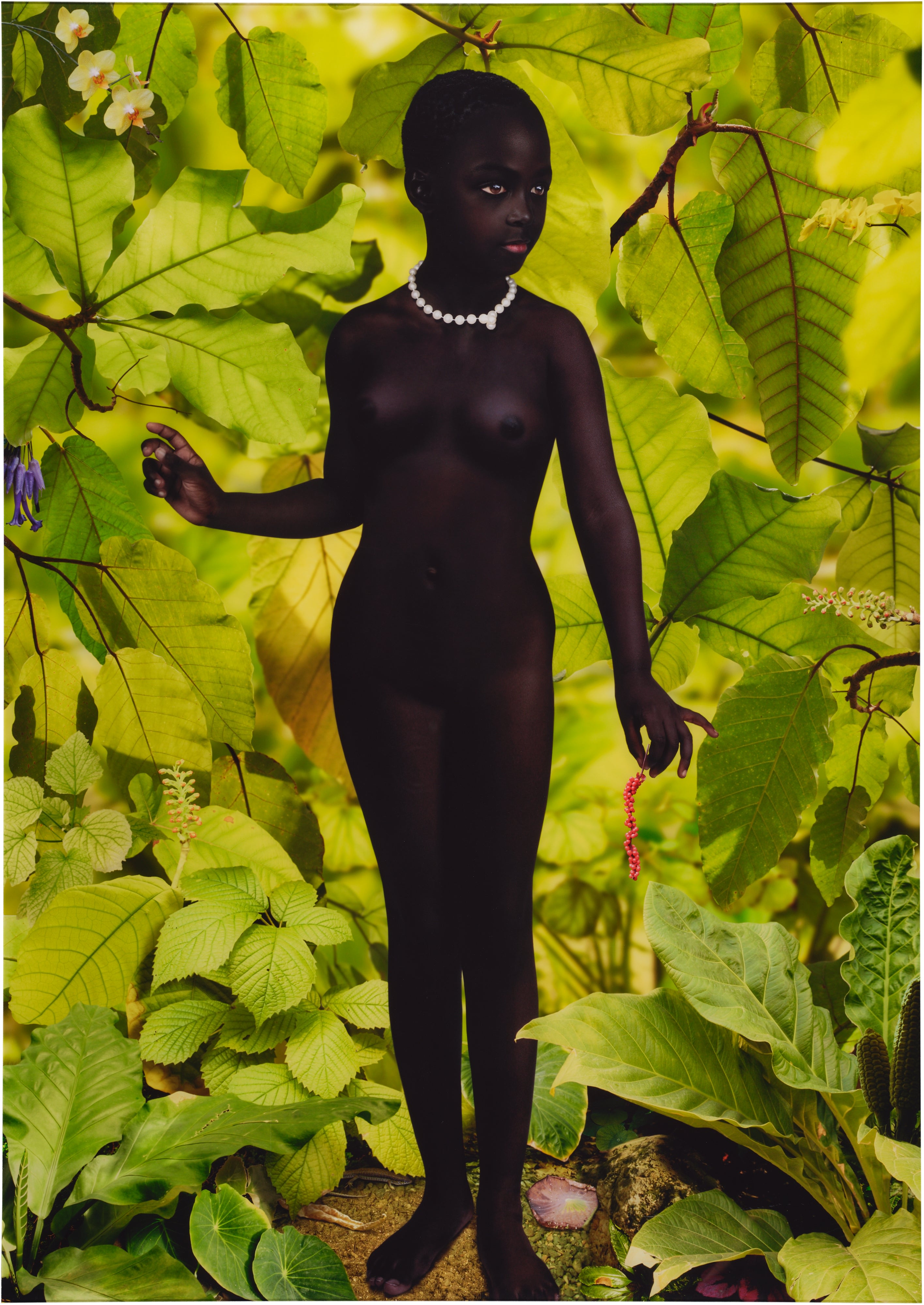
In the autumn of 2023, the Gemeentemuseum Den Haag presented a survey of Dutch contemporary photography that placed Ruud Van Empel firmly among the most visually arresting artists working in Europe today. His large format prints, glowing with an otherworldly intensity, drew sustained attention from curators and collectors who had followed his practice for two decades and newcomers who encountered his impossible gardens for the very first time. That encounter tends to be a memorable one. Standing before a Van Empel photograph is to feel simultaneously enchanted and slightly unmoored, as though the natural world has been dialed up to a frequency just beyond what the human eye normally registers. Van Empel was born in Breda, the Netherlands, in 1958, and came of age in a country with a profound and self conscious relationship to landscape painting. The Dutch Golden Age tradition, with its meticulous attention to light, botanical detail, and the dignity of the everyday, runs quietly through everything he makes, even when the surface of the work looks nothing like a seventeenth century canvas. He studied at the Academy of Art and Design in Den Bosch during the late 1970s, where he developed an early fluency in graphic design and illustration. Those formative years gave him a craftsman's discipline alongside an artist's restlessness, a combination that would eventually lead him toward photography and digital image making as tools capable of expressing something no single medium alone could achieve. His early career took him through advertising and graphic work before he arrived, in the mid 1990s, at a process that would define him entirely. Van Empel began constructing his images not by photographing a single scene but by assembling hundreds of individual photographs, scanning plant specimens, leaves, bark, petals, and skin tones, then compositing them with extraordinary patience in the digital studio. The result is images that look like photographs but behave like paintings, pictures that carry the authority of the documentary form while describing spaces that have never existed and could never exist. This tension is not a trick. It is the entire point, and collectors who understand it feel the difference immediately. The World series, which Van Empel developed across the early 2000s, brought him international recognition and remains the cornerstone of his reputation. In these works, young Black children stand within lush, saturated forest environments, their clothing pristine, their expressions poised somewhere between calm and mystery. The images draw on the iconography of European botanical illustration, the symbolic weight of the garden in Western art history, and a confrontation with ideas of innocence, race, and belonging that gives the work a moral and intellectual dimension well beyond decorative pleasure. The series was exhibited widely across Europe and the United States, with shows at Torch Gallery in Amsterdam, a gallery that has represented Van Empel with consistency and care and helped place his work in significant private and institutional collections. His Moon series continued this investigation into constructed nature and human presence, placing solitary figures against luminous nocturnal skies reflected in still water. The quality of light in these works is almost architectural, built layer by layer until it achieves something no single exposure could capture. Venus and Study in Green extended the practice further, with some images moving toward an almost complete abstraction of the figure within foliage, the body becoming one more element in a baroque inventory of natural forms. Critics writing for publications including Foam Magazine and Aperture noted that Van Empel occupied a singular position: he was simultaneously a photographer, a digital artist, and an heir to the Flemish and Dutch traditions of the painted garden and the vanitas still life. For collectors, Van Empel's work presents a compelling proposition. His editions are typically small, his printing standards are exacting, and the works age with the kind of physical presence and conceptual depth that sustains interest over time. The large format pieces, which can exceed a meter in width, command gallery prices that reflect his international standing, while smaller works remain accessible entry points for collectors building a serious engagement with contemporary Dutch photography. His prints have appeared at Phillips and Sotheby's, where they have consistently performed at or above estimate, a signal of genuine secondary market demand rather than speculative momentum. Collectors who hold his work tend to hold it, which is perhaps the most meaningful endorsement available. Within the broader landscape of contemporary art, Van Empel's peers and natural neighbors include artists who share his interest in the constructed image and the surreal potential of natural forms. The work of Andreas Gursky, with its digitally enhanced vistas and philosophical scale, offers one point of comparison, though Van Empel's sensibility is warmer and more intimate. Closer in spirit are artists like Cindy Sherman, who also constructs identity through meticulous artifice, and the painters of the Northern Renaissance who first taught Europe to look at a flower as though it contained everything. There is also a productive conversation to be had between Van Empel's practice and the work of artists like Mickalene Thomas, whose lush, layered surfaces similarly interrogate beauty, race, and visual pleasure. What makes Van Empel's legacy secure is precisely what makes his work difficult to summarize quickly. He works slowly, builds carefully, and resists easy categorization. He is a photographer who rarely uses a single photograph. He is a digital artist whose work feels organic and hand made. He is a Dutch artist working squarely within a national tradition while producing images that speak to global conversations about identity, nature, and the limits of the real. As platforms dedicated to serious private collecting continue to expand the conversation around contemporary photography, Van Empel stands as an artist whose entire practice rewards the sustained attention that great collecting demands. His gardens are impossible, and that is exactly why they feel so true.