Roy's People
Roy's People: Painting Humanity With Fearless Grace
Artist Spotlight · The Collection Editorial
Something is happening in contemporary American figurative painting, and Roy's People sits at a genuinely compelling crossroads of it. In a moment when questions of visibility, community, and who gets to be seen are reshaping cultural conversations from museum acquisition committees to social feeds, this artist's practice feels less like a stylistic choice and more like a principled commitment. The work arrives with quiet confidence, asking viewers to slow down, to look carefully, and to reckon with the profound dignity embedded in the act of portraiture itself. The name Roy's People is itself a kind of manifesto.
Roy's People
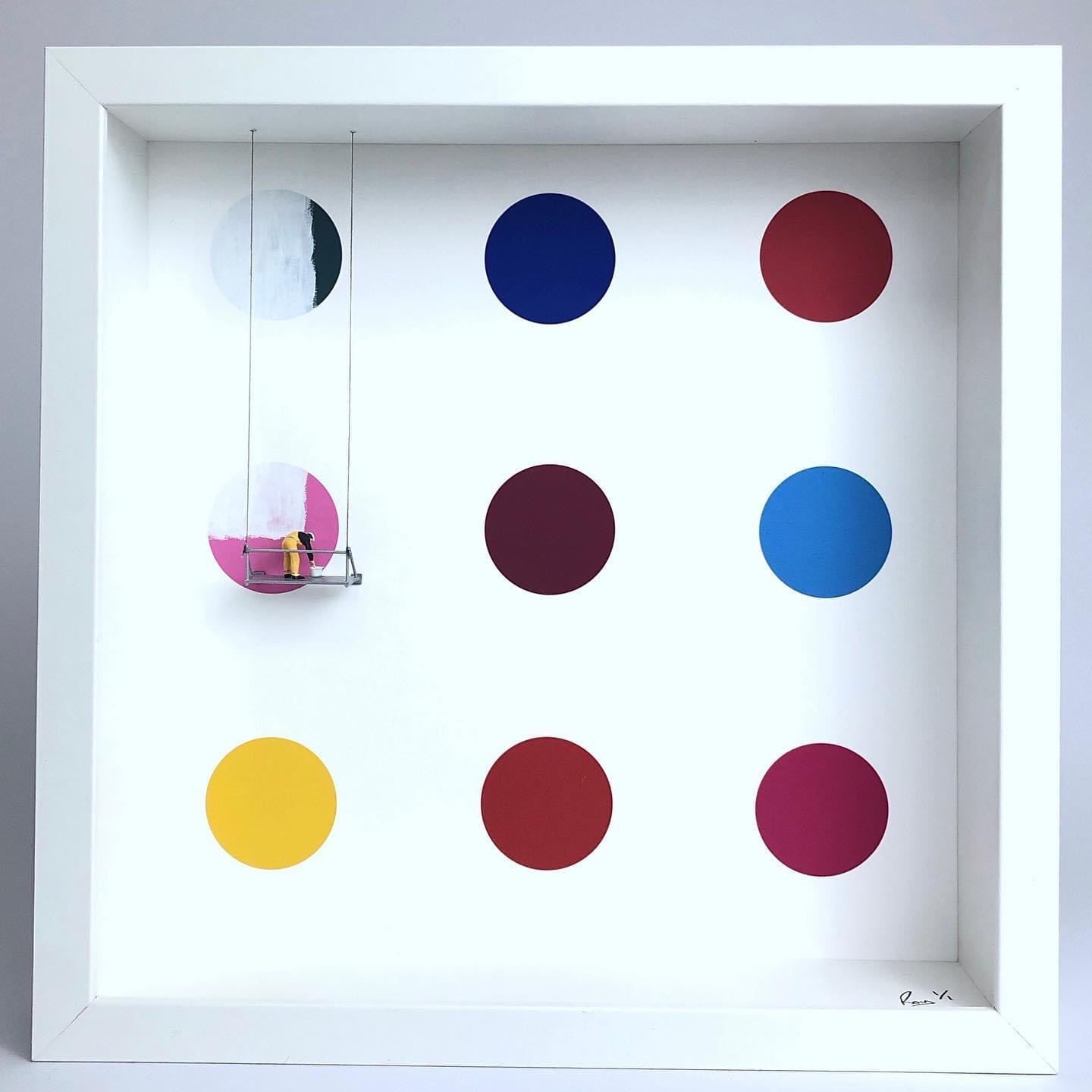
Scrubbed Out Spots 9, 2020
It announces a relationship, a possessive warmth between artist and subject that resists the cold remove of academic observation. These are not studies. They are declarations of belonging. The moniker signals that figurative painting, in this artist's hands, is never purely formal.
It is relational. It is communal. It is, at its core, about the irreducible value of individual human presence rendered visible through paint and attention. The artistic formation behind Roy's People is rooted in the long and vital tradition of American social realism, a lineage that stretches from the Ashcan School's unflinching portrayals of working life through the politically charged figuration of artists like Jacob Lawrence and Philip Evergood.
Roy's People
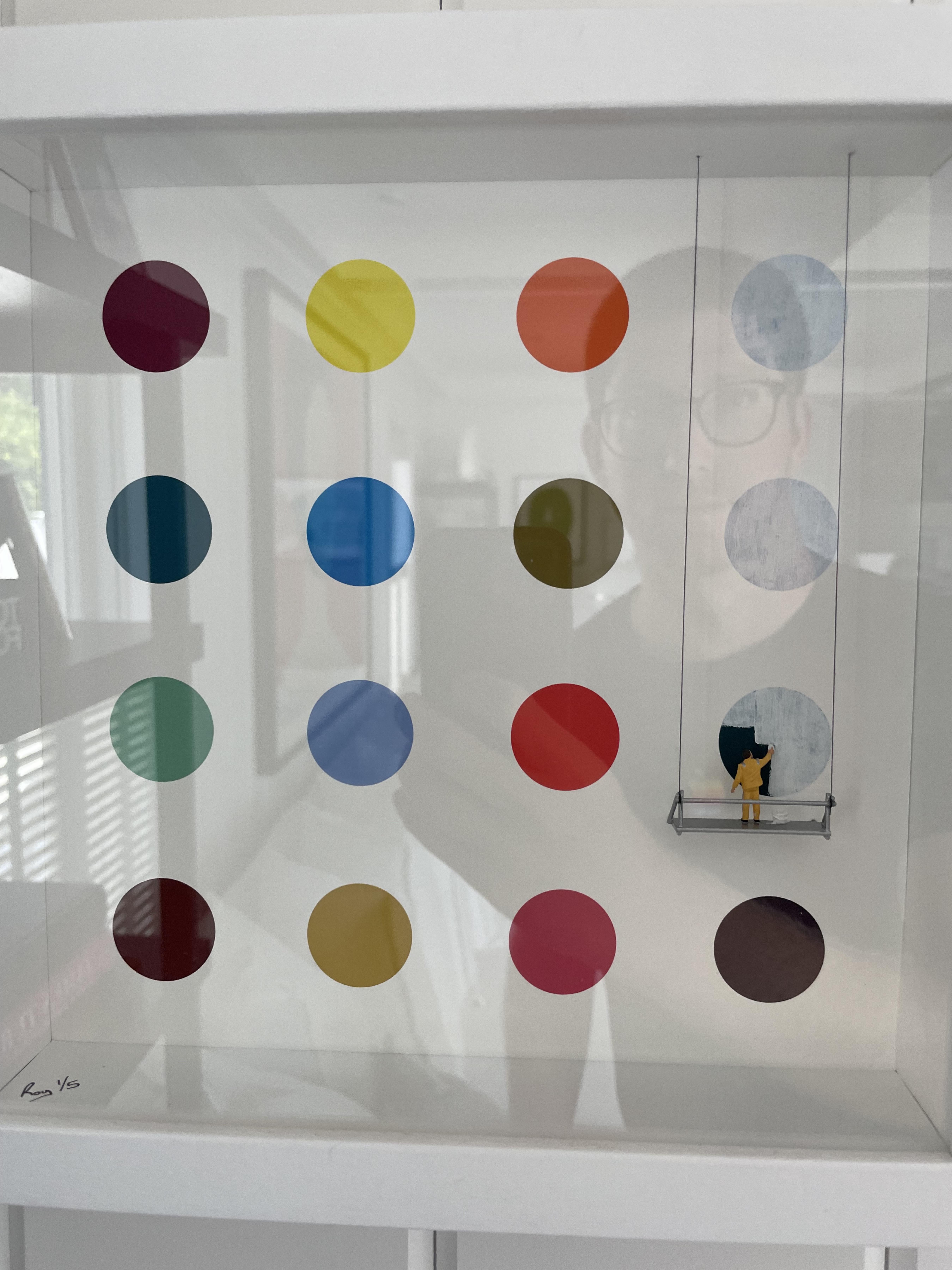
Scrubbed Out Spots 16, 2020
That tradition understood portraiture as a political act, a way of insisting that certain lives and certain faces belonged in the frame, in the gallery, and in the historical record. Roy's People has absorbed that inheritance deeply, translating it into a contemporary visual language that feels at once grounded in history and urgently of the present moment. The influence of community as subject and as collaborator runs through the work like a current. The development of the signature style is visible across the body of work, which balances direct observation with gestural, expressive mark making.
Paint is applied with both deliberation and freedom, a combination that gives figures a sense of inner life rather than mere likeness. Mixed media elements introduce texture and layering that suggest accumulated time, memory, and the complexity of individual identity. There is nothing quick or casual about these paintings despite their apparent spontaneity. Each surface rewards sustained attention, revealing decisions made and reconsidered, corrections embraced as part of the work's meaning rather than hidden away.
Roy's People
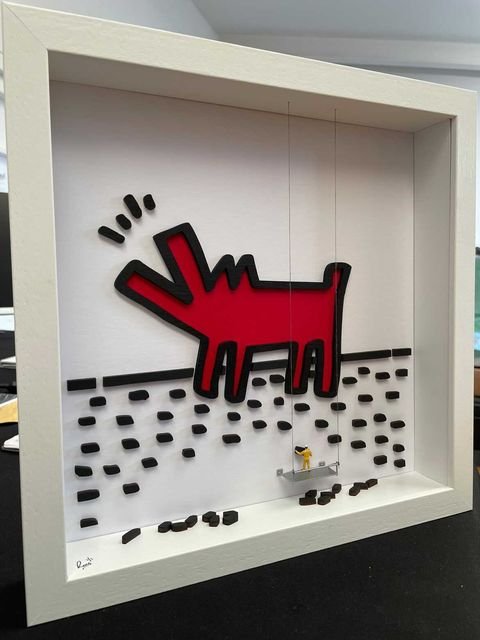
Under Construction - Haring, 2021
Among the most significant works to examine are the pieces from the Scrubbed Out Spots series, particularly numbers nine and sixteen, both completed in 2020. The title itself carries enormous resonance, especially against the backdrop of that year's national reckoning with racial visibility and erasure. To scrub out a spot is to remove a presence, to erase a mark, and the series addresses that violence directly while simultaneously insisting on restoration. The figures in these works push back against disappearance.
They occupy their canvases with a kind of insistent, quiet authority that feels both personal and collective. Completed in 2020, they stand as some of the most emotionally precise responses to that cultural moment made by any American painter working in figuration. Under Construction, Haring, from 2021, opens another dimension of the practice entirely. The reference to Keith Haring is not decorative.
Haring built his entire visual language around the body in motion, around the radical idea that public space could hold joyful, politically committed images of people who had been excluded from official culture. Roy's People engages that legacy with both affection and critical intelligence, acknowledging a lineage of artists for whom representation was never neutral. The work feels like a conversation across time, generous and rigorous in equal measure. For collectors, Roy's People represents precisely the kind of opportunity that rewards early, considered attention.
The practice is clearly in an expansive phase, with works that already demonstrate a fully realized visual intelligence and a thematic consistency that gives a collection genuine coherence. Figurative painting with strong social and identity based content has seen sustained institutional and market interest over the past decade, with artists working in adjacent territory, including Jordan Casteel, Tschabalala Self, and Toyin Ojih Odutola, commanding serious museum and gallery attention. Roy's People belongs in that conversation, and collectors who have followed the trajectory of those artists will recognize the quality of vision present here. Works from this period, particularly the Scrubbed Out Spots canvases, are likely to be seen as foundational as the broader practice becomes more widely known.
Within the art historical frame, the work sits comfortably alongside a generation of American painters who have reclaimed figuration as a site of both aesthetic and political seriousness. The flat rejection of portraiture that characterized much of late twentieth century critical discourse has given way to a renewed understanding that painting people, painting communities, painting faces, is one of the most complex and meaningful things a contemporary artist can do. Roy's People makes that case with intelligence and with genuine feeling, never slipping into sentiment and never sacrificing formal rigor for message. The legacy being built here is one of witness and of warmth.
At a time when the art world sometimes rewards difficulty and alienation, there is something bracingly generous about a practice that centers the human figure with such consistent care. Roy's People paints people because people matter, because their faces contain histories, because their presence in the frame is an argument for their presence in the world. That is a vision of what painting can do that feels, in the best possible sense, entirely necessary right now.