Rosson Crow
Rosson Crow Paints America Gloriously Ablaze
Artist Spotlight · The Collection Editorial
There is a particular kind of painting that stops you cold in a gallery doorway, that refuses to let you enter casually and instead demands you stand there, recalibrating your sense of scale, color, and time. Rosson Crow has been making those paintings for two decades now, and the art world has been catching up ever since. Her large canvases have appeared in gallery presentations from Los Angeles to London, and her work continues to attract serious collectors who recognize in her practice something genuinely rare: an American painter who can hold the full weight of the country's mythology and excess in a single, ecstatic image. Crow was born in 1982 and grew up shaped by the visual language of the American South and Southwest, landscapes saturated with myth, kitsch, religious fervor, and spectacular ambition.
Rosson Crow
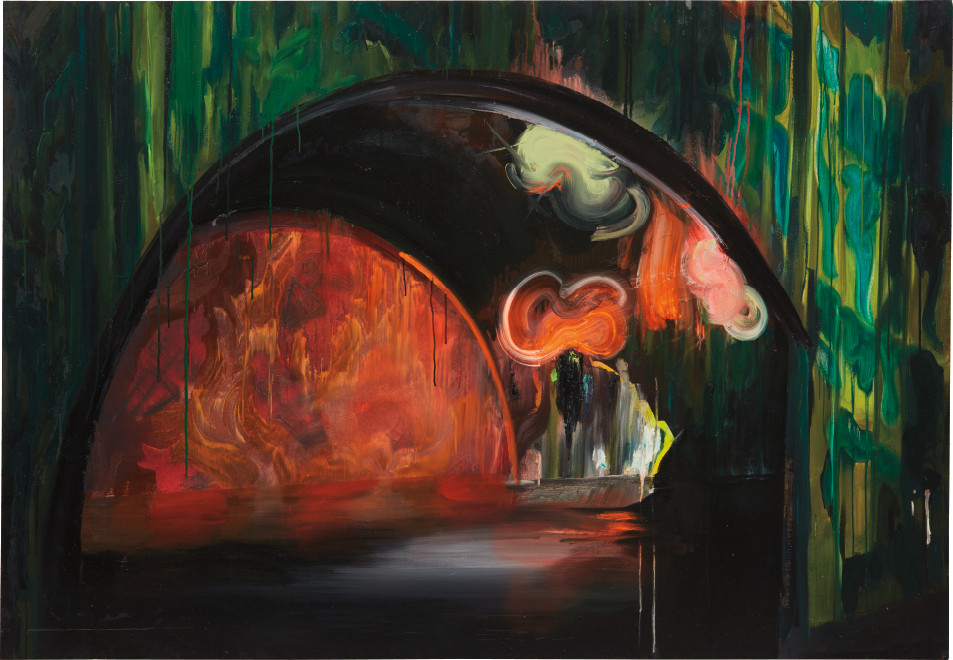
The Year of Infinity, 2005
She studied at the University of the Arts in Philadelphia and later at the Yale School of Art, where she earned her MFA. Yale in the early 2000s was a crucible for painterly ambition, and Crow emerged from it with a sensibility that was already fully charged, already reaching for walls rather than easels. The intellectual rigor of that training sits beneath her canvases like a hidden architecture, invisible until you look closely and find that every apparently reckless brushstroke is doing precise and deliberate work. Her early career was marked by an almost immediate recognition of her singular voice.
Galleries in New York and Los Angeles began showing her work while she was still in her mid twenties, and the critical response was enthusiastic and specific: here was a painter drawing on the grand tradition of American scene painting but running it through a contemporary sensibility that understood spectacle, nostalgia, and the seductive danger of national myths. Works from her earliest years, including pieces made around 2005 and 2006, already demonstrated the boldness that would define her. She was never a tentative painter. She arrived fully formed in her ambitions, even as her technique continued to deepen and expand.
Rosson Crow
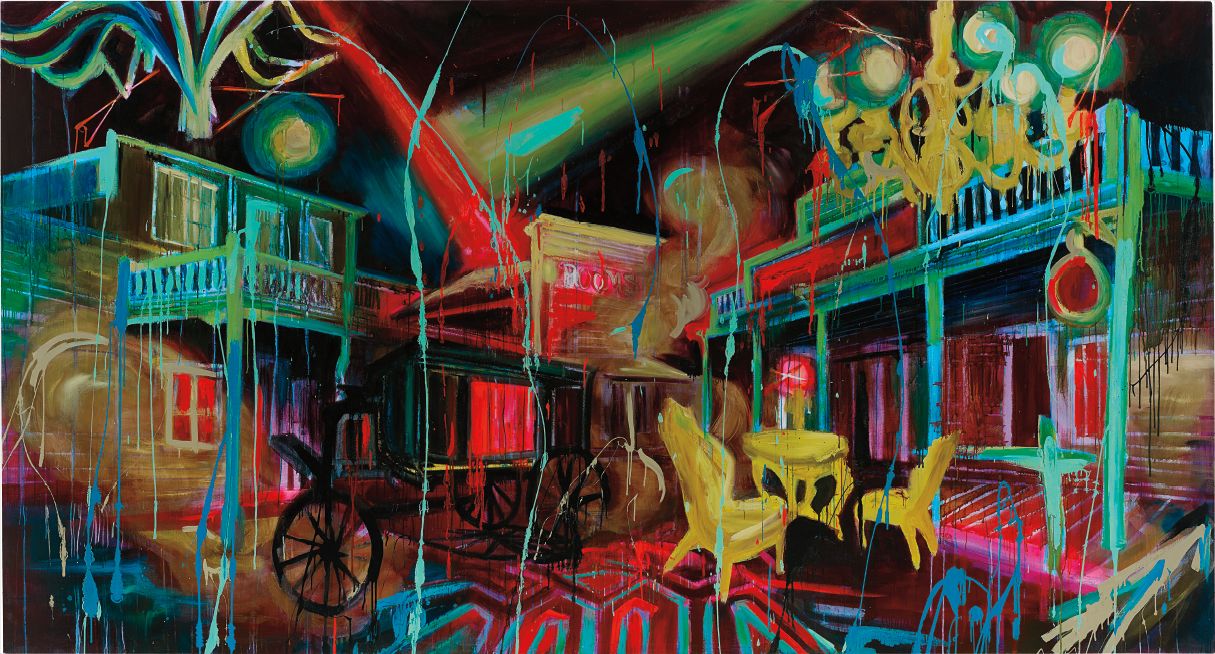
The Widow Garret's View of Deadwood, 2007
The signature Crow canvas is a theatre of American archetypes rendered in explosive color and physical paint. She reaches repeatedly for the iconography of the Las Vegas casino, the frontier saloon, the Southern Gothic interior, the Western landscape, and the spaces where American dreams are both born and spent. Her 2007 work "The Widow Garret's View of Deadwood" exemplifies this perfectly, conjuring the mythology of the frontier West with a palette and gestural energy that owes as much to Abstract Expressionism as it does to illustration or storytelling. "The Year of Infinity" from 2005, one of her most celebrated early works in oil, enamel and spray enamel on canvas, announced a mixed media approach that she has continued to refine, layering commercial and fine art materials in ways that mirror the layering of high and low culture in American life itself.
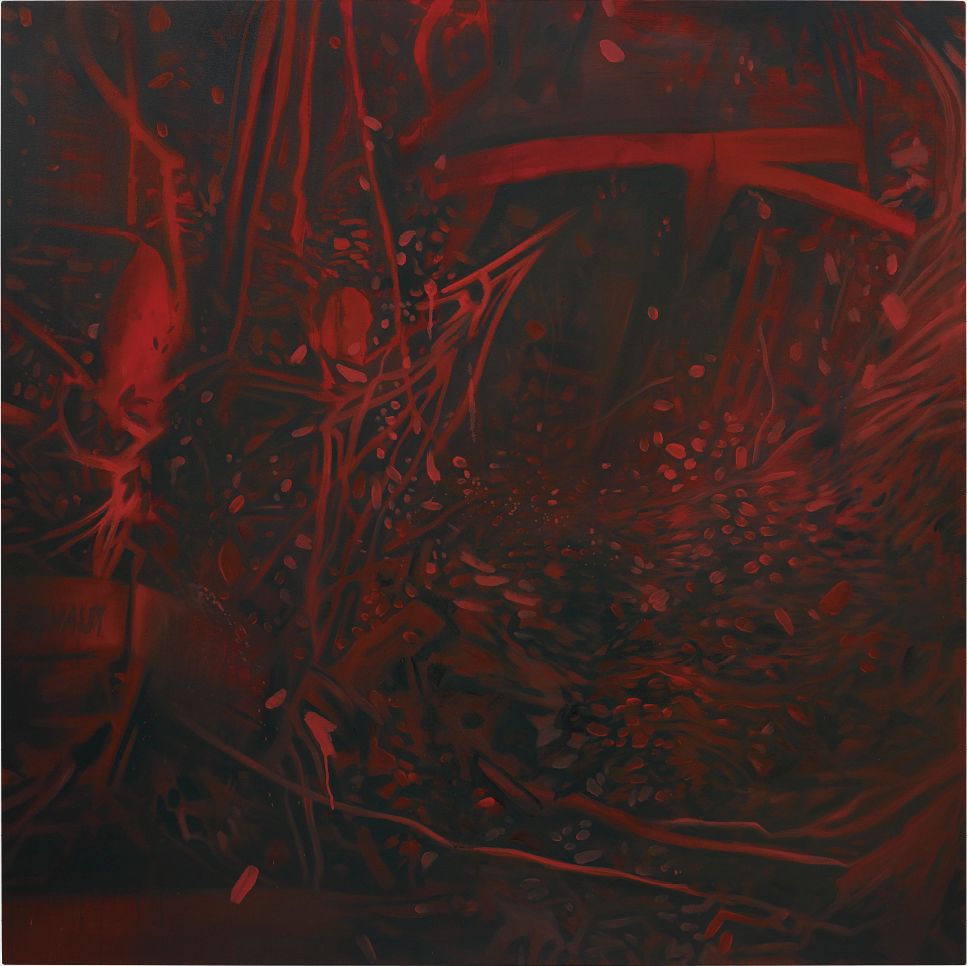
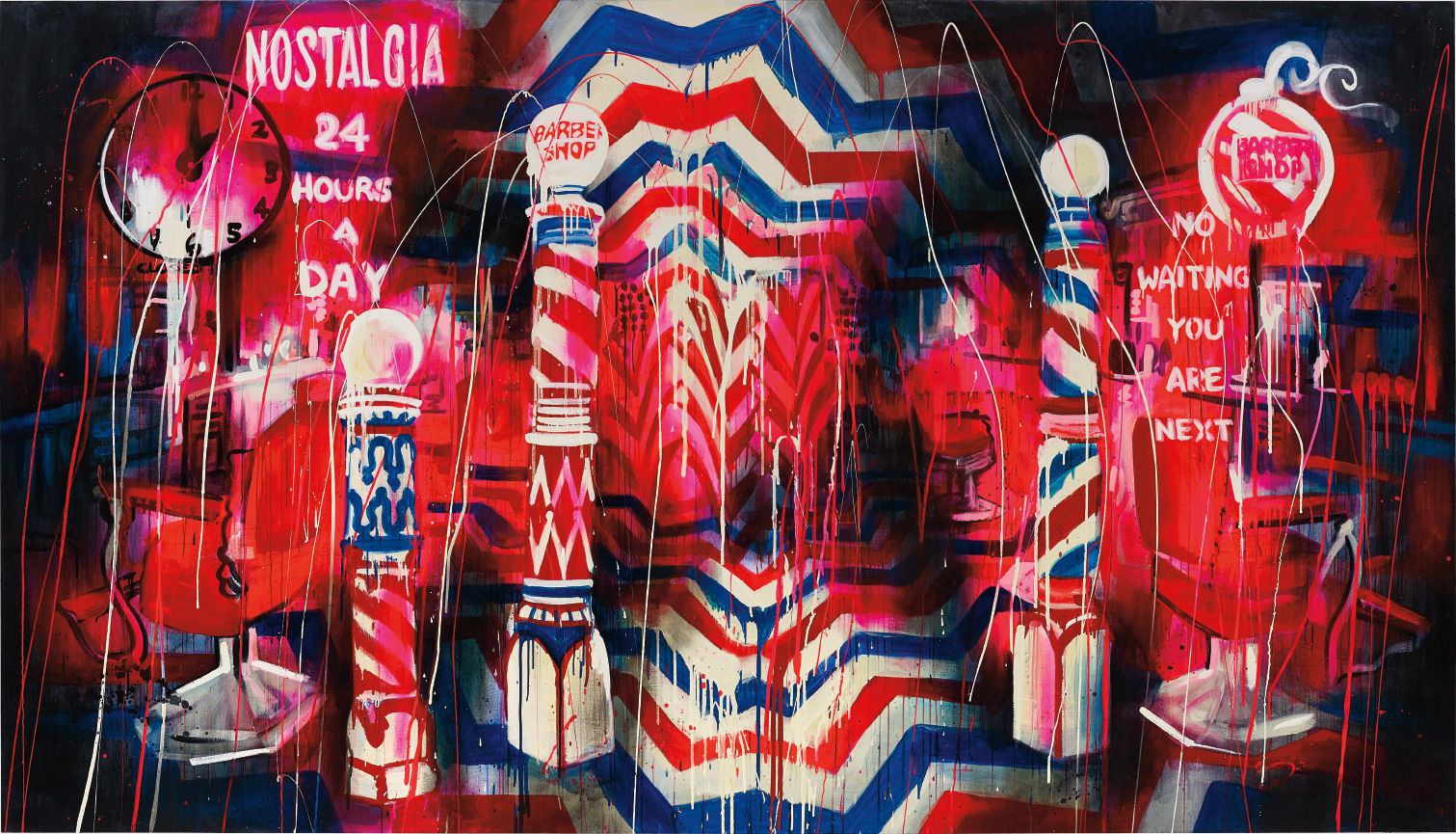
"Apollo 11 Lands" from 2011 extends this ambition into the realm of national spectacle, bringing the mythology of the space race into the same visual territory as the saloon and the casino, places where Americans have always gambled on impossible futures. What makes Crow's work so compelling to collectors and curators alike is the way it holds contradiction. These are paintings that feel simultaneously celebratory and elegiac, intoxicated and clear eyed. "Barber Shop" from 2009 and "Cosmic Cavern" from 2010 demonstrate the range within her focus: intimate interior spaces transformed by her hand into something operatic and strange.
Rosson Crow
Apollo 11 Lands, 2011
"Canyons of Heroes" from 2011 takes the ticker tape parade, one of the most quintessentially American ceremonies, and renders it with a kind of gorgeous ambivalence, all confetti and grandeur and something just beneath the surface that refuses easy comfort. "Choices We Must Make" from 2013 shows the continued maturation of her palette and compositional thinking, a painter in full command of her considerable means. From a collecting perspective, Crow represents a compelling proposition at every level of the market. Her works have been shown with prominent galleries including Honor Fraser in Los Angeles and has received attention from both institutional curators and serious private collectors on both sides of the Atlantic.
Her canvases, which frequently work at large and even monumental scale, make an immediate and powerful statement in significant collection spaces, and their mixed media construction, combining oil, acrylic, enamel, spray paint, and ink, gives them a physical presence and textural richness that reproduces poorly and rewards sustained in person engagement. This is precisely the quality that drives long term value in the secondary market: work that must be seen. Collectors who have acquired her paintings describe them as transformative presences in their homes, works that continue to reveal new details and new moods over years of living with them. Within the broader landscape of contemporary American painting, Crow sits in fascinating company.
Rosson Crow
Barber Shop, 2009
Her engagement with American mythology and historical imagery connects her to a lineage that includes painters like Eric Fischl and Neo Expressionist figures who interrogated the American scene from the inside. Her boldness of gesture and color links her to artists of her own generation who refused the conceptual turn's dismissal of painting as a serious mode, painters like Jules de Balincourt and Cecily Brown, who share her conviction that a canvas can carry enormous amounts of cultural and emotional information without becoming merely illustrative. Her Southern Gothic inflections bring to mind an awareness of painters like Jim Nutt and the Chicago Imagists, though her work is always resolutely her own. Why does Rosson Crow matter now, in the mid 2020s, with American mythology under more scrutiny than perhaps any time in the country's modern history?
Precisely because she has always refused to either celebrate or condemn her subjects with easy certainty. Her paintings hold the casino and the saloon and the parade as genuine American spaces: full of promise, full of damage, full of the peculiar American genius for spectacle that is neither purely cynical nor purely innocent. She has spent twenty years building a body of work that constitutes one of the most sustained and serious engagements with the visual culture of the United States by any painter of her generation. For collectors who want their holdings to speak to where American art has been and where it is going, her canvases offer something money alone cannot manufacture: genuine conviction and genuine vision, painted large, painted boldly, and painted to last.