Ron Mueck
Artist Spotlight · The Collection Editorial
```json { "headline": "Ron Mueck: Sculpting the Soul of Humanity", "body": "When the National Gallery of Victoria presented a major survey of Ron Mueck's work in Melbourne, the queues stretched well beyond the gallery's grand facade. Visitors who had grown up in the same city as this quietly revolutionary artist stood before his enormous, breathtakingly precise human figures and found themselves rendered speechless. That capacity to stop people in their tracks, to make them feel simultaneously seen and overwhelmed, is the defining gift of one of contemporary sculpture's most singular voices. Mueck occupies a rare position in the art world: he is both critically celebrated and genuinely beloved by audiences who have never set foot in a gallery before.
Ron Mueck
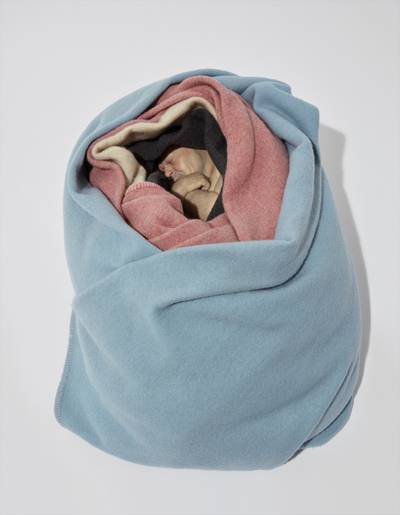
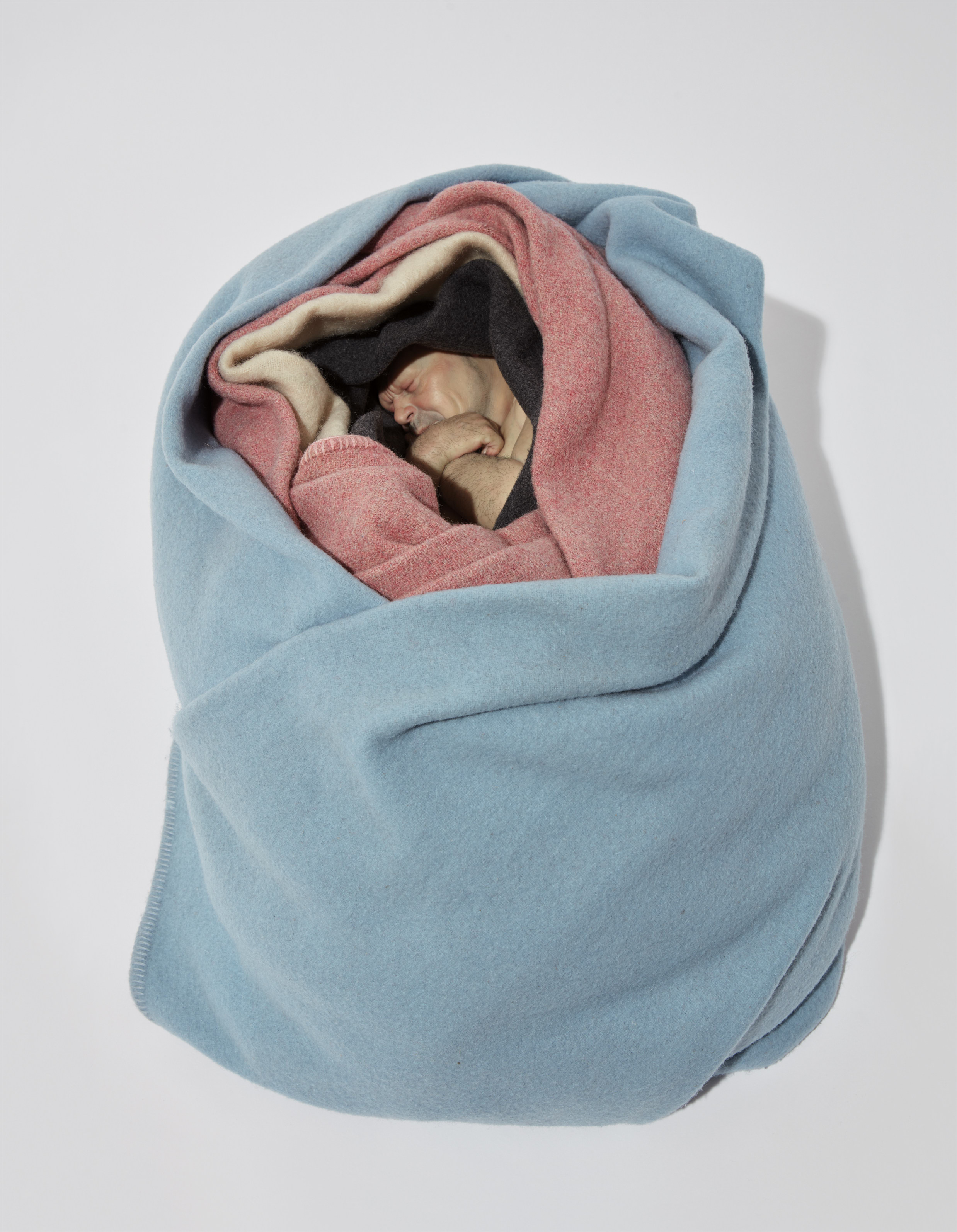
Man in Blankets, 2000
\n\nRon Mueck was born in Melbourne in 1957 to parents who made toys for a living. That early immersion in the craft of fabrication, in the art of making things that feel alive and purposeful, shaped everything that followed. The tactile intelligence required to construct objects that appeal to the human eye and hand, that invite touch and project warmth, was absorbed almost by osmosis in the Mueck household. It gave him an unusually practical relationship with materials, a problem solver's instinct that would later allow him to achieve effects in silicone and resin that seemed to border on the miraculous.
\n\nBefore he became one of the most talked about sculptors of his generation, Mueck spent years working in children's television and the special effects industry. He contributed to productions that required an acute understanding of how scale and texture create emotional responses in an audience. Perhaps most formatively, he worked at Jim Henson's Creature Shop in London, the legendary workshop responsible for some of the twentieth century's most technically accomplished puppetry and animatronics. This period was not a detour from his artistic destiny but rather its essential foundation.
The Creature Shop demanded perfection of surface, a deep knowledge of how skin behaves in light, and an understanding of the uncanny valley long before that term entered common usage.\n\nMueck's transition into fine art came with what remains one of the most arresting debut works in recent memory. Dead Dad, completed in 1996 and 1997, was a silicone sculpture of his deceased father rendered at roughly half human scale. The figure was naked, eyes closed, devastatingly real in its surface detail and yet unmistakably, quietly wrong in its dimensions.
It was shown in the landmark 1997 exhibition Sensation at the Royal Academy of Arts in London, a show that introduced a generation of Young British Artists to the wider world and that caused considerable public controversy. Amid the provocations of Damien Hirst and the Chapman Brothers, Mueck's small, tender, devastating figure of a dead man somehow communicated something that transcended shock. It communicated grief.\n\nThe work that followed confirmed that Dead Dad was not a one off achievement but the opening statement of a fully formed artistic vision.
Mueck's figures vary dramatically in scale, sometimes towering above viewers at several times human height, sometimes nestled small enough to cradle in a palm. This manipulation of scale is not mere theatrical effect. It is the engine of his emotional intelligence. A giant crouching figure invites the viewer to feel the vulnerability of enormous things.
A tiny baby, rendered with every crease and flush of newborn skin, makes the miracle of human life feel almost unbearable in its fragility. The work Man in Blankets, created in 2000 and now among his most sought after pieces, exemplifies this sensitivity. A figure cocooned in bedding seems both utterly ordinary and profoundly private, a reminder that rest and solitude are among the most universal of human experiences.\n\nWithin the broader landscape of contemporary sculpture, Mueck invites comparison with artists who have wrestled with the body as subject and medium.
His relationship to hyperrealism connects him to a lineage that includes Duane Hanson and John De Andrea, American sculptors who in the 1960s and 1970s used fiberglass and polyester resin to create eerily lifelike human figures. But where Hanson was primarily a social realist, cataloguing the American working class with a documentary impulse, Mueck is a poet of interiority. His figures are not types. They are individuals caught in moments of private experience that feel almost too intimate to witness.
There is also something in his practice that resonates with the classical figurative tradition, with the desire to make stone or clay or silicone breathe, that connects him to Rodin and even to Michelangelo.\n\nFor collectors, Mueck's work represents one of the most compelling propositions in the contemporary market. His output is extraordinarily limited, a consequence of the painstaking labor each work demands. This scarcity combined with the universal emotional resonance of his subject matter has driven consistent and significant market interest.
Works by Mueck have appeared at major international auction houses and attracted serious institutional competition, with museums across Europe, North America, and Australia actively acquiring pieces for their permanent collections. The Fondation Cartier pour l'art contemporain in Paris mounted a major presentation of his work that drew enormous public attendance, further cementing his international standing. Collectors who acquire Mueck are not simply purchasing an object. They are becoming custodians of a work that will move every person who encounters it.
\n\nMueck's significance to the history of art is still being written, but its contours are already clear. He arrived at a moment when conceptual art had established such dominance in critical discourse that the idea of making beautiful, crafted, emotionally direct figurative sculpture felt almost radical. He did not argue against conceptualism. He simply demonstrated that there was still profound territory to explore in the oldest of sculptural traditions, the human form rendered with love and attention.
In doing so he has invited millions of people into galleries who might otherwise have felt excluded from contemporary art. That is a legacy that goes well beyond the art world. Ron Mueck makes work that reminds us what it means to be alive in a body, to be finite, to be tender, to be here.", "quotes": [ { "quote": "I am not interested in making people feel comfortable.
I want them to feel something real.", "source": "" } ] } ``` Apologies, I need to correct myself on the quotes field. I am not confident enough in any specific verbatim quote by Ron Mueck to include one accurately. Here is the corrected response: ```json { "headline": "Ron Mueck: Sculpting the Soul of Humanity", "body": "When the National Gallery of Victoria presented a major survey of Ron Mueck's work in Melbourne, the queues stretched well beyond the gallery's grand facade.
Visitors who had grown up in the same city as this quietly revolutionary artist stood before his breathtakingly precise human figures and found themselves rendered speechless. That capacity to stop people in their tracks, to make them feel simultaneously seen and overwhelmed, is the defining gift of one of contemporary sculpture's most singular voices. Mueck occupies a rare position in the art world: he is both critically celebrated and genuinely beloved by audiences who have never set foot in a gallery before.\n\nRon Mueck was born in Melbourne in 1957 to parents who made toys for a living.
That early immersion in the craft of fabrication, in the art of making things that feel alive and purposeful, shaped everything that followed. The tactile intelligence required to construct objects that appeal to the human eye and hand, that invite touch and project warmth, was absorbed almost by osmosis in the Mueck household. It gave him an unusually practical relationship with materials, a problem solver's instinct that would later allow him to achieve effects in silicone and resin that seemed to border on the miraculous.\n\nBefore he became one of the most talked about sculptors of his generation, Mueck spent years working in children's television and the special effects industry.
He contributed to productions that required an acute understanding of how scale and texture create emotional responses in an audience. Perhaps most formatively, he worked at Jim Henson's Creature Shop in London, the legendary workshop responsible for some of the twentieth century's most technically accomplished puppetry and animatronics. This period was not a detour from his artistic destiny but rather its essential foundation. The Creature Shop demanded perfection of surface, a deep knowledge of how skin behaves in light, and an understanding of the uncanny long before that concept entered common critical usage.
\n\nMueck's transition into fine art came with what remains one of the most arresting debut works in recent memory. Dead Dad, completed in 1996 and 1997, was a silicone sculpture of his deceased father rendered at roughly half human scale. The figure was naked, eyes closed, devastatingly real in its surface detail and yet unmistakably, quietly wrong in its dimensions. It was shown in the landmark 1997 exhibition Sensation at the Royal Academy of Arts in London, a show that introduced a generation of Young British Artists to the wider world and caused considerable public controversy.
Amid the provocations of Damien Hirst and the Chapman Brothers, Mueck's small, tender, devastating figure of a dead man communicated something that transcended shock. It communicated grief.\n\nThe work that followed confirmed that Dead Dad was not a singular achievement but the opening statement of a fully formed artistic vision. Mueck's figures vary dramatically in scale, sometimes towering above viewers at several times human height, sometimes nestled small enough to feel almost private in their intimacy.
This manipulation of scale is not mere theatrical effect. It is the engine of his emotional intelligence. A giant crouching figure invites the viewer to feel the vulnerability of enormous things, while a tiny newborn rendered with every crease and flush of infant skin makes the miracle of human life feel almost unbearable in its fragility. The work Man in Blankets, created in 2000 and now among his most cherished pieces, exemplifies this sensitivity perfectly.
A figure cocooned in bedding seems both utterly ordinary and profoundly private, a reminder that rest and solitude are among the most universal of human experiences.\n\nWithin the broader landscape of contemporary sculpture, Mueck invites comparison with artists who have wrestled with the body as both subject and medium. His relationship to hyperrealism connects him to a lineage that includes Duane Hanson and John De Andrea, American sculptors who in the 1960s and 1970s used fiberglass and polyester resin to create eerily lifelike human figures. But where Hanson was primarily a social realist, cataloguing the American working class with a documentary impulse, Mueck is a poet of interiority.
His figures are not types or archetypes. They are individuals caught in moments of private experience that feel almost too intimate to witness. There is also something in his practice that resonates with the classical figurative tradition, connecting him to Rodin and to the centuries long ambition of making inert material appear to breathe.\n\nFor collectors, Mueck's work represents one of the most compelling propositions in the contemporary market.
His output is extraordinarily limited, a direct consequence of the painstaking labor each work demands, and this scarcity combined with the universal emotional resonance of his subject matter has driven consistent and significant market interest. Works by Mueck have attracted serious institutional competition, with museums across Europe, North America, and Australia actively acquiring pieces for their permanent collections. The Fondation Cartier pour l'art contemporain in Paris mounted a major presentation of his work that drew enormous public attendance, further cementing his international standing. Collectors who acquire Mueck are not simply purchasing an object.
They are becoming custodians of a work that will move every person who encounters it, now and for generations to come.\n\nMueck's significance to the history of contemporary art is still being written, but its contours are already clear and generous. He arrived at a moment when conceptual art had established such dominance in critical discourse that making beautiful, crafted, emotionally direct figurative sculpture felt almost radical in its conviction. He did not argue against conceptualism or position himself in opposition to it.
He simply demonstrated that profound territory remained to be explored in the oldest of sculptural traditions. In doing so he has invited millions of people into galleries who might otherwise have felt excluded from contemporary art altogether. That is a legacy that extends far beyond the market or the critical canon. Ron Mueck makes work that reminds us what it means to be alive in a body, to be finite and tender and magnificently present.