Robert Rauschenberg
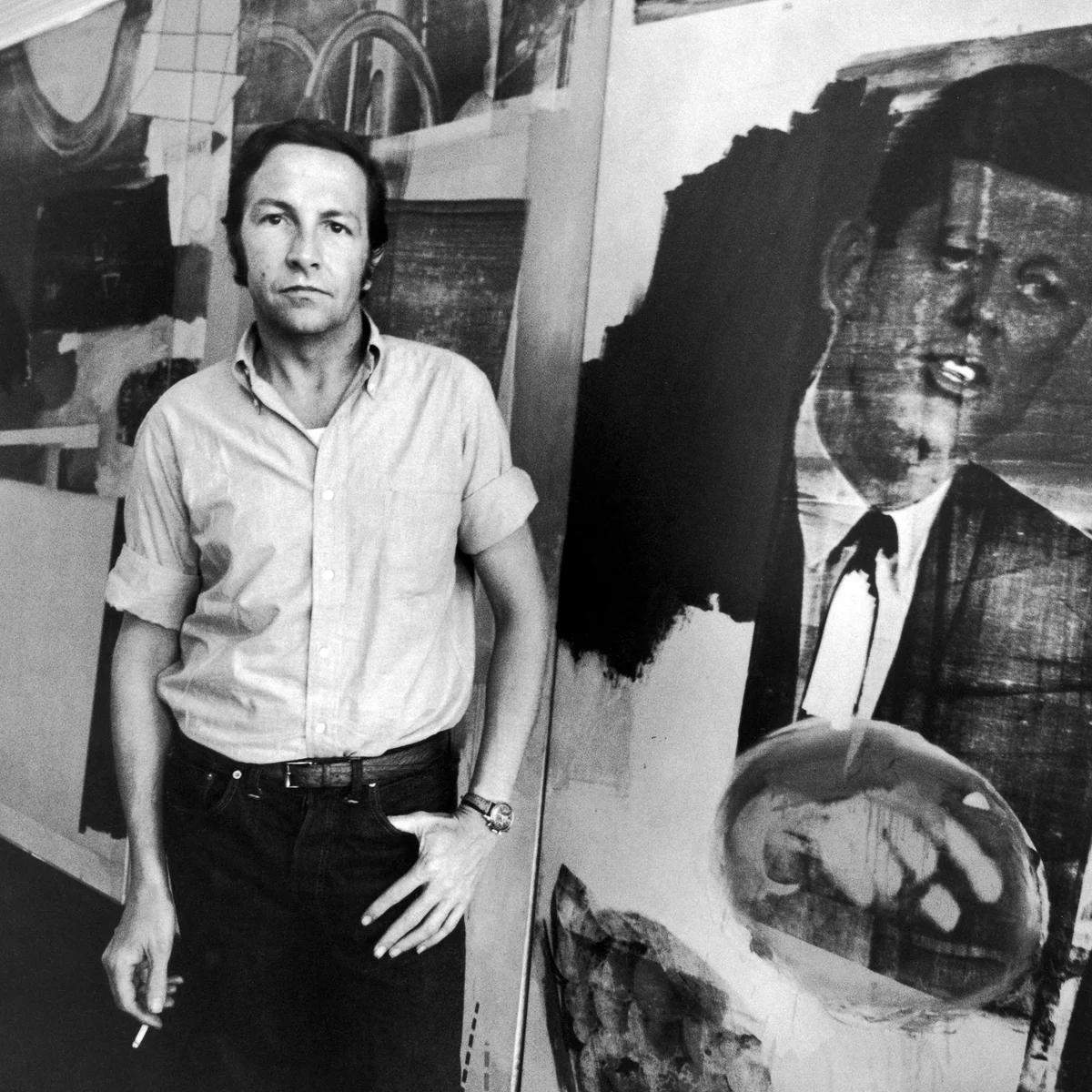
Rauschenberg: The Man Who Freed Art
Artist Spotlight · The Collection Editorial
“I work in the gap between art and life.”
Robert Rauschenberg
In 2017, the Tate Modern mounted a landmark retrospective of Robert Rauschenberg's work that drew hundreds of thousands of visitors and reminded a new generation why this singular American artist had so thoroughly changed the course of modern art. The exhibition, which traveled from the Museum of Modern Art in New York, presented Combines, prints, paintings, and sculptures across six decades of restless invention. Standing in those galleries, surrounded by works that absorbed newspapers, fabric, photographs, and found objects into their surfaces, it became impossible not to feel the full weight of Rauschenberg's radical generosity toward the world around him. He believed everything was worth looking at, and he made you believe it too.
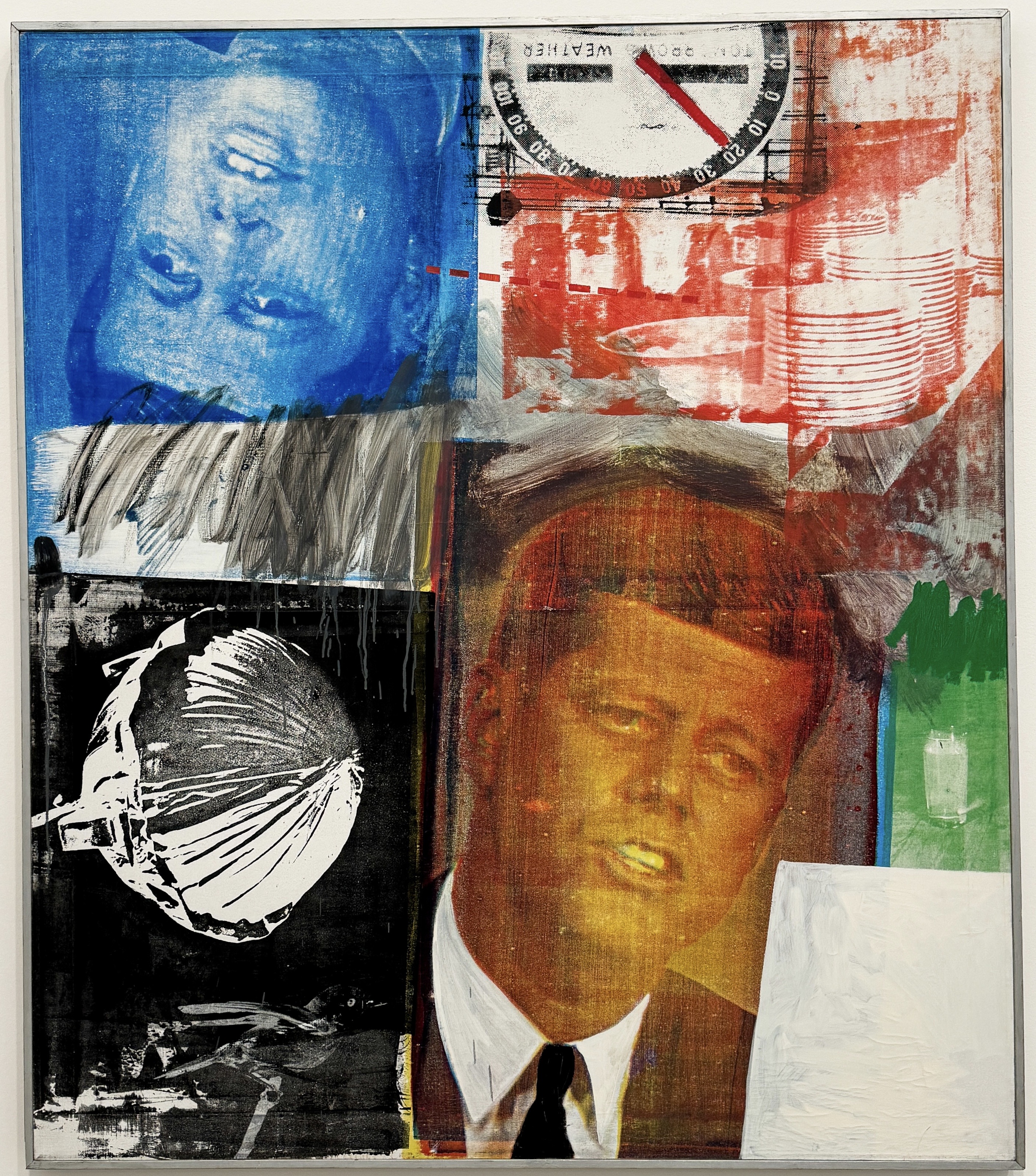
Robert Rauschenberg
Untitled, 1963
Milton Ernest Rauschenberg was born on October 22, 1925, in Port Arthur, Texas, a petrochemical port town on the Gulf Coast that offered little in the way of artistic culture. He grew up in a devout Fundamentalist Christian household, and his early exposure to color and pattern came largely from the linoleum floors and floral fabrics of his modest surroundings. He studied briefly at the University of Texas at Austin before being drafted into the United States Navy in 1944, where he worked as a neuropsychiatric technician. That experience of navigating institutional systems while quietly observing human behavior would leave a lasting imprint on his sensibility as an artist.
After the war, Rauschenberg pursued his education with uncommon determination. He studied at the Kansas City Art Institute, then at the Académie Julian in Paris, before arriving at Black Mountain College in North Carolina, the experimental institution that would prove transformative. There he studied under Josef Albers, the rigorous Bauhaus master whose teachings on color and perception Rauschenberg absorbed and then systematically dismantled in his own work. Black Mountain was also where he formed crucial friendships with composer John Cage and choreographer Merce Cunningham, collaborators who reinforced his instinct that art should be porous, open to chance, and deeply connected to lived experience.
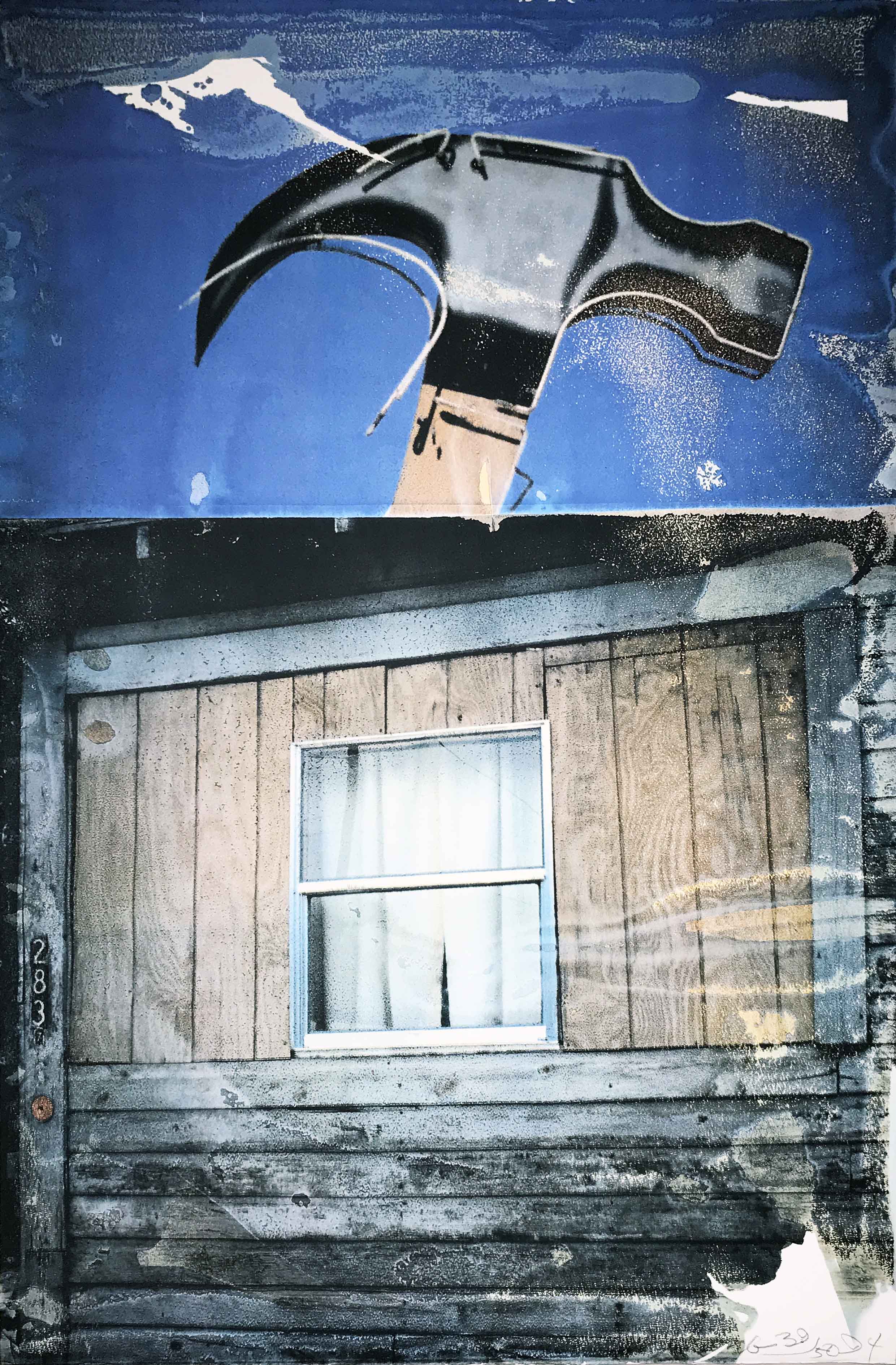
Robert Rauschenberg
Tribute 21: Labor, 1994
He later studied at the Art Students League in New York, where he met the painter Cy Twombly, with whom he would share a formative early friendship and a period of travel through Italy and North Africa. Rauschenberg arrived in New York in the early 1950s at a moment when Abstract Expressionism dominated the conversation. Rather than submit to its heroic, inward gestures, he began pushing in a different direction entirely. His White Paintings of 1951, monochrome canvases that registered only shadow and ambient light, were quietly radical, anticipating Minimalism by more than a decade.
“Painting relates to both art and life. Neither can be made. I try to act in that gap between the two.”
Robert Rauschenberg, exhibition statement, 1959
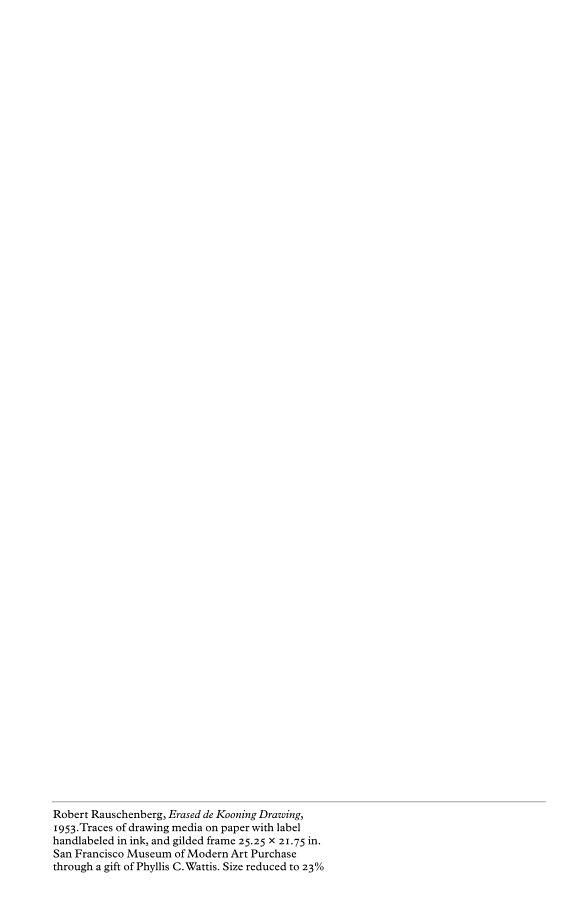
His Erased de Kooning Drawing of 1953, in which he laboriously erased a drawing given to him by Willem de Kooning and presented the result as his own work, remains one of the most intellectually daring gestures in postwar American art. It was not destruction but dialogue, an act that asked profound questions about authorship, value, and what art could be made of. The Combines that followed throughout the late 1950s cemented his reputation as one of the most original minds of his generation, works like Monogram (1955 to 1959), featuring a taxidermied Angora goat encircled by a painted tire, collapsing the boundary between painting and sculpture in ways that still feel startling today. Print and works on paper formed an increasingly central part of Rauschenberg's practice from the 1960s onward, and it is in these works that collectors often find some of the most rewarding entry points into his universe.
![Robert Rauschenberg — Duet [Anagram (A Pun)]](https://rtwaymdozgnhgluydsys.supabase.co/storage/v1/object/public/artwork-images/1BDDC6C9-713B-4E33-A3AB-1D77A076A44C/C31FBA06-7157-46C9-838D-F46B2CE3302E/0.jpg)
Robert Rauschenberg
Duet [Anagram (A Pun)], 1998
His collaborations with the print studio Gemini G.E.L. in Los Angeles produced editions of exceptional ambition and technical innovation, and his ongoing exploration of photographic transfer, lithography, and screenprint allowed him to layer cultural imagery with the same intuitive density he brought to his Combines.
“An empty canvas is full.”
Robert Rauschenberg
Works from the Tribute 21 series of 1994, produced as lithographs with vegetable dye water transfers on Arches Infinity paper, exemplify his ability to make printmaking feel as alive and unpredictable as painting. Similarly, the Anagram series of the late 1990s, which included inkjet pigment transfers on polylaminate, demonstrated that even in the final chapter of his career he was embracing new technologies with genuine curiosity rather than mere novelty. For collectors, Rauschenberg represents one of the most intellectually rich and historically significant bodies of work in postwar American art. His work appears regularly at the major auction houses, where significant Combines and paintings from the late 1950s and 1960s command prices in the millions, but the breadth of his practice means that collectors at many levels can engage meaningfully with his vision.
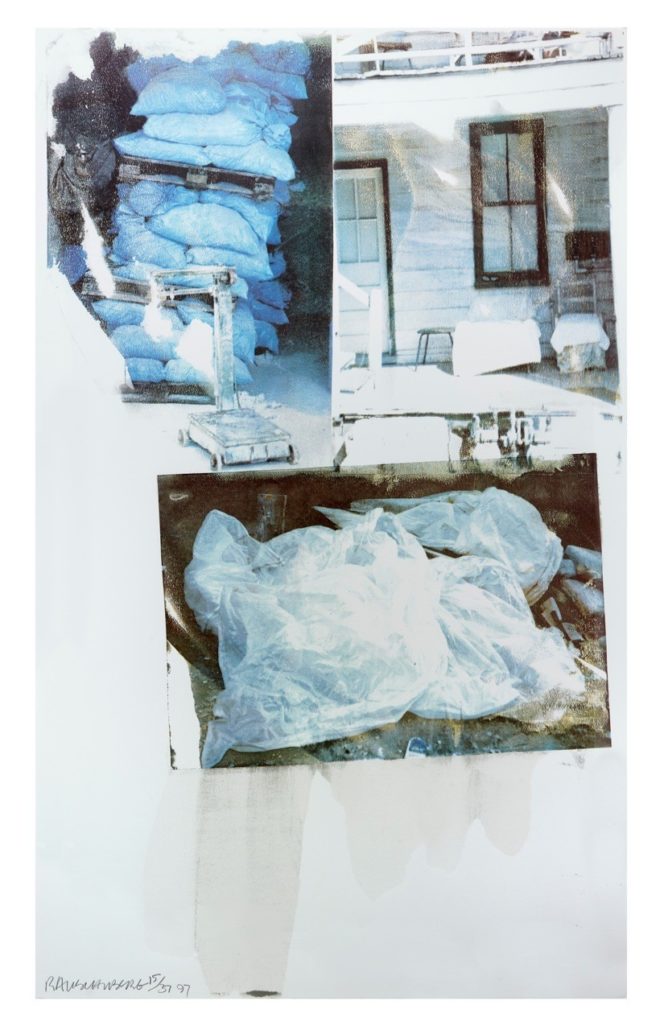
Robert Rauschenberg
Daydream (Speculations), 1997
Prints and works on paper, including the photographic transfer pieces and lithographs from his prolific later decades, offer access to the full range of his thinking at more approachable price points. What to look for is characteristic of Rauschenberg at his best: the collision of imagery that feels simultaneously accidental and inevitable, the sense that the work is still breathing, still gathering the world into itself. To understand Rauschenberg fully is to understand a whole network of postwar relationships and movements. His dialogue with Jasper Johns, with whom he shared a close personal and artistic connection throughout the 1950s, is one of the great creative partnerships in American art history.
His influence on Pop Art is foundational, evident in the work of Andy Warhol and Roy Lichtenstein, who drew on his embrace of commercial imagery and mass media even as they took those ideas in their own directions. His engagement with process and materiality connects him equally to artists like John Chamberlain and Jim Dine, while his collaborative work in performance and dance anticipates the interdisciplinary practices that define so much contemporary art today. Rauschenberg died on May 12, 2008, at his home and studio on Captiva Island, Florida, where he had lived and worked for decades. He left behind not only an extraordinary body of work but also the Rauschenberg Foundation, which continues to support artists and social causes in the spirit of his lifelong commitment to using art as a force for connection and change.
His insistence that art could exist in the gap between art and life, a phrase he returned to throughout his career, was not a slogan but a genuinely liberating proposition that continues to give permission to artists working today. To collect Rauschenberg is to own a piece of that permission, a reminder that the world in all its messy, luminous abundance is always available to the curious eye.
Explore books about Robert Rauschenberg

Robert Rauschenberg
Calvin Tomkins
Robert Rauschenberg: A Retrospective
Walter Hopps and Susan Davidson
Rauschenberg: Art and Life
Mary Lynn Kotz
Robert Rauschenberg: Combines
Various Contributors
Robert Rauschenberg: Overseas Culture Interchange
Susan Davidson
Rauschenberg: Photography
Various Editors
Robert Rauschenberg and the Silkscreen
Riva Castleman