Robert Mapplethorpe
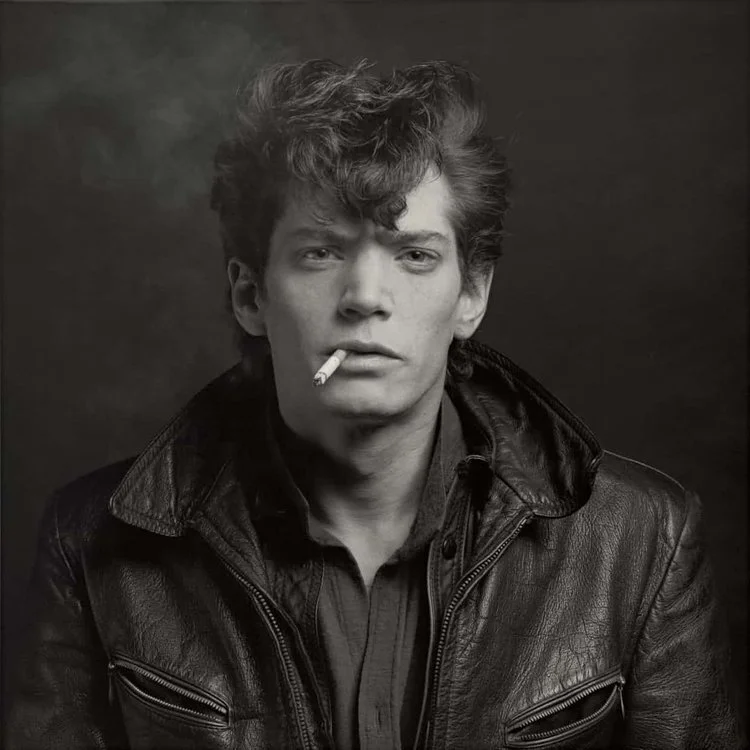
Mapplethorpe: Beauty Refined Into Pure Light
Artist Spotlight · The Collection Editorial
“I am looking for the unexpected. I am looking for things I have never seen before.”
Robert Mapplethorpe
In 1988, the Solomon R. Guggenheim Museum mounted 'Robert Mapplethorpe: The Perfect Moment,' a retrospective that would become one of the most talked about exhibitions in American cultural history. Traveling across the country and igniting fierce public debate about artistic freedom, the show confirmed what the art world had already come to understand: that Mapplethorpe was not simply a provocateur but a genuine master of the photographic form, someone who had elevated the medium to a plane of classical elegance that few before him had achieved. Today, decades after that landmark moment, his photographs continue to sell at the highest levels of the auction market and hang in the most prestigious institutional collections in the world, from the Getty Museum in Los Angeles to Tate Modern in London.
Robert Mapplethorpe
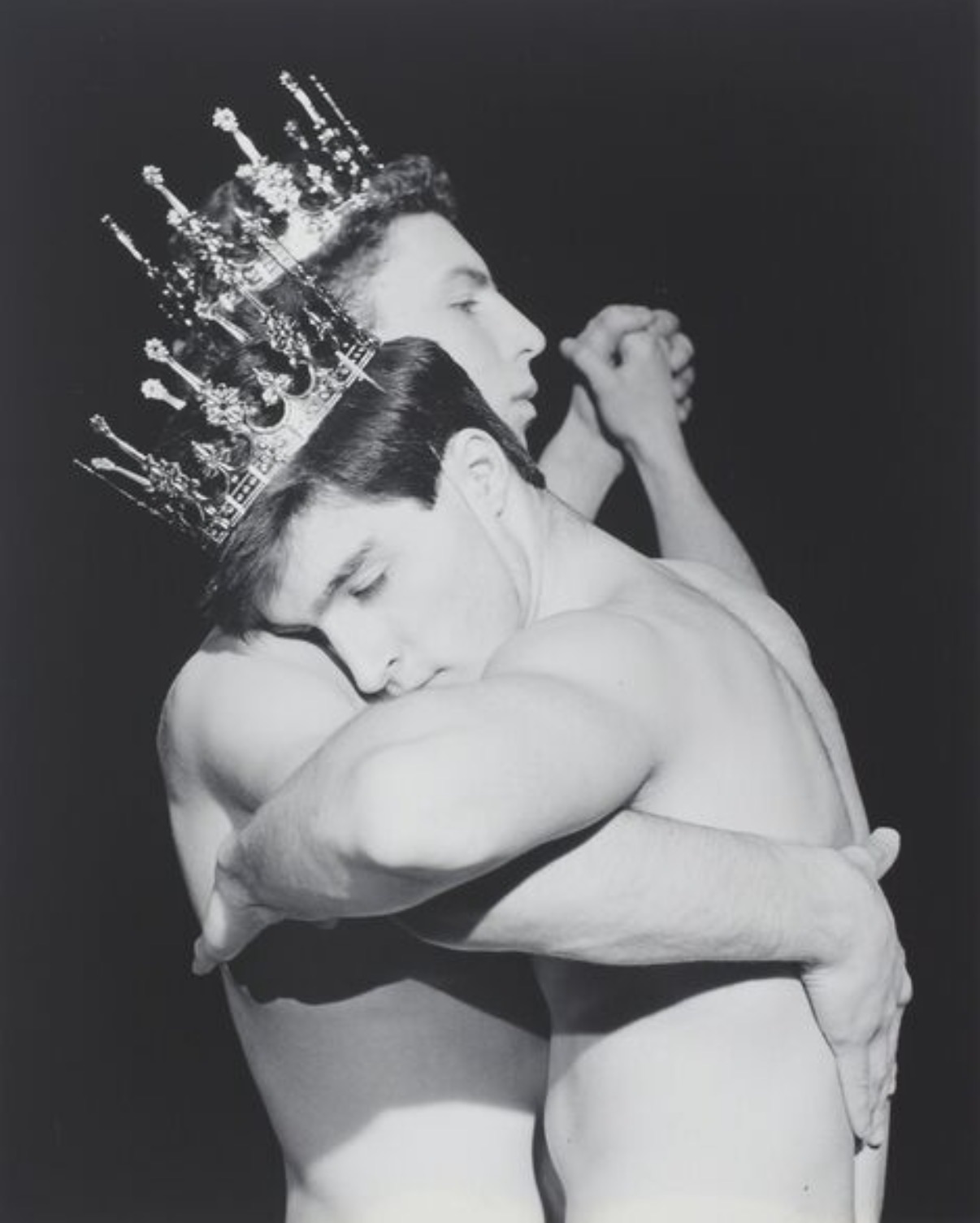
Two Men Dancing, 1984
His legacy grows more assured with every passing year. Robert Mapplethorpe was born in 1946 in Floral Park, Queens, New York, the third of six children in a devout Catholic household. He studied at the Pratt Institute in Brooklyn throughout the mid 1960s, initially pursuing painting and sculpture before discovering photography as his true language. The Catholic iconography of his upbringing, its love of ritual, symbol, and the beautification of the body, never fully left him, and one can feel its presence in the luminous gravity that suffuses even his most intimate images.
New York in the late 1960s was a crucible of transformation, and the young Mapplethorpe was shaped by its creative ferment, moving through the downtown scene with an artist's hunger and a craftsman's discipline. His early years were intertwined with the poet and musician Patti Smith, with whom he shared a deep personal and creative bond, most memorably documented at the Chelsea Hotel on West 23rd Street, that storied waystation for artists, writers, and dreamers. He began making collages and assemblages before acquiring his first Polaroid camera, a shift that proved decisive. His early Polaroid work, intimate and unguarded, shows him already thinking about the body as a formal subject, already reaching toward the distilled aesthetic that would define his mature practice.
Robert Mapplethorpe
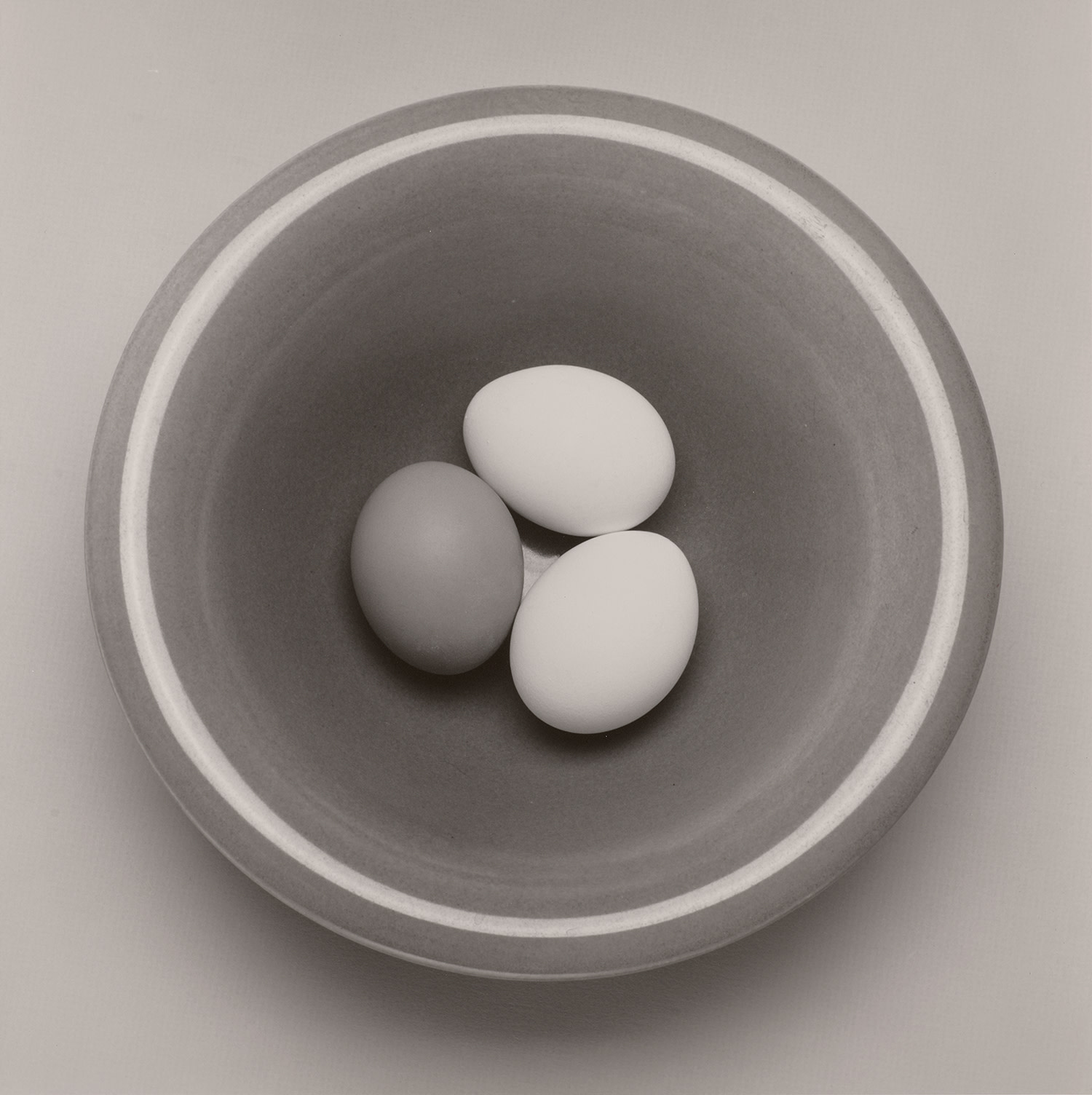
Eggs
The unique Polaroid from around 1974, capturing Stewart Foster and held in a private collection, exemplifies this early period: raw in process yet already marked by a keen compositional instinct. By the late 1970s, Mapplethorpe had moved into large format photography and was working almost exclusively in black and white, a choice that aligned his images with the visual grammar of classical art rather than the vernacular of documentary photography. He developed his signature approach in these years: studio conditions meticulously controlled, lighting arranged with a precision that recalls the old master painters he so admired, the surface of each print treated as something approaching a sculptural object. His relationship with the gallerist and curator Sam Wagstaff, a major collector who became a transformative presence in his life, gave him both personal stability and access to a wider world of connoisseurship.
“I went into photography because it seemed like the perfect vehicle for commenting on the madness of today's existence.”
Robert Mapplethorpe
Wagstaff's own deep knowledge of photography as a collecting discipline sharpened Mapplethorpe's understanding of where his work stood in art history. The range of Mapplethorpe's subjects is one of the most remarkable things about him, and it is worth dwelling on. He moved with equal conviction from the sexually explicit images of the 'X Portfolio' and 'Y Portfolio' to the serene floral studies of calla lilies and orchids, to celebrity portraits of artists and writers such as Andy Warhol, Louise Bourgeois, and Patti Smith herself. Works like 'Double Tiger Lily,' presented as a diptych in the artist's own silk overmats and frame, reveal his understanding that a flower could carry as much erotic charge and formal complexity as any nude.
Robert Mapplethorpe
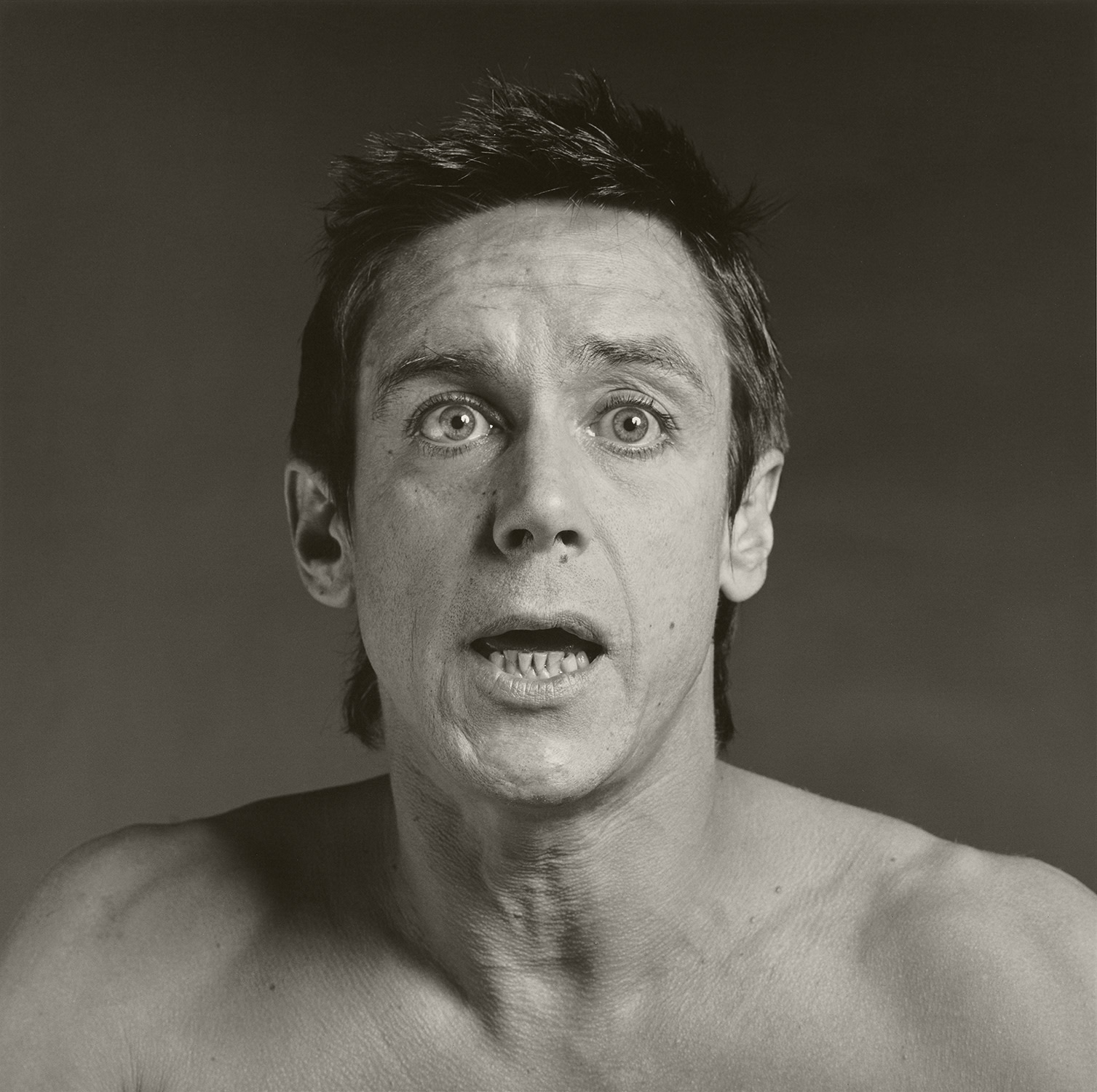
Iggy Pop
'Eggs,' the spare and luminous gelatin silver print from 1989, distills his aesthetic to its very essence: pure form, perfect light, nothing extraneous. 'Two Men Dancing' from 1984 captures the human body in motion with the same compositional authority he brought to his most static studio subjects. Each photograph, whatever its ostensible subject, is ultimately about the act of looking with complete attention. For collectors, Mapplethorpe represents one of the surest propositions in the photography market.
His work is held by virtually every major museum with a serious photography program, and his prints appear regularly at Christie's, Sotheby's, and Phillips, where they command prices reflective of his blue chip status. Gelatin silver prints from his mature period, particularly those printed during his lifetime, carry the greatest weight, though estate printed works bearing the authorization of the Robert Mapplethorpe Foundation also hold strong appeal. Collectors should pay close attention to edition size and print provenance: Mapplethorpe worked in carefully controlled editions, and the distinction between a lifetime print and a posthumous one matters both historically and at market. Works that retain the artist's original framing or matting, such as the 'Double Tiger Lily,' offer an additional layer of authenticity and intimacy.
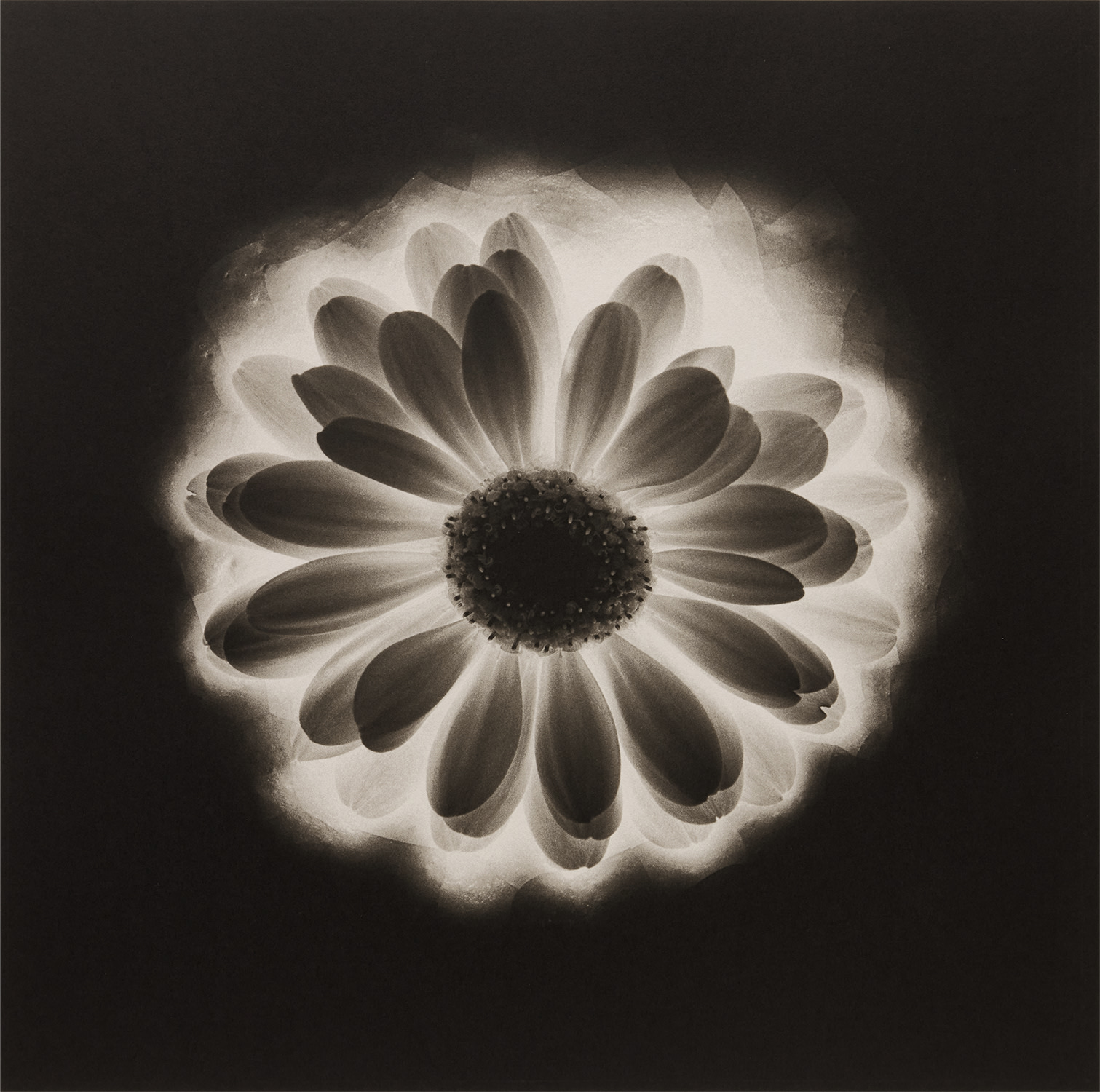
Robert Mapplethorpe
Flower
In the wider context of art history, Mapplethorpe belongs to a lineage of American photographers who insisted that the camera could produce work of genuine aesthetic ambition: Edward Weston's formalist nudes, Irving Penn's studio portraits, and Diane Arbus's unflinching examinations of marginality all echo through his practice. Among his contemporaries, one finds meaningful conversations with Cindy Sherman's explorations of identity and performance, with Nan Goldin's tender documentation of queer life and community, and with Annie Leibovitz's authoritative celebrity portraiture. Yet Mapplethorpe remains singular, the one photographer of his generation who made classicism itself feel radical, who proved that beauty and transgression were not opposites but collaborators. Robert Mapplethorpe died in Boston in February 1989 at the age of forty two, of complications from AIDS, one of the countless artists lost to an epidemic that devastated a generation.
The Robert Mapplethorpe Foundation, established before his death, has since donated tens of millions of dollars to HIV and AIDS research and to arts education, ensuring that his legacy extends well beyond the gallery wall. His photographs continue to feel urgently alive, not because they shocked, though some of them did, but because they achieved something rarer: they made us see. They asked us to look at the human body, at a flower, at a skull, at light falling across a simple form, and to understand that the act of sustained, loving attention is itself a kind of grace. For collectors and admirers alike, to live with a Mapplethorpe is to live with that invitation, renewed every time you enter the room.
Explore books about Robert Mapplethorpe
Robert Mapplethorpe
Patricia C. Phillips
Robert Mapplethorpe: The Philadelphia Museum of Art Collection
Philadelphia Museum of Art

Mapplethorpe: A Biography
Christopher Pullen
Robert Mapplethorpe: 1946-1989
Robert Mapplethorpe Estate
Robert Mapplethorpe: Black Book
Robert Mapplethorpe
Robert Mapplethorpe: Flowers
Robert Mapplethorpe
Robert Mapplethorpe: Lady: Lisa Lyon
Robert Mapplethorpe
Robert Mapplethorpe: Some Women
Robert Mapplethorpe