Rob Woodcox
Rob Woodcox Transforms the World Around Us
Artist Spotlight · The Collection Editorial
Something quietly extraordinary is happening in contemporary fine art photography, and Rob Woodcox is at the center of it. Over the past several years, his work has moved steadily from the margins of the emerging art world into a space of genuine cultural resonance, finding audiences not only among dedicated photography collectors but among those who simply feel something when they encounter his images. His photographs circulate with a kind of organic urgency across digital and physical spaces alike, the mark of an artist whose vision is both singular and deeply communicative. In a medium often associated with documentation and realism, Woodcox has carved out a territory that feels closer to painting, to poetry, to dreaming.
Rob Woodcox
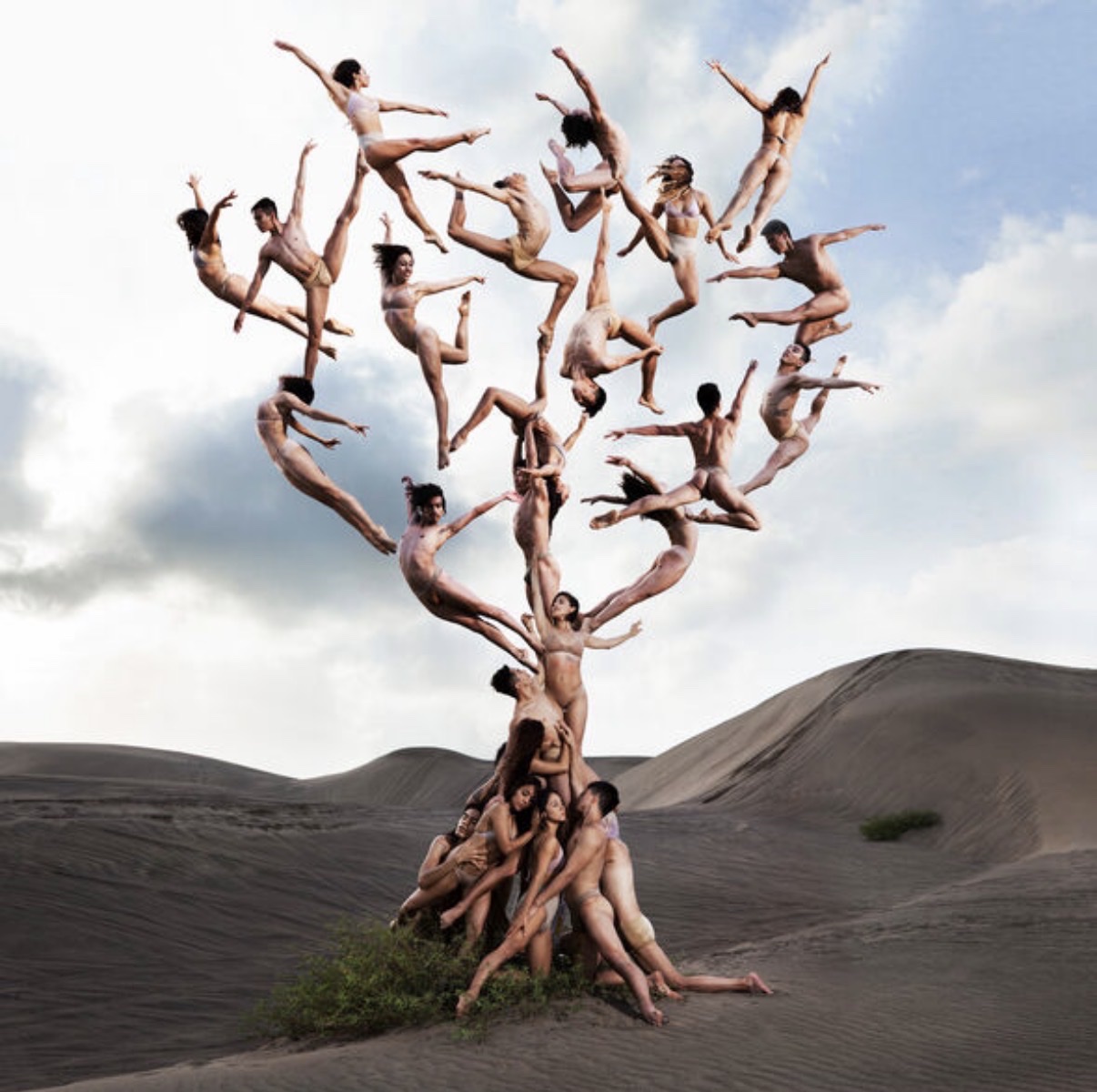
The Tree Of Life, 2018
Born in 1992, Rob Woodcox grew up in the American Midwest before eventually making his way to the Pacific Northwest, a landscape that would prove formative to his entire visual language. The Pacific Northwest offers a particular quality of light, at once diffuse and luminous, filtered through fog and forest canopy, and this quality permeates Woodcox's photographs with an almost atmospheric insistence. His upbringing and his experience navigating identity as a queer person in America gave him an early and intimate understanding of what it means to exist on the edges of visibility, to long for images that reflect one's own interior life. That longing became the engine of his practice.
Woodcox came to photography with the instincts of a storyteller rather than a technician. He was drawn not to the mechanics of the camera but to the possibilities of constructed reality, the idea that a photograph could contain not just what is but what might be, what is felt rather than seen. His early work already demonstrated an unusual capacity for synthesizing influences across media, from the Surrealist tradition of figures like Man Ray and Claude Cahun to the painterly figuration of the Pre Raphaelites, whose fascination with nature, myth, and the idealized body resonates clearly in his visual approach. He developed a working method centered on collaboration with subjects, often spending considerable time with the people he photographs, building the kind of trust that allows for genuine emotional vulnerability in front of a lens.
The work that has come to define Woodcox's practice is characterized by several immediately recognizable elements. Flowing fabrics move through natural settings with a choreographic precision, bodies are arranged and adorned in ways that feel both ancient and radically contemporary, and color is handled with extraordinary sensitivity, soft and luminous, never harsh, always in service of feeling. His images resist easy categorization as either fashion photography or fine art portraiture, though they draw from both traditions, and this resistance is part of their power. Works like The Tree of Life, created in 2018, exemplify the depth of this vision.
In this image, Woodcox situates the human body within a natural context in a way that feels less like landscape photography and more like mythology made visible, a meditation on growth, rootedness, and the profound entanglement of human life with the living world. The Tree of Life is a work that rewards sustained attention. On first encounter, it reads as beautiful in the most immediate sense, the kind of image that stops a viewer mid scroll or mid step in a gallery. But the longer one sits with it, the more its conceptual architecture becomes apparent.
Woodcox is asking serious questions about what it means to belong to a place, to a body, to a lineage, and he is asking them through visual means that feel genuinely earned rather than imposed. The surrealist elements in the work are never arbitrary; they are always in the service of a larger inquiry into identity and transformation. This is photography that thinks. For collectors considering Woodcox's work, there are several compelling reasons to pay close attention at this stage of his career.
He is an artist still in the early chapter of what promises to be a significant body of work, and the opportunity to acquire pieces from this formative period carries the particular excitement of proximity to a practice in genuine evolution. His photographs occupy a space in the market where fine art photography, conceptual portraiture, and LGBTQ+ cultural production intersect, a space that has attracted serious collector interest over the past decade as institutions and private collections alike have moved to reflect the full breadth of contemporary visual culture. Artists working in adjacent territory, including figures like Zanele Muholi, whose monumental photographic investigations of Black queer identity have found homes in major museum collections worldwide, or Tyler Mitchell, whose sun drenched, lyrical approach to Black joy and beauty reshaped conversations about whose image making matters, offer useful context for understanding the cultural current in which Woodcox's work flows. Each of these artists, in their own register, is insisting on the importance of images that had previously been underrepresented or rendered invisible.
Within the history of photography more broadly, Woodcox belongs to a tradition of artists who have used the medium to construct rather than simply capture reality. The legacy of figures like Francesca Woodman, whose ethereal self portraits explored the dissolving boundaries of the self, or Arthur Tress, whose dreamlike and often queer imagery pushed against the documentary assumptions of mid twentieth century photography, illuminates the lineage from which Woodcox emerges. He is not working in isolation but in conversation with a long history of image makers who believed that photography could hold interior truths, that it could be a vehicle for the visionary as much as the factual. His position within this lineage feels both earned and generative.
What ultimately makes Rob Woodcox matter is not simply the beauty of his individual images, though that beauty is real and considerable. It is the coherence of his vision and the sincerity of his inquiry. He is an artist who is genuinely trying to understand something through his work, about nature, about queerness, about what transformation feels like from the inside, and that sincerity communicates itself directly and powerfully to viewers and collectors alike. As conversations about representation, ecology, and the meaning of identity continue to shape our cultural moment, Woodcox's photographs feel not merely timely but necessary.
To collect his work is to invest in a voice that is still finding its fullest expression, and to be present for that process is one of the genuine pleasures of engaging with living art.