Rebecca Warren
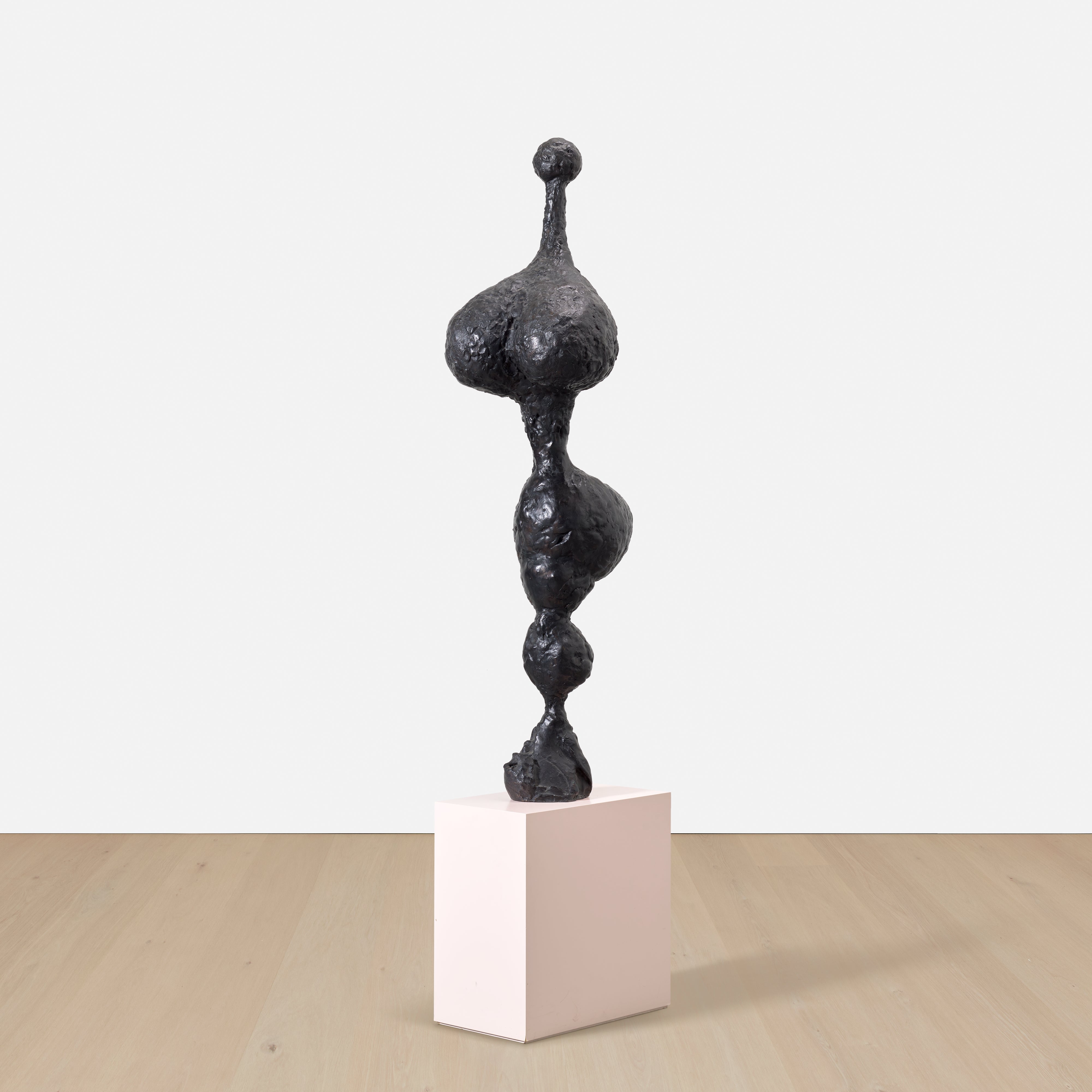
Rebecca Warren, Sculptor of Glorious Unruly Form
Artist Spotlight · The Collection Editorial
When the Turner Prize nominations were announced and Rebecca Warren's name appeared among them, the art world felt a particular kind of satisfaction. Here was a sculptor whose practice had been quietly, stubbornly, magnificently refusing easy categorization for years, and the recognition felt not like a discovery but like an overdue acknowledgment. Warren had already built a body of work that placed her in direct and knowing conversation with the great modernist tradition, and she was doing so on her own terms, with wet clay under her fingernails and a sharp, scholarly mind guiding every gesture. Warren was born in London in 1965, and her formation as an artist unfolded through one of the most intellectually charged periods in British art education.
Rebecca Warren
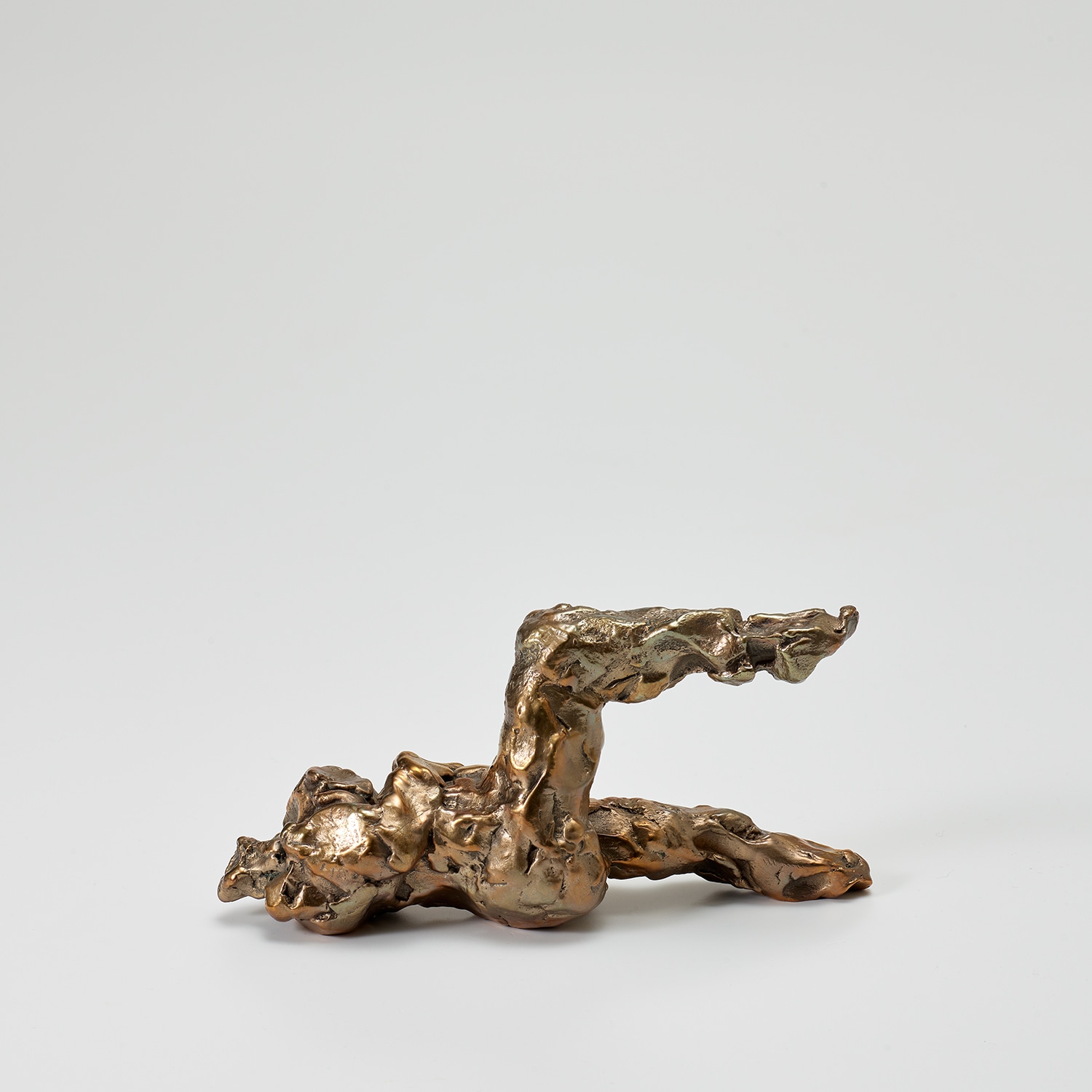
La Volta
She studied at the Chelsea School of Art and later at Goldsmiths College, the institution that in the late 1980s and early 1990s became the seedbed for a generation of artists who would reshape contemporary art internationally. The Goldsmiths environment was conceptually rigorous and fiercely argumentative, and Warren absorbed that energy while charting a course that was distinctly her own. Where many of her peers gravitated toward installation and new media, she turned toward the oldest of sculptural materials and asked what it still had to say. The foundation of Warren's practice is unfired clay, a material choice that is itself a kind of statement.
Clay that has not been fired remains vulnerable, provisional, alive to the touch and to time. Her figures emerged from this material with a roughness that was never accidental and never careless. The surfaces carry the evidence of making, the thumbprints and compressions and additions that record a physical encounter between artist and material. She was looking closely at the figures of Edgar Degas, at the late work of Auguste Rodin, at the formal inventions of Henri Laurens and the expressive distortions running through modernist sculpture from Umberto Boccioni onward.
Rebecca Warren
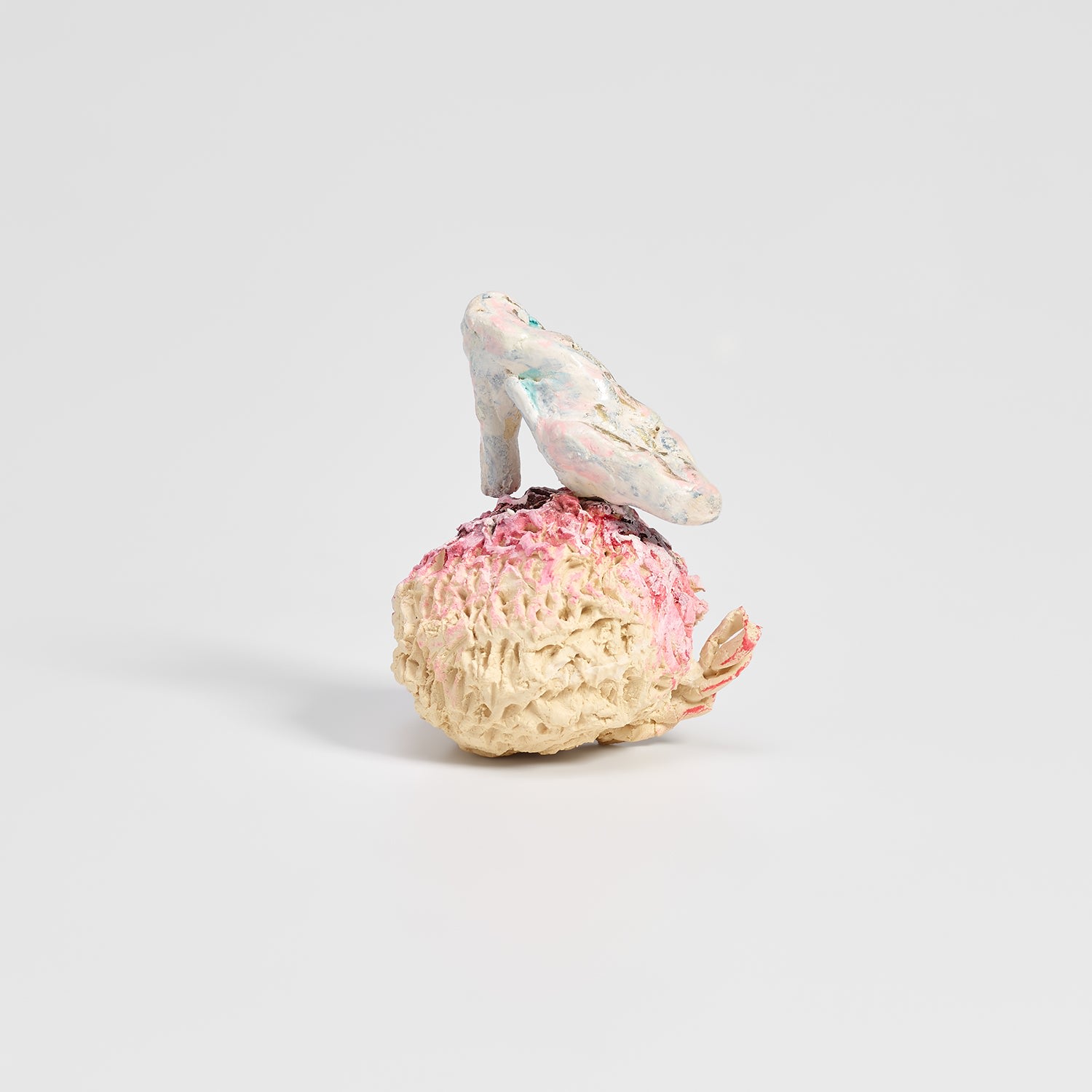
Poincaré (Parkett 78)
But she was also reading those traditions through a feminist lens, asking who those figures were made for and what assumptions were built into their forms. The figures Warren creates are frequently female, and they occupy a strange and powerful space between homage and subversion. They carry the weight of the modernist canon without being crushed by it. A Warren figure might recall the dance studies of Degas in its posture while simultaneously exploding the decorum that surrounded those studies.
The bodies are exaggerated, comic, earthy, and at the same time genuinely moving. This combination of humor and seriousness is one of Warren's great gifts as an artist. She understands that you can laugh at something and revere it in the same breath, and her sculptures hold both impulses in suspension. Her bronze works extend this investigation into a more monumental register.
Rebecca Warren
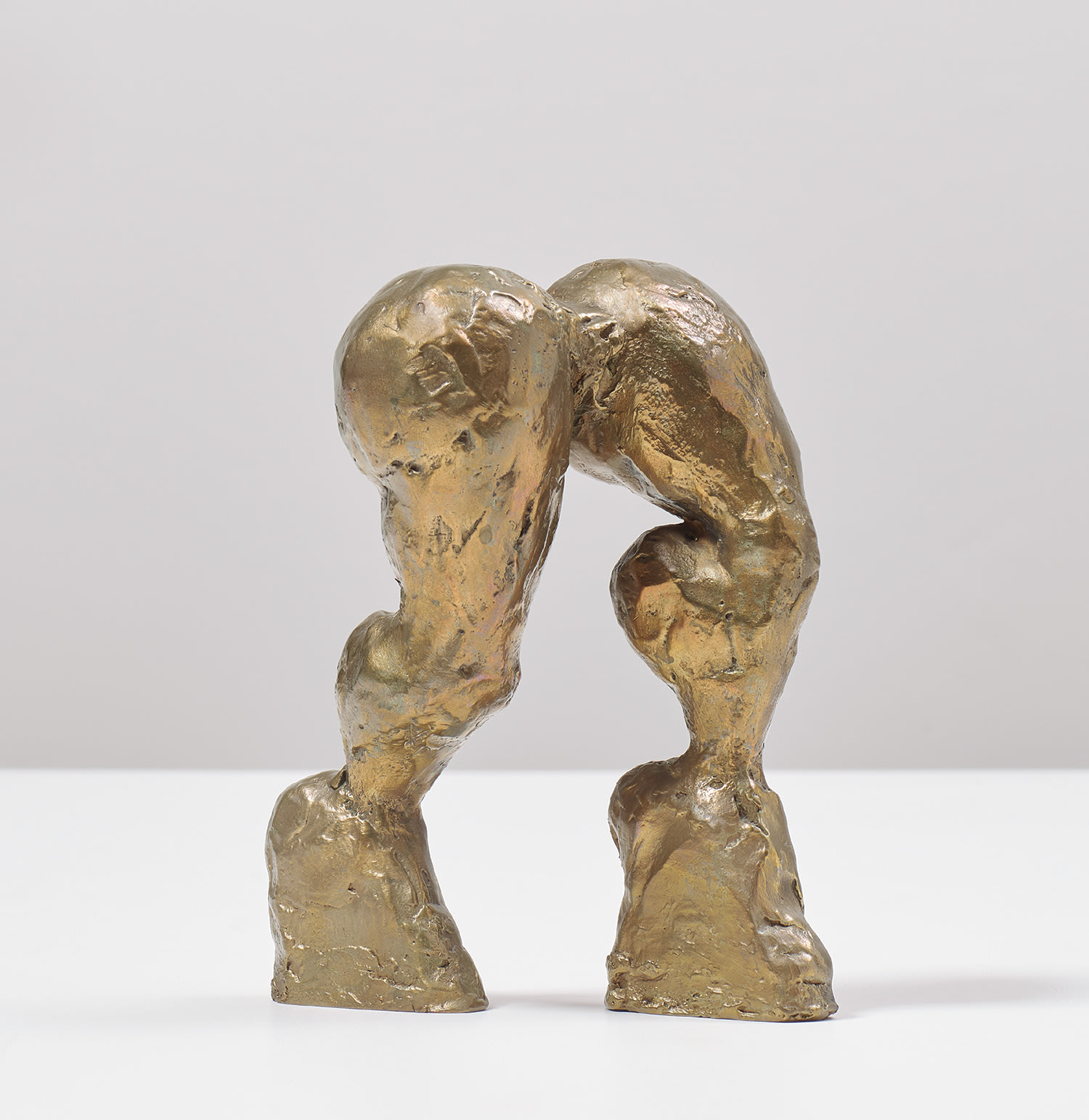
Croccini
Pieces like Waterfall and Croccini translate the energy of her clay practice into cast metal, preserving the gestural immediacy of the original modeling while giving it a permanence and presence suited to larger spaces. The hand painted bronzes, among them the remarkable Noir, comme mon âme from 2007, add a further layer of decision making, with color applied in ways that refuse to simply decorate and instead complicate and deepen the reading of the form. Fascia III from 2010 and Fascia V from 2012 demonstrate how Warren's thinking about the body had grown more architectonic over time, the forms becoming more abstract while remaining rooted in physical experience. Redondo Beach from 2003, a hand painted clay work, shows the raw immediacy of her earlier approach, the figure present in the material like a thought that has not yet been fully resolved.
The mixed media multiple Poincaré, created for Parkett edition number 78, brought Warren's work to a wider audience through the prestigious publishing context that Parkett cultivated over decades. Parkett editions have historically been a way for serious collectors to acquire works by major artists at a moment of consolidation in their careers, and Warren's contribution sits comfortably alongside the other artists the publication recognized as defining figures of their generation. La Volta, her bronze multiple, is another point of entry that has attracted collectors who want to live with Warren's thinking at a scale suited to private spaces. From a collecting perspective, Warren occupies a position that has become increasingly recognized over the past decade as genuinely significant.
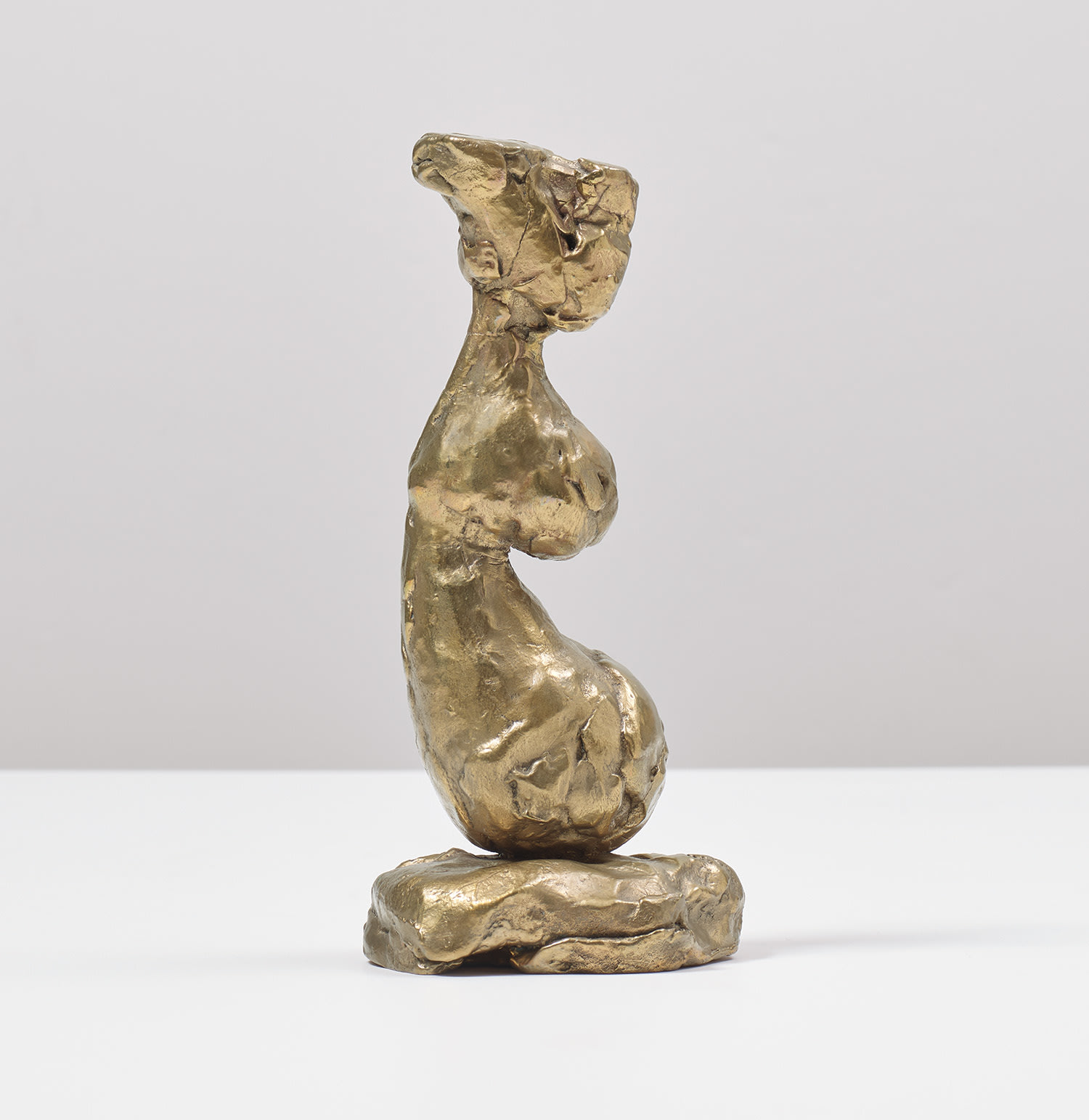
Rebecca Warren
Waterfall
Her work is held by the Tate in London, by the Museum of Modern Art in New York, and by the Dallas Museum of Art, an institutional spread that reflects how thoroughly international her reputation has become. In the secondary market, her bronzes and hand painted works have attracted sustained interest, particularly as collectors have grown more attentive to the generation of artists who bridged the conceptual energy of the 1990s with a renewed investment in physical making. The unfired clay works carry a particular rarity and presence that makes them prized among those lucky enough to hold them. Collectors drawn to the lineage running from Rodin through to contemporary sculpture will find in Warren a figure who understands that tradition from the inside.
Warren has been represented by Maureen Paley in London, a gallery with a long history of championing artists whose work demands sustained attention rather than immediate legibility. This relationship has helped shape the context in which her work is seen and discussed in Britain and beyond. Artists working in adjacent territory include Berlinde De Bruyckere, whose visceral approach to the body in sculpture shares something of Warren's emotional intensity, and Isa Genzken, whose restless formal invention and feminist reading of modernism offer a useful parallel. In terms of the British tradition, Warren can be placed in a lineage that runs through the figurative energy of Phyllida Barlow, though each artist arrives at their conclusions through very different material means.
What makes Warren's work matter now, with particular force, is the combination of intellectual seriousness and sensory pleasure she brings to questions that have only grown more urgent. The female body, sculptural tradition, the politics of form, the history of who gets to make art and what kinds of making get taken seriously: these are not settled questions. Warren has been asking them for three decades through works that are demanding and delightful in equal measure, and the answers she proposes keep revealing new dimensions as the world around them changes. To collect her work is to invest in a practice that rewards long attention, that gives back more the longer you look, and that places you in conversation with one of the most distinctive sculptural minds working in Britain today.