Rashid Johnson
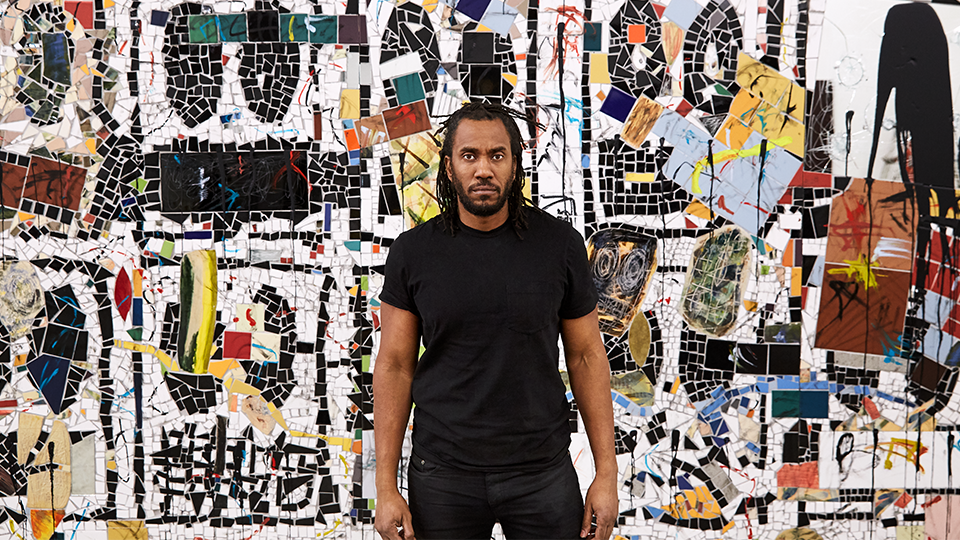
Rashid Johnson Builds Worlds From Truth
Artist Spotlight · The Collection Editorial
“I am interested in the space between what is known and what is felt, and how that space is where identity lives.”
Rashid Johnson
When Rashid Johnson unveiled his sprawling installation "Fly Away" at Hauser and Wirth in 2021, the work arrived at a moment of collective reckoning in America, and it felt inevitable. The piece, featuring his signature steel shelving structures draped with plants, shea butter, books, and mirrored tiles, spoke directly to resilience, refuge, and the ongoing negotiation of Black life in the twenty first century. Critics and collectors alike recognized something urgent and generous in the gesture, a reminder that Johnson has been quietly building one of the most emotionally and intellectually rich bodies of work in contemporary art today. At a time when the art world was searching for artists who could hold complexity with grace, Johnson answered.
Rashid Johnson
Untitled
Johnson was born in Chicago in 1977, a city whose cultural richness would prove formative in ways that resonate throughout his practice. Raised on the South Side, he came of age in an environment saturated with the histories of the Great Migration, the intellectual legacy of institutions like the South Side Community Art Center, and the sonic worlds of jazz and hip hop. His mother, Carol Adams, was a university administrator, and his household was steeped in books, ideas, and a sense that Black intellectual life was both a birthright and a responsibility. That inheritance would later manifest in works that treat literature, philosophy, and music not as references but as living materials.
Johnson studied photography at Columbia College Chicago before completing his MFA at the School of the Art Institute of Chicago in 2005. His early photographic work drew immediate attention for its conceptual rigor and its engagement with the lineage of Black cultural production. He was among a generation of artists, alongside peers such as theaster gates and Kara Walker, who were expanding what it meant to make work about identity without being confined by it. Johnson was represented by Yancey Richardson Gallery early in his career before joining the roster at Hauser and Wirth, where his practice found the institutional support to scale both literally and conceptually.
Rashid Johnson
Untitled
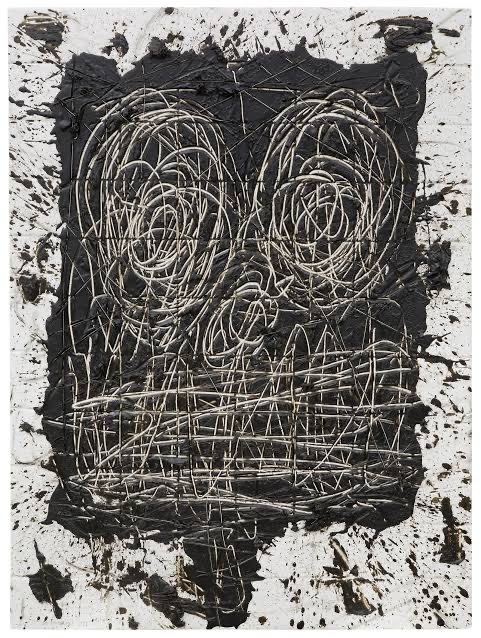
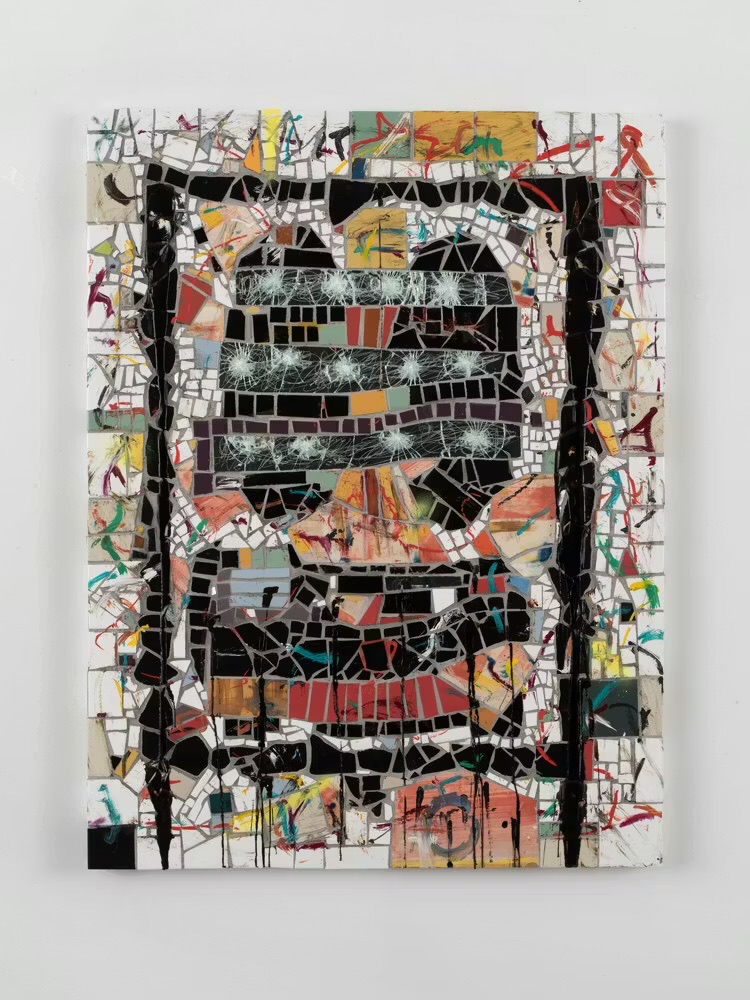
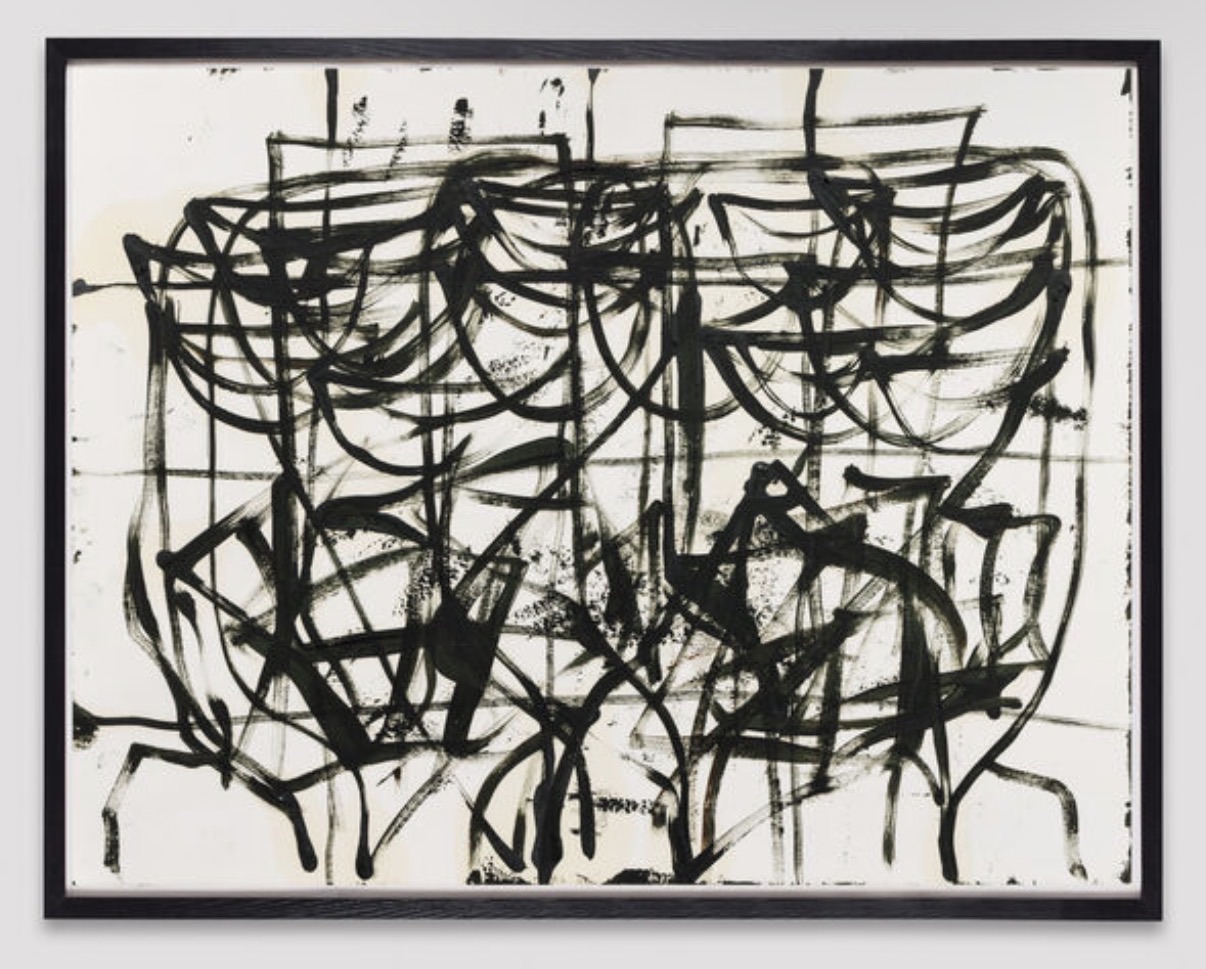
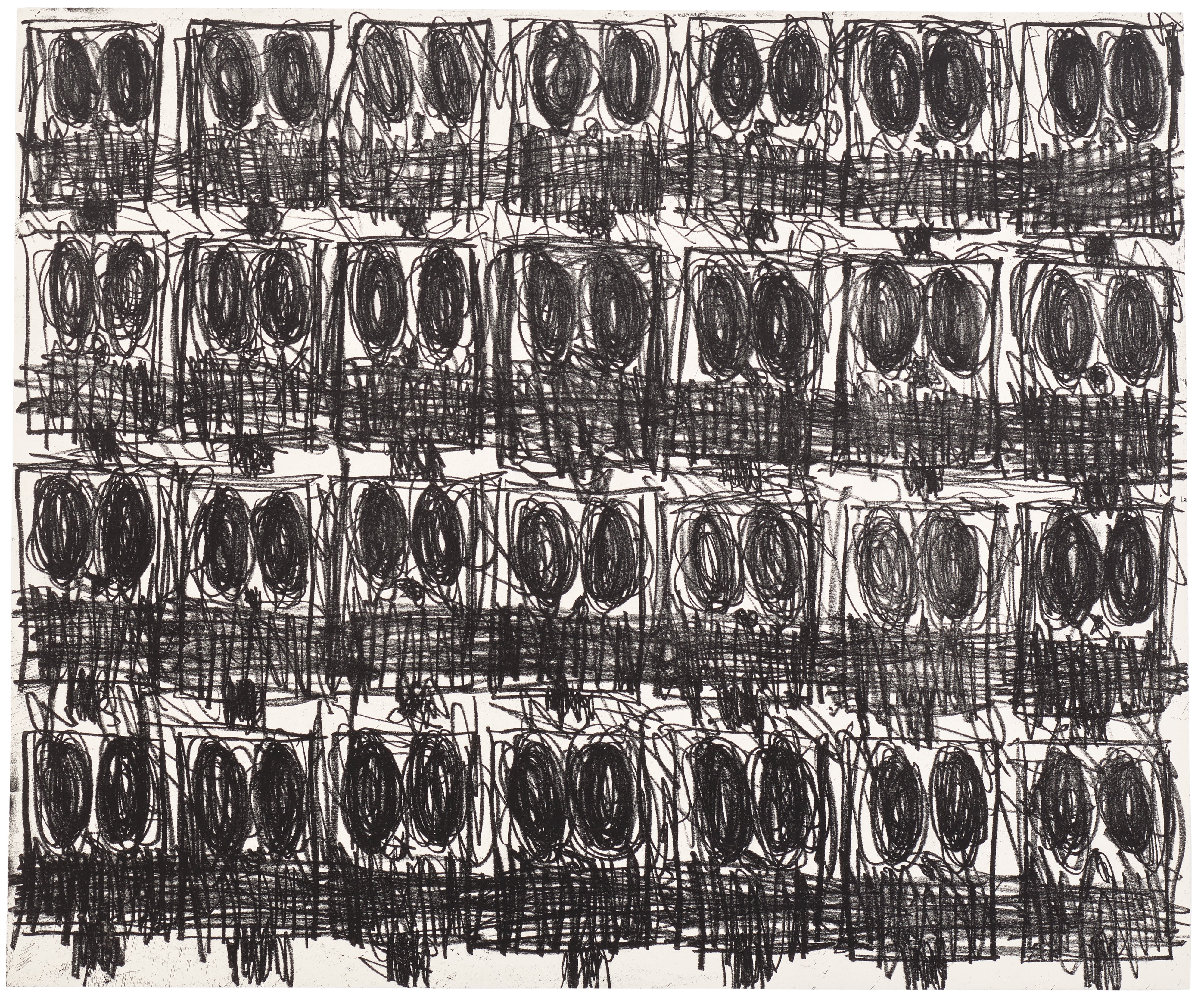
The evolution of Johnson's work from photography into sculpture, painting, and immersive installation reflects not a restlessness but a deepening. His Anxious Men and Anxious Red series, begun in the 2010s and continuing with genuine vitality today, feature roughly rendered faces drawn or painted with urgent, gestural energy. These figures carry their title honestly: they are portraits of anxiety as a shared human condition, one that Johnson has spoken about in relation to his own experiences as well as the broader social and psychological weight carried by Black Americans navigating contemporary life. Works from the Anxious series, including pieces from the Untitled Anxious Drawing group in oil on cotton rag, have become among the most sought after works in his output, beloved for their rawness and their refusal to aestheticize suffering while still finding beauty in expression.
Among his most celebrated and historically significant works is "Souls of Black Folk" from 2010, a sculpture that assembles black soap, wax, books, vinyl, brass, shea butter, space rocks, plants, mirrors, gold paint, and stained wood into an altar like structure that practically hums with cultural memory. The title invokes W.E.B.
Rashid Johnson
Untitled Anxious Drawing, 2018
Du Bois deliberately, situating the work within a century long conversation about Black consciousness and double consciousness. The materials themselves are not incidental: shea butter and black soap carry histories of African domestic practice and beauty ritual, while books and vinyl evoke intellectual and musical tradition. Johnson transforms the shelving unit, an everyday object of organization and storage, into a monument to the ongoing project of Black self definition. "This Year" from 2014, made with branded red oak flooring, black soap, wax, and spray and enamel, similarly transforms architectural materials into charged psychological terrain.
From a collecting perspective, Johnson occupies an enviable position in the contemporary market. His work is held in major museum collections including the Museum of Modern Art in New York, the Art Institute of Chicago, and the Hirshhorn Museum and Sculpture Garden in Washington D.C. Auction results for his works have climbed steadily, with paintings and works on paper from the Anxious series regularly exceeding their estimates at Christie's, Sotheby's, and Phillips.
Rashid Johnson
Untitled (Anxious Crowd)
Collectors are drawn to Johnson not only because of his institutional validation but because his work sustains repeated engagement: the more you know about the literary, musical, and philosophical traditions he draws from, the richer each encounter becomes. For those entering his market now, works on paper and smaller photographic pieces represent thoughtful entry points into a practice whose institutional profile continues to grow. Johnson exists in productive dialogue with a wide constellation of artists. His engagement with material culture and Black intellectual history invites comparison with David Hammons, whose own use of unconventional materials set a precedent for what Johnson has built upon.
His photographic roots connect him to the documentary traditions of Gordon Parks while his interest in Afrofuturism and speculative cultural identity places him in conversation with artists like Nick Cave and Lorna Simpson. His paintings carry the expressive charge of Neo Expressionism while remaining firmly grounded in conceptual specificity, a balance that places him alongside contemporaries such as Nina Chanel Abney and Henry Taylor in the broader landscape of figurative painting today. What makes Rashid Johnson genuinely indispensable to the story of contemporary art is his commitment to holding multiple truths at once. His work is intellectually rigorous and emotionally accessible, historically grounded and urgently present, personal and profoundly collective.
He has built a practice that asks its audience to think and feel in equal measure, and that invitation has never felt more necessary. As his work continues to enter major collections, inspire younger generations of artists, and generate conversation across disciplines, it becomes clearer that Johnson is not simply responding to the moment but helping to define it. To collect his work is to invest in one of the most honest and enduring artistic voices of our time.
Explore books about Rashid Johnson