Phillip K. Smith III

Phillip K. Smith III Illuminates the World
Artist Spotlight · The Collection Editorial
There is a particular quality of light in the California desert at dusk, when the sky shifts from amber to violet and the air seems to hold its breath. It is in precisely this liminal moment that Phillip K. Smith III has built his reputation, and it is this sensibility that has drawn the attention of major institutions, curators, and collectors across the globe. In recent years, Smith has emerged as one of the most compelling voices in contemporary site specific art, with large scale commissions that have transformed public spaces from the Coachella Valley to international venues, cementing his status as an artist whose work resonates far beyond the gallery wall.
Phillip K. Smith III
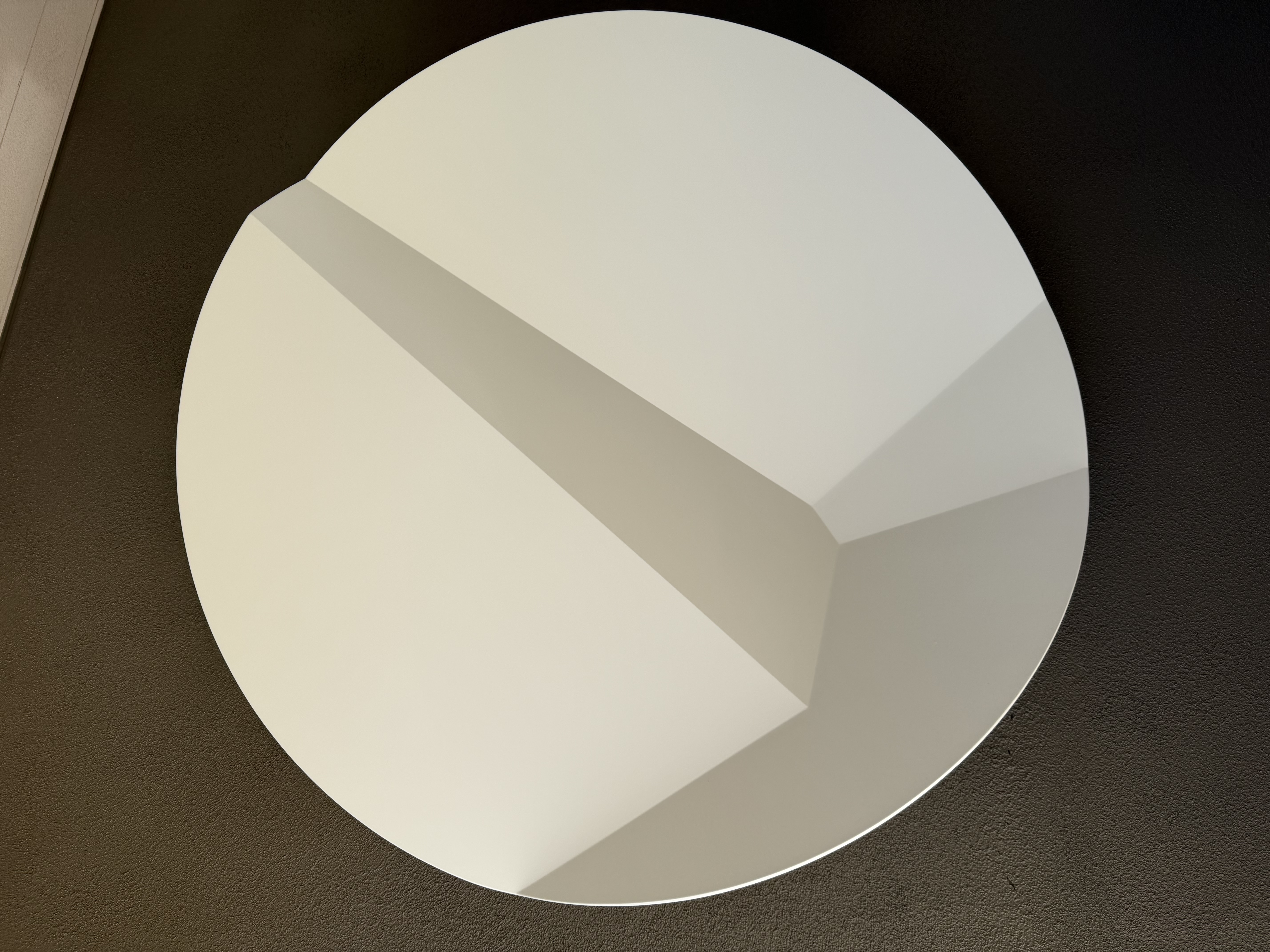
Faceted Disc Variant #4, 2018
Smith was born in 1972 and grew up in Southern California, a geography that would prove foundational to everything that followed. The desert landscape, with its vast horizontals, its radical shifts in temperature and light, and its quiet insistence on the elemental, became not merely a backdrop but an active collaborator in his practice. Trained as an architect, Smith brought to his early artistic work a precision and structural rigor that distinguished him from the outset. His architectural education gave him an understanding of how built forms negotiate space, shadow, and human experience, skills he would later redirect toward sculpture and installation with striking results.
Smith's artistic development has unfolded in close dialogue with the California Light and Space movement, that extraordinary lineage that includes James Turrell, Robert Irwin, and Larry Bell. Like those predecessors, Smith is preoccupied with perception itself, with how light enters the eye and how the body orients itself within an environment shaped by luminous phenomena. Yet Smith's work carries its own distinct character, one rooted in the specific topography of the Mojave and the Sonoran deserts and expressed through a formal vocabulary that embraces mirrors, LED technology, and architectural geometries. His installations do not simply occupy their sites; they enter into a quiet conversation with them, amplifying what is already present while introducing something altogether new.
Phillip K. Smith III
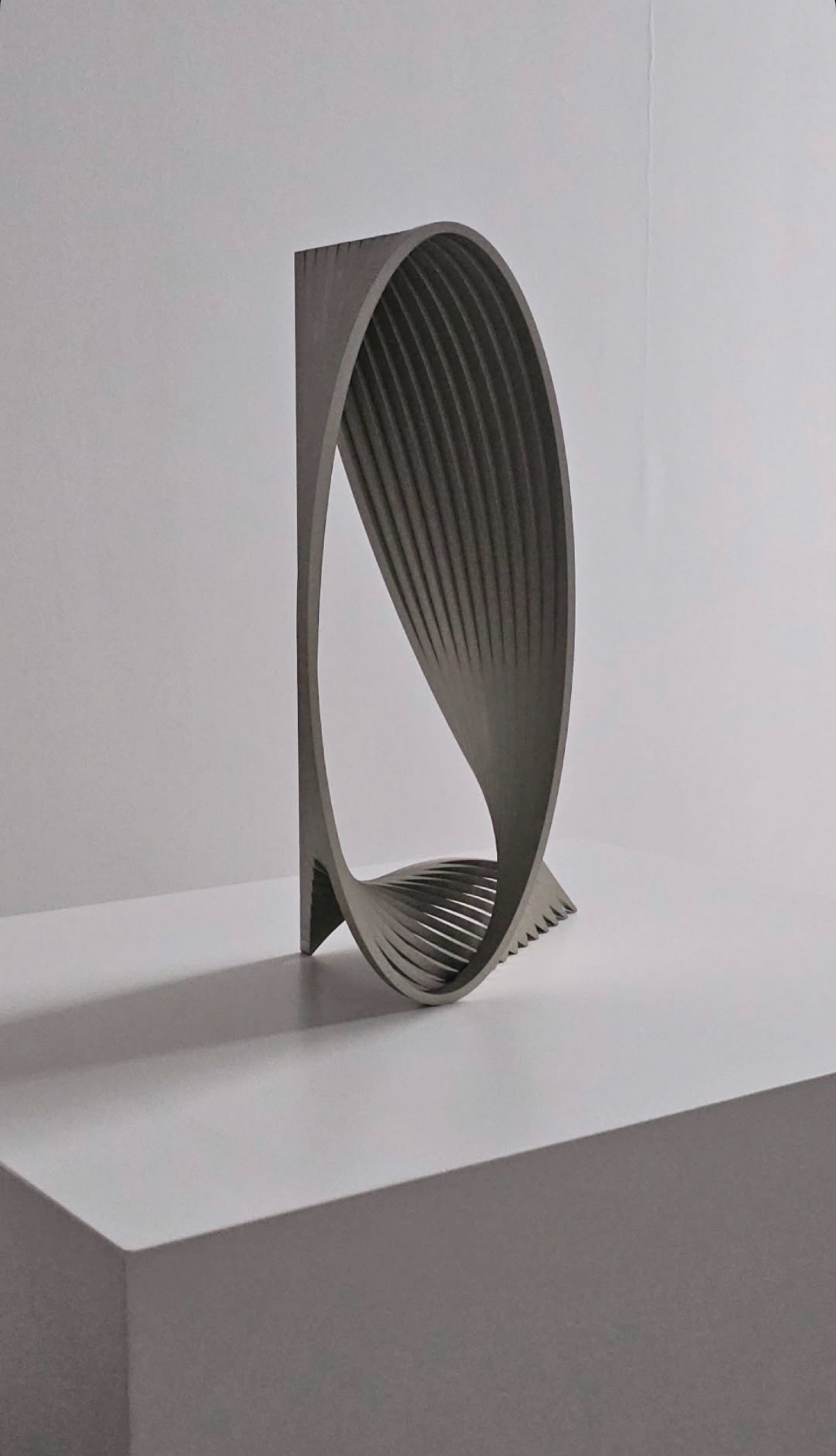
Chrysalis 16 Study Model, 2026
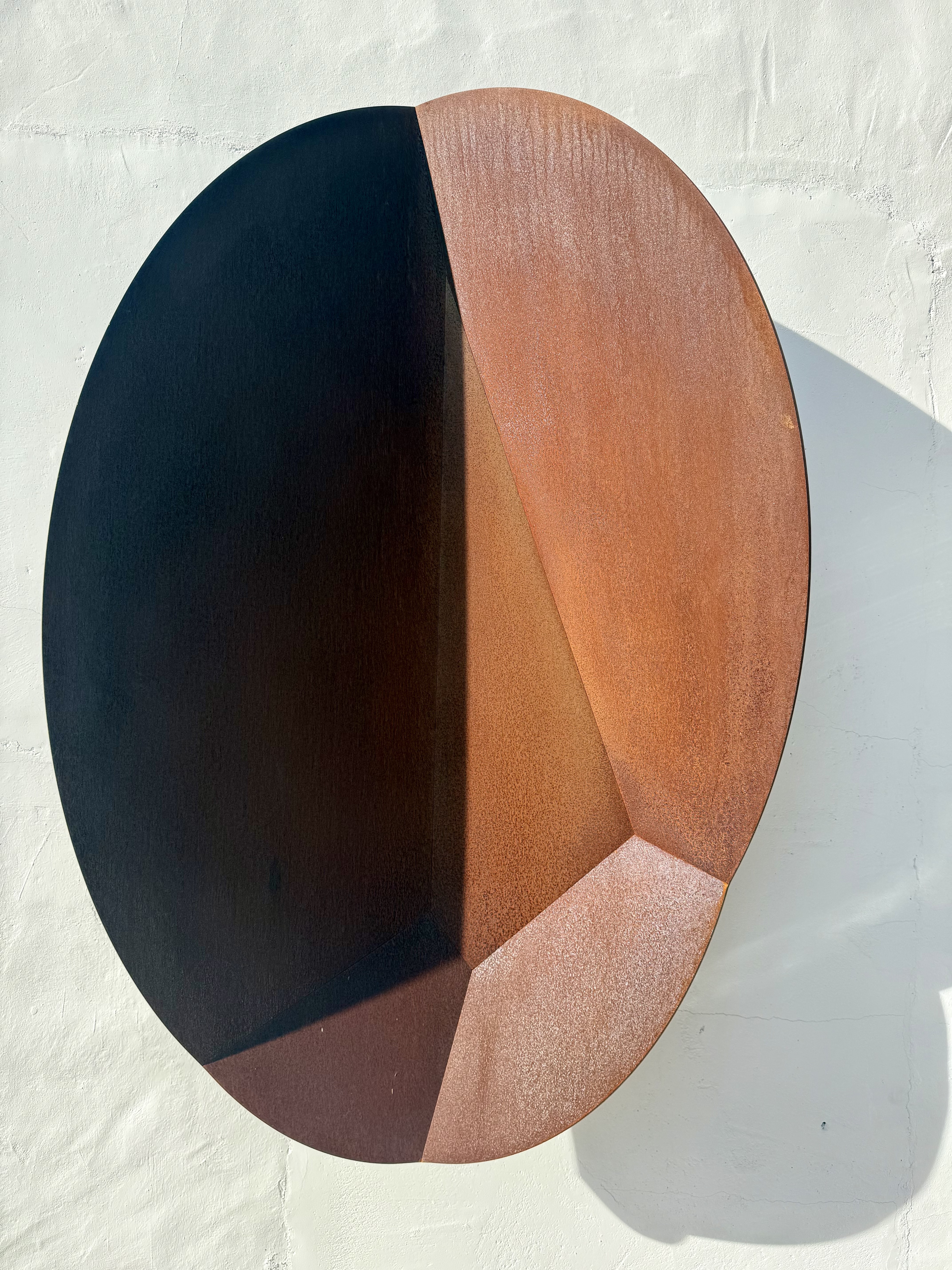
Among Smith's most celebrated bodies of work is his ongoing engagement with reflective surfaces and faceted forms. Works such as Faceted Disc Variant from 2018, rendered in painted fiberglass, demonstrate his ability to translate geometric logic into objects that feel simultaneously precise and lyrical. The faceted surface catches and refracts ambient light in ways that shift with the viewer's position and the hour of the day, making time itself a medium. His Corten Steel works, including Faceted Oval Corten 1 from 2024, introduce a different material sensibility, one where the warm oxidized surface of weathering steel becomes a kind of earthen skin that deepens the object's relationship to its desert surroundings.
These sculptures reward extended looking, revealing new dimensions of color and form as conditions change around them. Perhaps the most forward looking dimension of Smith's practice is his sculptural research, exemplified by works like the Chrysalis 16 Study Model, an aluminum form featuring precision machined fins that speak to his continued evolution as a maker. The chrysalis as a concept is well chosen: it evokes transformation, patience, and the emergence of something new from a structured process. Smith's studio practice is characterized by this kind of rigorous experimentation, moving through material studies and scale models before committing to the final forms that will inhabit real landscapes and architectural spaces.

Phillip K. Smith III
Untitled
His light installations, including large scale untitled works in LED and reflective elements, extend this sensibility into the immersive register, surrounding visitors in fields of shifting color and reflection that feel genuinely transporting. From a collecting perspective, Smith occupies an enviable position in the contemporary market. He is firmly established as a blue chip presence among mid career artists, with institutional support that gives his work both cultural credibility and long term market stability. His sculptures offer collectors entry points across a range of scales and media, from intimate study models that carry the energy of the artist's direct thinking to monumental outdoor works suited to significant private estates and public commissions.
The material durability of works in Corten steel and aluminum makes them particularly attractive for collectors who prize objects that can live confidently in outdoor environments, aging gracefully alongside the natural world. Smith's work sits naturally in collections alongside those of his Light and Space peers, as well as artists working in minimalist sculpture and environmental art, including figures such as James Turrell and De Wain Valentine. The art historical context for Smith's practice is rich and well defined. The Light and Space movement that emerged from Southern California in the 1960s created a lineage of artists devoted to sensory experience, perceptual investigation, and the dematerialization of the art object.
Phillip K. Smith III
Faceted Oval Corten 1, 2024
Smith inherits this tradition and extends it into the twenty first century with a fluency in contemporary fabrication technologies and a deepened engagement with ecological site. His work also resonates with the Minimalist tradition, sharing with artists like Donald Judd and Dan Flavin a commitment to geometric clarity and the expressive power of industrial materials. Yet Smith is never merely a formalist; his work carries an emotional warmth and an investment in human experience that gives it broad appeal beyond specialist audiences. What ultimately distinguishes Phillip K.
Smith III is his capacity to make complexity feel effortless and to make effortlessness feel profound. His installations and sculptures ask viewers to slow down, to notice the quality of light falling across a surface, to register the subtle drama of a color shift or a reflected horizon. In an era saturated with visual noise, this invitation to attentive looking feels not only relevant but necessary. As his practice continues to evolve, with new commissions, new material explorations, and an expanding international profile, Smith stands as one of the genuinely essential artists of his generation, an artist whose work enriches every collection fortunate enough to include it.