Philippe Hiquily
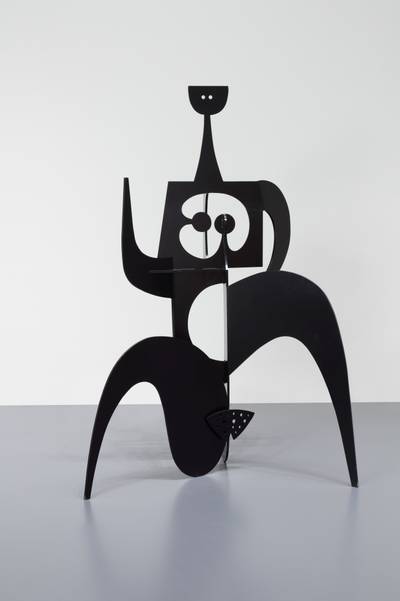
Philippe Hiquily, Sculpture's Most Joyful Sensualist
Artist Spotlight · The Collection Editorial
In the grand salons and contemporary galleries of Paris, a particular kind of electricity has long accompanied the appearance of a Philippe Hiquily sculpture. The works arrive in a room and immediately animate it, their coiled limbs and arching torsos suggesting a body caught mid pirouette, a figure leaning into pleasure, a form that refuses to be still. In recent years, major auction houses including Christie's and Sotheby's have seen sustained and growing interest in Hiquily's output, with collectors across Europe and the United States seeking out his elegant metal figures as cornerstones of serious post war French sculpture collections. The renewed appetite speaks to something durable in his vision: a language of form that feels as alive today as it did when he first put torch to iron in the workshops of postwar Paris.
Philippe Hiquily
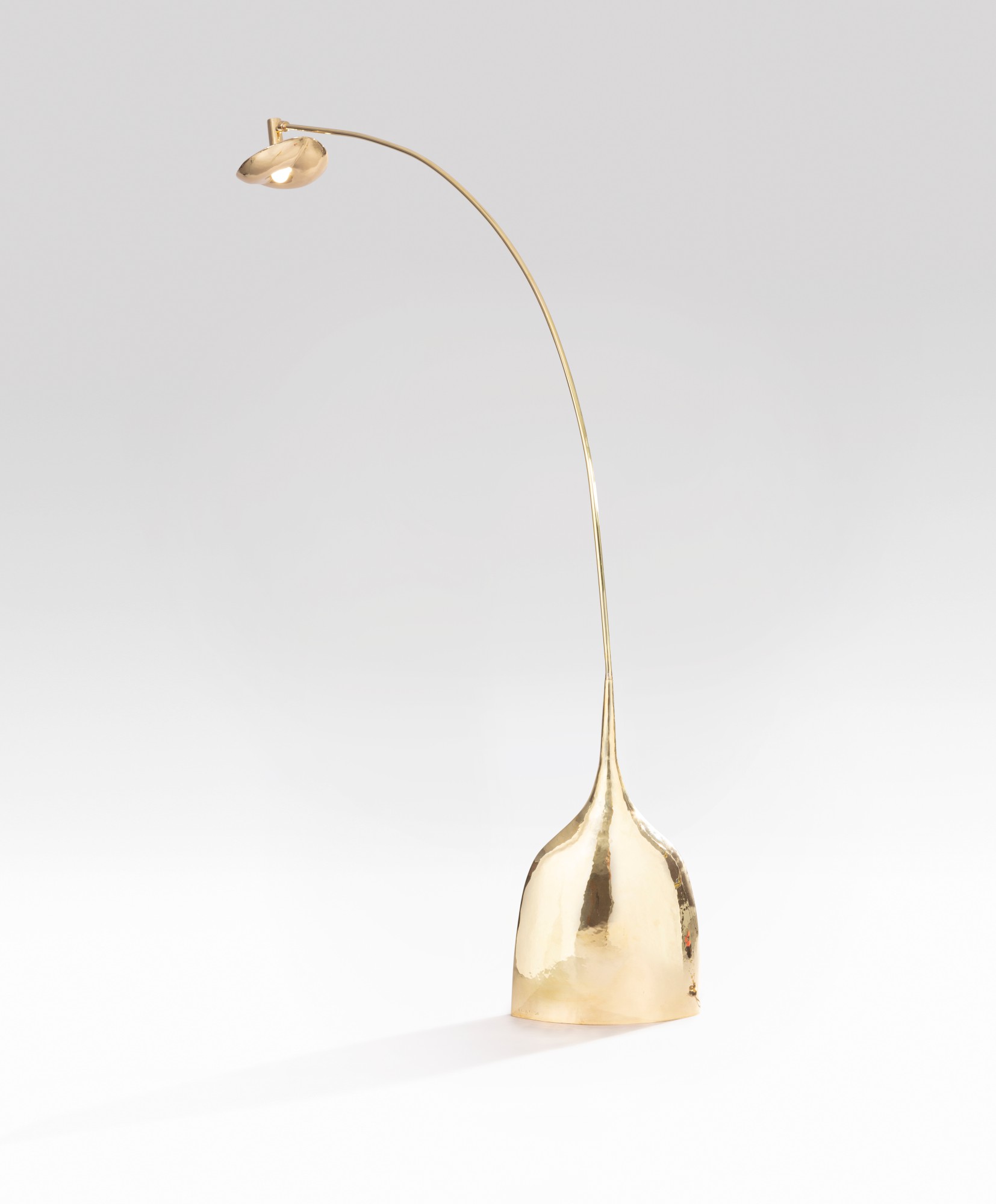
Floor lamp
Philippe Hiquily was born in Paris in 1925, and came of age in a city that was simultaneously wounded and electric with creative possibility. The France that shaped his early sensibility was one emerging from occupation, reaching for beauty and freedom with a particular urgency. He trained at the École Nationale Supérieure des Beaux Arts in Paris, where he absorbed the technical rigors of classical sculpture while casting his eyes toward the more restless energies gathering around Surrealism and the international avant garde. The encounter with the work of Alexander Calder proved decisive, and in Calder's mobiles Hiquily saw proof that sculpture could breathe, could be subject to time and air and chance, could harbor humor without sacrificing seriousness.
His early practice centered on wrought iron, a material with deep roots in French craft tradition and one that demanded a physical dialogue between sculptor and substance. Where many of his contemporaries were drawn to the cool neutrality of welded steel in its most industrial forms, Hiquily brought something warmer and more irreverent to the forge. By the late 1950s and into the 1960s, he had developed a vocabulary that was unmistakably his own: elongated figures, often female, rendered in flowing arabesques of metal that suggested both the surrealist body and the kinetic tradition. His 1963 work Girouettes, created in painted steel and conceived in three parts, exemplifies this early period beautifully, with its weathervane logic proposing that art, like the wind, should be free to change direction.
Philippe Hiquily
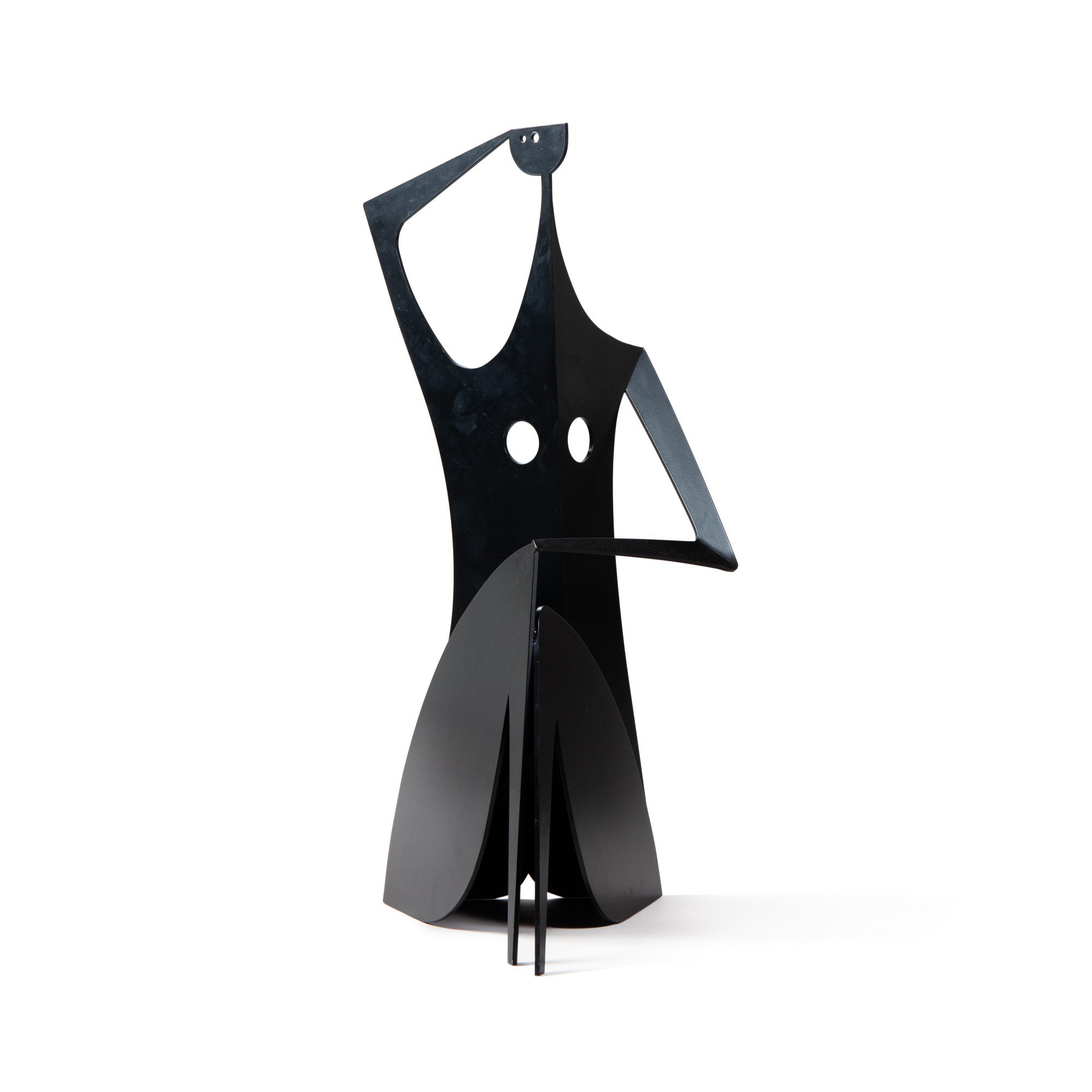
L'Epicurienne, 2011
The decades that followed saw Hiquily expand his practice into furniture and functional objects without ever compromising the sculptural ambition at the heart of his work. Pieces such as Table femme and Table basse, modèle Rothschild demonstrate his conviction that the boundary between fine art and the applied arts was largely a bureaucratic fiction. A table could carry within it the same erotic charge, the same wit, the same mastery of silhouette as any gallery sculpture. His use of hammered brass and petrified wood in certain table pieces introduced a geological patience into compositions otherwise defined by fluid dynamism, grounding the fantastical in materials of deep earthly time.
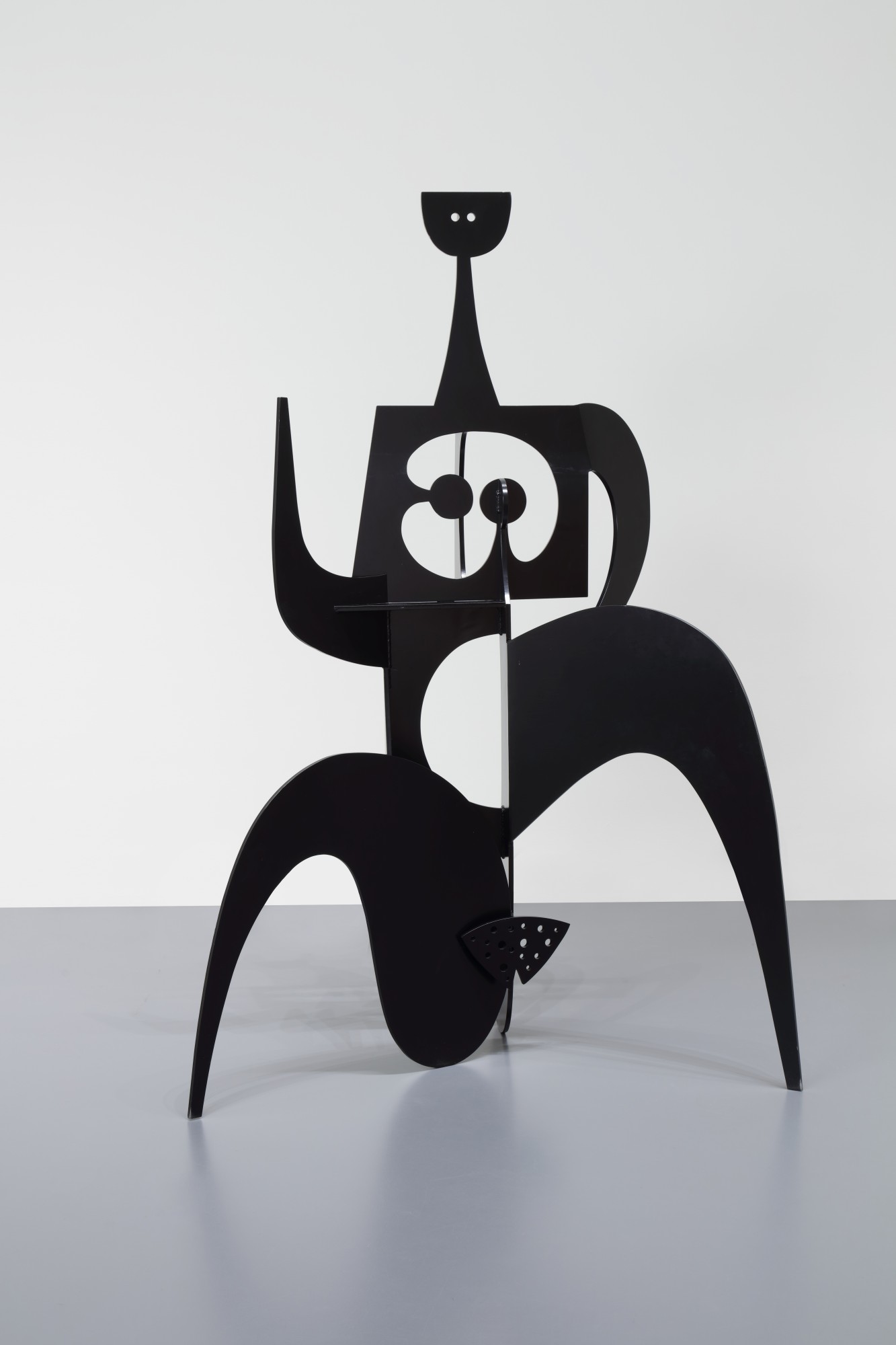
L'Epicurienne, a painted steel work completed in 2011, shows that even in his late eighties Hiquily retained the full voltage of his early invention, the figure still coiling with appetite and grace. Among the works that most compellingly represent his achievement, La Funambuleuse from 2007 stands out with particular force. The tightrope walker is a figure of perfect metaphorical resonance for Hiquily's entire project: she balances between gravity and flight, between the erotic and the abstract, between the serious traditions of European sculpture and the liberating play of Surrealism and kinetic art. Marathonienne, dating to 1981, similarly captures a body in pure forward motion, the steel somehow conveying the warmth of exertion, the joy of physical commitment.
Philippe Hiquily
Marathonienne, 1981
L'Accouplement of 1991, rendered in copper against a wood panel, brings an intimacy and a richness of surface to his exploration of the human form in relation, the two materials conversing as warmly as the figures they describe. For collectors, the appeal of Hiquily rests on several converging qualities. His work is technically extraordinary, the product of a sculptor who spent decades mastering the behavior of metal under heat and pressure, who understood surfaces and patinas with the attentiveness of a painter. It is also deeply livable: Hiquily's sculptures and furniture pieces were conceived to inhabit spaces, to be encountered at the level of the body rather than reverently from across a room.
There is a generosity in this orientation that collectors consistently respond to. The functional works in particular represent an unusual opportunity, since they operate simultaneously as collectible sculpture and as objects of genuine daily use, a combination that remains rare even in a collecting landscape that has grown increasingly open to design. In the broader constellation of post war French and European sculpture, Hiquily occupies a position adjacent to several significant figures. His sensibility shares something with the mobile architectures of Alexander Calder, whose influence he freely acknowledged.
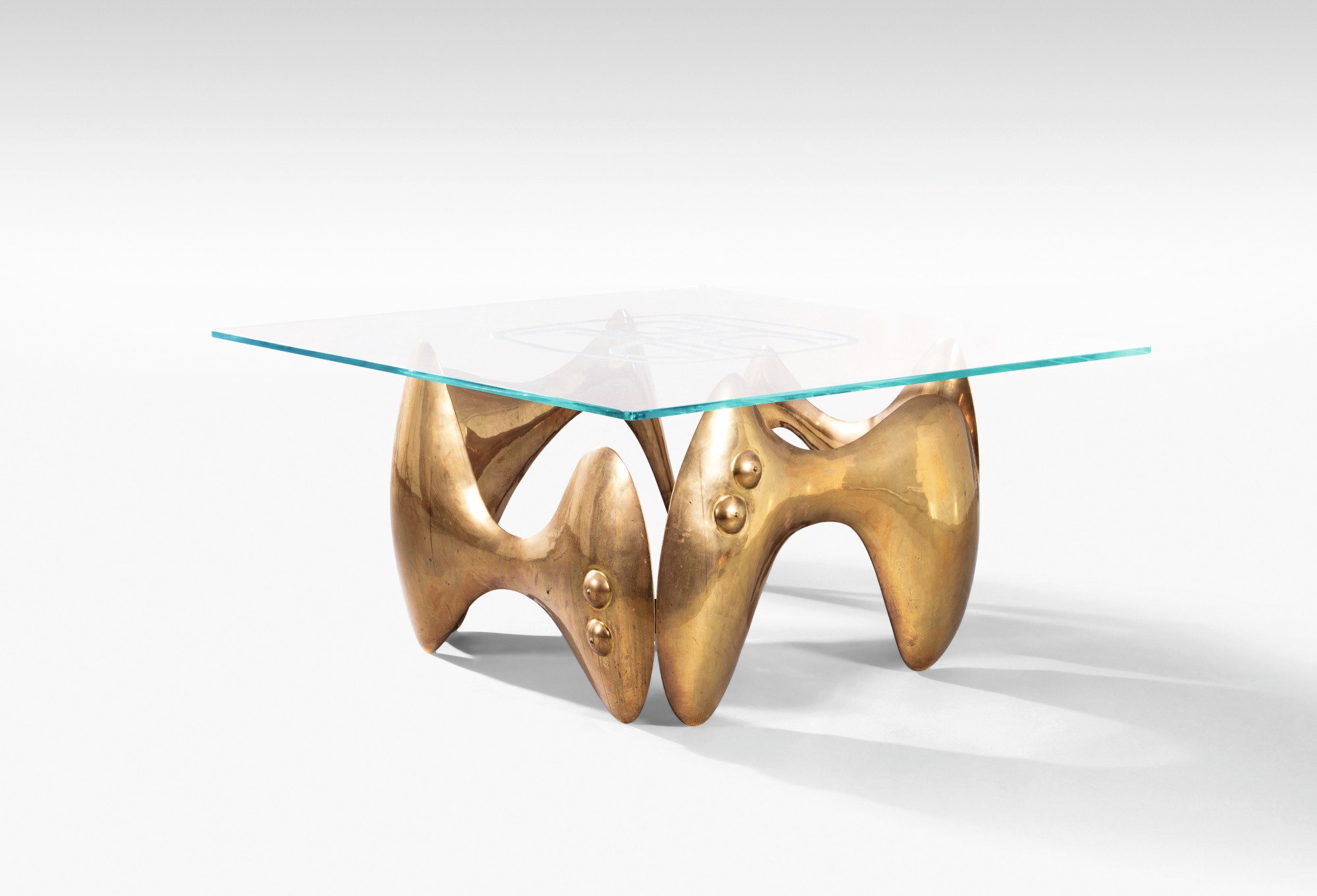
Philippe Hiquily
Table femme
There are affinities too with the playful and sometimes transgressive figuration of Niki de Saint Phalle, and with the kinetic concerns of Jean Tinguely, whose machines treated movement and humor as valid sculptural languages. Where Hiquily diverges from all of these is in his sustained, almost devotional attention to the female form: not as object or symbol but as an inexhaustible source of compositional energy, a subject whose curves and extensions and implied movements gave his entire practice its animating rhythm. Philippe Hiquily died in Paris in 2013, leaving behind a body of work that continues to find new admirers with each passing year. His legacy is one of integration: he brought together the technical inheritance of French metalwork, the philosophical provocations of Surrealism, the spatial freedom of kinetic sculpture, and the everyday pleasures of beautifully made furniture into a practice of singular coherence and warmth.
To live with a Hiquily is to accept a standing invitation to look again, to notice how light moves across a surface, how a silhouette changes with your position in the room, how sculpture can hold desire and laughter and craft in the same arching gesture. That invitation remains open, and it is as generous and alive as ever.