Philip-Lorca diCorcia

Philip-Lorca diCorcia: Light That Transforms Everything
Artist Spotlight · The Collection Editorial
“I want there to be a moment of doubt about the nature of reality in the photograph.”
Philip-Lorca diCorcia, interview with Aperture
There is a particular kind of attention that Philip Lorca diCorcia demands from his viewers, one that is patient, curious, and ultimately rewarding. His photographs do not yield their secrets immediately. They seduce first with their cinematic luminosity, their impeccable compositional intelligence, their uncanny sense that something profound and human is trembling just beneath the surface. Over the past four decades, diCorcia has built one of the most quietly influential bodies of work in contemporary photography, and major institutional collections from the Museum of Modern Art in New York to the Whitney Museum of American Art to the Los Angeles County Museum of Art have recognized what discerning collectors have known for years: this is an artist working at the very highest level.
Philip-Lorca diCorcia
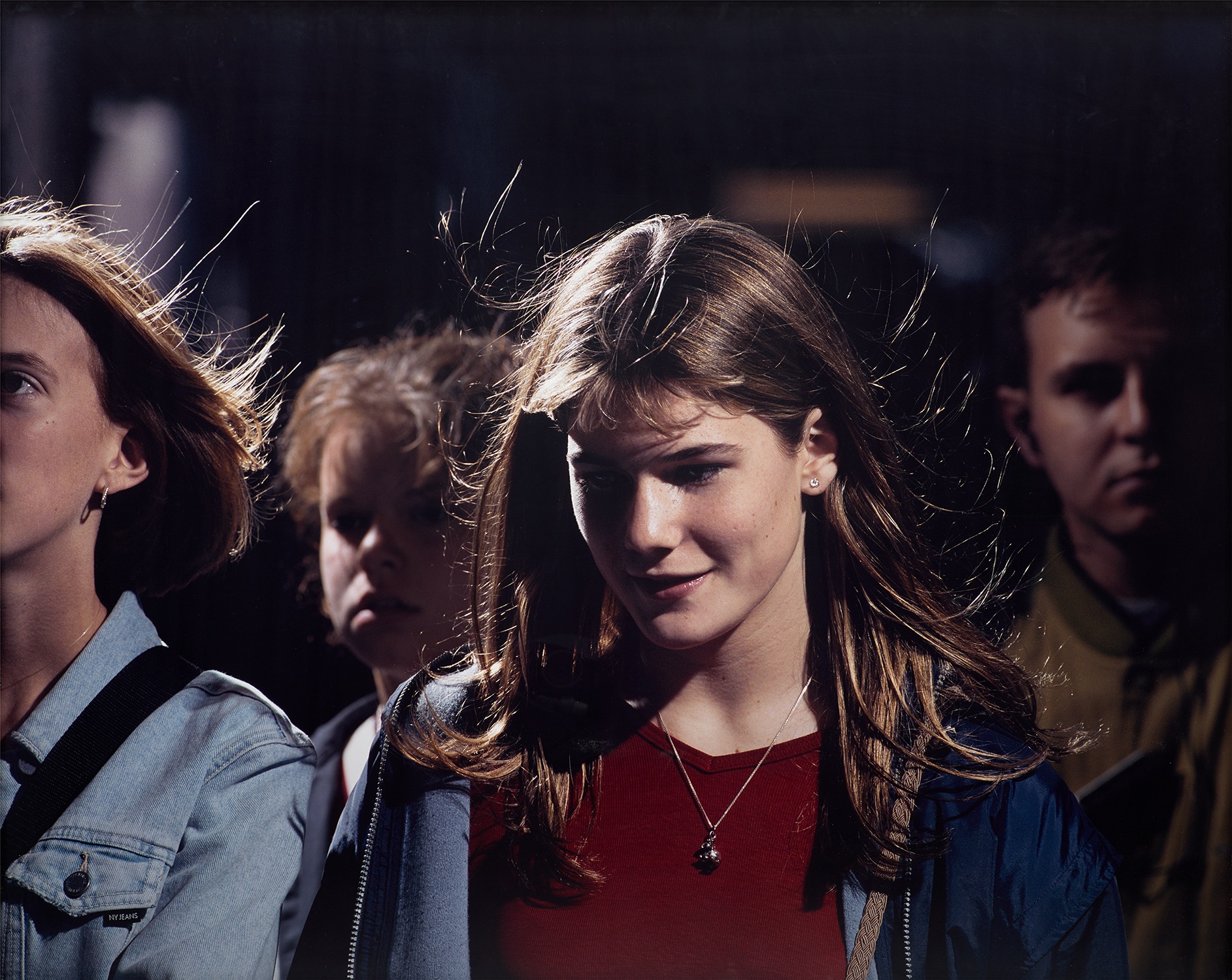
Michael Jenson, 19 years old, Dallas, Texas, $20 / Jerry Imel, 18 years old, Wichita, Kansas, $20
Philip Lorca diCorcia was born in Hartford, Connecticut in 1951, and came of age during a period when American photography was in vigorous conversation with itself. He studied at the School of the Museum of Fine Arts in Boston before completing his MFA at Yale University in 1979, an institution that was already nurturing some of the most provocative visual thinkers in the country. Yale's rigorous critical environment, combined with the influence of teachers who encouraged serious engagement with art history and cinema alike, gave diCorcia a foundational framework that would shape everything that followed. He arrived in photography at a moment when artists were beginning to question the documentary tradition from the inside, asking whether the apparent neutrality of the camera was ever really neutral at all.
His early work, produced in the 1980s, already demonstrated the signature tension that would come to define his practice. Working with friends and family members in domestic settings, diCorcia used elaborate off camera lighting rigs to create images that looked spontaneous but were elaborately orchestrated. The photographs resembled film stills, charged with implied narrative and emotional ambiguity, yet they depicted ordinary people in recognizable spaces. This interplay between the staged and the found, between the theatrical and the truthful, became diCorcia's great subject.
Philip-Lorca diCorcia
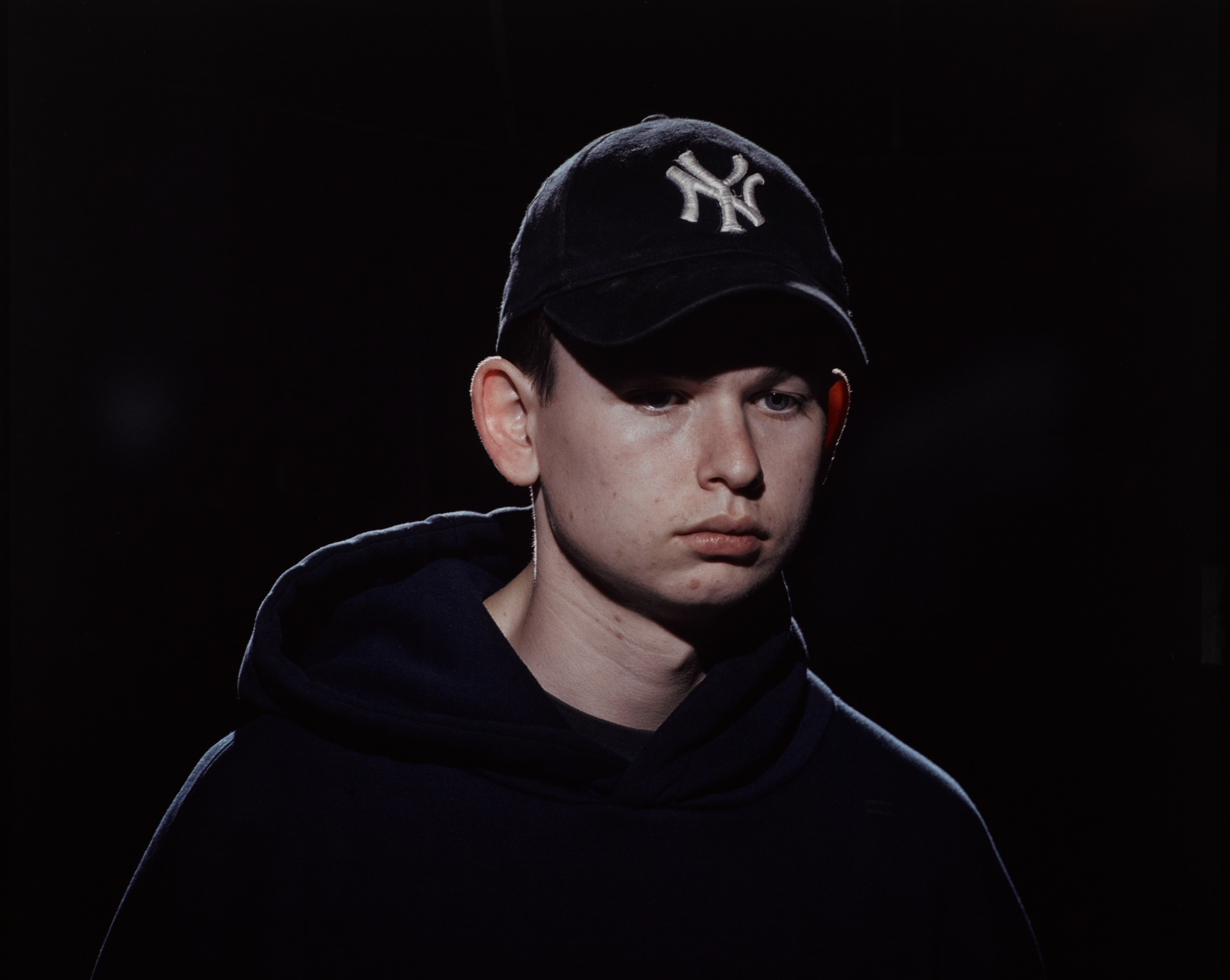
Head #10, 2000
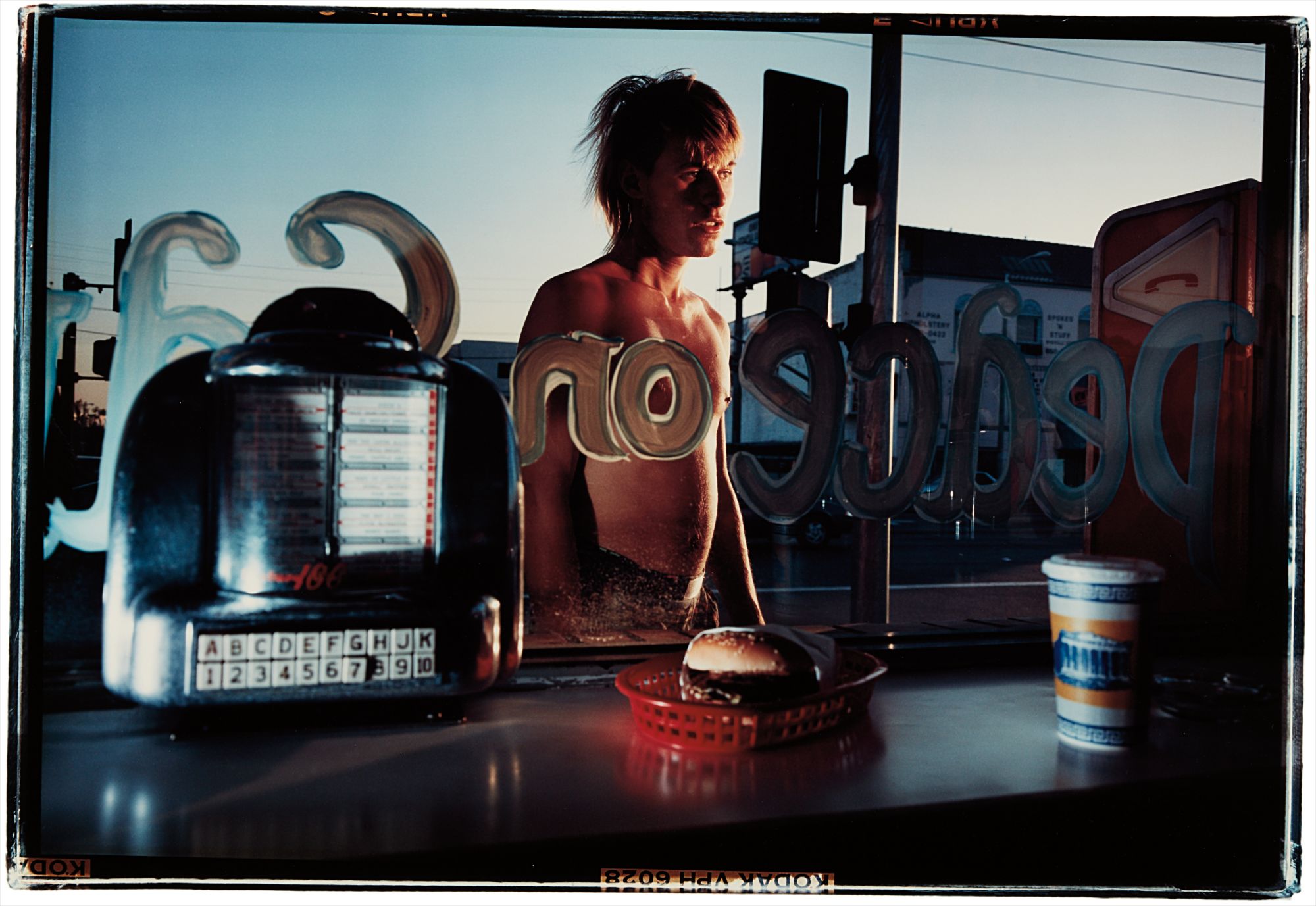
He was asking a question that remains urgently relevant: what do we actually see when we look at a photograph, and how much of what we feel is projection? The series that brought diCorcia to widespread critical attention was Hustlers, produced between 1990 and 1992 with support from a National Endowment for the Arts grant. Working on Santa Monica Boulevard in Los Angeles, diCorcia paid male sex workers the same fee they would charge for their services to pose for his camera. The resulting chromogenic prints are among the most discussed and reproduced photographs of their era.
Works such as Eddie Anderson, 21 years old, Houston, Texas, $20 and Ike Cole, 38 years old, Los Angeles, California, $25 (Mayfair Market) are electric with contradictions. The men are bathed in diCorcia's characteristic theatrical light, elevated by the photography into something approaching the grandeur of Renaissance portraiture, yet the titles, with their stark biographical data and dollar amounts, insist on the economic and social realities of their subjects' lives. The series refuses to let its viewers look away from that contradiction, and it is precisely this refusal that gives the work its enduring moral and aesthetic force. If Hustlers announced diCorcia as a major voice in contemporary photography, his subsequent series Heads, produced primarily in 2001, confirmed his place in the canon.
Philip-Lorca diCorcia
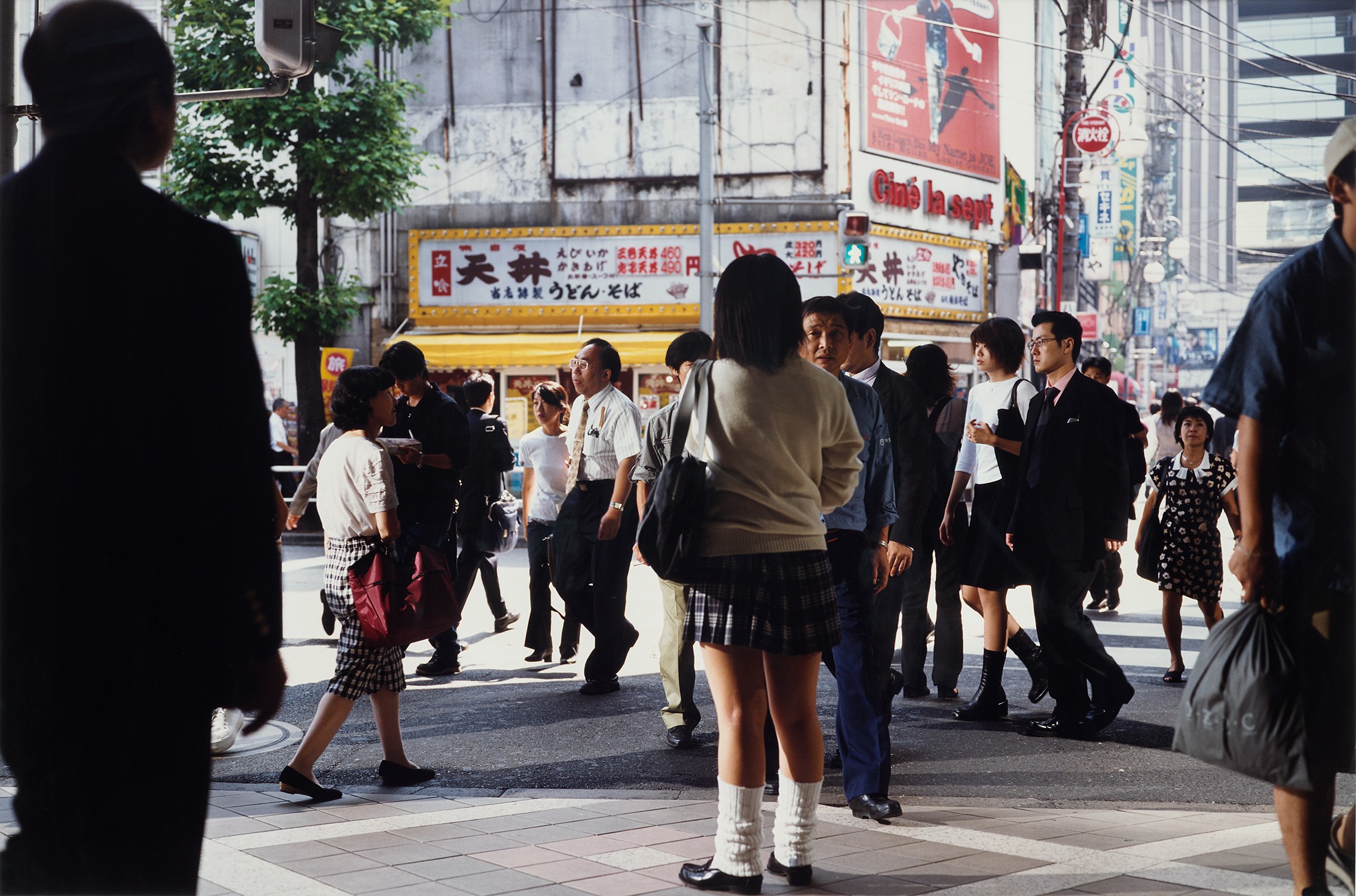
Heads #24
Working in Times Square with a long lens camera and powerful strobe lights hidden on scaffolding above the crowd, diCorcia photographed unsuspecting pedestrians in a fraction of a second, capturing faces illuminated against the surrounding darkness as if by a single divine spotlight. The results, including Head #10 and Head #11, are extraordinary: anonymous individuals who become, through the alchemy of diCorcia's light and framing, vessels of something universal. The series sparked a significant legal challenge when one of the photographed subjects, a retired diamond merchant named Erno Nussenzweig, sued the artist over his image, a case that raised foundational questions about photography, consent, and the status of public space. The courts ultimately ruled in diCorcia's favor, and the episode, while serious, underscored how charged and consequential his practice had become.
The market for diCorcia's work reflects the depth and seriousness of collector interest that has built steadily over three decades. His prints, typically produced in carefully controlled editions, appear regularly at the major international auction houses, where strong results confirm sustained demand. Collectors are drawn to the works' unusual combination of formal beauty and conceptual rigor: they are simultaneously pleasurable to live with and inexhaustibly interesting to think about. The Hustlers photographs in particular carry a kind of art historical weight that is rare in photography of any generation.
Philip-Lorca diCorcia
Eddie Anderson, 21 years old, Houston, Texas, $20
Works such as Todd Brooks, 22, Denver, Colorado, $40 and Eric Hutsell, 27 Years Old, Southern California, $20 reward close looking in the way that great paintings do, revealing new details and emotional registers the longer one spends with them. Collectors acquiring a diCorcia photograph are acquiring not just an object of exceptional beauty but a position within one of the defining conversations of contemporary art. Within the broader history of photography and contemporary art, diCorcia occupies a pivotal position. His work exists in productive dialogue with that of Cindy Sherman, whose staged self portraits interrogate identity and representation with comparable sophistication, and with Gregory Crewdson, whose elaborately constructed suburban tableaux share diCorcia's debt to cinema and his interest in the uncanny dimensions of American life.
He is also in conversation, perhaps unexpectedly, with artists such as Jeff Wall, the Canadian photographer whose large scale lightbox works similarly explore the boundary between documentary and staged imagery. Yet diCorcia's voice is entirely his own: warmer than Wall, more streetwise than Crewdson, more concerned with actual human beings and their social conditions than many of his contemporaries. What makes diCorcia's legacy so durable is the way his photographs insist on the dignity and complexity of his subjects even as they acknowledge the constructed nature of the image. In a cultural moment when questions of representation, visibility, and truth in photography feel more urgent than ever, his work from the 1980s through the 2000s reads as remarkably prescient.
He understood early that the documentary photograph was always also a fiction, always also an act of authorship, and he chose to make that tension the heart of his art rather than a problem to be solved. The result is a body of work that belongs to the great tradition of humanist photography while remaining entirely contemporary in its intelligence and ambition. To encounter a diCorcia photograph is to be reminded of what the medium, at its most serious and most generous, is capable of achieving.
Explore books about Philip-Lorca diCorcia