Peter Lindbergh
Peter Lindbergh: Truth, Beauty, and Lasting Grace
Artist Spotlight · The Collection Editorial
“It is the mission of photography to explain man to himself.”
Peter Lindbergh, interview with Der Spiegel
In the spring of 2023, the Kunsthal Rotterdam mounted a sweeping retrospective of Peter Lindbergh's work, drawing tens of thousands of visitors who stood before his large format prints in something close to reverence. The show reminded a new generation of what those already devoted to his practice had always known: that Lindbergh did not merely photograph people, he revealed them. His images carry a stillness and a psychological weight that feels closer to cinema or literature than to the pages of a fashion magazine, and in the years since his passing in September 2019, the art market and the museum world have only grown more certain of his canonical importance. Lindbergh was born Peter Brodbeck in 1944 in Leszno, a city in what was then occupied Poland, and raised in Duisburg, in the industrial Ruhr region of Germany.
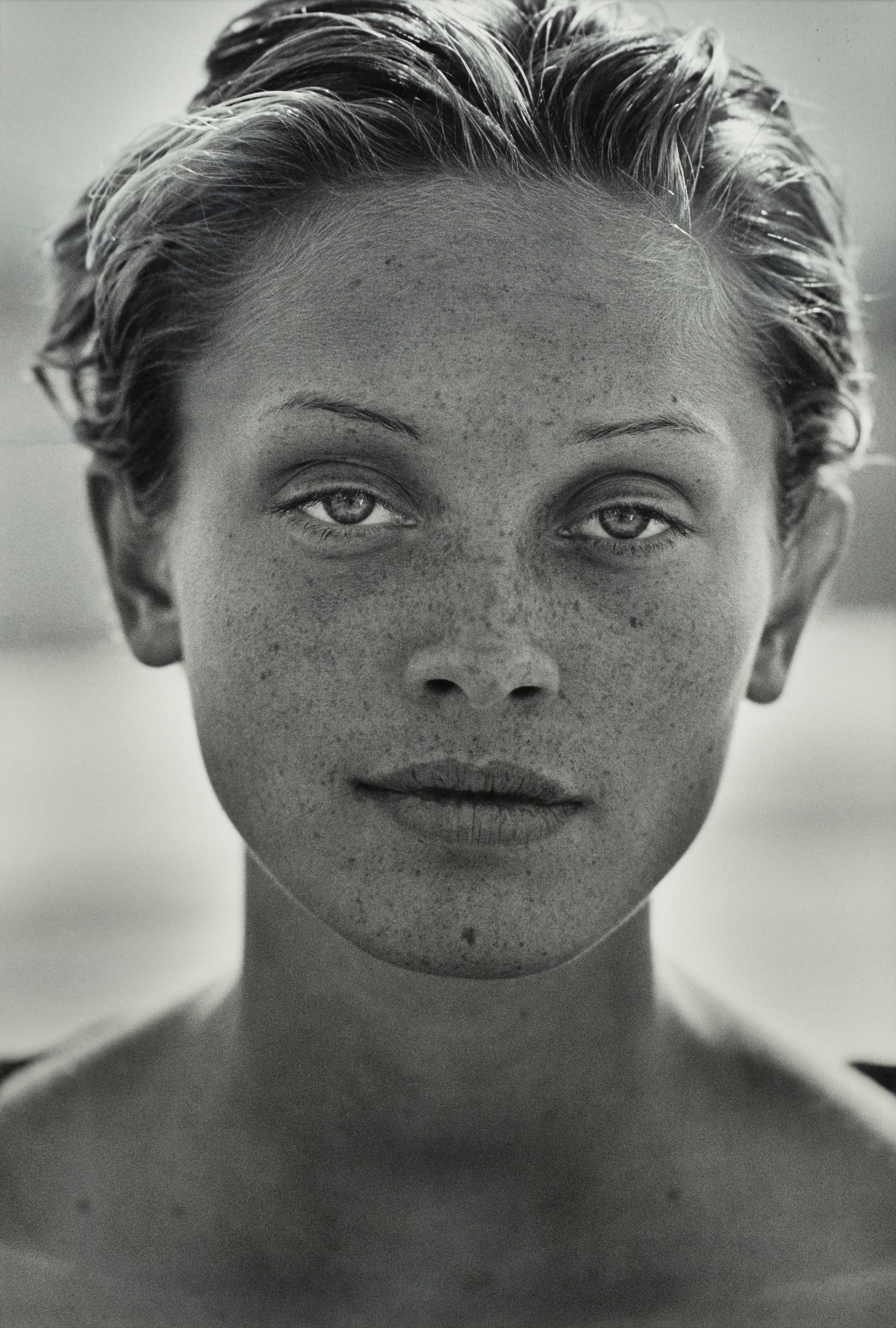
Peter Lindbergh
Beri Smither, Harper's Bazaar, El Mirage, California, 1993
The gritty textures of postwar German working life left a permanent impression on his visual imagination. He later studied at the Berlin Academy of Fine Arts, and it was there that he began developing the serious, humanistic sensibility that would define everything he made. Before photography became his calling, he worked as a window dresser and assisted photographer Hans Lux, absorbing the craft from the ground up in a way that gave his eventual mastery a tactile, hands on quality entirely his own. His breakthrough arrived in the early 1980s when he began contributing to publications including Vogue and Harper's Bazaar, and his ascent was swift and decisive.
Where the prevailing aesthetic of the era leaned toward high gloss artifice, elaborate studio constructions, and an almost surgical perfection, Lindbergh moved instinctively in the opposite direction. He favored overcast natural light, open industrial spaces, and deserted stretches of coastline or desert. He put his subjects in motion, asked them to run or laugh or simply stand without instruction, and caught them in moments of unguarded authenticity. His preference for black and white photography was not nostalgic but philosophical: by removing color, he stripped away distraction and focused the viewer entirely on the human face and form.
Peter Lindbergh
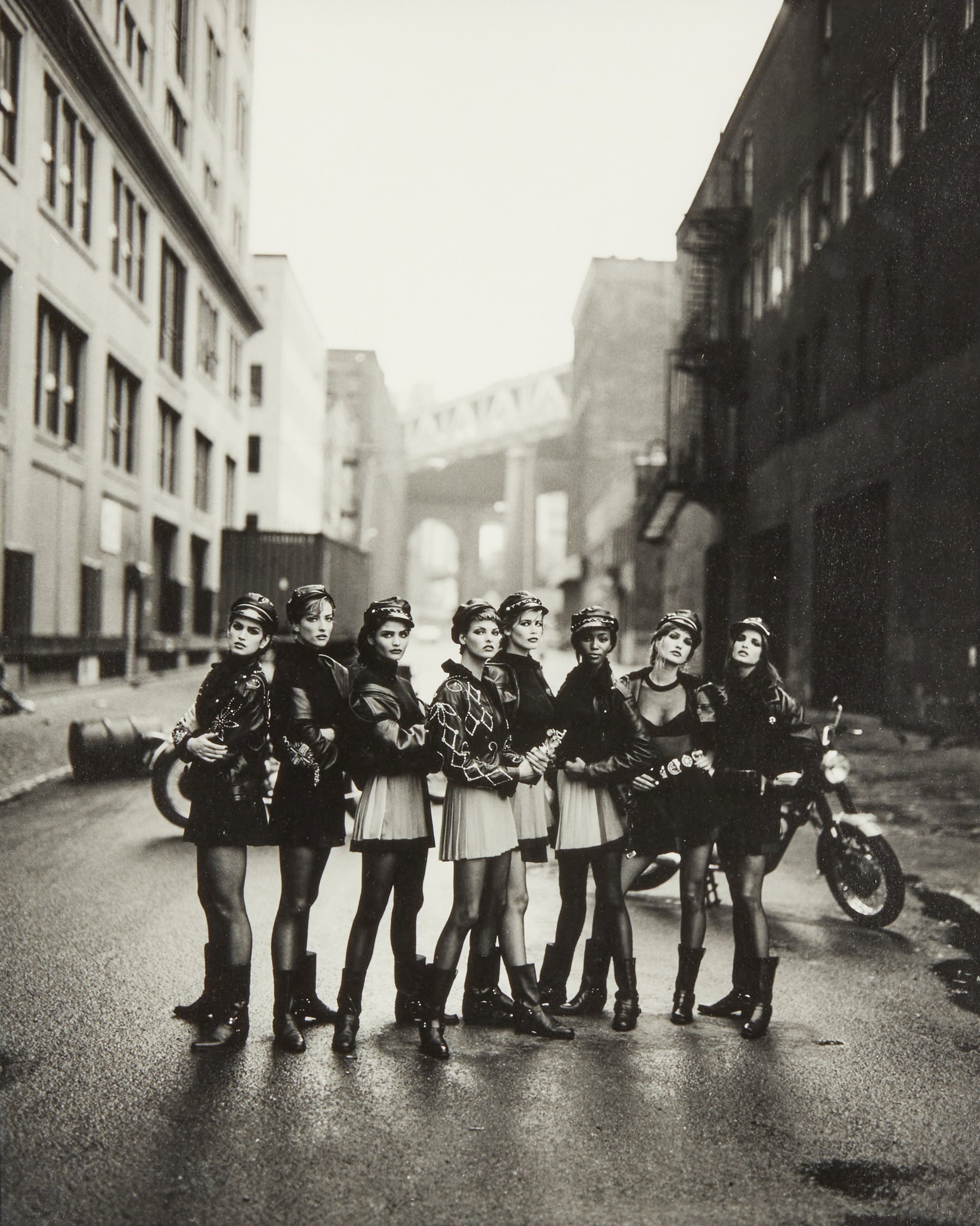
'Cindy Crawford, Tatjana Patitz, Helena Christensen, Linda Evangelista, Claudia Schiffer, Naomi Campbell, Karen Mulder, Stephanie Seymour, Brooklyn, Vogue U. S. A.'
The works now available on The Collection represent some of the most celebrated chapters of that career. His 1993 image of Beri Smither for Harper's Bazaar, shot at El Mirage in California, exemplifies his approach with crystalline clarity: a vast, flat landscape, bleached and ancient, frames a single figure with a quiet monumentality that feels almost biblical. His group portrait gathering Cindy Crawford, Tatjana Patitz, Helena Christensen, Linda Evangelista, Claudia Schiffer, Naomi Campbell, Karen Mulder, and Stephanie Seymour for Vogue USA in Brooklyn became one of the defining images of the supermodel era, not because it flattered or glamorized but because it humanized. These women, individually among the most photographed people on earth, appear together as genuine companions, relaxed and present.
“What could be more beautiful than to capture the soul of a person in a fraction of a second?”
Peter Lindbergh
The image launched careers and shifted the culture of fashion photography in ways still felt today. His portrait of Catherine Deneuve, rendered in gelatin silver, carries the same quality of intimate respect: the frame does not perform her legend so much as it simply acknowledges a remarkable human presence. For collectors, Lindbergh's prints offer something rare in the photography market: works that hold their aesthetic authority across decades without any sense of period datedness. His gelatin silver prints, many signed and numbered in limited editions, have attracted serious institutional and private attention at auction.
Peter Lindbergh
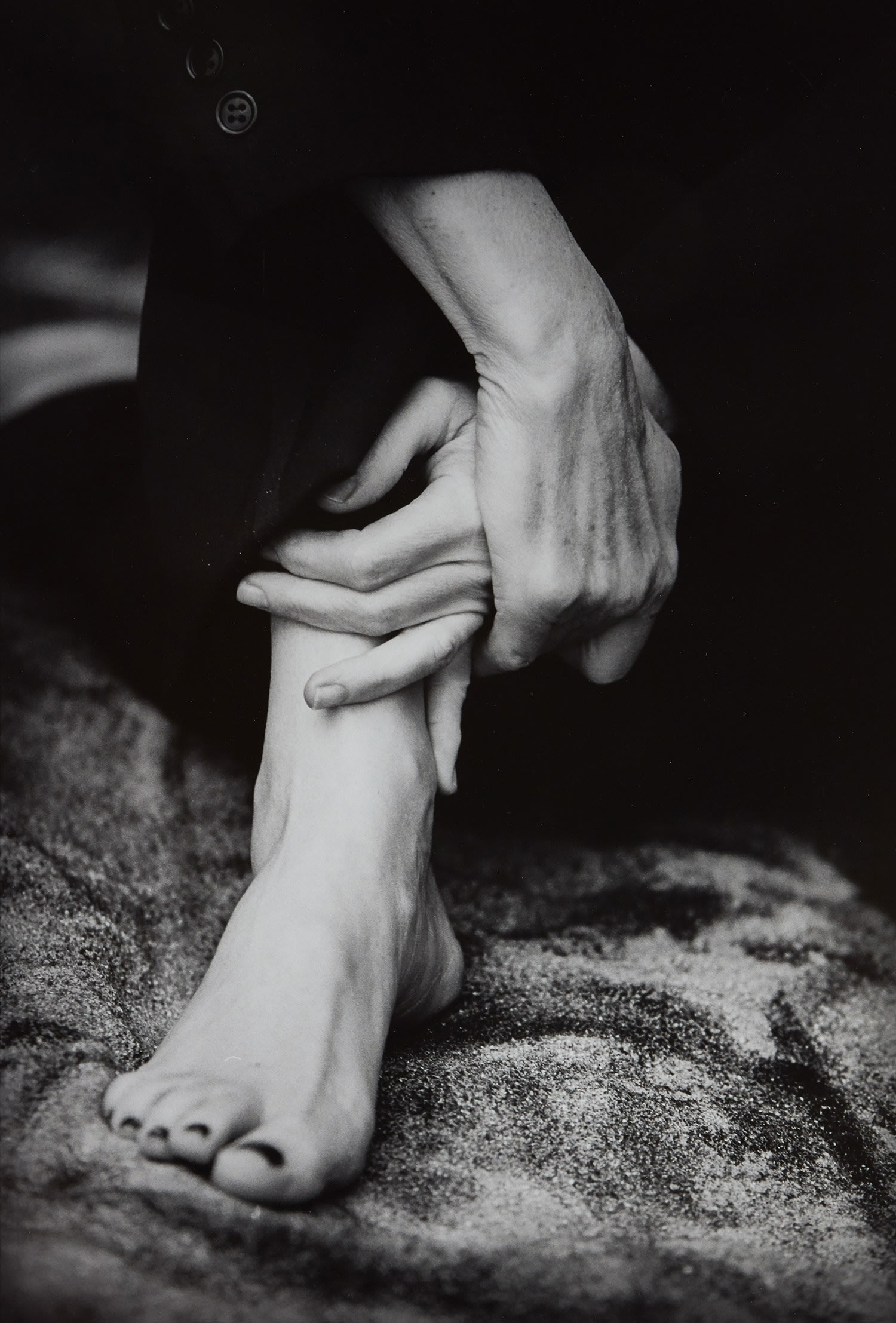
Catherine Deneuve
Works have appeared at Christie's, Sotheby's, and Phillips with consistent strength, and signed, numbered examples in excellent condition command particular premiums. Collectors should pay close attention to provenance and to the printing history: some prints were produced during the original shoot period while others, noted as printed later, were authorized by Lindbergh himself and carry their own documentary significance. The diversity of subjects in his body of work, from supermodels to actresses to musicians such as Madonna, means a collection can be built around a single thematic thread or assembled as a broad survey of late twentieth century portraiture at its most searching. Within the broader history of photography, Lindbergh belongs to a lineage that includes Richard Avedon, Irving Penn, and Helmut Newton, artists who understood that fashion photography could be a genuine art form without apology.
Where Newton pursued provocation and Penn sought formal perfection, Lindbergh's unique contribution was empathy. He is perhaps most usefully compared to contemporaries such as Annie Leibovitz and Herb Ritts, each of whom brought a distinct emotional register to celebrity portraiture, but Lindbergh's cinematic restraint and his deep investment in unretouched reality set him apart. His work shares DNA with the New Objectivity tradition in German art, that early twentieth century commitment to seeing clearly and honestly without sentimentality, and it is no coincidence that his formation was rooted in the same cultural soil. Lindbergh's legacy is already inscribed in the history of both fashion and fine art photography, but it continues to accumulate meaning in the present tense.
Peter Lindbergh
Sasha with Bolex, French Vogue, Le Touquet, France
At a cultural moment when digital manipulation has made photographic truth an increasingly contested concept, his insistence on natural beauty, on the face as it actually is rather than as software might prefer it to be, feels not merely admirable but urgent. He was one of the first major fashion photographers to refuse retouching as a standard practice, and he spoke and wrote about this conviction with genuine moral seriousness. The women he photographed across four decades have consistently described the experience of working with him as one of liberation rather than performance, of being seen rather than constructed. That quality of seeing, generous and exact and always deeply human, is precisely what elevates his prints from documents of an industry to works of enduring art.
Explore books about Peter Lindbergh