Peter Lanyon
Peter Lanyon: Cornwall's Sky and Soul
Artist Spotlight · The Collection Editorial
“A painting is not a picture of an experience, it is an experience.”
Peter Lanyon, artist statement
There are moments in art history when a body of work feels not merely observed but physically inhabited, as though the painter pressed their whole body against the world and left an impression. That is the sensation that greets visitors to any serious retrospective of Peter Lanyon, and it is a feeling that has been growing in cultural resonance for decades. Tate St Ives, the institution that stands in the landscape Lanyon loved most, has long honoured his place at the centre of British modernism, and major survey exhibitions in recent years have reconfirmed his status as one of the essential voices of twentieth century painting. For collectors and curators alike, Lanyon's work rewards sustained attention, revealing new layers of meaning with every encounter.
Peter Lanyon
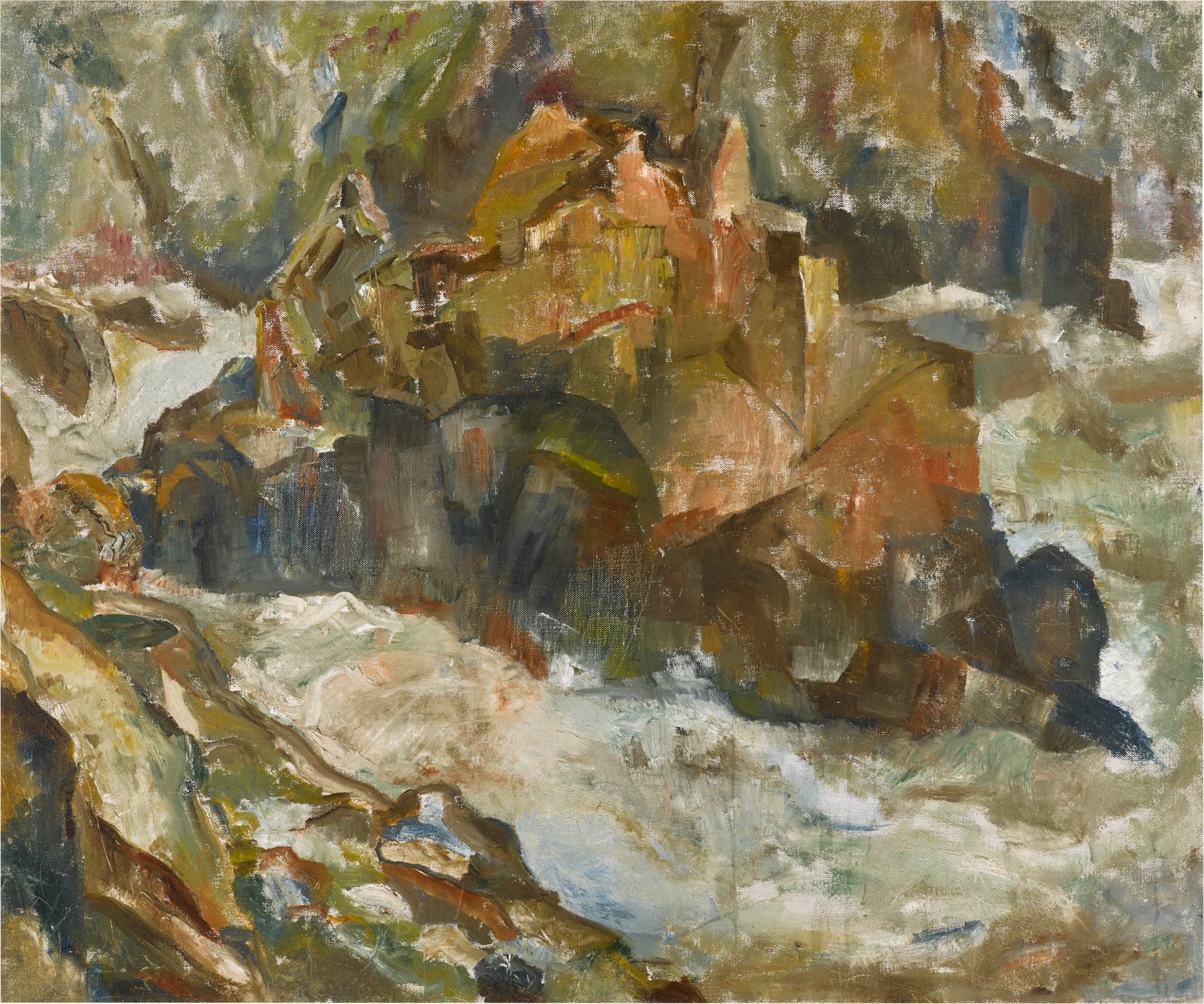
Untitled (Bosigran, Battleship Rock), 1936
Peter Lanyon was born in St Ives, Cornwall, in 1918, into a family with deep roots in that extraordinary peninsular community. His father was an amateur musician and photographer, and the household was one attuned to creative life. Growing up in a place of such raw elemental beauty, where Atlantic weather systems roll in without warning and the light shifts from pewter to gold in the space of an hour, shaped Lanyon's sensibility from the beginning. He was not an outsider drawn to Cornwall in search of the picturesque.
He was of it, formed by its granite cliffs, its fishing harbours, and its particular quality of atmospheric turbulence. His formal training brought him into contact with two figures who proved transformative. In the late 1930s Lanyon studied under Borlase Smart in St Ives, gaining technical grounding in observational painting. Then, in 1939, he encountered Ben Nicholson and Naum Gabo, who had arrived in Cornwall as part of a broader exodus of European modernists fleeing the gathering storm of the Second World War.
Peter Lanyon
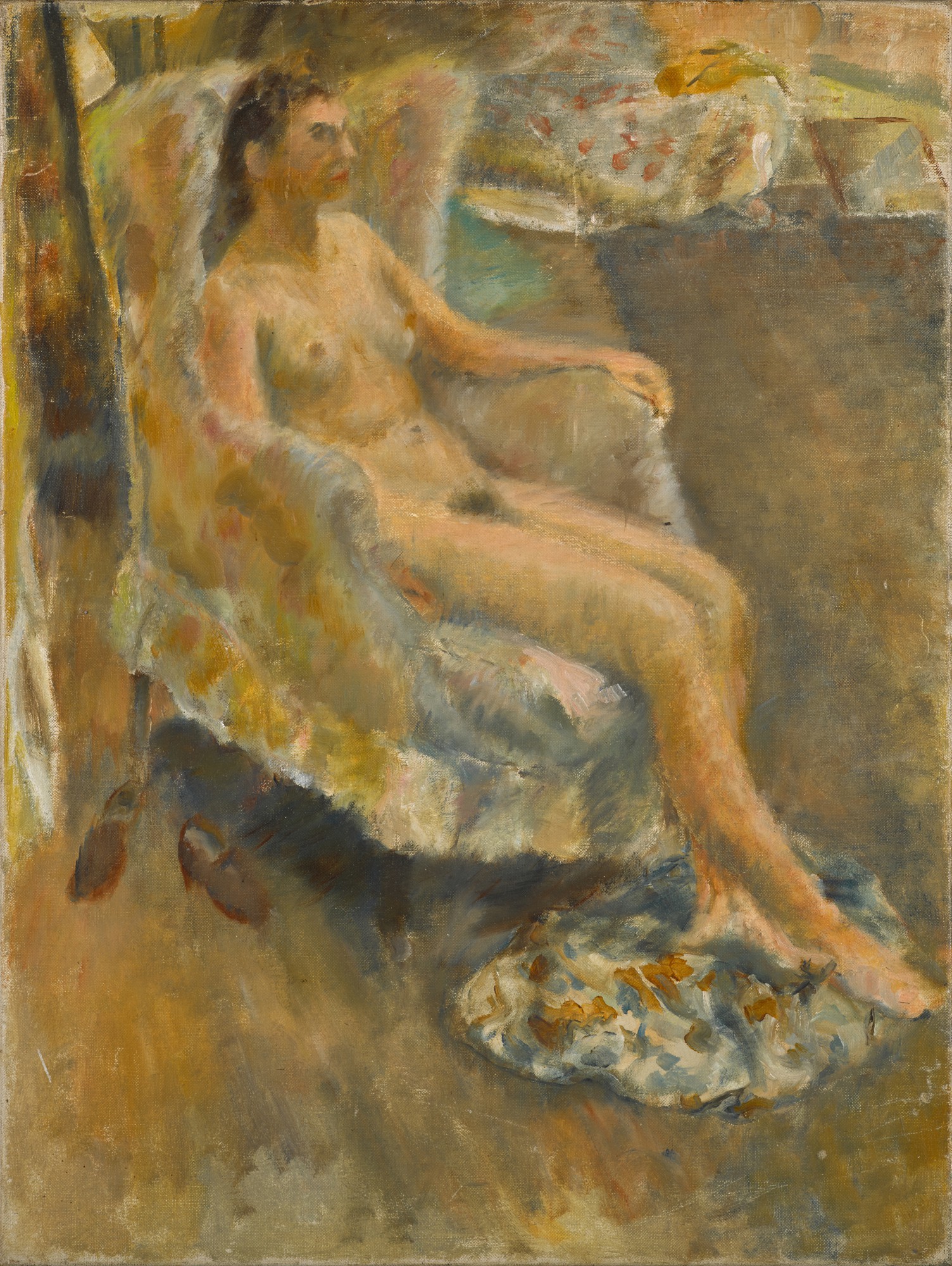
Untitled (Nude Euston Road School), 1939
The influence was electric. Gabo in particular opened Lanyon's eyes to the possibilities of constructed space and dynamic form, while Nicholson's rigorous abstraction offered a counterpoint to the more romantic tradition of English landscape painting. These encounters pushed Lanyon toward a synthesis that would define his entire career: a practice rooted in physical place but reaching always toward pure sensation. The war years interrupted his development, as Lanyon served in the Royal Air Force, an experience that would prove prophetic in ways he could not yet anticipate.
“I paint to explore my own country and to find out what I know.”
Peter Lanyon
Returning to Cornwall in the late 1940s, he threw himself into painting with renewed urgency. His work of this period moves through recognisable landscape forms toward something more elemental, as though he were trying to capture not the appearance of Cornwall but its underlying forces. By the early 1950s Lanyon was exhibiting at the Lefevre Gallery in London and beginning to attract serious critical attention. His 1952 construction works and the atmospheric canvases that followed placed him firmly within the international conversation about abstraction, even as his work remained stubbornly, passionately local.
Peter Lanyon
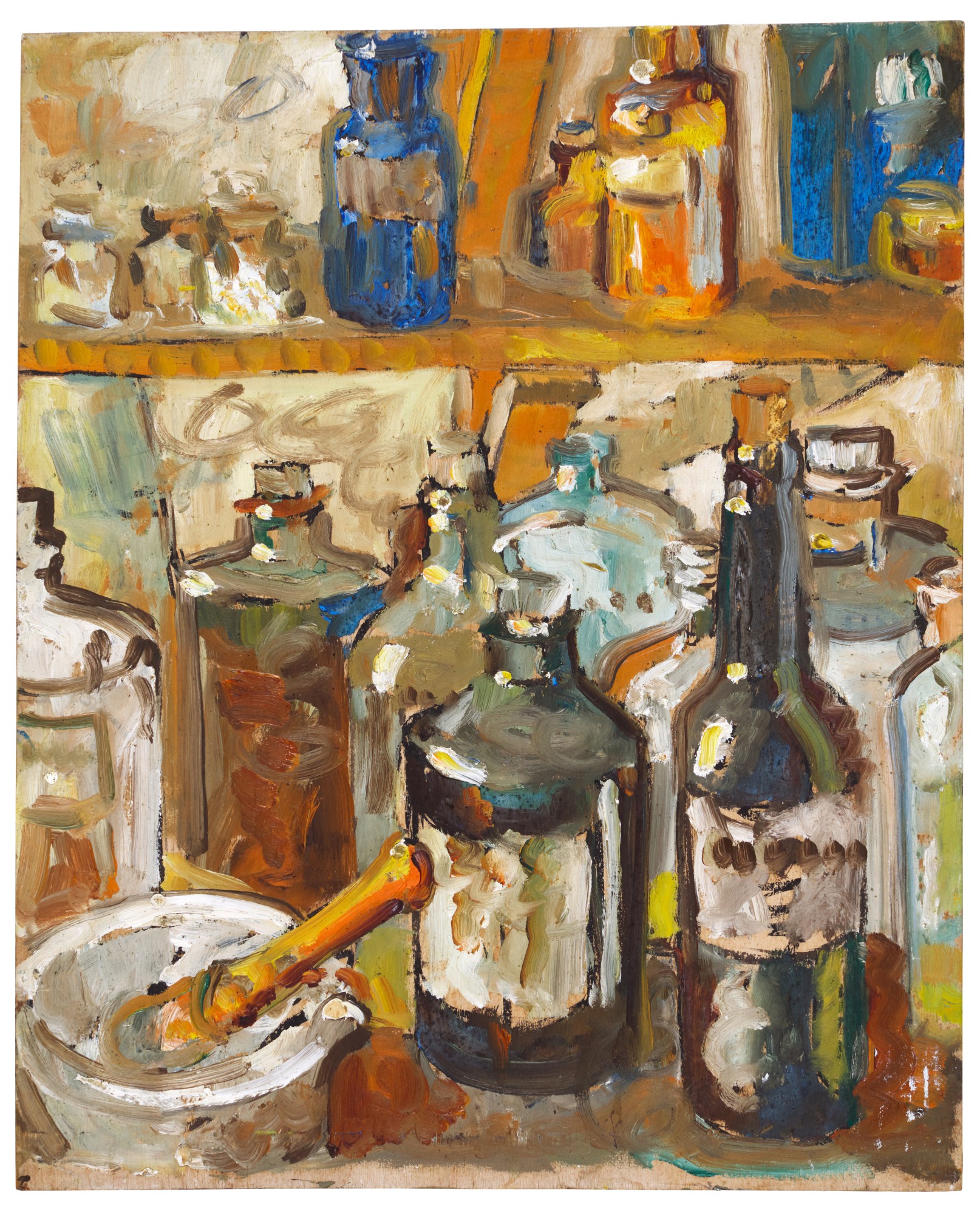
Pestle, Mortar and Bottles, 1937
The decisive revelation came in 1959 when Lanyon took up gliding. The experience of soaring over the Cornish landscape, feeling the invisible architecture of thermals and air currents beneath the wings of a glider, gave him an entirely new vocabulary. Suddenly the sky was not a backdrop but a medium as material as paint. Works from the early 1960s such as Thermal (1960) and Rising Air (1961) carry the memory of that suspended, turning, breathless perspective.
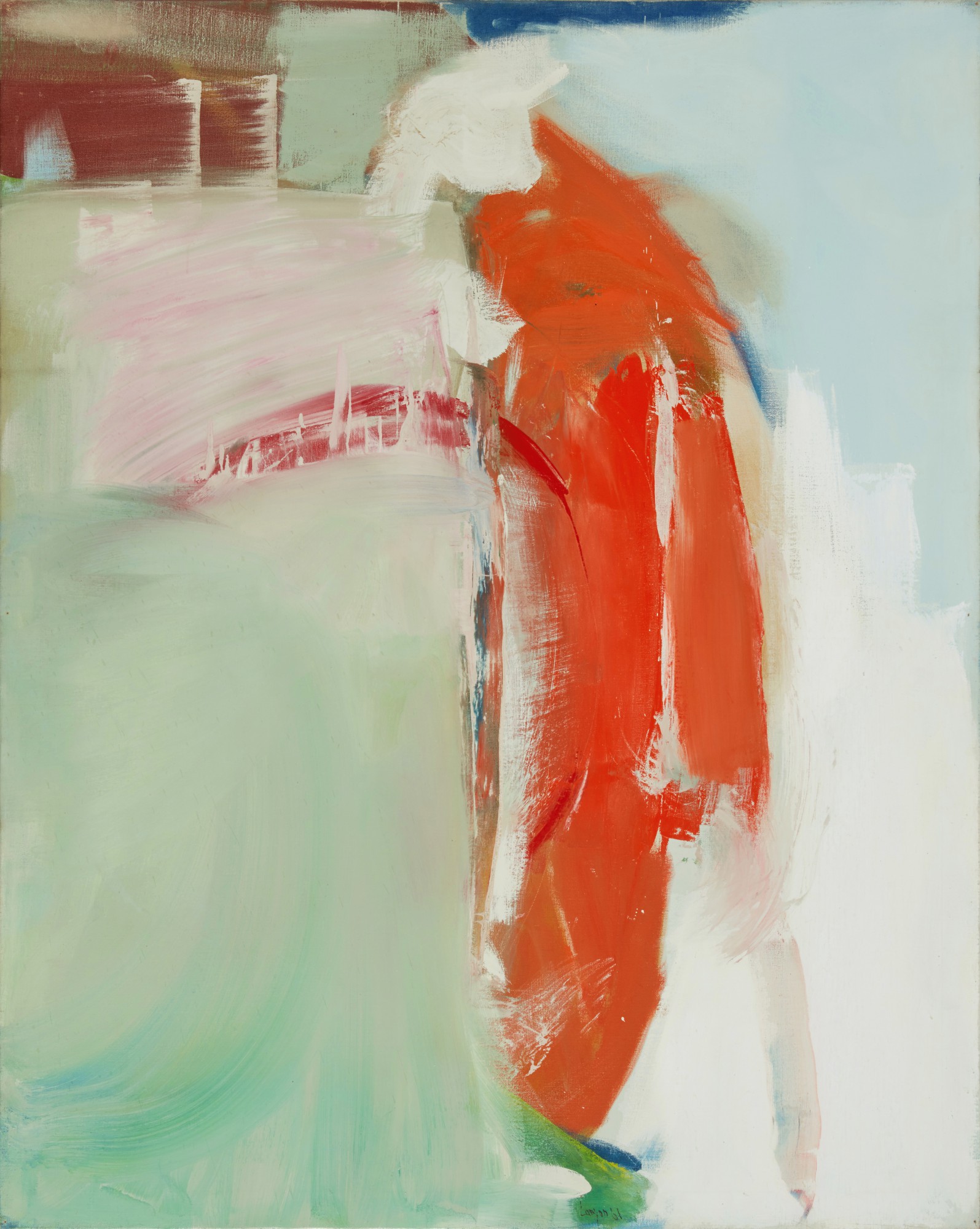
In Rising Air, the canvas seems to rotate around a luminous core of warm colour, blues and whites and ochres spiralling outward as though the viewer were banking through a column of heated air above a Cornish cliff. These paintings are among the most physically vivid works produced by any British artist of the postwar generation. The range of works available through The Collection offers a remarkable opportunity to trace Lanyon's development across three decades. His early oil paintings from the late 1930s, including St Ives Harbour (1938) and the intimate Pestle, Mortar and Bottles (1937), reveal a young painter of exceptional sensitivity working through the formal lessons of European modernism while remaining tethered to observed reality.
Peter Lanyon
Rising Air, 1961
Untitled (Bosigran, Battleship Rock) from 1936 shows the Cornish landscape asserting itself with particular force, the rocky formations of the far west of the peninsula rendered with a solidity that already hints at the physical intensity to come. By the time of Straw Wind (1957) and Susan (1958), Lanyon's mature language is fully formed, the surface alive with a gestural energy that owes something to American Abstract Expressionism while remaining distinctly and irreducibly Cornish. The 1961 works Forget Me Not and Rising Air represent the gliding period at its most distilled and transcendent. For collectors, Lanyon occupies a particularly compelling position in the market.
He is unambiguously a first rank figure in twentieth century British art, with works held by Tate, the Arts Council Collection, and major museums in the United States, where he enjoyed significant recognition during his lifetime. His solo shows at the Catherine Viviano Gallery in New York during the 1950s and early 1960s brought him into dialogue with the New York School, and artists including Mark Rothko expressed admiration for his work. At auction, Lanyon's paintings have achieved consistent and growing results, with his mature landscapes from the late 1950s and early 1960s commanding the strongest prices. Early works and works on paper offer extraordinary points of entry, combining historical significance with relative accessibility.
The diversity of media and period available through The Collection means that there is an authentic Lanyon to suit almost every collecting appetite. To understand Lanyon fully it helps to place him within a broader constellation of artists working through the relationship between abstraction and landscape. The St Ives School, with which he is most closely associated, included Patrick Heron, Terry Frost, Roger Hilton, and Bryan Wynter, all artists exploring the chromatic and spatial possibilities of the Cornish environment. Lanyon's work shares qualities with the American land connected abstractionists, and there are affinities too with the Welsh painter Ceri Richards and with certain aspects of the European informel movement.
Yet Lanyon is finally irreducible to any single tendency. His insistence on bodily knowledge, on painting as a form of physical encounter with the world, gives his work a dimension of presence that transcends period and movement. Peter Lanyon died in August 1964, following injuries sustained in a gliding accident in Wiltshire. He was forty six years old, and at the height of his powers.
The loss to British art was immeasurable, and yet the body of work he left behind is rich enough to sustain a lifetime of looking. More than six decades after his death, Lanyon continues to feel urgently alive, his canvases vibrating with the specific quality of light and air that made Cornwall a place of pilgrimage for so many artists. To collect Lanyon is to bring something of that irreplaceable vitality into your own space, a piece of the sky above the far west of England, held in paint.
Explore books about Peter Lanyon
