Peter Alexander
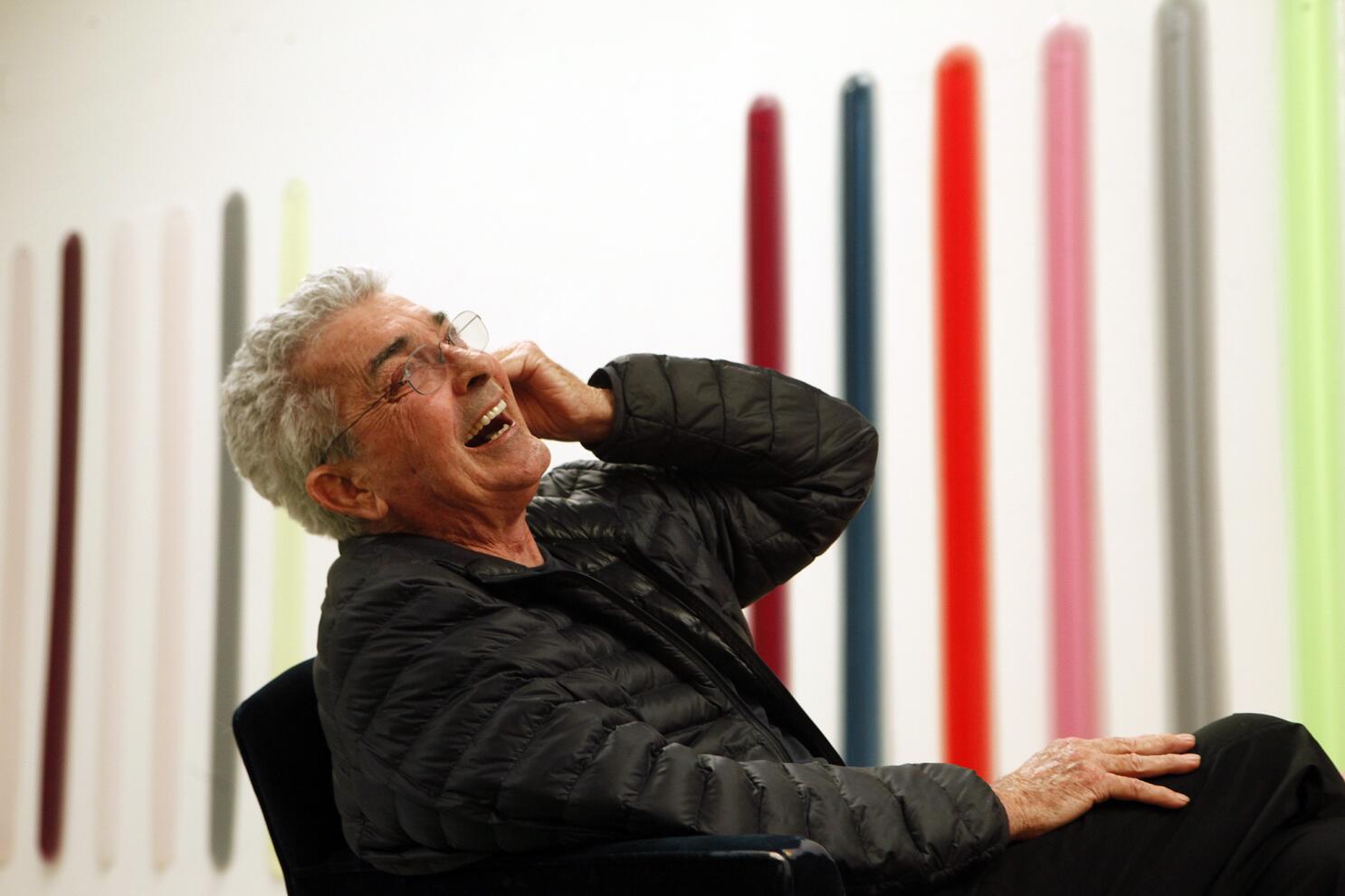
Peter Alexander, Where Light Becomes Everything
Artist Spotlight · The Collection Editorial
There is a moment, standing before a Peter Alexander wedge, when the eye refuses to settle. The urethane catches whatever light is in the room and transforms it into something interior, something almost breathing. It is a sensation that collectors and curators have returned to for more than five decades, and one that continues to generate serious institutional attention. In 2019, the Palm Springs Art Museum mounted a comprehensive survey of Alexander's work that brought together sculptures, paintings, and resin pieces spanning his entire career, affirming his central place in the history of California art and reminding a new generation just how singular his contribution has been.
Peter Alexander
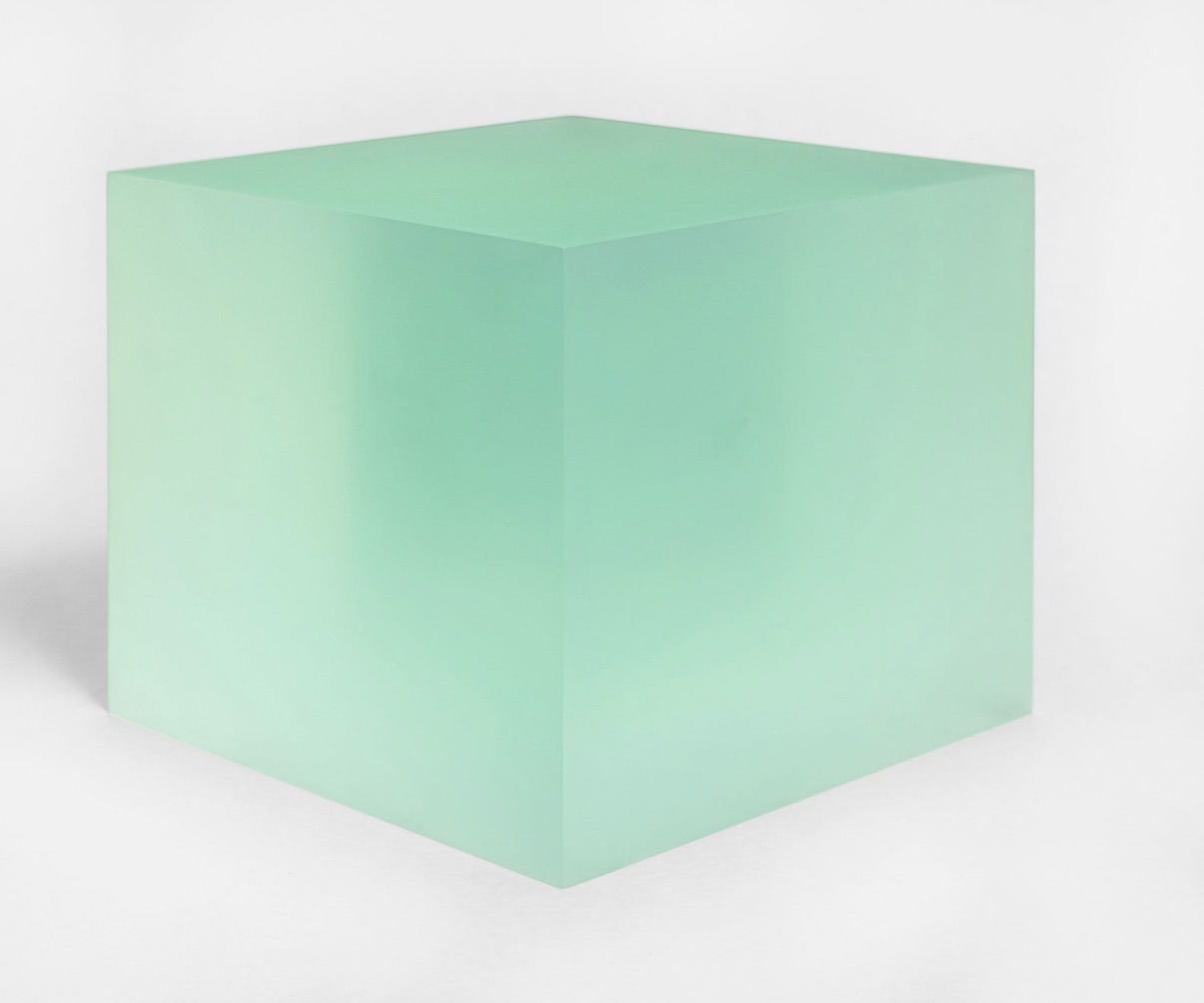
10/7/16 (Flo Lime Box), 2016
Peter Alexander was born in Los Angeles in 1939, a fact that feels almost preordained given the city he would come to define artistically. He grew up immersed in the particular quality of Southern California light, that flat, diffuse, almost hallucinatory brightness that falls differently there than anywhere else on earth. His formal education was rigorous and wide ranging. He studied architecture at the University of Pennsylvania, then moved through the University of California, Berkeley, before earning his MFA from UCLA in 1962.
That architectural training never left him. You can feel it in the precision of his forms, in his instinctive understanding of how an object occupies space and how space responds in return. The 1960s in Los Angeles were an extraordinary moment to be a young artist. The Ferus Gallery, under the direction of Irving Blum and Walter Hopps, had established the West Coast as a genuine center of avant garde practice.
Peter Alexander
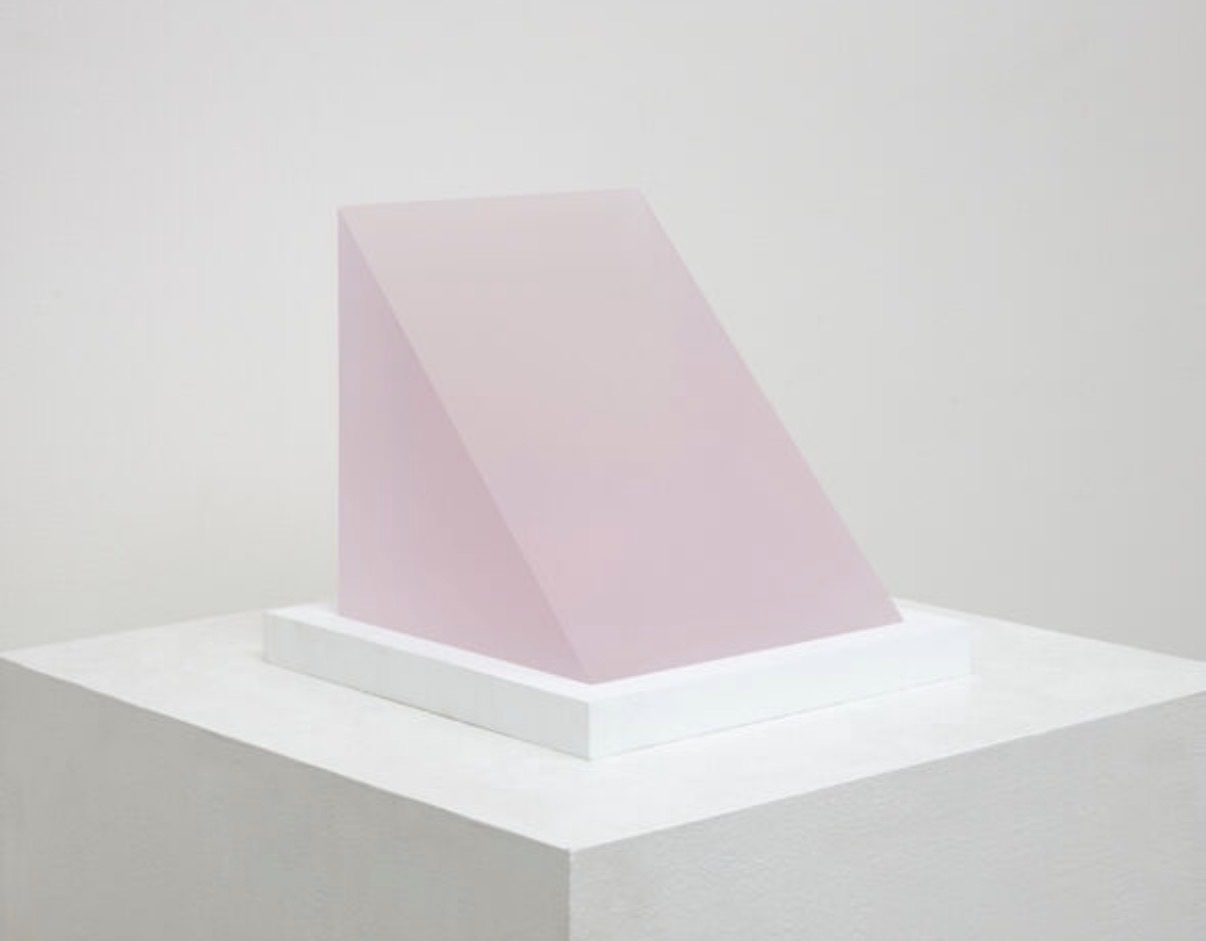
3/20/18 (Frosted Pink Wedge), 2018
Artists like Larry Bell, Robert Irwin, James Turrell, and Doug Wheeler were all pushing toward questions about perception, atmosphere, and the phenomenology of seeing. Alexander moved naturally into this orbit. He became one of the founding figures of what critics would come to call the Light and Space movement, a loose but philosophically coherent group united by their interest in how materials and environments could be made to manipulate human perception at its most fundamental level. Alexander's great breakthrough was his discovery of cast polyester resin as an artistic medium.
Beginning in the late 1960s, he poured and layered this industrial material into molds, trapping light within translucent or semi translucent forms. The results were unlike anything being made elsewhere. His early resin cubes and wedge shapes glowed from within, their surfaces simultaneously present and immaterial. Galerie Rosamund Felscher in Zurich and Pace Gallery in New York both championed his work during formative periods, helping to establish his international reputation alongside his growing recognition at home.
Peter Alexander
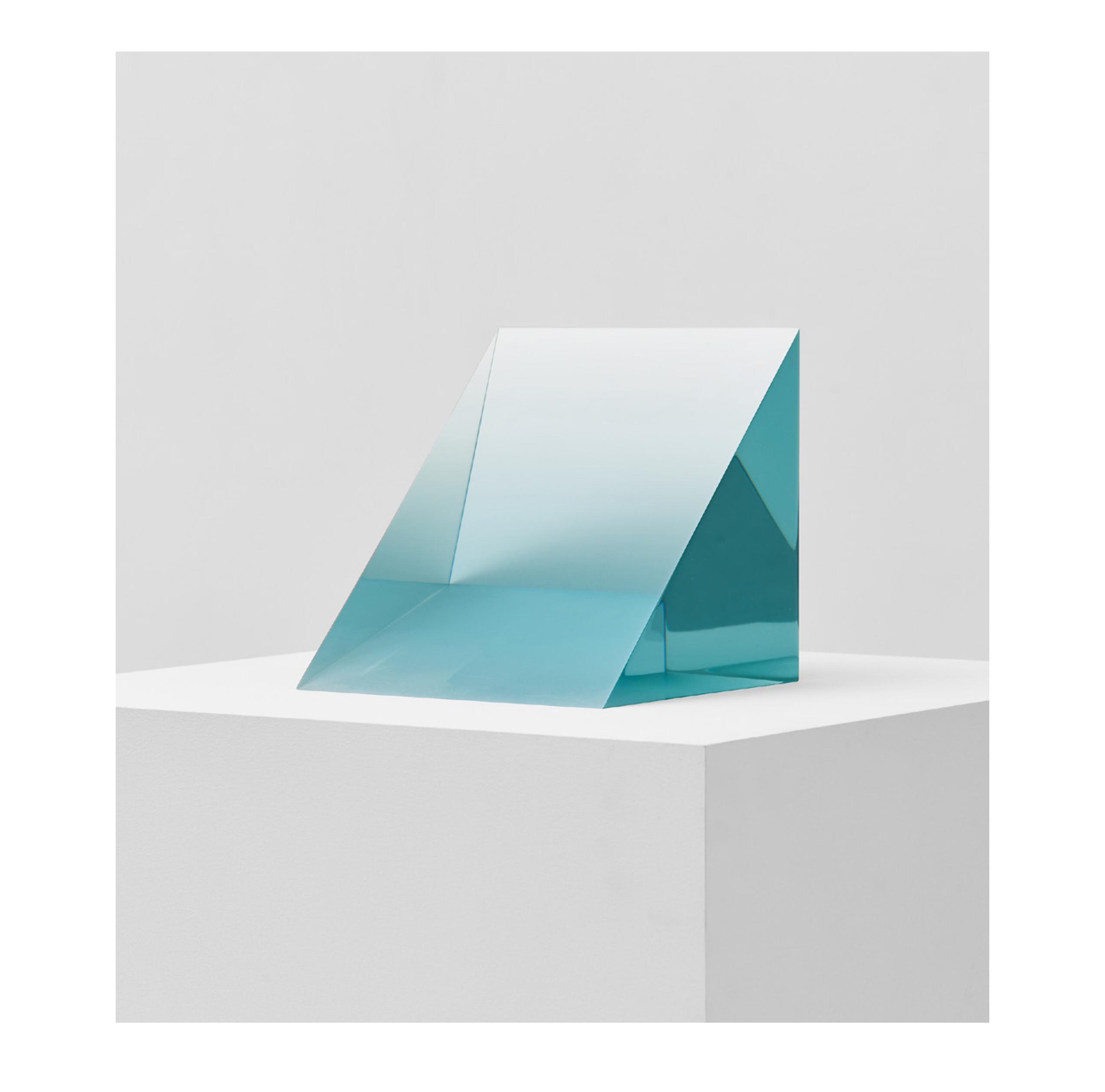
12/13/19 Blue Grey Wedge, 2019
The Whitney Museum of American Art and the Los Angeles County Museum of Art acquired works early, giving institutional weight to what was already becoming a celebrated practice. Over the following decades, Alexander expanded his vocabulary considerably. He moved between sculpture and painting with an ease that frustrated any attempt to categorize him too neatly. His painted works, often large canvases exploring atmospheric color fields suggestive of California sunsets and Pacific horizons, shared the same fundamental preoccupation as his resin objects: the behavior of light, the emotional register of color, the way a surface can be both opaque and infinite at the same time.
He was never purely a Minimalist, though Minimalism's rigor is present in his forms. He was never purely an abstract painter, though abstraction is the language he spoke most fluently. He occupied a space that was entirely his own. The works available through The Collection represent some of the richest years of Alexander's late practice, a period in which his command of urethane as a medium reached its fullest expression.
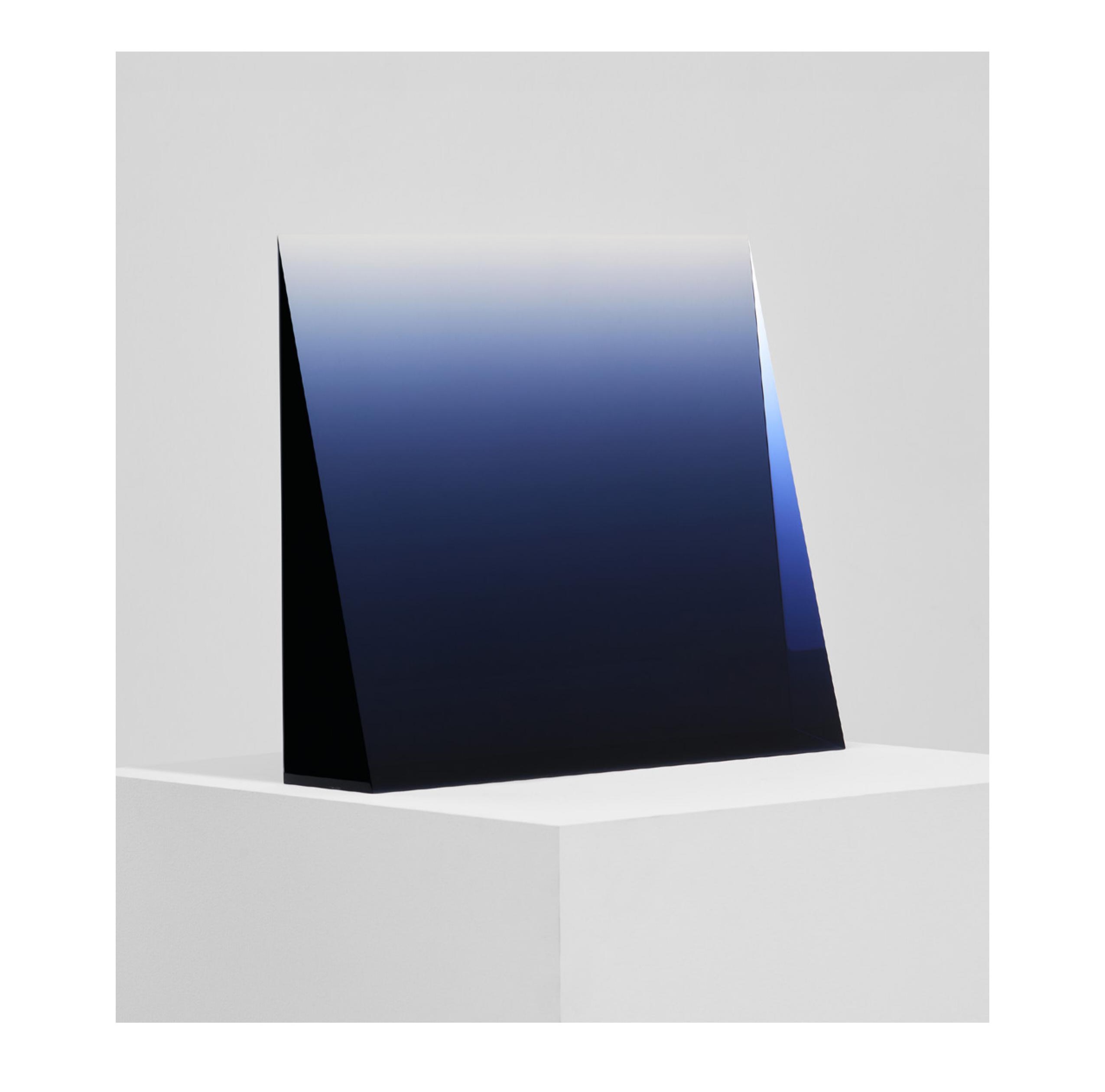
Peter Alexander
7/17/17 (Black Violet Window), 2017
Pieces such as the 2016 Flo Lime Box, the 2018 Frosted Pink Wedge, and the haunting 2017 Black Violet Window demonstrate the extraordinary chromatic range he achieved in these years. The wedge and box formats, which he returned to repeatedly, are not arbitrary shapes. They interact with their surroundings, casting colored shadows, absorbing and redirecting ambient light, making the wall itself a participant in the work. His final works from 2020, including Cold Hands Warm Heart and Cat's Meow, carry particular emotional resonance as the last expressions of a lifetime spent listening to what light has to say.
For collectors, Alexander's market has shown consistent strength rooted in genuine institutional demand and a relatively finite body of work now that the estate manages his legacy. His sculptures and resin pieces appear regularly at Christie's, Sotheby's, and Phillips, where strong results reflect not speculative enthusiasm but deep connoisseurship. Collectors who are drawn to Donald Judd's formal precision, to Larry Bell's investigations of glass and surface, or to James Turrell's immersive atmospherics will find in Alexander a figure who shares their concerns while offering something distinctly painterly and sensuous in return. The best Alexander works reward sustained attention in a way that few objects do.
They are not simply beautiful on first encounter. They deepen with time and with changing light conditions throughout the day. Within the broader arc of postwar American art, Alexander occupies a position that is both historically significant and personally irreplaceable. The Light and Space movement he helped define has only grown in critical stature as the art world has come to understand how profoundly it anticipated contemporary interests in installation, environment, and embodied spectatorship.
Artists working today in immersive and experiential modes owe a considerable debt to the investigations Alexander and his peers undertook in those remarkable Los Angeles studios during the 1960s. He is a genuine originator, not a follower of trends. Peter Alexander passed away in 2020, leaving behind a legacy that is still being fully appreciated and understood. His estate continues to work carefully to place his works in collections where they will be properly cared for and seen.
To acquire an Alexander now is to participate in a story that connects the light soaked optimism of midcentury California to the most searching questions contemporary art continues to ask about how we see, what we feel, and what it means to be present in a room with something made by a generous and exceptional mind.