Paulina Olowska
Paulina Olowska Paints the World Anew
Artist Spotlight · The Collection Editorial
Few artists working today command the particular kind of attention that Paulina Olowska has earned over the past two decades: the attention of someone who has genuinely changed how we see the image. In recent years her profile has risen considerably on the international stage, with solo exhibitions at institutions including Kunsthalle Basel and the Stedelijk Museum Amsterdam, alongside a sustained presence at Art Basel that has cemented her reputation among the most discerning collectors in Europe and beyond. Her paintings arrive with a quality that is almost impossible to manufacture: they feel both utterly contemporary and warmly, achingly familiar, as if glimpsed in a dream about another century. Olowska was born in Gdansk in 1976, and her formation carries the particular charge of a childhood spent in late socialist Poland.
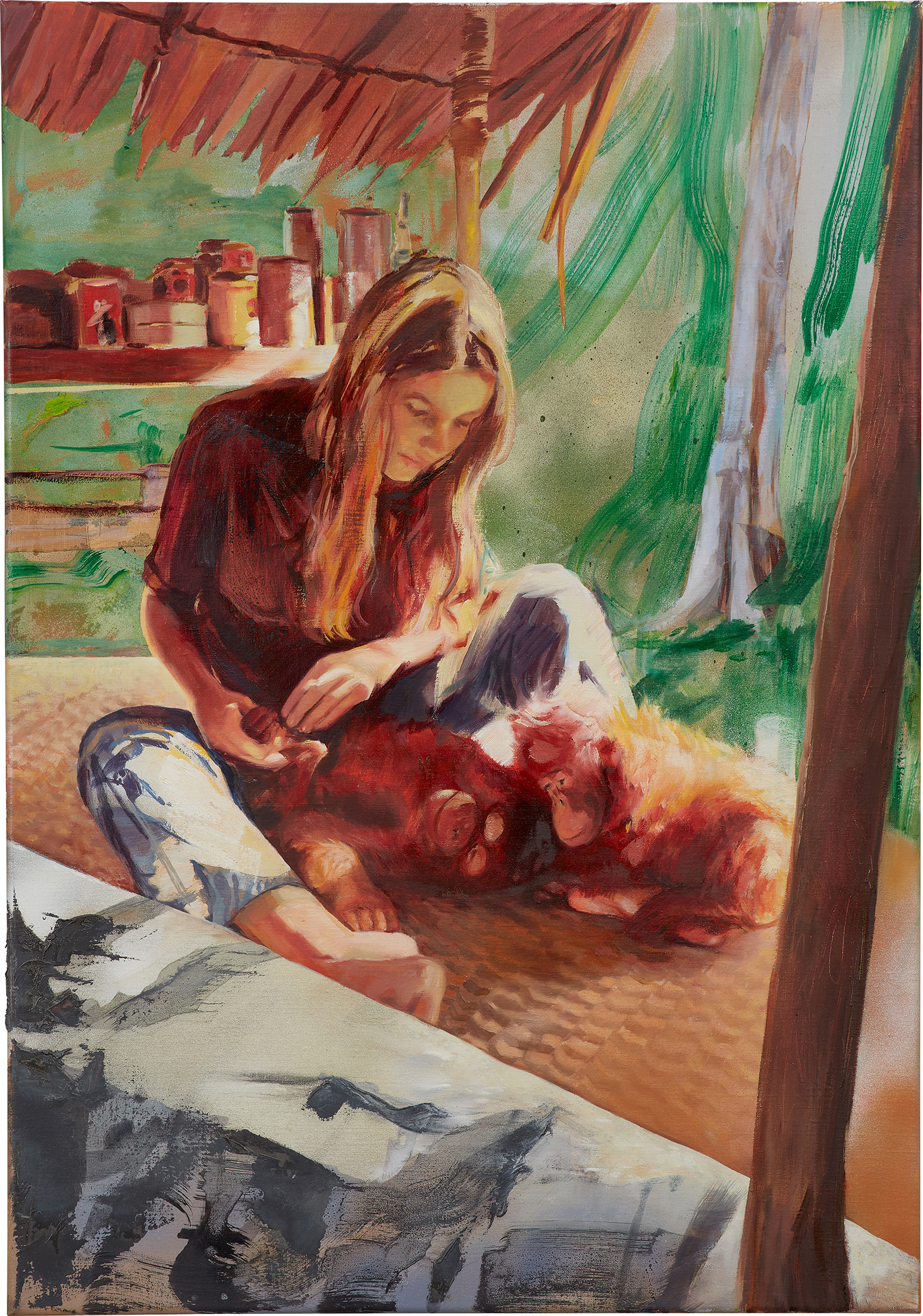
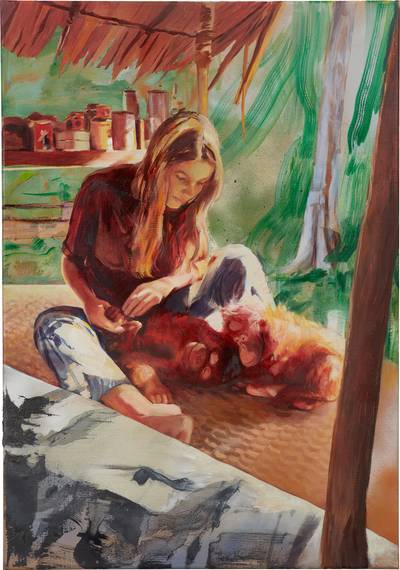
Paulina Olowska
The Primatologist, 2017
She studied at the Academy of Fine Arts in Gdansk before continuing her education at the School of the Art Institute of Chicago, a transatlantic passage that proved formative. Chicago gave her access to American cultural archives, to the visual energy of advertising and mass media, while Poland gave her something rarer: a living connection to a modernist tradition that the West had largely forgotten or misread. She returned to Poland and eventually settled in the village of Rabka Zdroj in the Tatra foothills, a retreat that has shaped the texture and rhythm of her practice in profound ways. Her early career in the late 1990s and early 2000s was marked by a spirit of collaborative experimentation.
She worked closely with artist Lucy McKenzie on projects that blurred the line between painting, graphic design, and social practice, including the celebrated Nova Popularna initiative in Warsaw, which transformed a bar into a site for artistic exchange and feminist inquiry. These early years established several of the themes that would define her mature practice: the recuperation of overlooked visual cultures, the interrogation of femininity and labor, and a deep, affectionate relationship with the European avant garde traditions of the early twentieth century. She was never content to be merely ironic about these sources. Her engagement is always warmer than that, and far more complex.
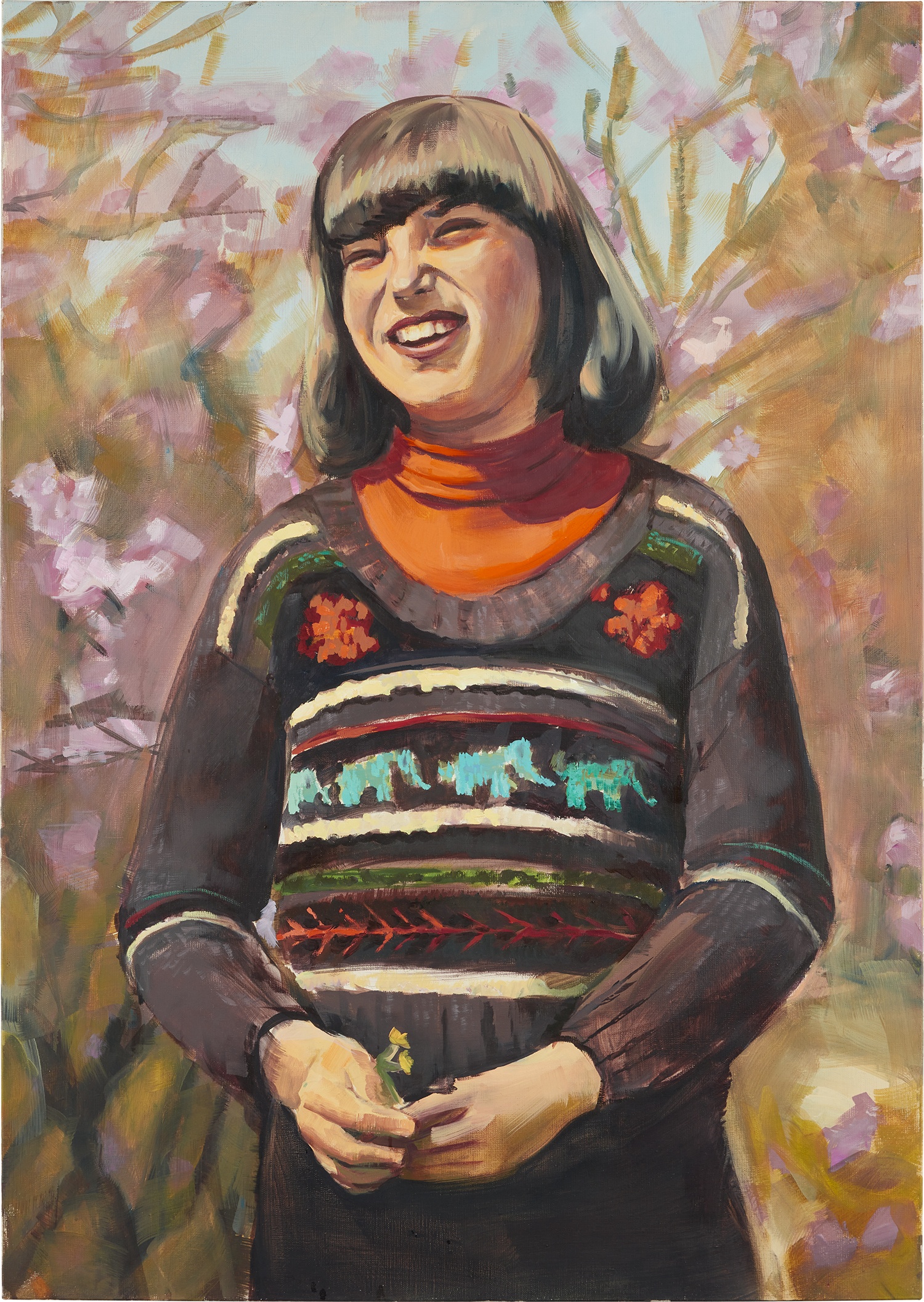
Paulina Olowska
Sweterek-Blazeaka (Sweater - blouse), 2010
The paintings for which Olowska is best known operate in a distinctive register that sits somewhere between homage and reinvention. Works such as Sweterek Blazeaka from 2010 exemplify her approach: the image of a woman in a knitted garment, drawn from the visual language of Polish fashion illustration and folk craft, becomes in her hands something monumental and strange. The paint handling is confident and expressive, the palette rich and considered, and the figure carries a psychological weight that no mere appropriation could achieve. Similarly, Klaun from the same year demonstrates her range, summoning the melancholy glamour of theatrical tradition through a palette of extraordinary delicacy.
These are paintings that reward sustained looking, and collectors who live with them report that they continue to reveal new dimensions over time. Her works on paper and in other media deserve equal attention. Cigarette Break from 2005, with its combination of acrylic, oil, graphite, and paper collage on canvas, captures the layered, accretive quality of her thinking: the image is built up like memory itself, through accumulation and revision. John K on the Beach from 2004 shows her ease with oil and her ability to charge an apparently simple scene with unexpected emotional resonance.
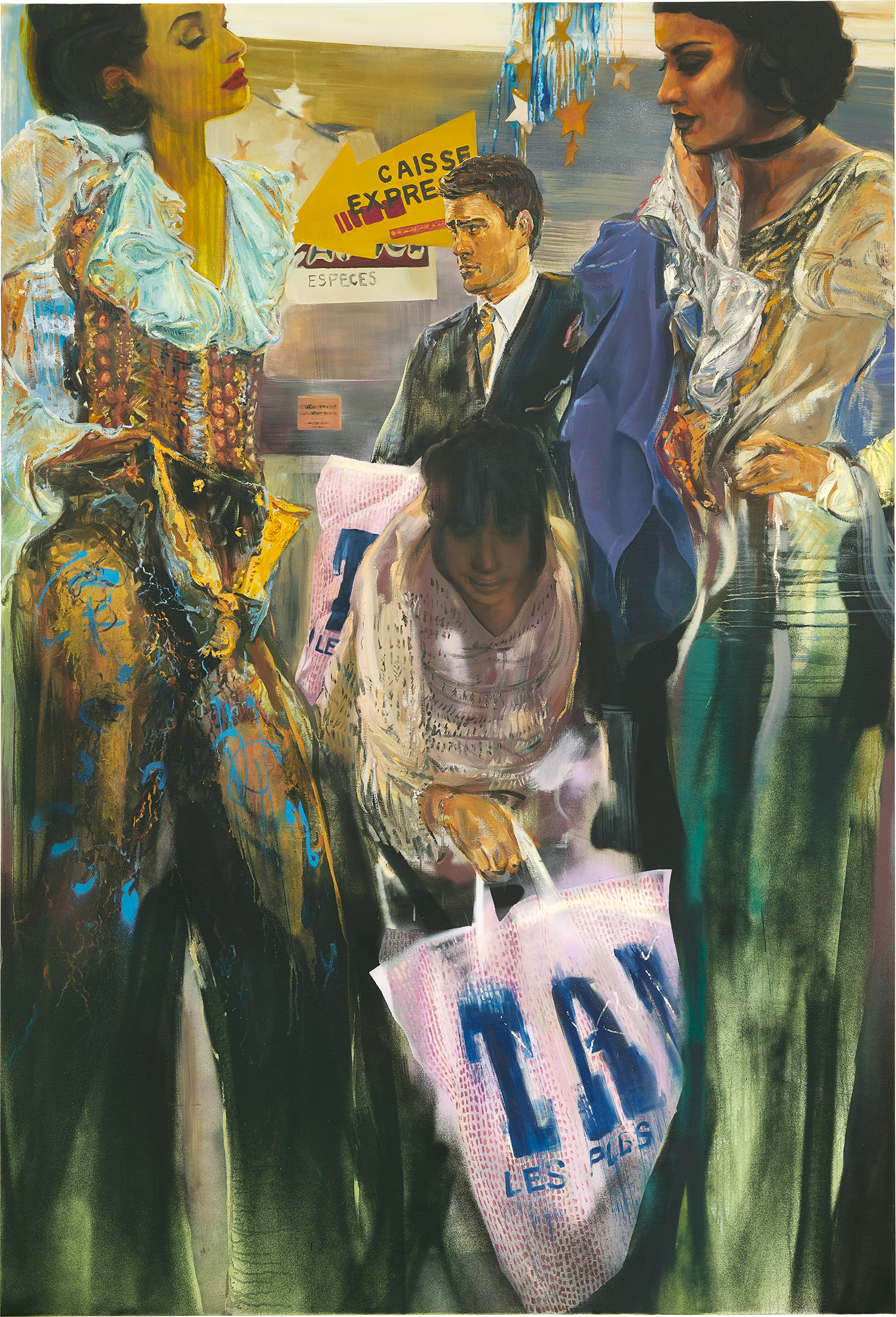
Paulina Olowska
Tati 2, 2017
The neon work Dancing from 2007 points to her willingness to move across media, and to her belief that the language of modernism including its commercial and popular strands belongs fully to the contemporary artist. The Primatologist from 2017 represents a later evolution in her figure painting, the women in her canvases becoming ever more sovereign, more knowing, more fully inhabited. From a collecting perspective, Olowska represents something increasingly rare: a major artist whose secondary market has grown steadily without the volatility that afflicts more speculative names. Her works have appeared at auction at Christie's and Phillips, where the combination of her critical standing and her relatively limited output has kept demand consistently strong.
Collectors are drawn to the coherence of her vision across very different media and scales, and to the sense that any single work is part of a larger, evolving conversation. For those building collections with a European or feminist art historical focus, her work sits naturally alongside artists such as Maria Lassnig, Marlene Dumas, and Miriam Cahn, painters who have each in their own way insisted on the figure as a site of serious inquiry. Her affinities also extend to artists working at the intersection of graphic culture and painting, including contemporaries such as Lucy McKenzie and Laura Owens. What Olowska offers art history is something genuinely distinctive: a bridge between the visual cultures of Central and Eastern Europe and the international contemporary conversation, built with intelligence, generosity, and remarkable painterly skill.
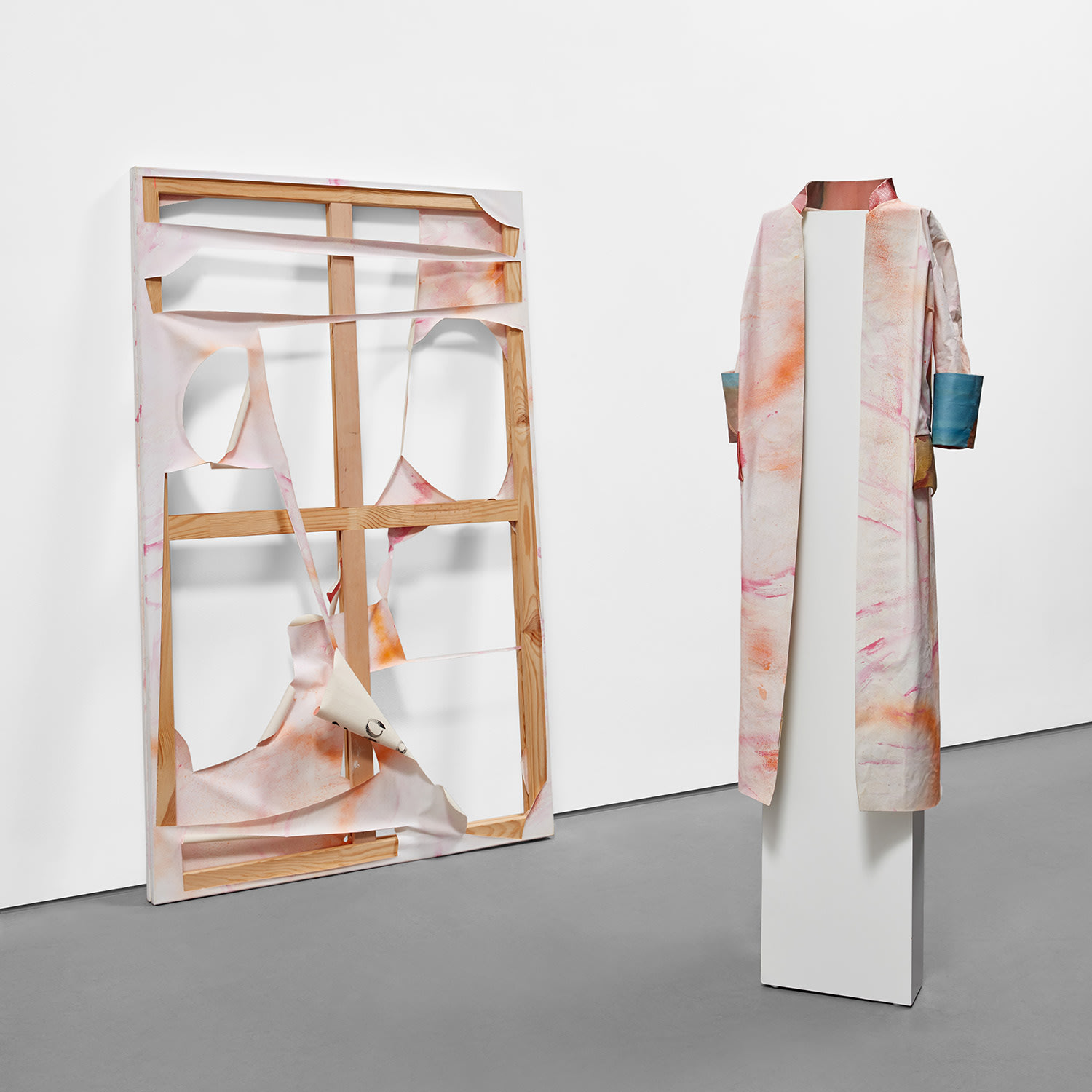
Paulina Olowska
Two works: (i), 2007
At a moment when the canon continues to expand to include voices long excluded from its center, her work stands as evidence of how much richness was always there, waiting to be seen. Her practice does not merely recover forgotten images; it asks why they were forgotten, and what their recovery might mean for how we understand modernism itself. Galleries including Metro Pictures in New York and Galerie Buchholz in Cologne and Berlin have long championed her work, giving international audiences sustained access to a practice that deepens with every passing year. To collect Paulina Olowska is to invest in one of the most considered and genuinely joyful practices of her generation.