Paul Outerbridge, Jr.
Paul Outerbridge: Light, Color, and Desire
Artist Spotlight · The Collection Editorial
There is a moment, standing before a Paul Outerbridge carbro print, when the eye refuses to accept that what it sees was made with a camera. The colors are too precise, too voluptuous, too willed. A porcelain bowl catches the light at an angle that feels almost architectural. A nude figure emerges from shadow with the composed authority of a Vermeer.
Paul Outerbridge, Jr.
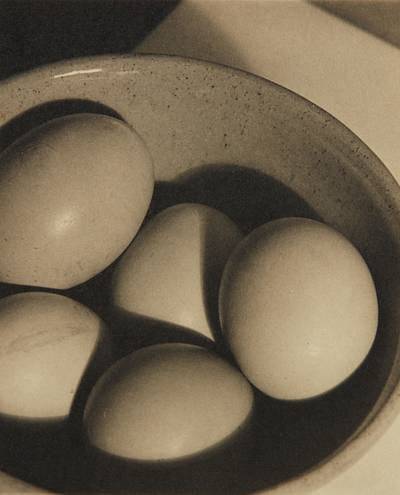
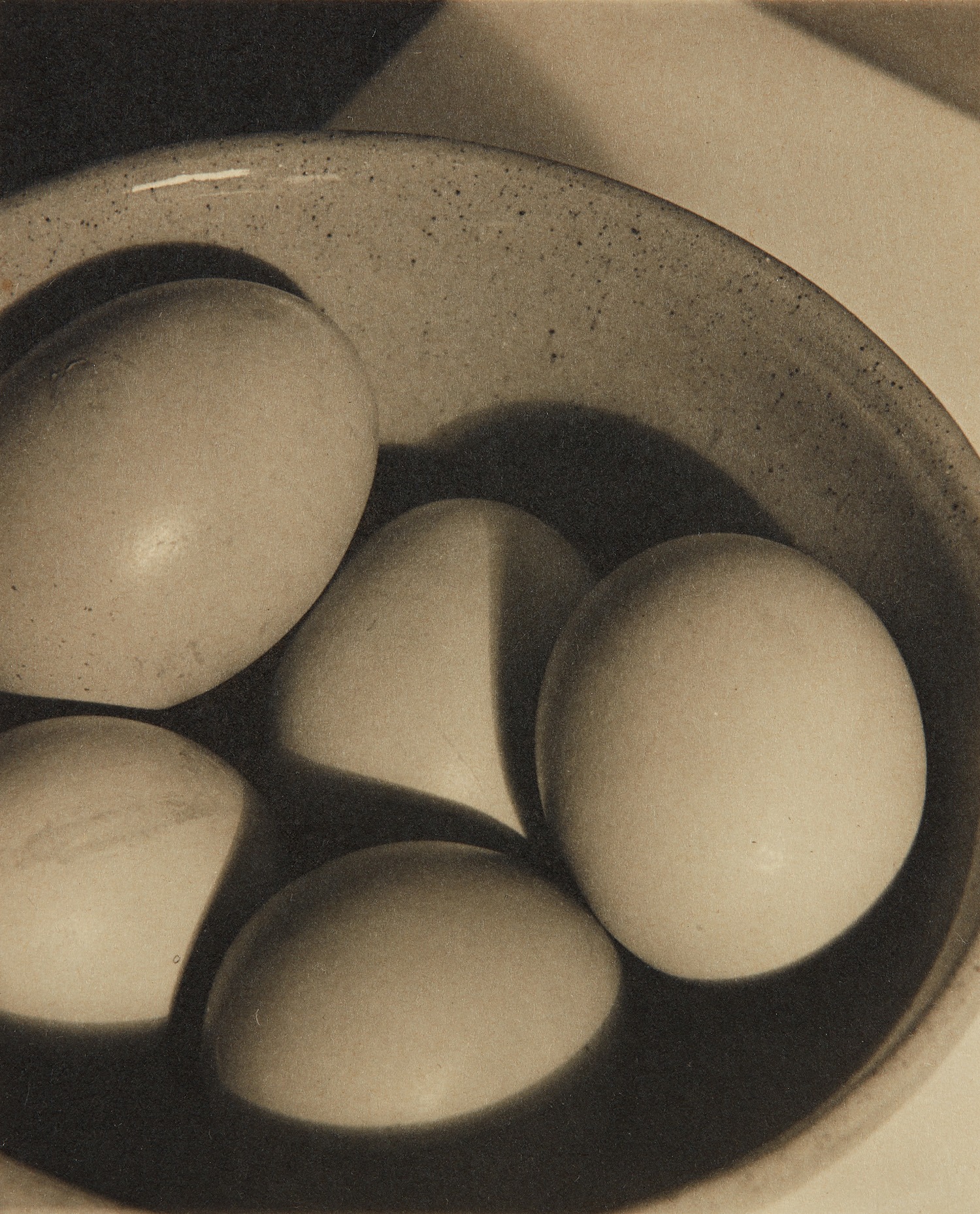
Eggs and Bowl
Outerbridge, working at the intersection of commerce and high art in the 1920s, 1930s, and 1940s, produced a body of work so formally rigorous and so quietly seductive that it continues to reward rediscovery. His photographs do not age. They simply wait. Paul Outerbridge, Jr.
was born in New York City in 1896 into a family of means and social standing. He studied anatomy, drawing, and design at the Art Students League in New York, that legendary downtown institution that shaped so many American modernists, before turning his full attention to photography in the early 1920s. He enrolled at the Clarence H. White School of Photography, where he absorbed the pictorialist tradition even as he was moving decisively beyond it.
Paul Outerbridge, Jr.
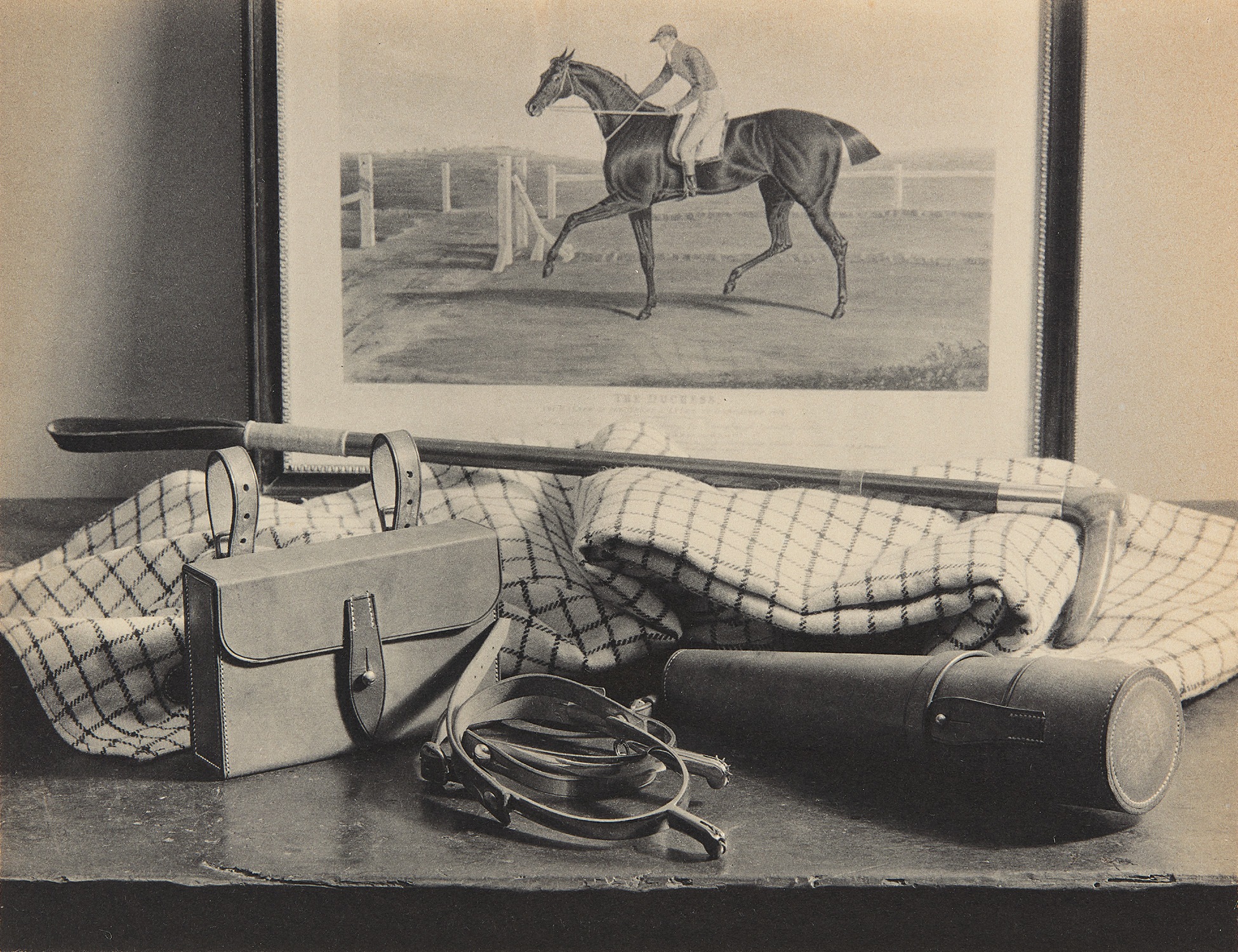
Riding Crop with Spurs and Jacket
White's emphasis on formal composition, on the photograph as a designed object rather than a captured moment, gave Outerbridge a foundation that would define everything he made afterward. By 1921, Outerbridge was producing work of startling originality. His early black and white photographs, including the celebrated image of a shirt collar and cufflink that appeared in Vanity Fair in 1922, demonstrated a sensibility already fully formed. The image is almost abstract in its economy: geometric shadows, crisp linen, a single brass stud.
It could have been made yesterday. These early commercial assignments for publications including Vanity Fair and Harper's Bazaar placed him at the center of American modernist visual culture, in conversation with the work of Charles Sheeler, Edward Steichen, and Man Ray. He traveled to Paris in 1925 and spent time in London and Berlin, absorbing European avant garde ideas while contributing to publications and advertising studios that valued his eye. The turning point of Outerbridge's career, and the achievement for which he is most celebrated, was his mastery of the carbro color printing process.
Paul Outerbridge, Jr.
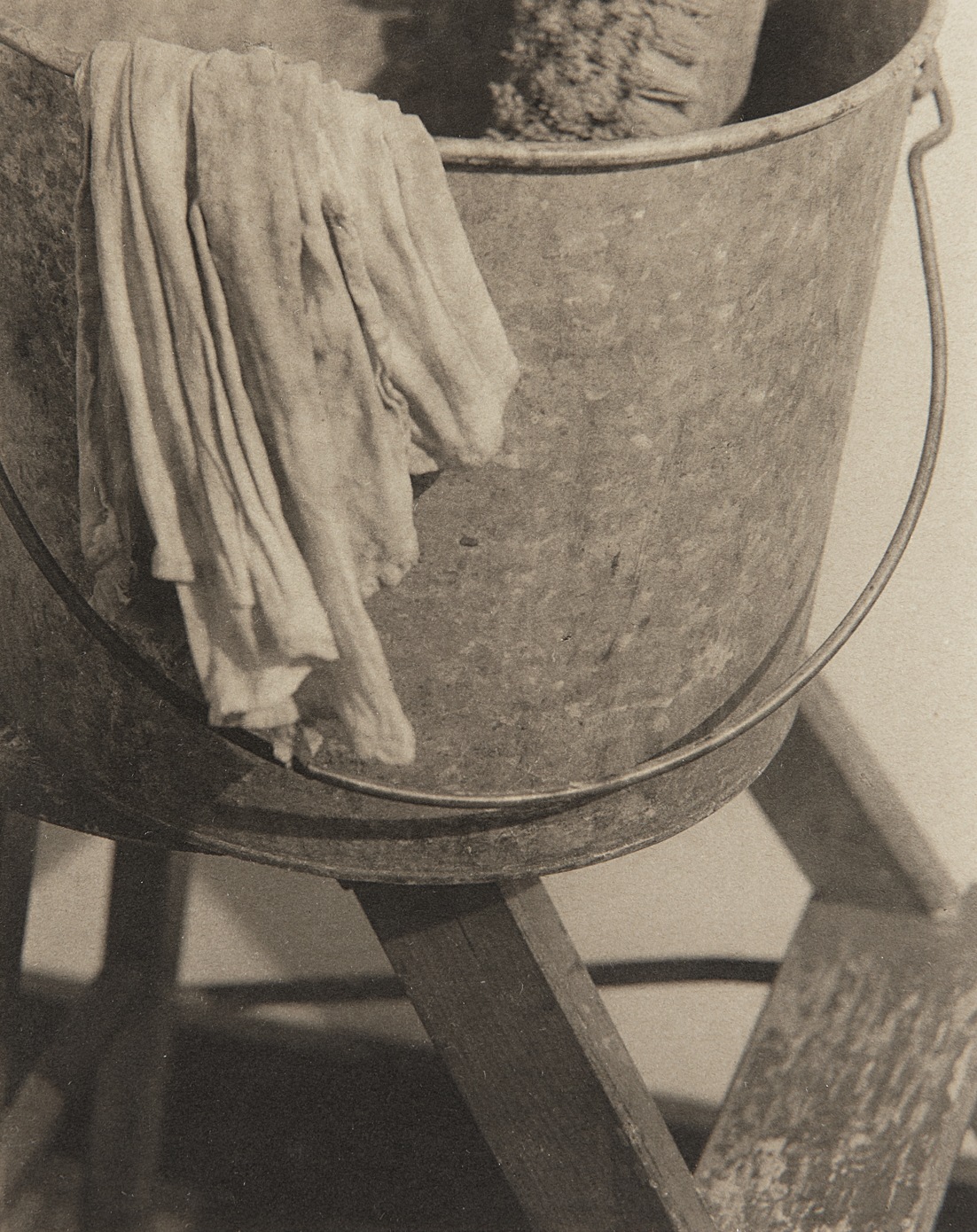
Pail on Ladder (Wash Bucket)
Beginning seriously in the early 1930s after his return to the United States, he devoted years to perfecting a technique that required extraordinary patience and technical skill. The carbro process involved the assembly of three separate carbon tissue layers, each representing one primary color, aligned and transferred onto a single support. In the hands of most practitioners it produced competent results. In Outerbridge's hands it produced something close to magic.
The colors in his finished prints have a density and saturation that feel almost material, as though the image has weight. His still lifes of eggs, glassware, and geometric objects glow against dark backgrounds with a richness that recalls Dutch Golden Age painting. His nudes, bold and unapologetic for their time, merge the formal language of modernism with an erotic directness that was genuinely transgressive. Among the works now available on The Collection, several illuminate the full range of his practice with particular clarity.
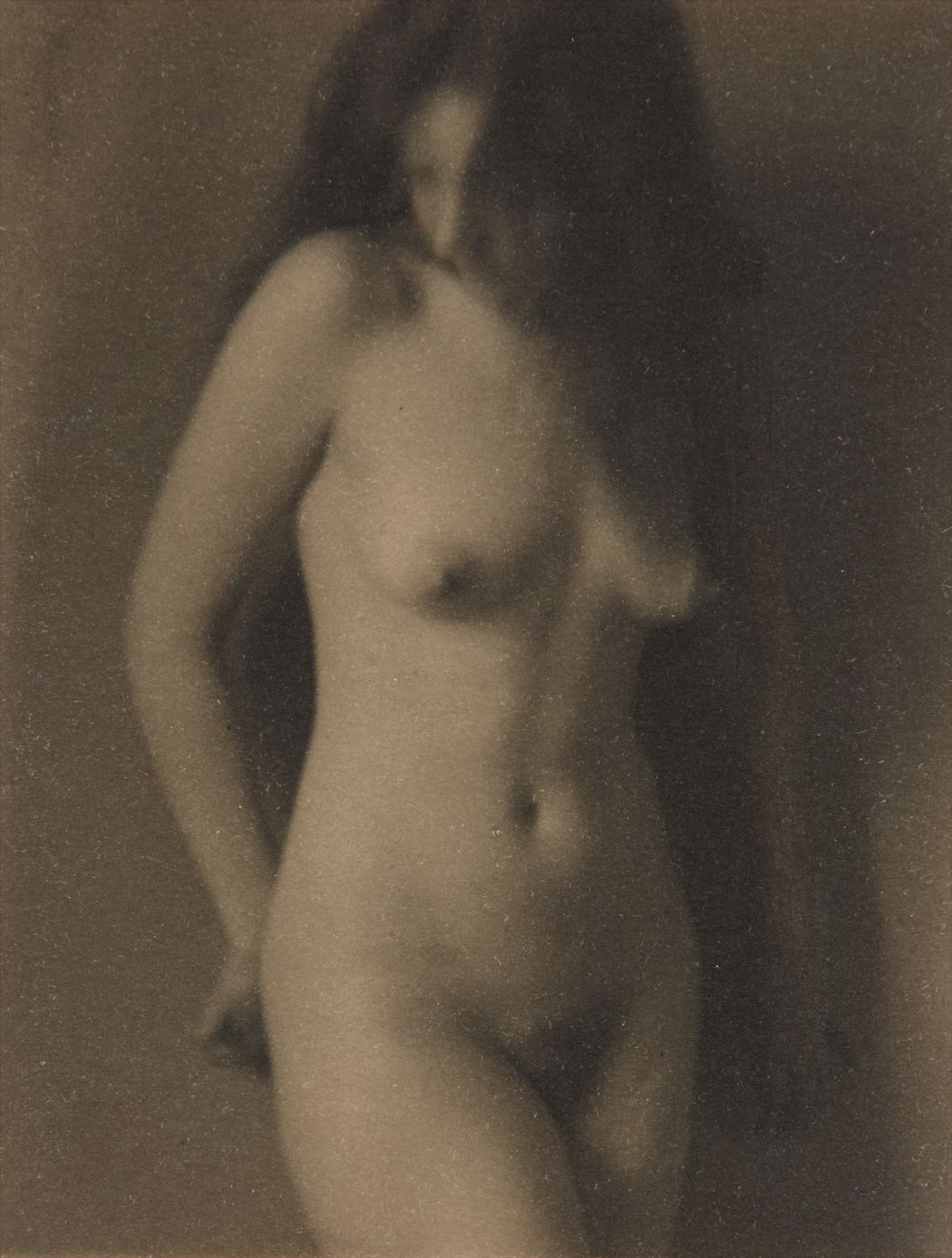
Paul Outerbridge, Jr.
Standing Nude
"Eggs and Bowl" demonstrates his genius for finding the monumental within the mundane: ordinary objects rendered in light so considered that they become icons. "Riding Crop with Spurs and Jacket," annotated in pencil on the reverse as a Christmas gift from December 1924, captures his early mastery of texture and surface before he had even moved to color. "Four Glass Elephants" shows the mature Outerbridge at his most assured, arranging transparent objects so that color and light refract through and between them, creating a composition of almost impossible visual complexity. "Standing Nude" and related figurative works reveal the other dimension of his practice, one that was kept largely private during his lifetime but that now reads as central to understanding the ambition of what he was attempting: a complete visual language for the human body that owed nothing to sentimentality and everything to formal intelligence.
From a collecting perspective, Outerbridge occupies a position of genuine rarity. His carbro prints are inherently scarce: the process was laborious, expensive, and demanding, and he produced a relatively small number of finished color works during his most productive decades. Works with documented provenance, particularly those with connections to the Laguna Beach Museum of Art or with Smithsonian Institution exhibition labels, carry an additional layer of institutional endorsement that serious collectors recognize immediately. The presence of estate credit stamps and signatures by Lois Outerbridge on certain prints also provides important authentication markers for buyers navigating a market where documentation is everything.
Auction appearances of significant Outerbridge carbro prints have drawn serious attention from American modernism collectors, and as critical reassessment of commercial photography's role in twentieth century art history continues to deepen, his position can only strengthen. To understand Outerbridge fully it helps to place him within a constellation of peers and near contemporaries. Edward Weston brought a similar formal intensity to the still life and the nude, though through a very different technical tradition. Charles Sheeler shared his fascination with the clean geometry of modernist design.
Man Ray, whom Outerbridge knew in Paris, was exploring adjacent territory in the relationship between the commercial image and the surrealist object. Irving Penn, who came slightly later, would bring a comparable elegance to the still life tradition in color photography. Outerbridge stands among all of them as a figure who refused the boundary between fine art and commercial practice, not because he was indifferent to the distinction but because he understood, perhaps earlier than most, that the photograph made for a client and the photograph made for eternity could be the same object. Paul Outerbridge died in Laguna Beach, California in 1958, the city where he had settled and where his work remained close to the collections and institutions that understood it best.
The decades since his death have brought a slow, steady, and thoroughly deserved rehabilitation of his reputation. Museum retrospectives and scholarly publications have reframed him not as a curious footnote to American modernism but as one of its essential practitioners, a photographer who used the constraints of commercial work to sharpen rather than dilute his artistic vision. His photographs remind us that precision and sensuality are not opposites. In the best of his images they are the same thing, translated into light and color and held there, perfectly still, for as long as anyone cares to look.
Explore books about Paul Outerbridge, Jr.
Paul Outerbridge Jr.: A Retrospective
Graham Howe, Graham Howe
Paul Outerbridge Jr.: Photographs
Manfred Heiting
The Photographs of Paul Outerbridge Jr.
Paul Outerbridge Jr.
Photographing in Color
Paul Outerbridge Jr.
Paul Outerbridge Jr.: Elegant Erotic Photography
Graham Howe