Patrick Heron
Patrick Heron: Britain's Master of Radiant Colour
Artist Spotlight · The Collection Editorial
“Colour is both the subject and the means, the form and the content, the image and the meaning.”
Patrick Heron, writings on painting
There is a moment, standing before a Patrick Heron canvas, when the eyes simply surrender. The colours do not merely sit on the surface; they vibrate, advance and recede, breathe in and out like something living. That experience has drawn a new generation of collectors and curators back to Heron with renewed urgency in recent years, as major institutions across Britain and beyond have reassessed his singular contribution to postwar abstraction. The Tate Gallery, which holds a significant body of his work, has long positioned Heron as one of the essential figures of British modernism, and the market has followed with consistent enthusiasm at auction houses including Christie's and Sotheby's, where his paintings and works on paper regularly attract competitive bidding from collectors who understand that great colourists of his stature are genuinely rare.
Patrick Heron
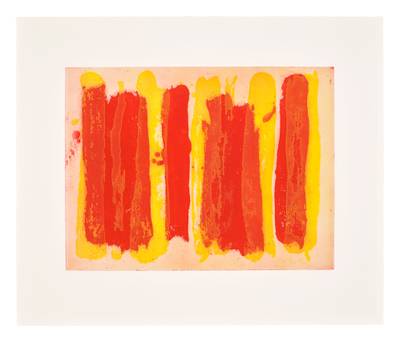
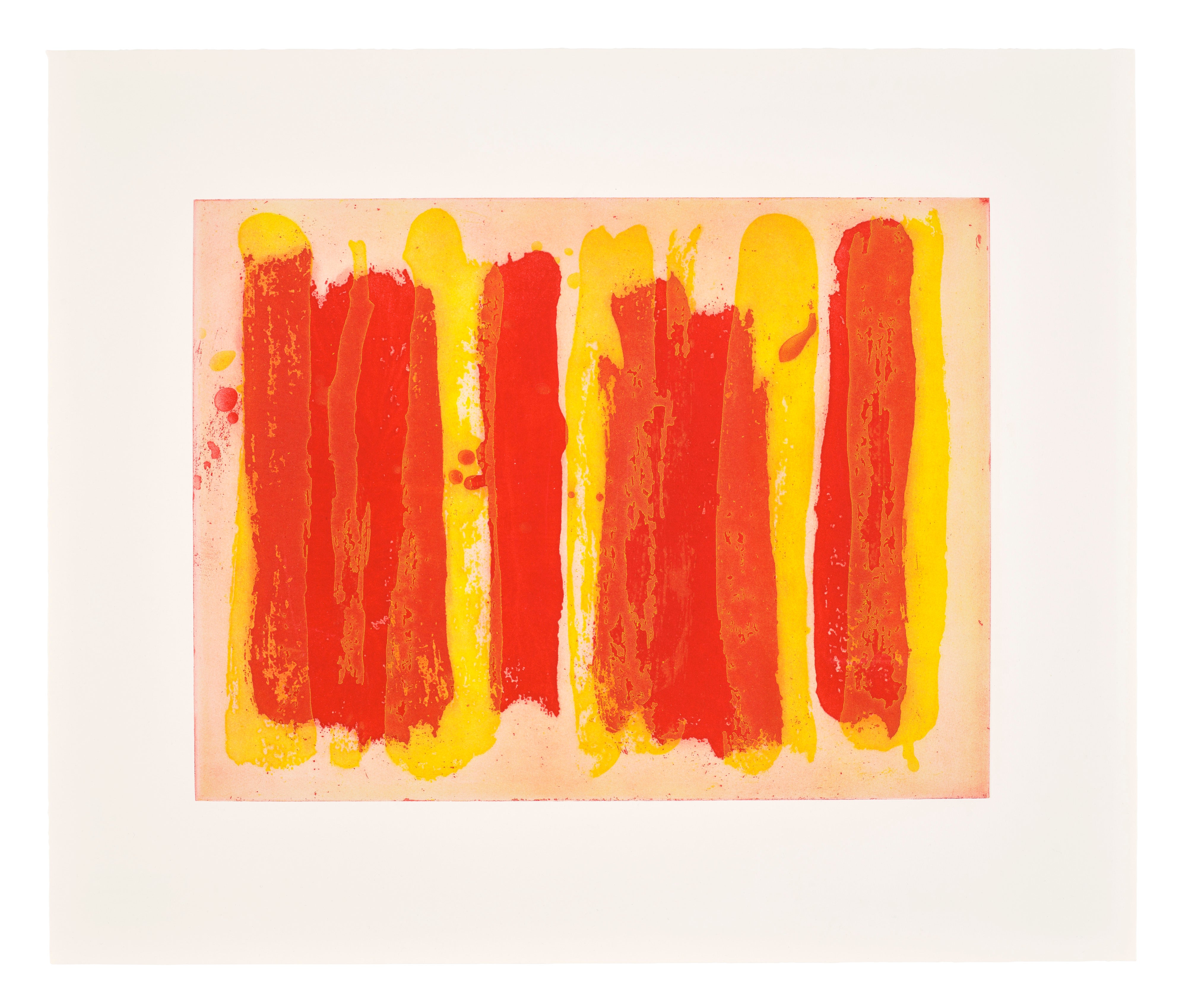
The Brushworks Series: plate 11
Patrick Heron was born in Headingley, Leeds, in 1920, and his earliest formation was shaped by an unusually rich exposure to art and design. His father, Tom Heron, ran Cresta Silks, a progressive textile company whose aesthetic sensibility introduced the young Heron to the relationship between colour, pattern and surface at a formative age. The family moved to Cornwall in the late 1920s, and the light of the far west, that particular luminosity where Atlantic sky meets granite headland, lodged itself permanently in Heron's visual memory. He studied at the Slade School of Fine Art in London, though his education was interrupted by the Second World War, during which he worked as an agricultural labourer and later as an assistant to the potter Bernard Leach in St Ives.
These years were not lost time; they deepened his understanding of material, craft and the meditative relationship between maker and medium. By the late 1940s, Heron had established himself as both a practising painter and one of the most acute art critics writing in Britain. His tenure as art critic for the New Statesman from 1947 to 1950, followed by his regular contributions to arts publications throughout the decade, gave him an extraordinary platform to articulate what he believed painting could and should do. He was a fierce advocate for the importance of pictorial space and colour as autonomous expressive forces, positions he would defend with passion across decades of transatlantic debate.
Patrick Heron
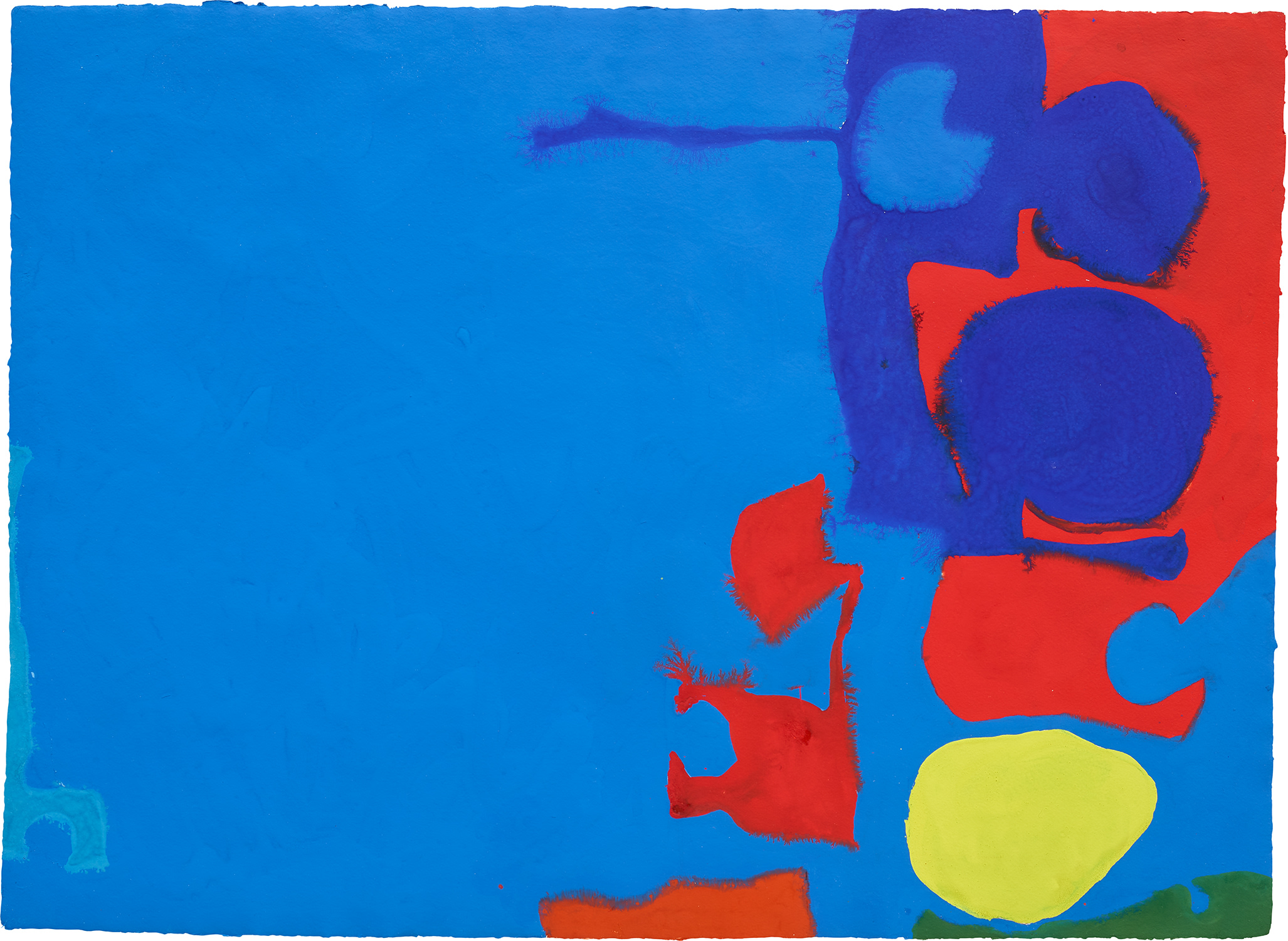
Scarlet, Dark Blue and Lemon to the Right of Cobalt: April 1968, 1968
His early paintings from this period, including works such as the 1946 oil Still Life with Hyacinths, Plaice and Lemon, show a confident post Cubist sensibility, rooted in admiration for Braque and Matisse, yet already reaching toward something distinctly his own. The decisive turn came in the late 1950s, when Heron made his permanent home at Eagle's Nest, his house perched dramatically above Zennor on the Cornish coast. This move coincided with a period of radical pictorial liberation. The figurative scaffolding fell away, and Heron began working with pure colour relationships in compositions of increasing freedom and scale.
“I regard the flatness of the canvas as the most important single fact in painting.”
Patrick Heron, lecture and critical writings
Works from 1960 and 1961 such as Red Painting (ceruleum) : July 1960 and Cinnamon and Dirty Violet: January 18, 1961 reveal a painter fully in command of a new visual language: organic, loosely bounded forms in saturated hues that create dynamic spatial tension without recourse to representation. The precise dating in his titles was deliberate and meaningful, a form of diary keeping that acknowledged painting as a lived event unfolding in real time. By works such as Scarlet, Dark Blue and Lemon to the Right of Cobalt: April 1968, the compositions had grown even more assured, the colour areas hovering and overlapping with extraordinary poise. Heron was also a gifted printmaker, and his editions produced in collaboration with publishers including Waddington Graphics in London demonstrate how completely his ideas about colour translated across different media.
Patrick Heron
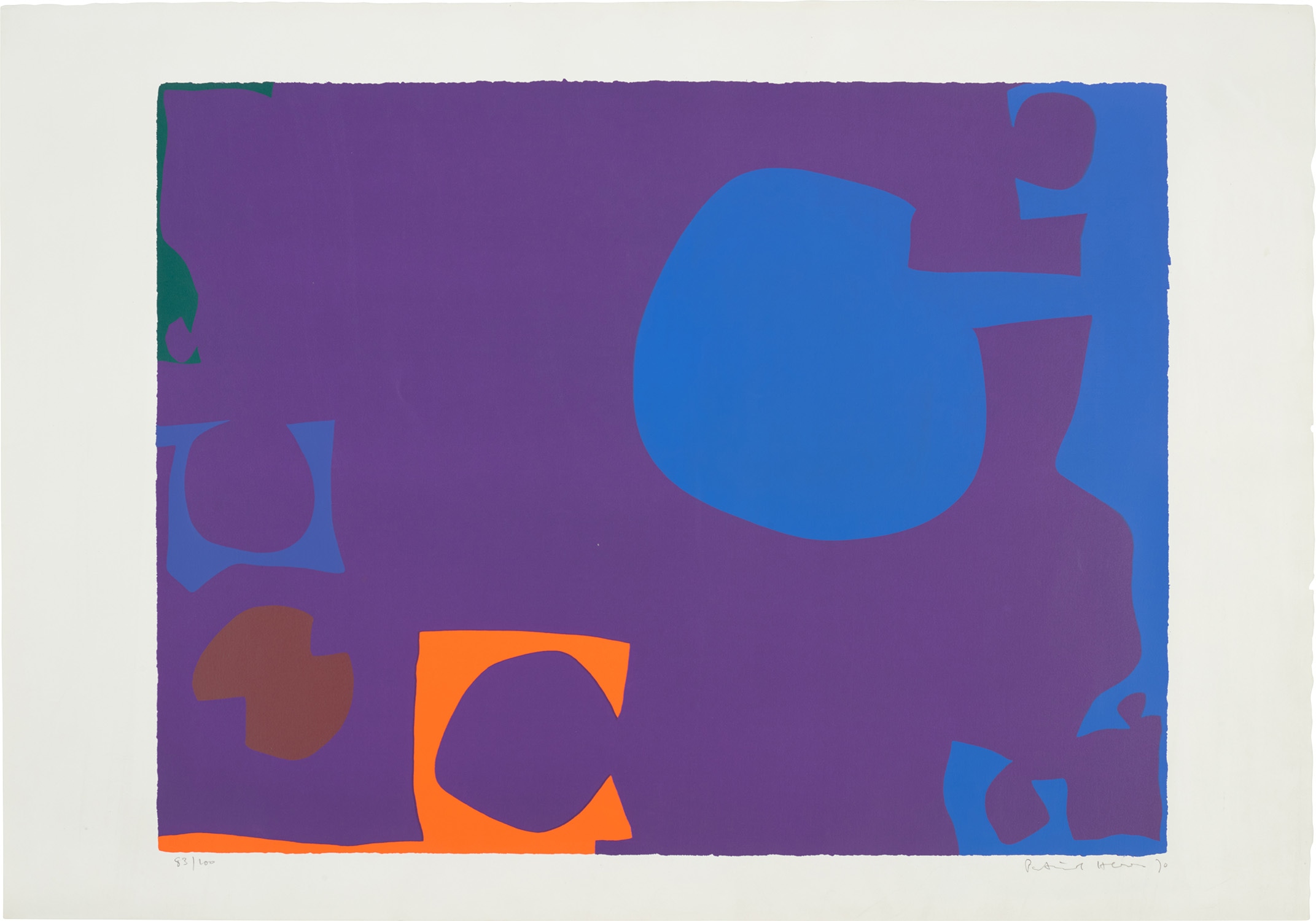
Blue and Deep Violet with Orange, Brown and Green: April 1970
Screenprints such as Blue and Deep Violet with Orange, Brown and Green: April 1970 and works from his Brushworks Series as etchings and aquatints on Arches paper bring the same luminous intelligence to multiples that his paintings achieve on a grander scale. These works represent a genuinely important entry point for collectors, offering the characteristic Heron chromatic intensity at a range of price points. They are also among the most collectible British prints of the postwar era, prized for their quality of production and the directness with which they communicate the artist's central concerns. For collectors, Heron occupies a position of unusual richness in the market.
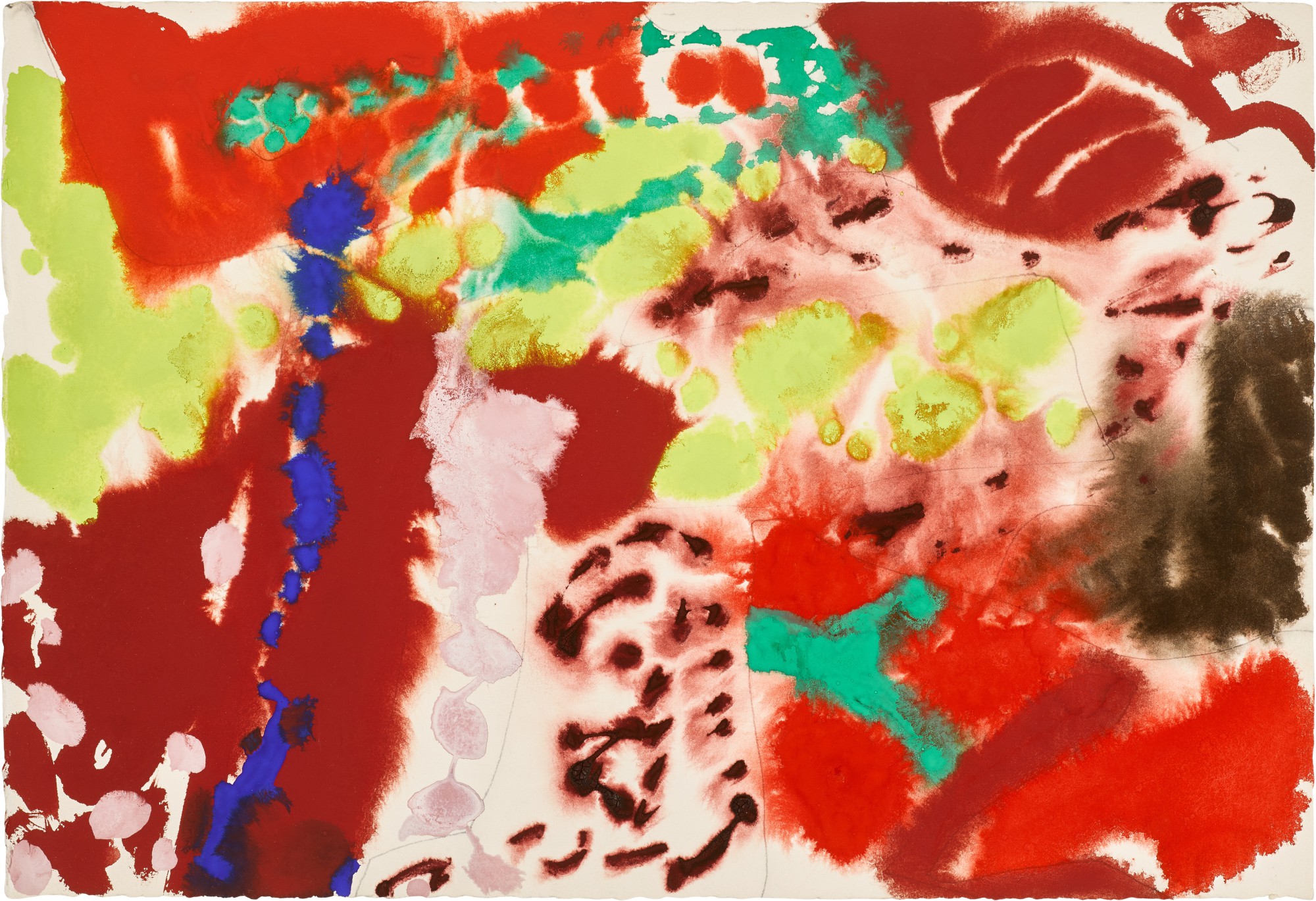
His work spans oil paintings, gouaches, screenprints and etchings, each medium revealing different facets of his intelligence. Gouaches such as May 11 : 1986: II and Cinnamon and Dirty Violet possess a freshness and immediacy that reflects Heron working at speed and with complete conviction. Oils from the early 1960s represent the most sought after tier of his production, works from a period when he was at the height of his powers and fully engaged in dialogue with contemporaries on both sides of the Atlantic including Mark Rothko and Sam Francis, painters he admired while also defending the distinctly European, and specifically British, character of his own spatial thinking. Collectors who follow Heron are typically drawn by the combination of intellectual rigour and sensory pleasure his work provides, qualities that rarely coexist so harmoniously.
Patrick Heron
May 11 : 1986: II 1986
Within the broader context of art history, Heron belongs to a constellation of painters associated with St Ives who transformed British abstraction during the postwar decades. His peers and near contemporaries included Roger Hilton, Terry Frost, Peter Lanyon and Bryan Wynter, a group that found in the specific geography and atmosphere of West Cornwall a source of pictorial energy that was neither provincial nor derivative of American developments. Heron was insistent on this point, arguing publicly and at length that the New York painters had themselves been shaped by European colour thinking, and that the traffic of influence ran in more complex directions than the dominant critical narrative allowed. His polemical writings remain essential reading for anyone seeking to understand the cultural politics of postwar abstraction.
The legacy of Patrick Heron is one of generous, life affirming intensity. His belief that colour was the fundamental language of painting, not a decorative accessory but the very substance of pictorial meaning, feels more compelling with each passing decade. As the art world continues to reassess the range and ambition of British modernism, Heron stands as proof that one painter, working with deep commitment in a house above the sea in Cornwall, could produce a body of work that holds its own against anything produced anywhere in the world during the second half of the twentieth century. To live with a Heron is to accept a daily education in seeing.
Explore books about Patrick Heron

Patrick Heron: A Painter's Notebook
Patrick Heron
Patrick Heron: Paintings 1945-1960
Patrick Heron
Patrick Heron: Recent Paintings
Alan Davie
Patrick Heron: A Career in Painting
Lucy Moore
Patrick Heron: Paintings 1960-1995
William Feaver
Patrick Heron: Painter and Critic
Andrew Causey
Patrick Heron: The Complete Paintings
Mel Gooding