Oscar Murillo
Oscar Murillo Turns the World Into Paint
Artist Spotlight · The Collection Editorial
“I want to create a space where people can participate and feel included, not excluded.”
Oscar Murillo, interview with Frieze
When Oscar Murillo represented Colombia at the 2019 Venice Biennale, he arrived not with a polished solo statement but with a sprawling, generous idea: a years long participatory project called Frequencies, in which blank canvases had been installed in classrooms across dozens of countries, allowing schoolchildren to mark, stain, draw, and leave traces on the fabric simply by living near it. The resulting works, dense with the accumulated energy of young lives, filled the Colombian Pavilion with something rare in contemporary art: genuine communal tenderness. It was the kind of gesture that earned Murillo the Golden Lion for a promising young artist, and it crystallized what collectors and curators had been sensing for nearly a decade. This is an artist who does not merely make paintings about the world.
Oscar Murillo
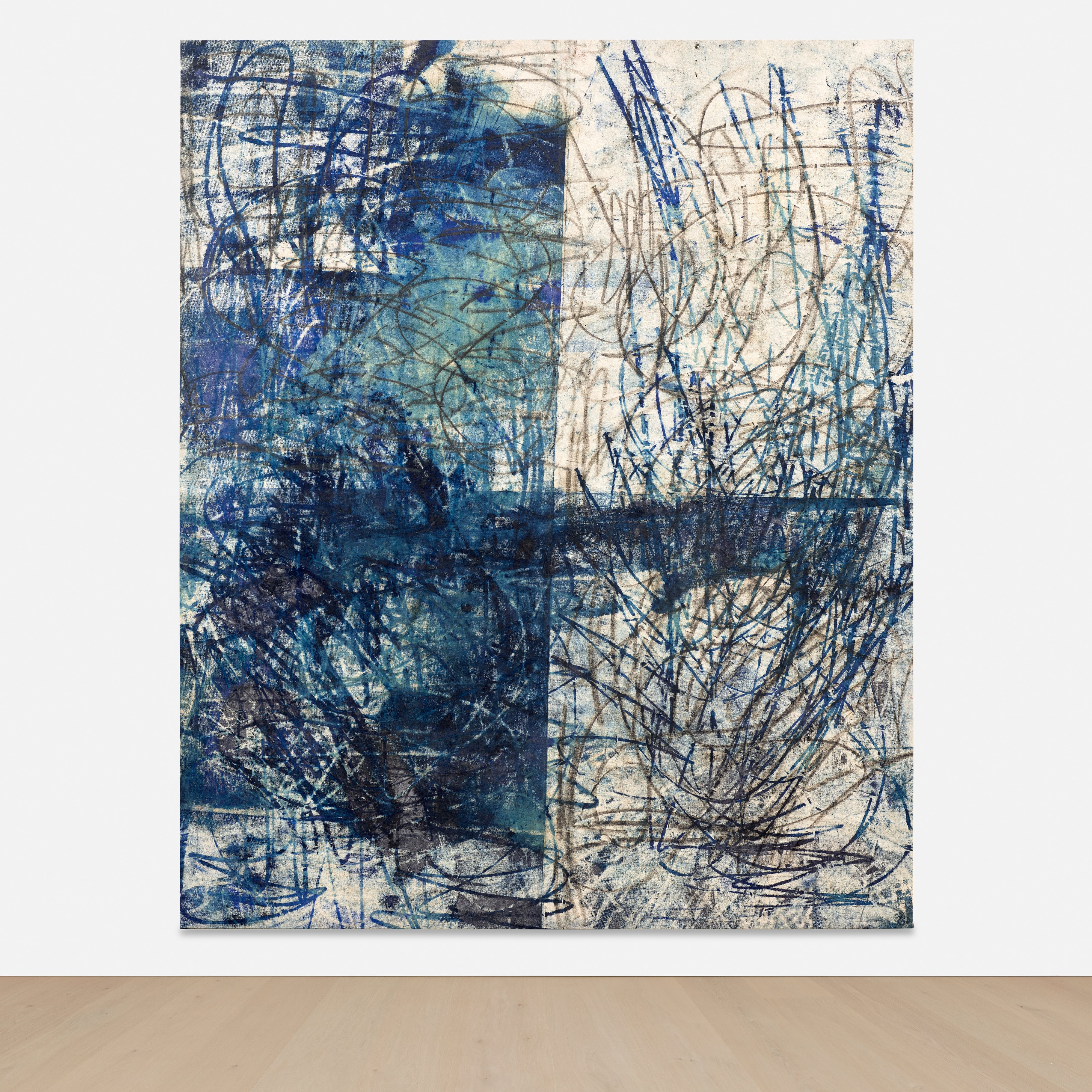
Catalyst 3, 2015
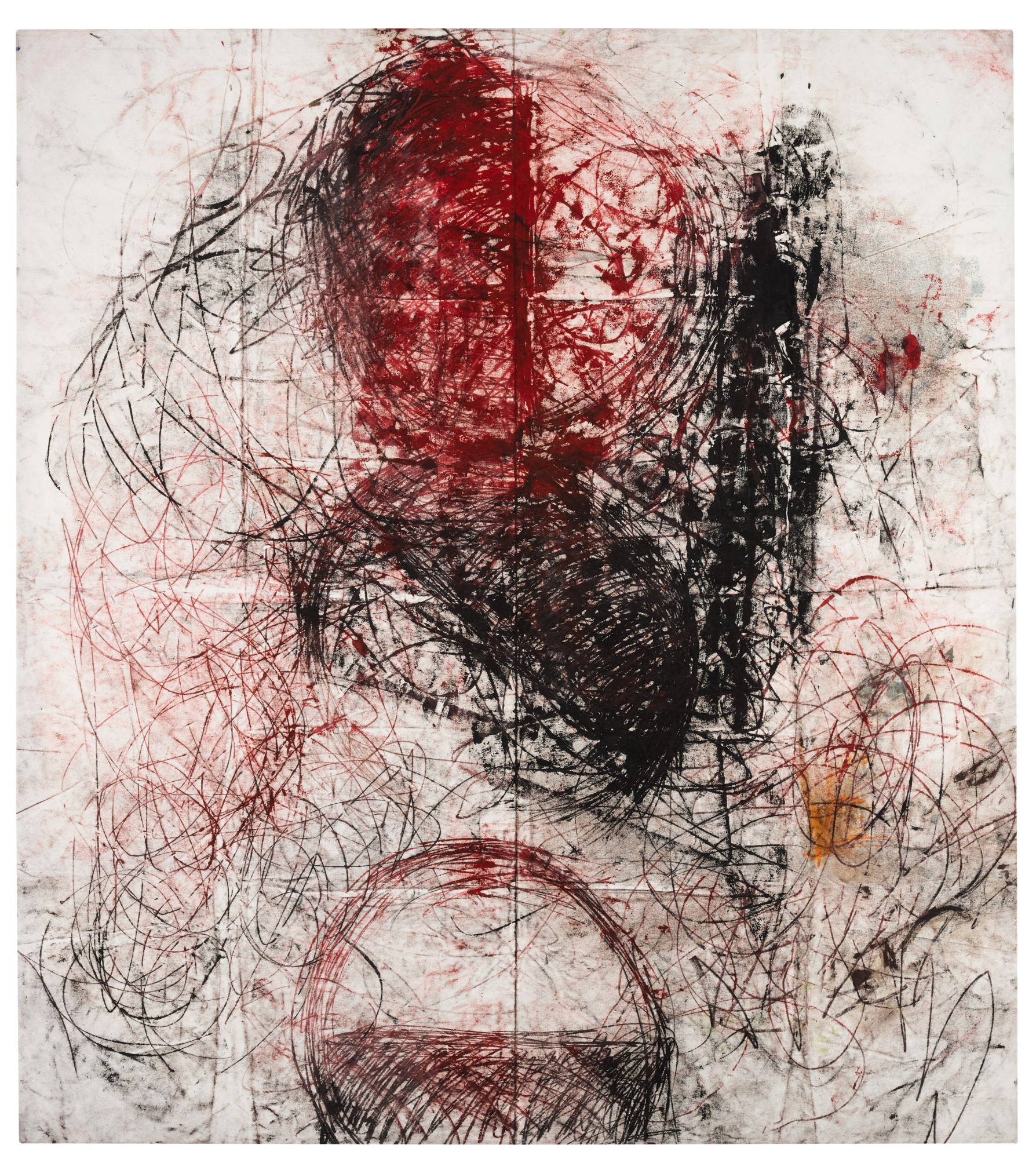
He makes paintings that the world has moved through. Murillo was born in La Paila, a small town in the Valle del Cauca region of Colombia, in 1986. His family relocated to London when he was a child, settling in the working class neighborhoods of west London where his relatives labored in food factories and service industries. That particular displacement, the transition from the warmth and specificity of a Colombian town to the anonymous machinery of a global city, became the emotional and intellectual engine of his entire practice.
He studied at the University of the Arts London and later at the Royal College of Art, but his real education happened in the spaces between those institutions, in the familial kitchens and factory floors and immigrant communities that surrounded him. His early work announced a sensibility that was simultaneously raw and deeply considered. The Drawings off the Wall series, begun around 2011, involved Murillo pulling large sheets of canvas from the walls of his studio and working them with oilstick and spray paint, preserving the physical evidence of their previous life as surfaces. Works like Untitled (Drawings Off the Wall Series) from 2011 carry the marks of contact and accident, the visual record of a canvas that existed in a space before it became a painting.
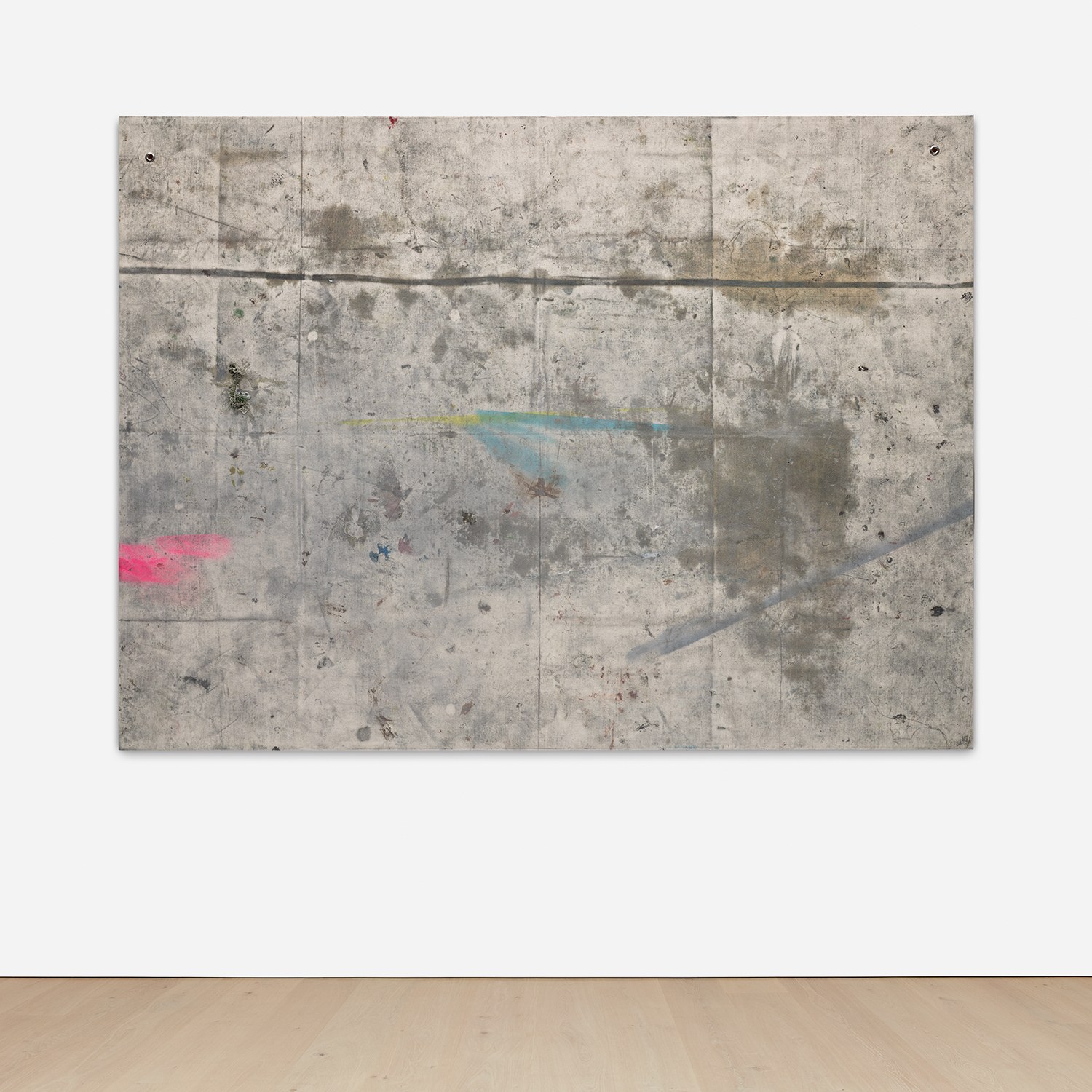
Oscar Murillo
Work!, 2012
This was not merely stylistic restlessness. It was a philosophical position: that the boundary between making and living should be as porous as possible. By 2012, Murillo had developed a signature vocabulary that felt both urgent and historically rooted. Work!
from that year combines spray print, paint, tape, dirt, yarn, and steel grommets on canvas in a composition that reads like a message posted on the wall of a factory or a protest. The word itself, rendered with the blunt authority of a command or a rallying cry, sits within a surface that is itself evidence of labor. 26 Postures and 4 Savasanas Between London and Paris, also from 2012, is one of the most physically ambitious works of his early career, a 15 part composition on linen and synthetic canvas incorporating oil, oilstick, graphite, enamel paint, concrete dye, tape, dirt, newspaper, and paper collage. The title maps a body in transit, moving between cities, meditating, resting, and the work itself performs that same restless accumulation.
Oscar Murillo
Untitled (Drawings Off the Wall Series), 2011
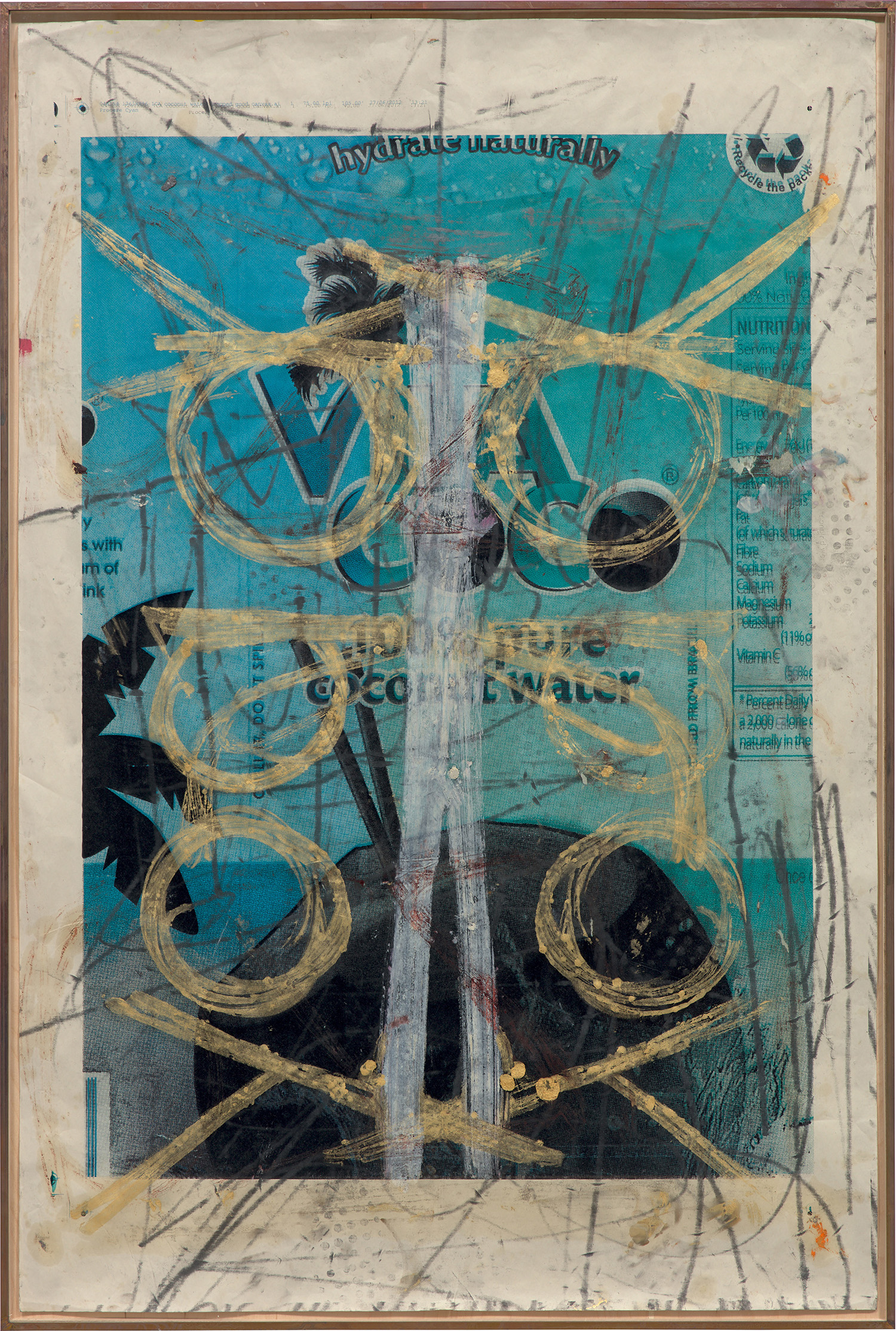
These are paintings that breathe. The period between 2013 and 2015 represents a significant deepening of his practice. La era de la sinceridad, from 2013, works in an intimate register, using oil, oilstick, and silkscreen ink on newspaper mounted in a copper frame the artist made himself. The choice of newspaper as ground connects personal mark making to global information flows, while the handmade frame insists on craft and individuality within that system.
Just Dreams from the same year deploys oilstick, oil, concrete dye, and spray paint in passages of color that feel simultaneously controlled and liberated. Catalyst 3, from 2015, is among his most resolved canvases, a work in oil, oilstick, and dirt that demonstrates how fully he had synthesized his materials into a coherent visual language. The dirt is not metaphor here. It is biography.
Oscar Murillo
La era de la sinceridad, 2013
For collectors, Murillo represents one of the most intellectually substantial and historically grounded practices to emerge from the London scene in the past two decades. His works sit comfortably in conversation with Arte Povera, with the gestural intensity of Cy Twombly, and with the politically engaged material practices of artists like David Hammons and Theaster Gates. He shares with Hammons a commitment to the poetics of found and overlooked materials, and with Twombly a belief that the mark itself carries cultural memory. His installations and multi part works reward institutional ambition, while his works on canvas and paper offer collectors a way into a practice of exceptional rigor and warmth.
The Tensions series from 2014, with its combinations of raw steel, aluminum, copper, and thread, demonstrates that his thinking extends fluidly across media, making a collection of his work genuinely dynamic to live with. Murillo has been represented by David Zwirner, one of the most internationally significant galleries in the world, a relationship that has brought his work into major private and museum collections across Europe, the Americas, and Asia. His presence in the Rubell Museum collection places him among the most important artists of his generation, and institutional acquisitions continue to grow as curators recognize the depth and consistency of his vision. Works that entered collections in the early part of his career have appreciated significantly, but the more compelling argument for collecting Murillo is not market momentum.
It is the feeling, rare and real, that these works will continue to open up over time, revealing new layers of meaning as the world they respond to continues to change. What Oscar Murillo ultimately offers is a vision of painting as a practice of radical hospitality. His canvases accept everything: dirt, labor, longing, language, the residue of other people's lives. In a moment when contemporary art can sometimes feel sealed off from experience, his work insists on remaining porous, available, and alive.
The Golden Lion at Venice was recognition, but it was also confirmation of something collectors had understood for years. Murillo is not an artist of a particular moment. He is an artist for the long run, and the works he has made so far are among the most humanly generous of our time.
Explore books about Oscar Murillo