On Kawara
On Kawara: Time, Presence, and Pure Wonder
Artist Spotlight · The Collection Editorial
“I am still alive.”
On Kawara, recurring telegram text, 1969 onwards
In 2015, the Solomon R. Guggenheim Museum in New York staged one of the most quietly astonishing retrospectives in recent memory. Titled 'Silence', the exhibition filled the museum's spiraling rotunda with the work of On Kawara, a Japanese Conceptual artist who had spent nearly five decades painting dates, sending telegrams, and cataloguing the very texture of human existence. Visitors moved through the space in hushed contemplation, as if they had wandered into something sacred.
On Kawara
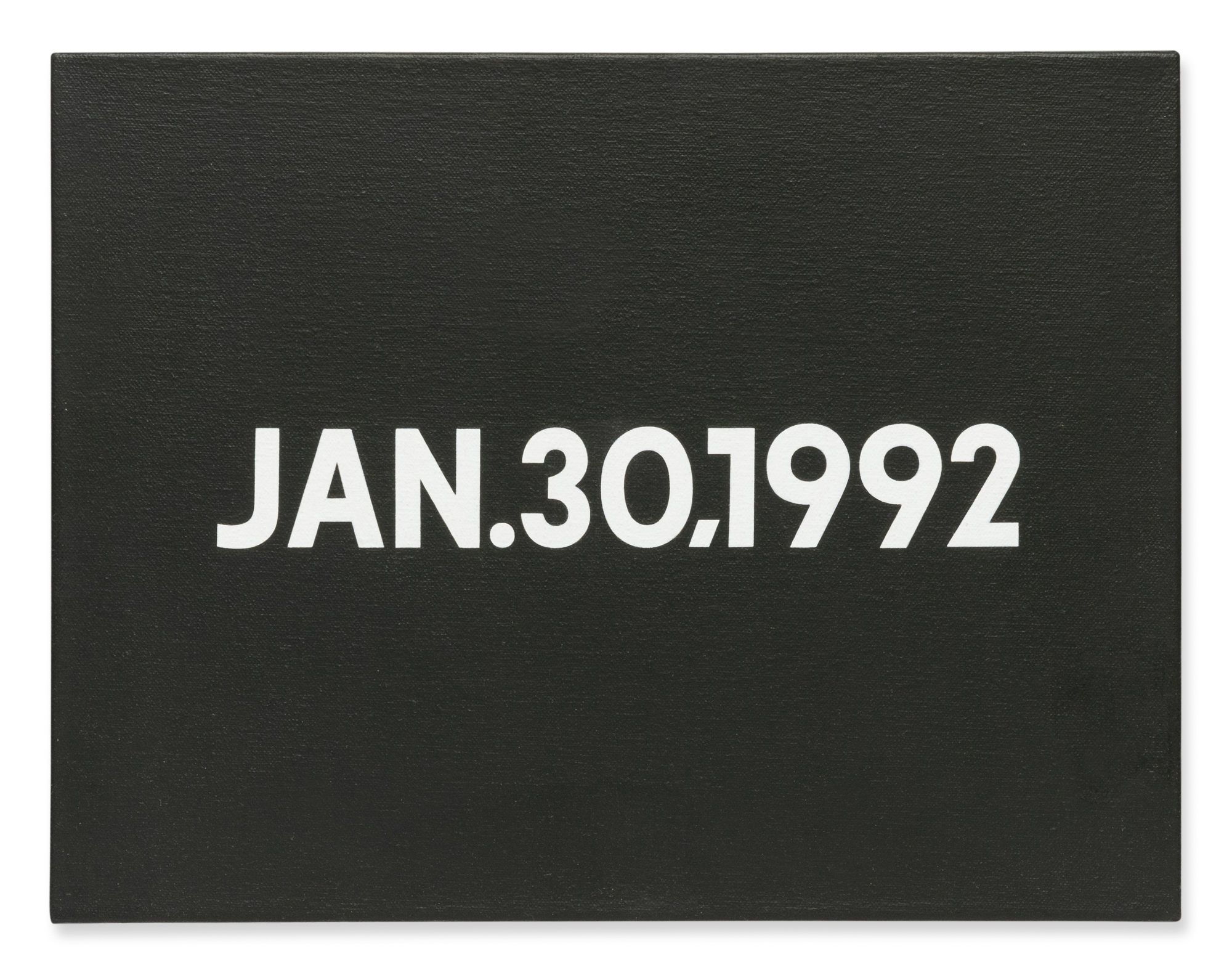
Jan. 30. 1992, 1992
The show confirmed what devoted collectors and curators had long understood: Kawara was not simply an artist of ideas but an artist of profound feeling, one who had found a way to make time itself visible and tender. On Kawara was born in Kariya, Japan, in 1932, and his early years were shaped by the seismic upheavals of the mid twentieth century. He came of age during and after the Second World War, a period that left an indelible mark on Japanese culture and on the sensibilities of an entire generation of artists. He began his career painting figurative works in Japan, unsettling and surrealist in character, before relocating to Mexico City in 1959 and eventually settling in New York by 1965.
These years of movement across continents gave Kawara an outsider's perspective on place and time, a sense that human life was always being measured against forces far larger than any individual. That awareness would become the animating force of everything he made. The year 1966 marked a decisive turning point. On January 4th of that year, Kawara painted the first of what would become known as the 'Today' series, a sequence of date paintings that he would continue until 2013, ultimately producing close to 3,000 individual works.
On Kawara
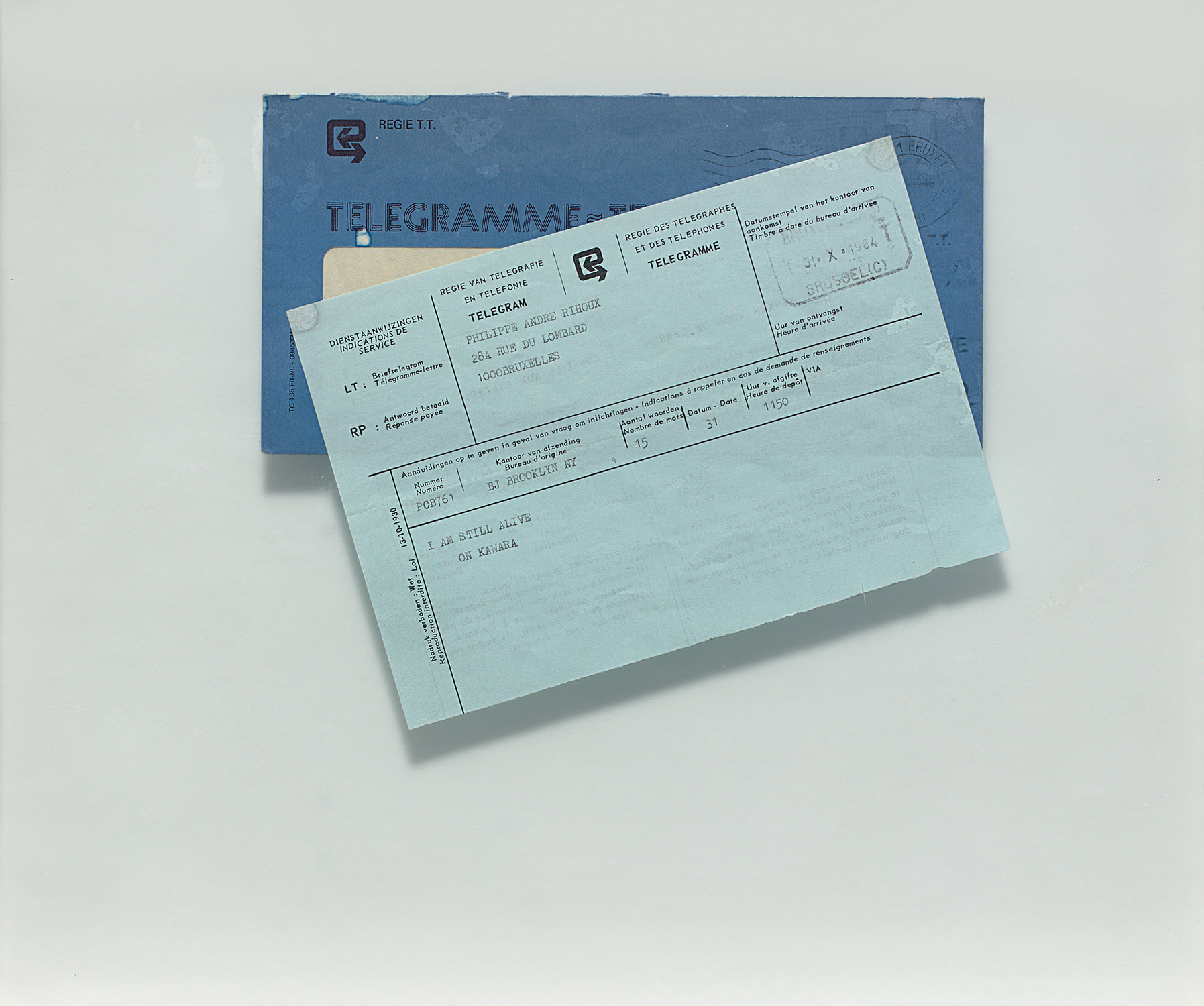
I Am Still Alive
Each canvas was painted by hand in Liquitex, bearing only the date of its creation rendered in careful, precise lettering against a monochromatic ground, most often a deep red, grey, or blue. The rule was absolute: if a painting was not completed before midnight on the date it depicted, it was destroyed. This self imposed discipline transformed each work into a kind of proof of existence, a quiet declaration that on this particular day, the artist was alive and present in the world. Alongside the 'Today' series, Kawara developed a constellation of related practices that expanded his investigation of consciousness and duration.
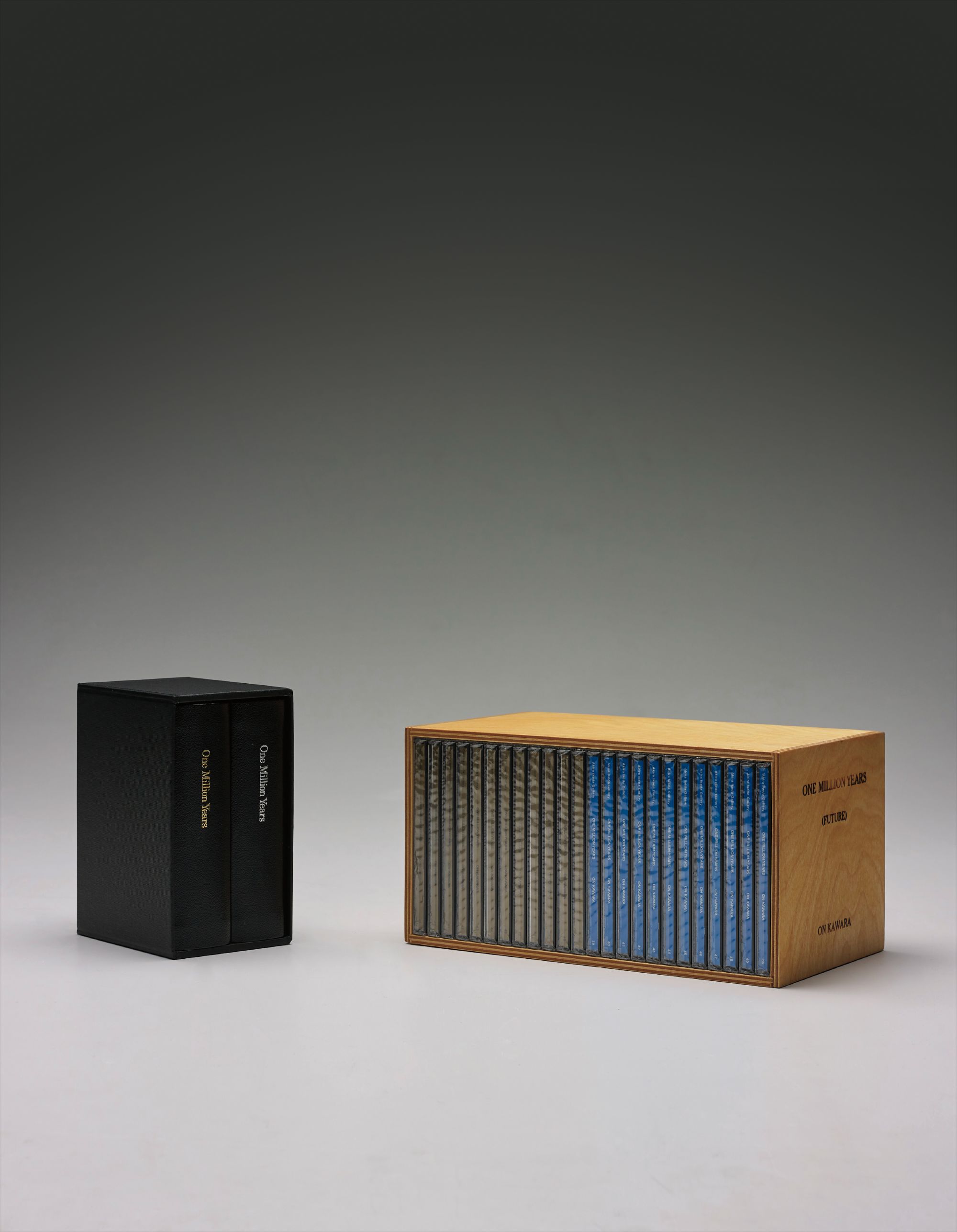
'I Got Up At' consisted of rubber stamped postcards sent to friends and colleagues each morning, recording the exact time Kawara had risen from sleep. 'I Am Still Alive' comprised telegrams dispatched to acquaintances around the world, each one carrying only that spare and luminous phrase. 'One Million Years', perhaps his most monumental conceptual undertaking, listed one million years in the past dedicated to all those who had lived and died, and one million years in the future dedicated to the last one. Together these works form something like a philosophical system, a sustained meditation on what it means to be a sentient being moving through time.
On Kawara
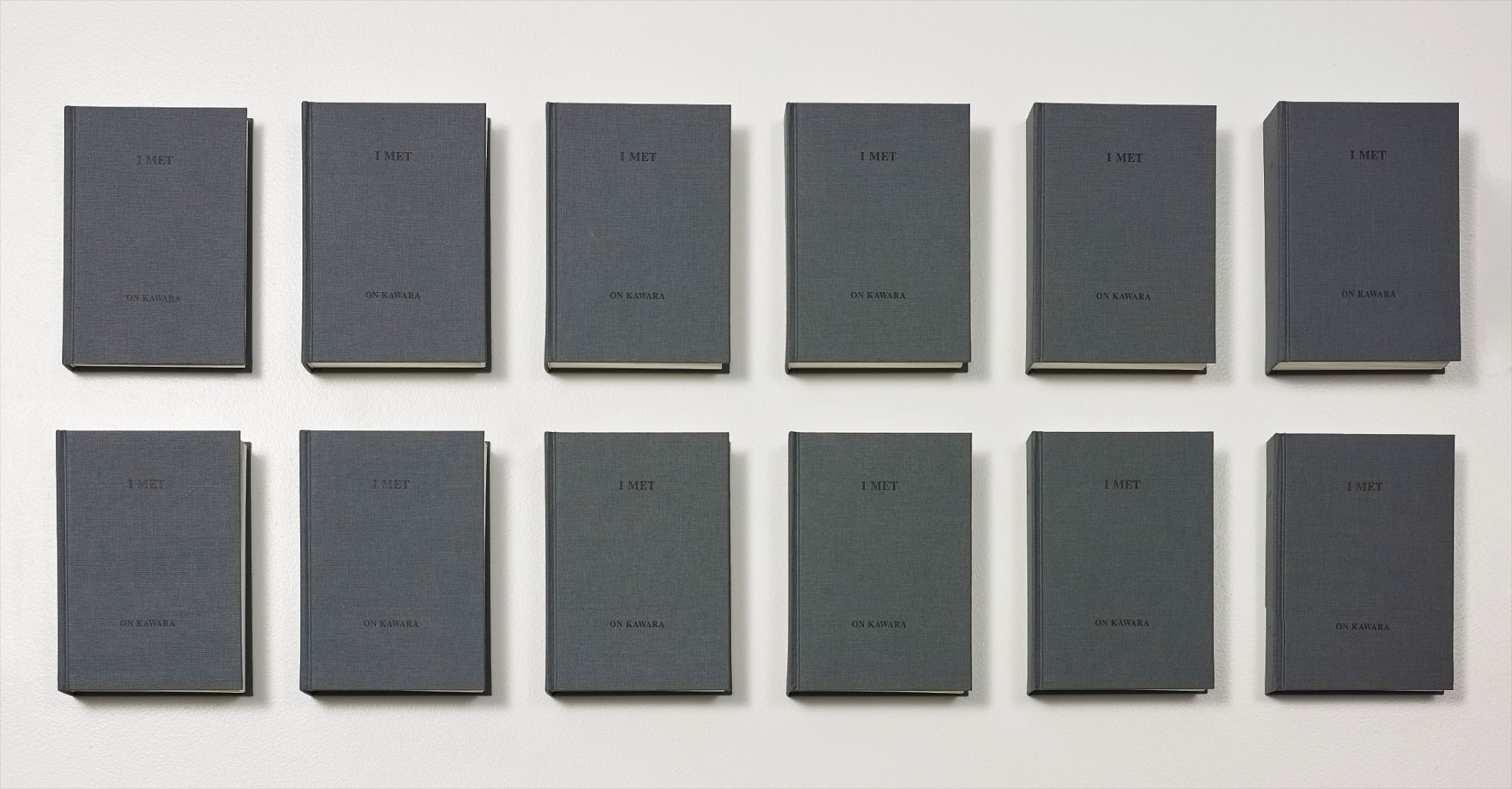
I Met
The artist's reticence about his personal life only deepened the resonance of the work: Kawara gave virtually no interviews, made no public appearances, and allowed his art to speak with total authority. For collectors, the 'Today' paintings represent one of the most distinctive and rewarding areas of the Conceptual art market. Each painting comes housed in a handmade cardboard box lined with a newspaper clipping from the city where the work was painted, a detail that anchors the abstract measurement of time in the specific texture of daily life. Works from the series appear regularly at major auction houses, with strong results reflecting both the historical importance of the practice and the relatively finite number of canvases available.
Pieces such as 'Jan. 30, 1992' and 'Oct. 23, 1992' exemplify what collectors prize most: the combination of material austerity with deep conceptual weight, the sense that you are holding a preserved moment of consciousness. The book works, including the signed and numbered editions of 'I Met' and 'One Million Years', published by Editions Micheline Szwajcer and Michele Didier in Antwerp, offer another compelling point of entry, combining rigorous intellectualism with the intimacy of the artist's own initialled hand.
On Kawara
One Million Years (For All Those Who Have Lived and Died); and One Million Years (Past and Future #39-50)
Kawara's practice occupies a singular position within the broader landscape of Conceptual art that emerged in the 1960s and 1970s. His contemporaries and peers in that movement, artists such as Sol LeWitt, Lawrence Weiner, and Hanne Darboven, shared his interest in systems, repetition, and the displacement of the artist's ego in favour of process. Yet Kawara's work carries a warmth and even a vulnerability that sets it apart. Where much Conceptual art can feel deliberately cold or cerebral, the 'Today' paintings pulse with something human and fragile.
The philosopher's question lurking behind each canvas, whether a single day can be said to matter, whether consciousness leaves any trace, is answered by the very existence of the object. The paintings are their own argument. The market for Kawara's work has grown steadily since the 1990s, supported by major institutional acquisitions and by a collector base that spans Europe, North America, and Japan. Museums including the Museum of Modern Art in New York, the Centre Pompidou in Paris, and the Art Institute of Chicago hold significant works, lending the practice an institutional endorsement that reassures both new and established collectors.
The edition works, particularly the beautifully produced publications from Editions Micheline Szwajcer and Michele Didier and from Edition Parco in Japan, such as the haunting 'Thanatophanies', allow collectors at various levels to engage with the practice in depth. These are objects that reward sustained looking and sustained thought, works that change subtly as the collector's own relationship to time and memory deepens. On Kawara died in New York in June 2014, having spent his final years in the same disciplined quiet that characterised his entire career. He left behind one of the most coherent and moving bodies of work in postwar art, a practice that asked the simplest possible questions and arrived at answers of genuine beauty.
In an era saturated with noise and speed, his insistence on the significance of a single day, a single moment of waking, a single gesture of reaching out to say 'I am still alive', feels not only timely but necessary. To collect On Kawara is to participate in that gesture, to affirm that attention paid to the passing of time is among the most meaningful things a person can do.
Explore books about On Kawara