Norman Zammitt
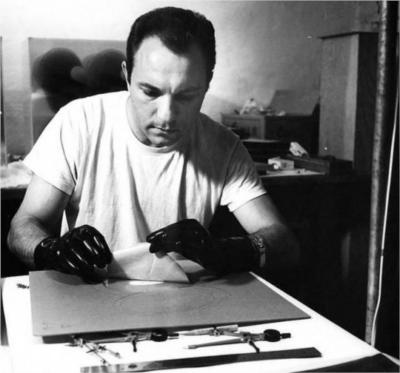
Norman Zammitt: Light Made Gloriously Visible
Artist Spotlight · The Collection Editorial
There are moments in art history when a single canvas stops you cold, not through violence or provocation, but through sheer luminous beauty. Standing before a Norman Zammitt painting is one of those moments. His works, with their slow, breathing gradients and precisely engineered color bands, feel less like objects hanging on a wall and more like apertures opened into another dimension of light. As museum collections and private holdings alike turn renewed attention toward the California Light and Space generation, Zammitt emerges as one of its most quietly radical figures, a painter who devoted his life to understanding exactly what color can do to the human eye and spirit.
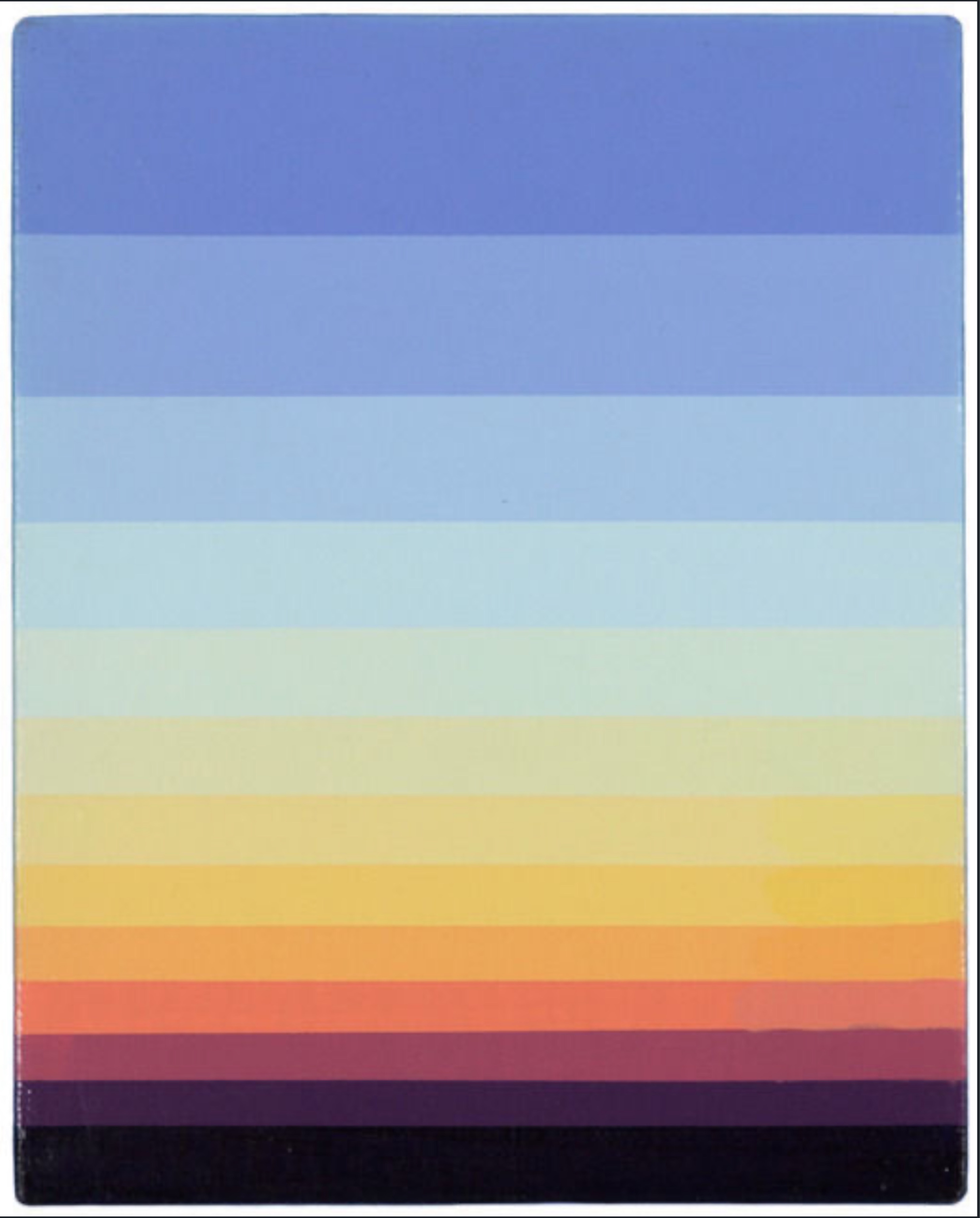
Norman Zammitt
Quanta 27, 1986
Norman Zammitt was born in Toronto, Canada, in 1931, and came of age in the United States during a period of enormous cultural energy and reinvention. His educational path led him to Pasadena City College and then to the Otis Art Institute in Los Angeles, where he earned his Master of Fine Arts degree. Los Angeles in the postwar decades was not yet the globally recognized art capital it would become, but precisely that openness, that sense of a scene still forming its own identity, made it fertile ground for artists willing to work outside the established hierarchies of the New York art world. Zammitt took full advantage of that freedom.
The Los Angeles of the 1960s and 1970s was alive with artists rethinking the fundamental properties of perception and materiality. The Light and Space movement, which counted among its central figures James Turrell, Robert Irwin, Larry Bell, and Doug Wheeler, asked what happens when art is stripped of narrative, of figure, of conventional composition, and reduced to the direct experience of light and atmosphere. Zammitt occupied a distinct and vital position within this milieu. Where some of his peers worked with architectural installations or specially fabricated glass and resin objects, Zammitt returned again and again to the painted surface, insisting that the canvas itself could become a vehicle for optical and perceptual revelation.
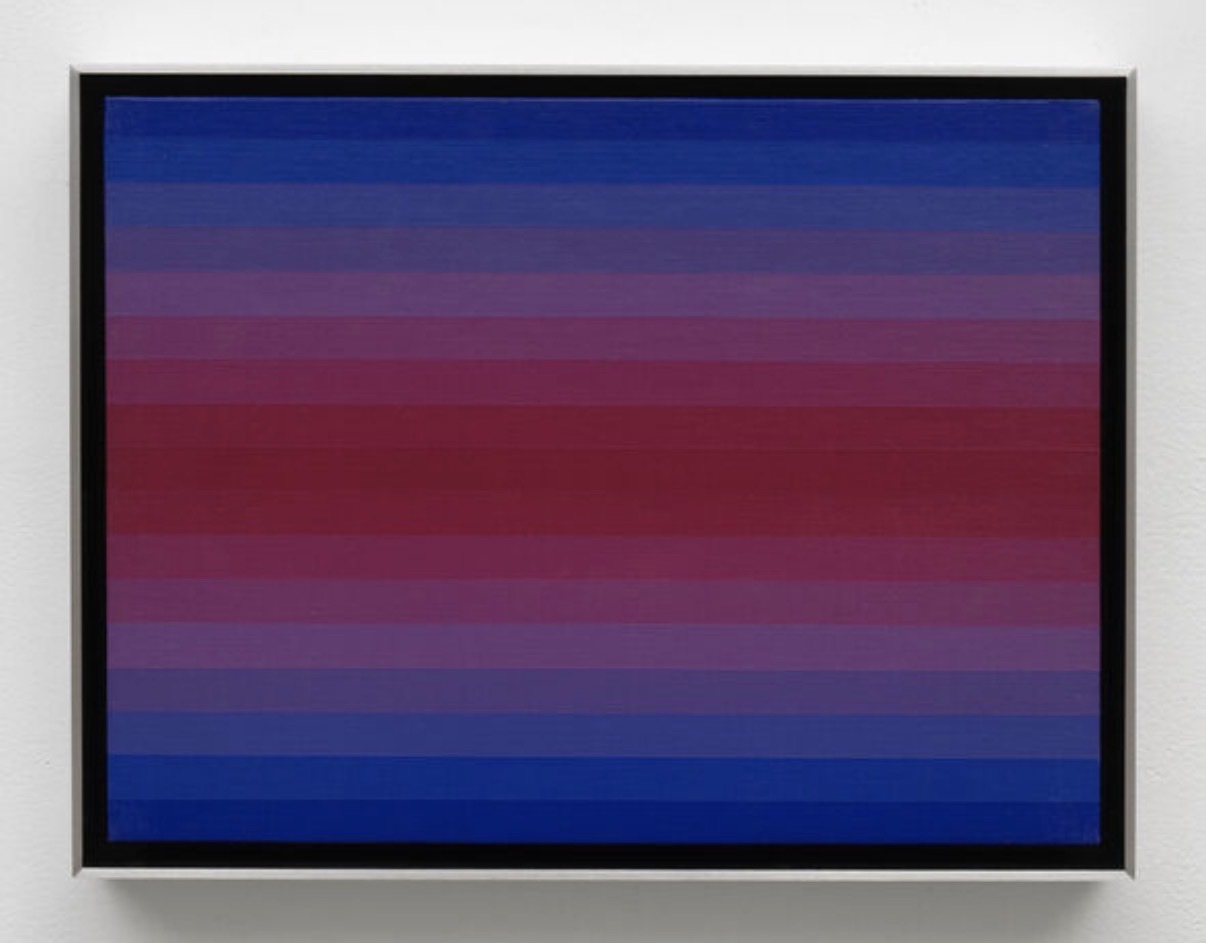
Norman Zammitt
Untitled
His mature practice centered on the systematic exploration of color gradients, sequences of carefully calibrated tonal shifts that move across the picture plane with a precision that feels almost scientific but produces effects that are undeniably emotional. Works from the 1980s, including his celebrated Quanta series, demonstrate this approach at its most refined. "Quanta 27," completed in 1986, exemplifies the quiet power of his method. Vertical bands of color, each modulated in minute increments, create a surface that seems to pulse and breathe.
The title itself gestures toward physics, toward the discrete packets of energy that govern light at the quantum level, and this is entirely deliberate. Zammitt was deeply interested in the science of light, in how wavelength and frequency translate into human sensation, and his paintings operate at exactly that intersection of the empirical and the felt. Zammitt also worked as a sculptor, and his three dimensional practice informed his understanding of how objects exist in space and how light behaves around and through form. This dual engagement, across painting and sculpture, gave his work a richness of spatial thinking that is legible even in his most apparently flat canvases.
His acrylic paintings on canvas and canvas board, including works that present as deceptively modest in scale, carry within them a monumental sense of space. Acrylic as a medium suited his purposes perfectly, allowing him to build up thin, luminous layers of color with a consistency and transparency that oil paint could not quite achieve. The surface of a Zammitt painting rewards close looking: there is always more happening than the initial impression suggests. For collectors, Zammitt represents something increasingly rare in the market for postwar California art: genuine quality at a moment of growing institutional recognition.
The Light and Space movement has attracted serious scholarly and curatorial attention over the past two decades, with major exhibitions at institutions including the Museum of Contemporary Art in Los Angeles and the Getty Center helping to establish its historical importance. As the canonical figures of that movement have seen their market values rise substantially, thoughtful collectors have begun looking more carefully at the artists who surrounded and enriched that scene. Zammitt is precisely the kind of figure who rewards that attention, an artist of rigorous intelligence and refined sensibility whose work stands fully on its own terms. Within art history, Zammitt's practice sits at a productive intersection of several important currents.
His systematic color work connects him to the Color Field painters, to the legacy of Josef Albers and his lifelong investigation into color interaction, and to the Op Art movement that captivated international audiences in the 1960s. At the same time, his commitment to perceptual experience over pictorial representation aligns him firmly with Minimalism and with the phenomenological concerns that animated so much West Coast art of his era. He is usefully considered alongside artists such as Robert Irwin, whose own journey from painting toward pure perceptual installation began with canvases not entirely unlike Zammitt's, and alongside the broader community of Los Angeles artists who made the city a genuine center of artistic innovation rather than a satellite of New York. What makes Zammitt matter today, beyond the pleasures of the individual work, is the clarity of his commitment.
He was an artist who identified a set of questions, about color, about light, about the mechanics and mysteries of human perception, and pursued them with extraordinary discipline across decades of work. In an art world that frequently rewards novelty and provocation, there is something deeply nourishing about an artist who trusted that sustained attention to a single great subject could yield inexhaustible rewards. His paintings ask us to slow down, to look again, and to notice what light actually does when it moves across a carefully prepared surface. That invitation feels, if anything, more urgent now than it did when Zammitt first extended it.