Nino Migliori
Nino Migliori, Italy's Eternal Photographic Visionary
Artist Spotlight · The Collection Editorial
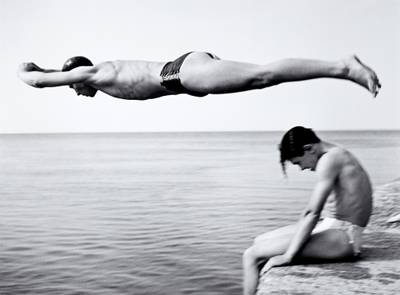
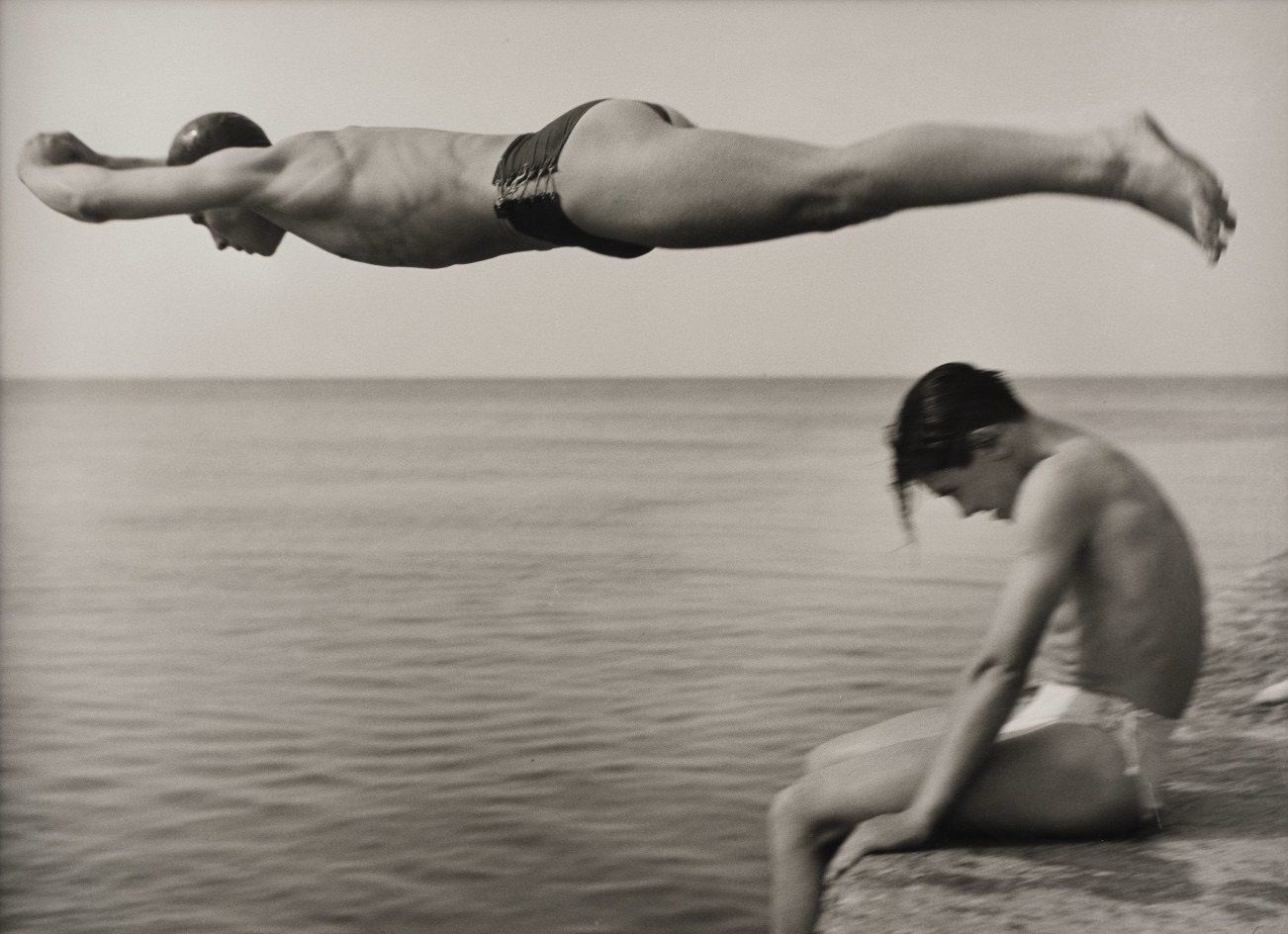
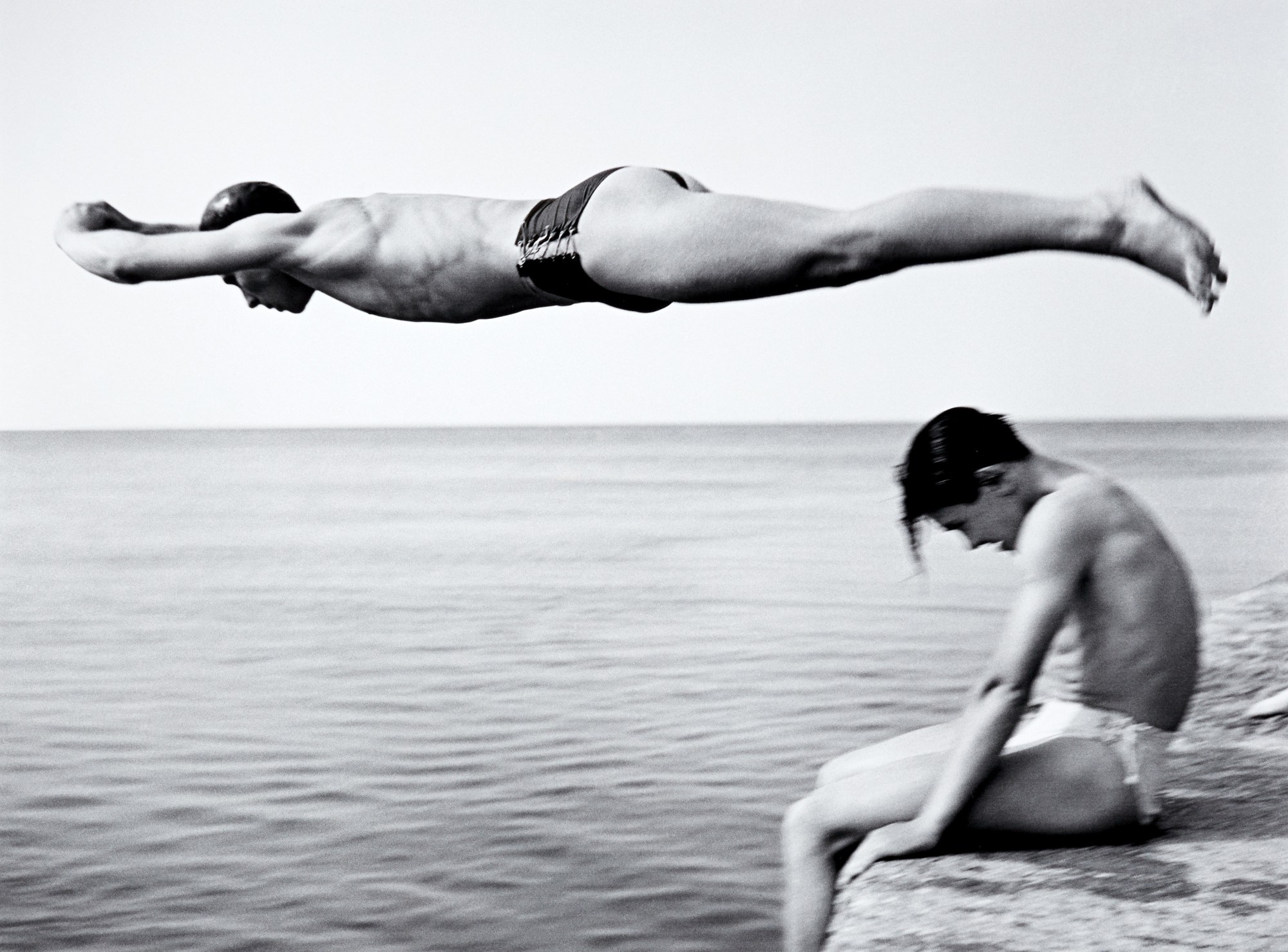
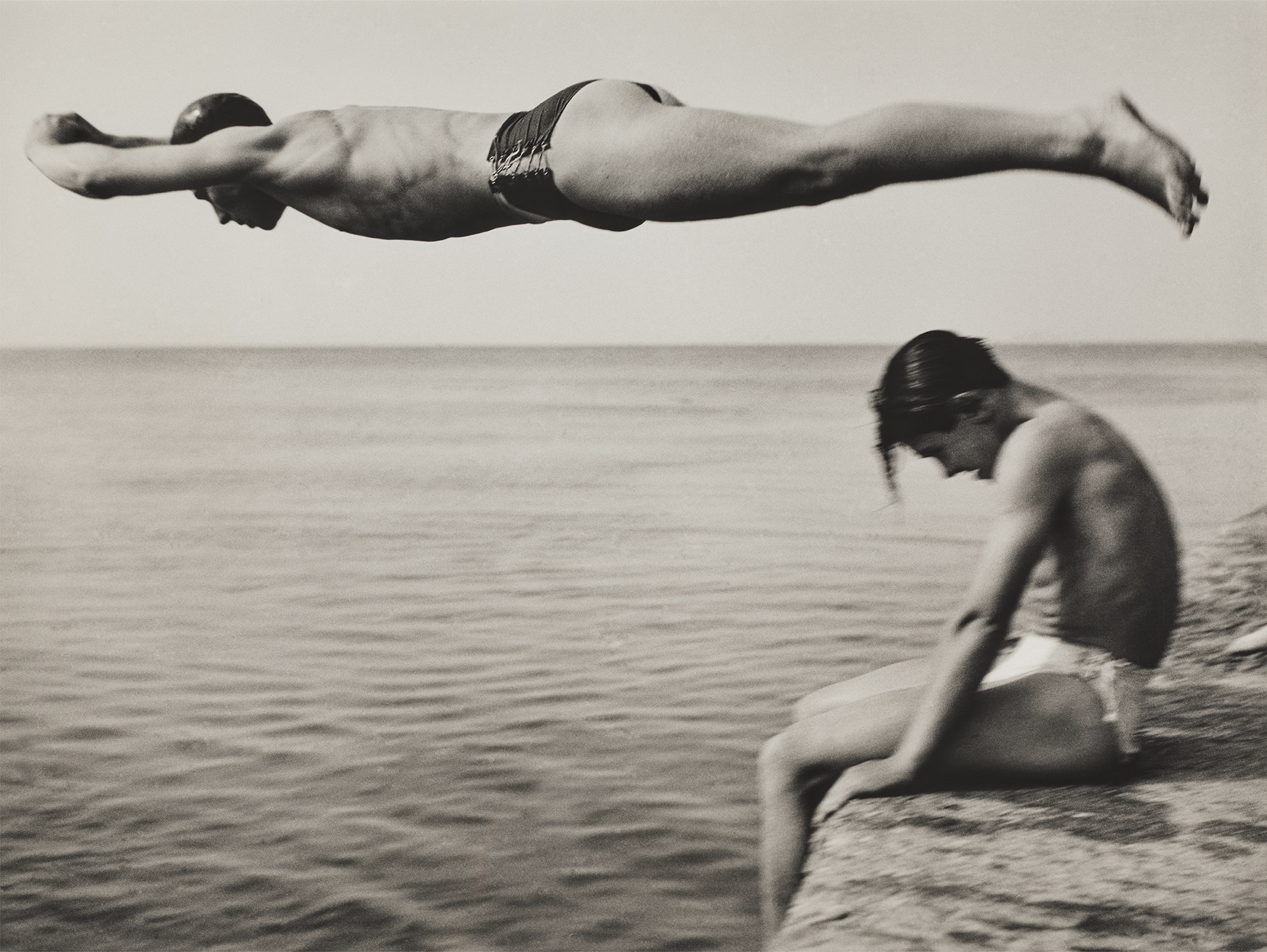
There is a photograph made in 1951 that stops people in their tracks. A diver caught mid arc, suspended between sky and water, his body a perfect crescent of tension and release. Nino Migliori made this image in Bologna when he was still in his twenties, and it became one of the most reproduced and celebrated photographs in Italian postwar culture. Known simply as Il Tuffatore, The Diver, it captures something almost impossible: the feeling of pure physical freedom translated into gelatin silver.
Nino Migliori
Il Tuffatore (The Diver), 1951
Decades later, the image remains as vital and alive as the moment Migliori pressed the shutter, a reminder that truly great photographs do not age so much as deepen. Migliori was born in Bologna in 1926, and the city shaped him profoundly. Bologna in the postwar years was a place of intense intellectual and political ferment, a city rebuilding itself with equal parts pragmatism and idealism. It was a natural environment for a young man who would spend his entire career refusing to separate rigorous thought from sensory pleasure.
Migliori came to photography largely on his own terms, without formal academic training in the medium, which may explain why he never felt bound by its conventions. He approached the camera the way a poet approaches language, not as a fixed system but as a living, malleable thing. By the early 1950s Migliori was already exhibiting widely and had aligned himself with the cultural energies of Italian neorealism. His early documentary work focused on the lives of ordinary Italians, workers, children, street scenes and moments of unguarded human expression.
Nino Migliori
'Il Tuffatore', 1951
These images brought him early recognition and placed him firmly within the tradition of socially engaged photography that was flourishing across Europe in the postwar decades. Yet even then, something else was stirring in his practice. He was drawn to the formal possibilities of light itself, to the idea that a photograph need not begin and end with what the eye could see. The real turning point came as Migliori began exploring experimental and alternative photographic processes with a commitment that few of his contemporaries could match.
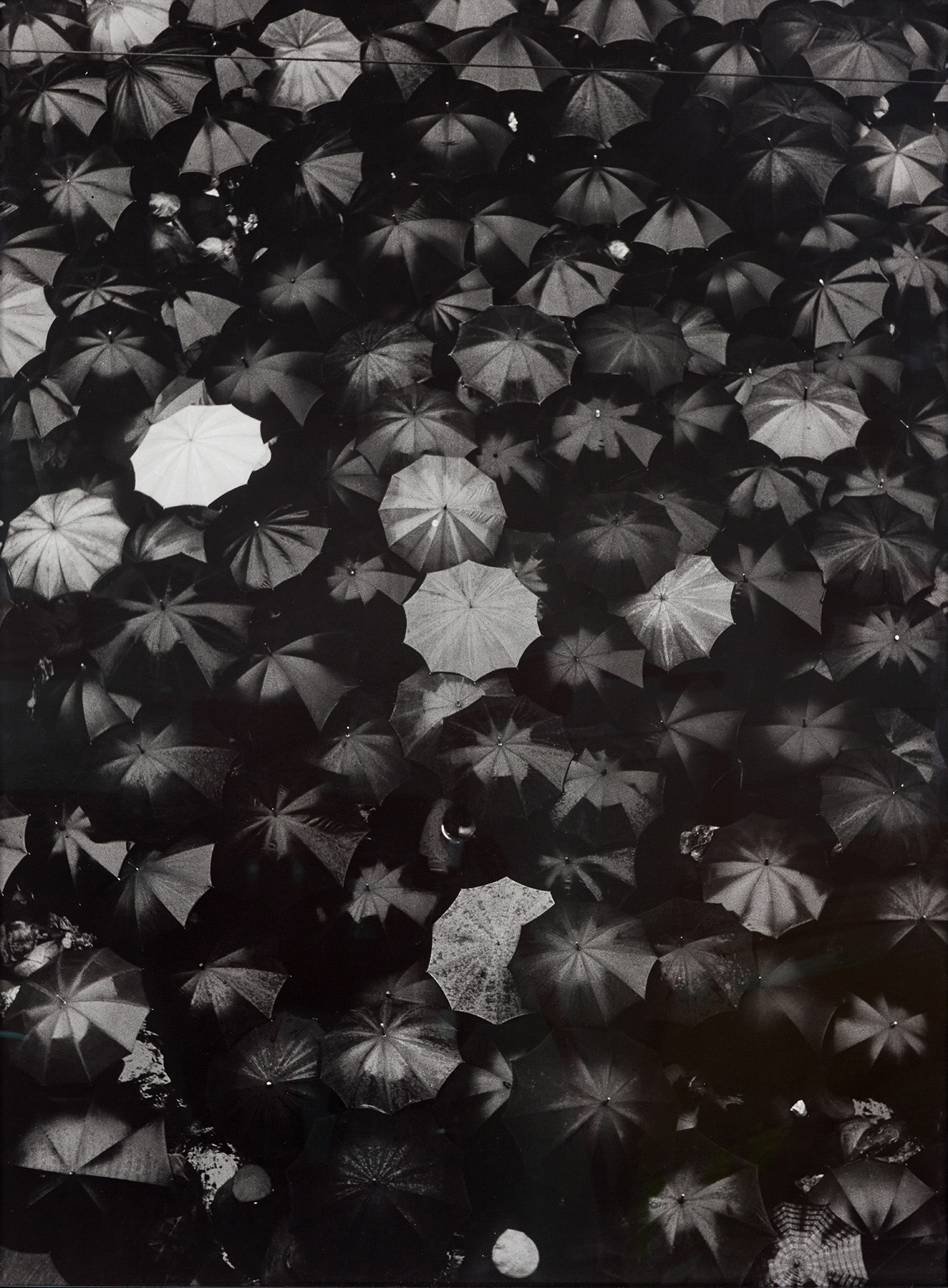
He became deeply engaged with photograms, images made without a camera by placing objects directly onto light sensitive paper. He worked with chemigrams, solarization, and direct chemical intervention on photographic surfaces, techniques that produce images hovering somewhere between photography, painting and pure abstraction. These were not novelties or diversions for Migliori. They were serious philosophical investigations into the nature of the medium itself, asking what a photograph actually is and where its boundaries lie.
Nino Migliori
Albino
His experimental work from the 1950s through the 1970s placed him in dialogue with artists like Man Ray, László Moholy Nagy and Lucio Fontana, figures who shared his conviction that materials are not neutral and that process is meaning. Il Tuffatore remains the work most collectors encounter first, and for good reason. The image exists in several forms, including gelatin silver prints from the original period and later pigment prints and flush mounted editions produced in the 2000s. Each format offers a different encounter with the same luminous moment.
The gelatin silver prints carry the particular warmth and texture of traditional darkroom craft, while the later pigment prints bring a crystalline precision that makes the diver's form feel almost sculptural. The work Albino, a gelatin silver print flush mounted and produced in 2009, demonstrates Migliori's continued engagement with portraiture and his gift for finding strangeness and beauty in the human face. Across all these works, what distinguishes Migliori is his understanding that photography is not simply recording but transformation. For collectors, Migliori represents a rare convergence of art historical significance and genuine aesthetic pleasure.
Nino Migliori
Il Tuffatore
His work sits comfortably in collections alongside the Italian postwar masters, and his experimental photographs have been acquired by major institutions including the Museo di Arte Moderna e Contemporanea di Trento e Rovereto and the Museo del Patrimonio Industriale in Bologna. Auction appearances have confirmed sustained and growing interest in his work, particularly for the early gelatin silver prints which carry both documentary weight and formal elegance. Collectors drawn to the experimental tradition in photography, to figures like Aaron Siskind or minor white in America or Otto Steinert in Germany, will find in Migliori a European counterpart of comparable depth and invention. His prints reward close looking and reveal more over time rather than less.
Migliori's place in the broader history of photography is now secure, though it is still being fully appreciated outside Italy. He is a figure who bridges two worlds that are sometimes treated as separate: the humanist documentary tradition that gave Italian photography so much of its moral seriousness, and the experimental avant garde that refused to treat the medium as merely a window onto the world. To hold both impulses together across more than seven decades of active work is a genuine achievement, and it is what makes Migliori so instructive for anyone thinking about where photography has come from and where it continues to go. His career is an argument, made quietly and beautifully over a lifetime, that the camera is an instrument of imagination as much as observation.
At a moment when photography's identity is being renegotiated by digital technology and expanded definitions of the image, Migliori's work feels not like a historical artifact but like a living conversation. He demonstrated long before the current debates began that photography was always more than documentation, always capable of becoming something stranger, more personal and more poetic than a straightforward record of the visible world. For those encountering his work for the first time, there is genuine excitement ahead. And for those who already know it, the pleasure of returning is one of the quiet rewards of being a serious collector.