Nick Van Woert
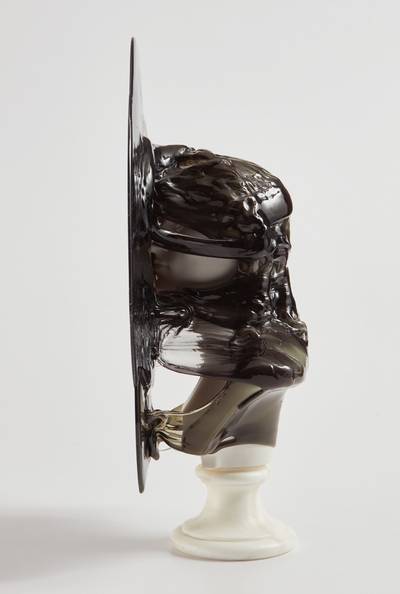
Nick Van Woert's Beautiful Alchemy of Everything
Artist Spotlight · The Collection Editorial
There is a particular kind of artist who makes you reconsider the material world entirely, who looks at industrial foam or taxidermy or pooling resin and sees not waste or accident but potential, latent drama, the compressed story of civilization pressing against nature. Nick Van Woert is precisely that artist. Over the past two decades, his sculptures and installations have accumulated a devoted following among collectors and curators who recognize in his work something genuinely rare: a practice that is conceptually rigorous and viscerally, unmistakably beautiful at the same time. As interest in materiality and process continues to animate the most compelling conversations in contemporary art, Van Woert's vision feels not only timely but essential.
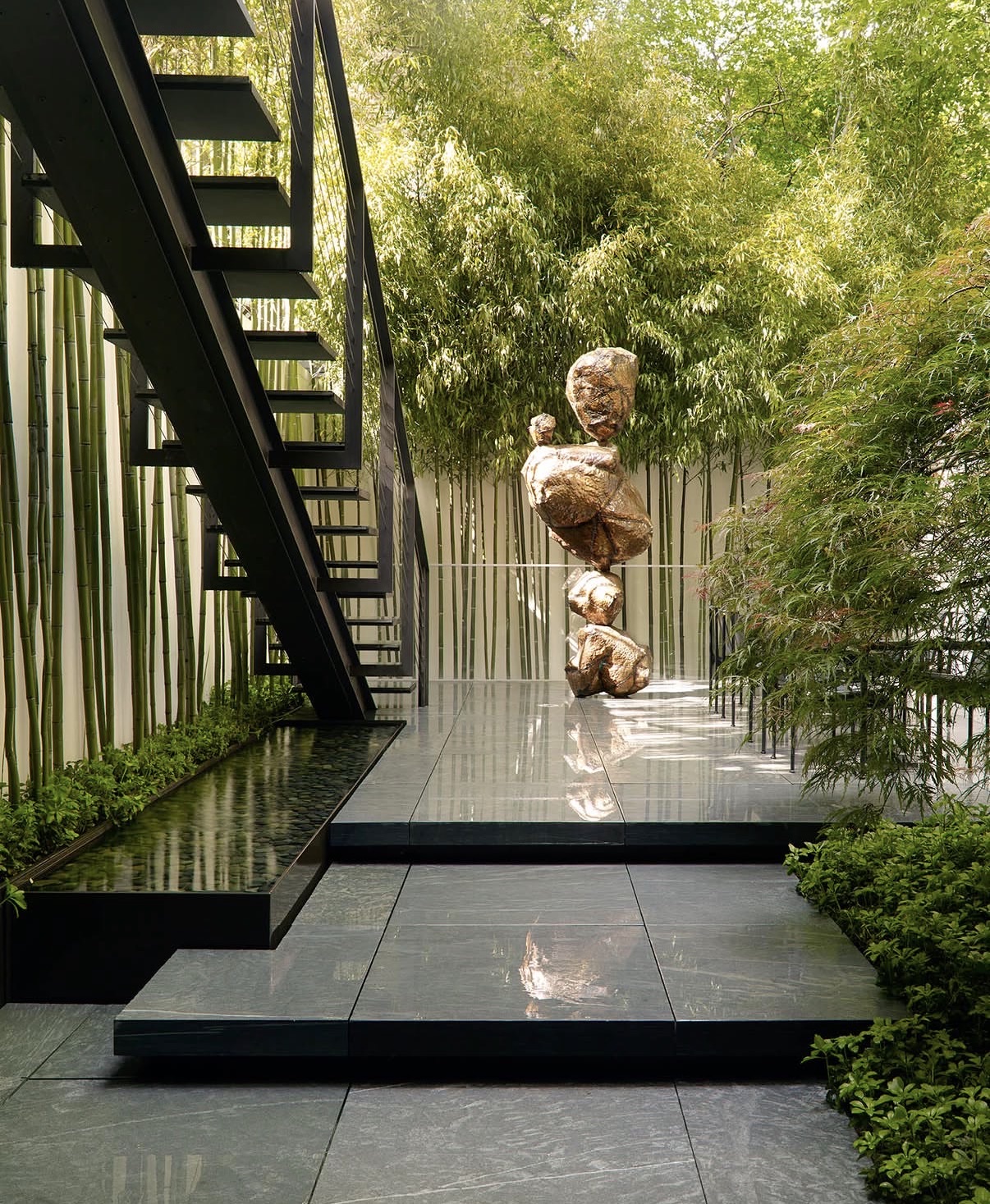
Nick Van Woert
Untitled
Born in 1979, Van Woert came of age in an America saturated with the byproducts of industrial production, and his artistic sensibility was shaped by a fascination with the gap between the natural world and the synthetic one that increasingly overlays it. He studied at the University of Nevada before relocating to New York, where the density and friction of the city sharpened his instinct for found and repurposed materials. New York in the early 2000s was a fertile environment for a sculptor drawn to the vernacular of industrial supply chains, and Van Woert absorbed the lessons of artists working around him while developing a voice that was unmistakably his own. The city's texture of accumulation and erosion became a recurring undercurrent in everything he made.
His artistic development is marked by an extraordinary openness to material experimentation that never tips into arbitrariness. Van Woert approaches unconventional substances, resins, polyurethane adhesives, insulation foam, taxidermy, industrial chemicals, not as provocations in themselves but as honest carriers of meaning. Each material brings its own history, its own relationship to labor, ecology, and time. His early works established a signature tension between the classical and the contemporary, between art historical references and the raw vocabulary of construction sites and hardware stores.
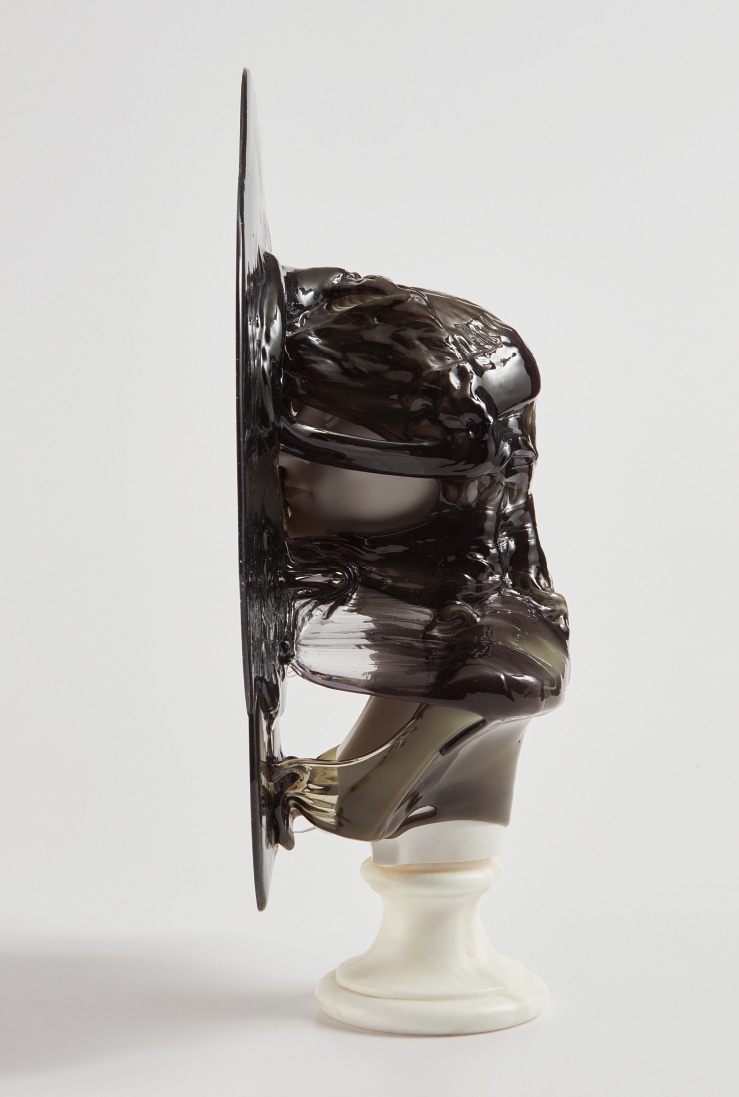
Nick Van Woert
Damnatio Memoriae (black), 2011
This willingness to hold apparent opposites in suspension without resolving them is what gives his practice its intellectual depth and its persistent visual power. Among his most celebrated works, Damnatio Memoriae from 2011 stands as a landmark. The title refers to the Roman practice of erasing a disgraced figure from public memory, a charged frame for a work that combines fiberglass statuary with polyurethane in ways that seem to enact processes of transformation, decay, and partial erasure in real time. The piece is a meditation on history's instability and the way materials themselves participate in the telling and untelling of stories.
Neo Classical, made in 2008, similarly pairs a plaster bust with polyurethane adhesive, insulation foam, wood, Plexiglas, and paint in a composition that feels like an archaeological site excavated from the near future. The Animist from 2010, in plaster and plastic, continues this conversation, evoking totemic power through the collision of ancient sculptural form with contemporary synthetic material. Across these works, Van Woert achieves something alchemical: the objects appear simultaneously freshly made and millennia old, as if they have passed through geological time at an accelerated rate. Black Eclipse, which pairs a plaster bust with resin, exemplifies the formal confidence that distinguishes Van Woert's most resolved work.
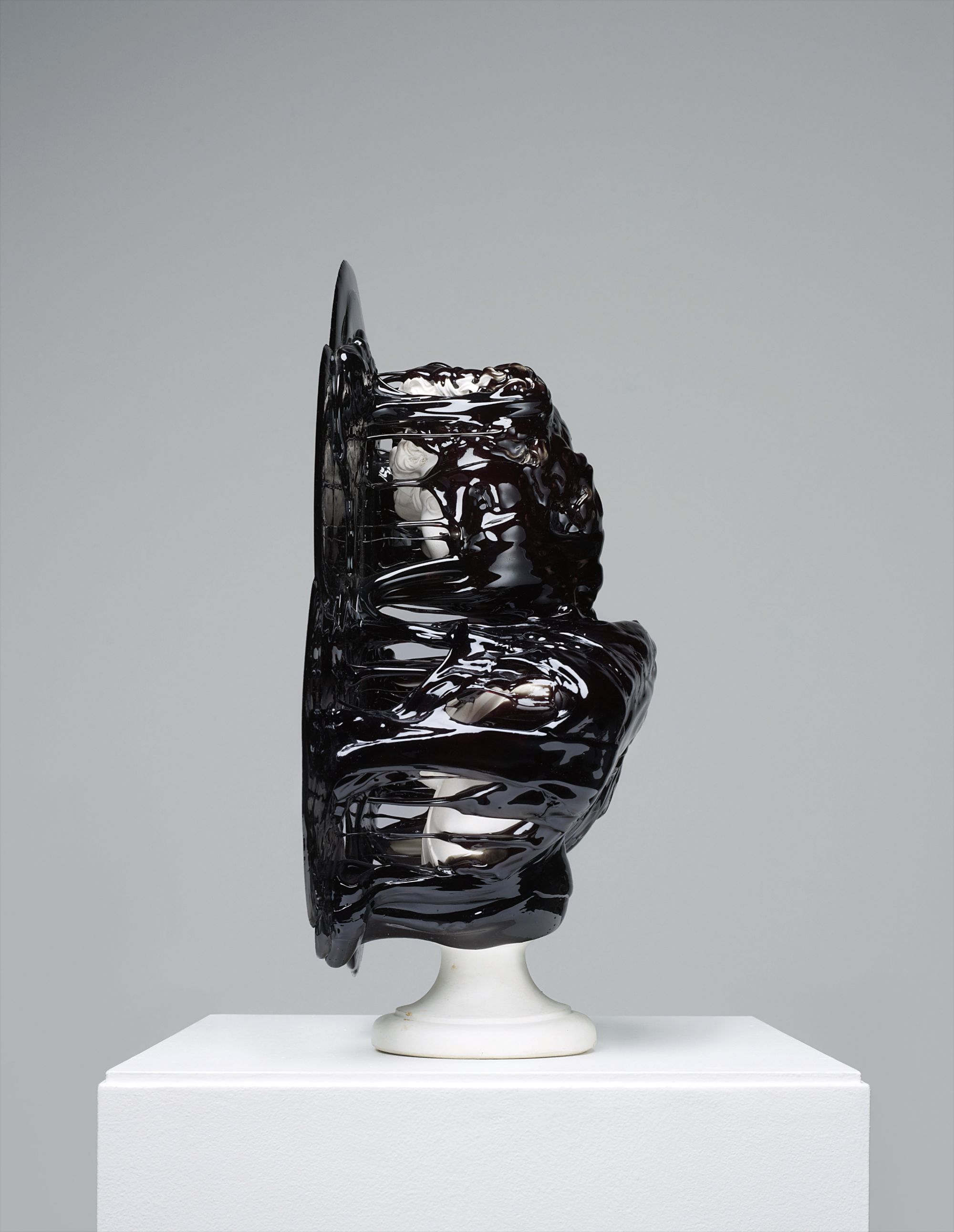
Nick Van Woert
Black Eclipse
The resin intrudes on or embraces the classical form in ways that feel both violent and tender, suggesting geological process, industrial accident, and intimate touch all at once. The surfaces he achieves have a quality that rewards close looking over time, revealing depths and shifts that photographs can only partially capture. This is a quality that serious collectors respond to instinctively: the sense that a work will continue to reveal itself across years and decades of living with it. Van Woert's metal sculptures, including works that simply carry the title Untitled, demonstrate that his engagement with material is not limited to the theatrical chemistry of resin and foam but extends to a quieter, more austere register as well.
From a collecting perspective, Van Woert occupies an enviable position. His work is held by prominent institutions and private collections, and his reputation has been built through sustained critical attention rather than market speculation alone. Collectors who have acquired his work early have found themselves holding objects whose significance has only grown as the broader conversation around materiality, entropy, and the relationship between nature and industry has become central to contemporary discourse. His works operate beautifully as singular acquisitions but also reward collectors who build a body of his practice over time, since the dialogue between different pieces, different materials, different moments in his development, reveals dimensions that no single work can carry alone.
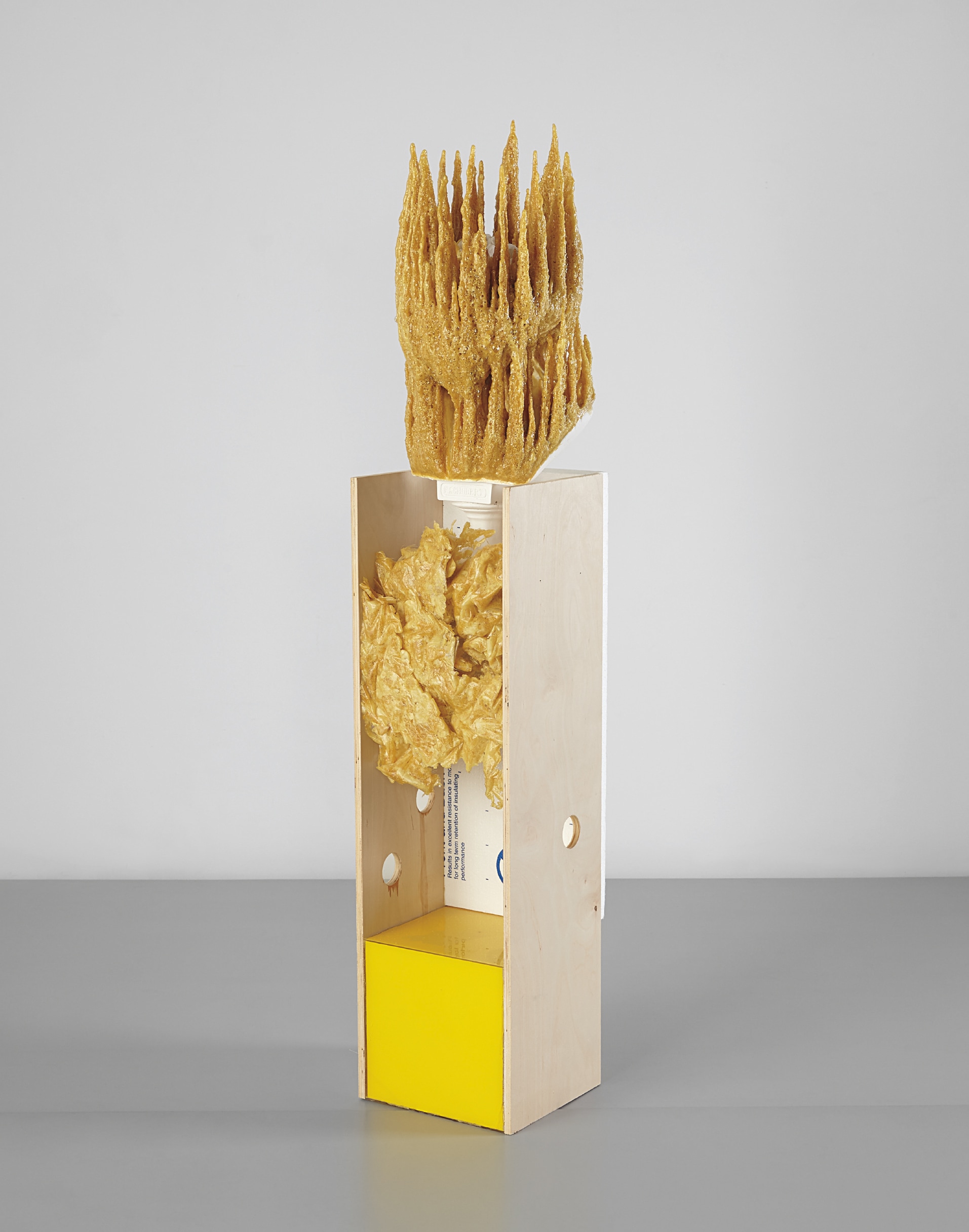
Nick Van Woert
Neo Classical, 2008
For collectors considering entry points, the range of materials and scales across his output offers genuine options at multiple levels of engagement. In terms of artistic context, Van Woert's practice invites comparison with a generation of sculptors who have interrogated the boundary between the organic and the synthetic. His work shares certain obsessions with artists like Matthew Ronay, whose organic abstractions similarly invoke biological process and formal history, and with the broader lineage of artists who have mobilized industrial materials in the service of deeply humanistic inquiry, a lineage that runs from Robert Smithson's engagement with entropy through the material experiments of the Arte Povera movement. Van Woert is not derivative of any of these predecessors but in conversation with them, extending and complicating a tradition of thinking through sculpture about what the world is made of and what making means.
Ultimately, what makes Nick Van Woert matter in 2024 and beyond is the quality of attention his work demands and rewards. At a moment when so much cultural production feels accelerated and disposable, his sculptures insist on slowness, on the time it takes for resin to cure or foam to expand or a surface to achieve its final, unrepeatable state. They are objects that carry the record of their own becoming, which is another way of saying they are honest in a manner that is increasingly precious. For collectors, for institutions, and for anyone who believes that art can still make visible the deep strangeness of being alive in a world made of both ancient stone and petroleum byproduct, Van Woert's work is an ongoing, generous, and quietly magnificent invitation.