Natalie Frank
Natalie Frank Makes the Wild Luminous
Artist Spotlight · The Collection Editorial
When the Drawing Center in New York mounted its landmark survey of Natalie Frank's Grimm fairy tale drawings, the art world took a long, collective breath. The project, which culminated in a major publication and drew serious critical attention, confirmed what many collectors and curators had already sensed: Frank was doing something genuinely new with very old material. She had taken the Brothers Grimm not as nostalgic bedtime territory but as a psychosexual landscape full of hunger, transformation, and female agency, and she had rendered it in gouache and pastel with a rawness that felt urgent and alive. The show announced her as one of the most compelling figurative painters working in America today.
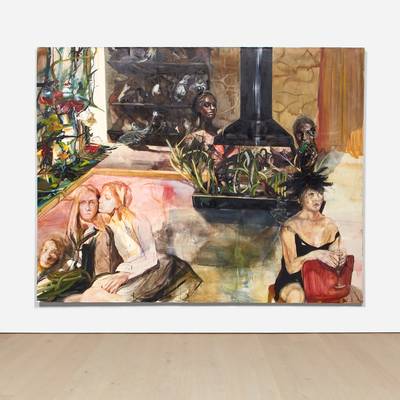
Natalie Frank
Brothel, 2005
Frank was born in 1980 and grew up in a household that valued intellectual and cultural life deeply. She studied at Brown University before going on to earn her MFA from Yale School of Art, that crucible of American painting talent that has produced so many significant voices in contemporary art. At Yale she developed the foundations of what would become a fiercely individual practice, one that drew equally on art history, feminist theory, and literary sources that most painters would not think to touch. The academic rigor she absorbed there never calcified into academicism.
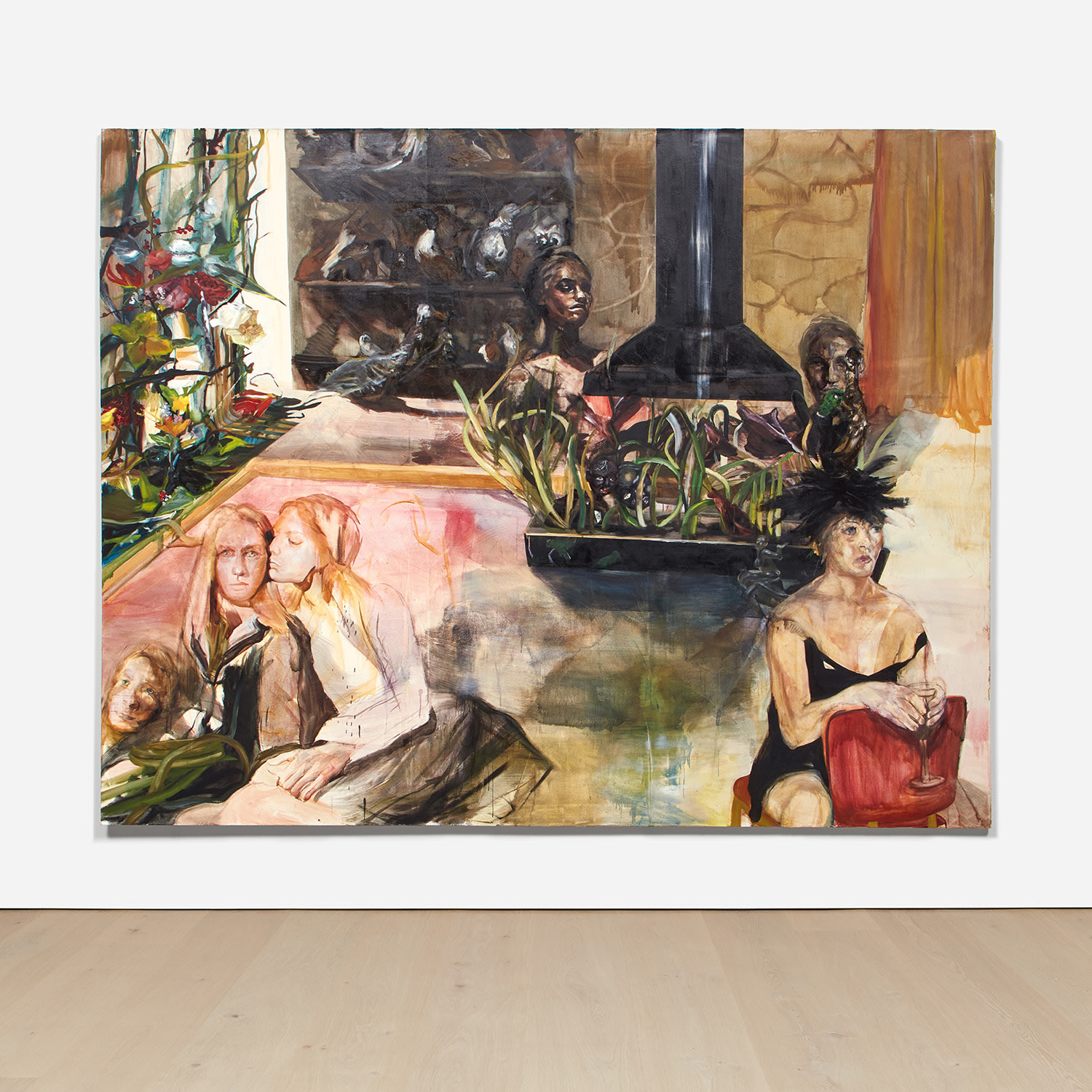
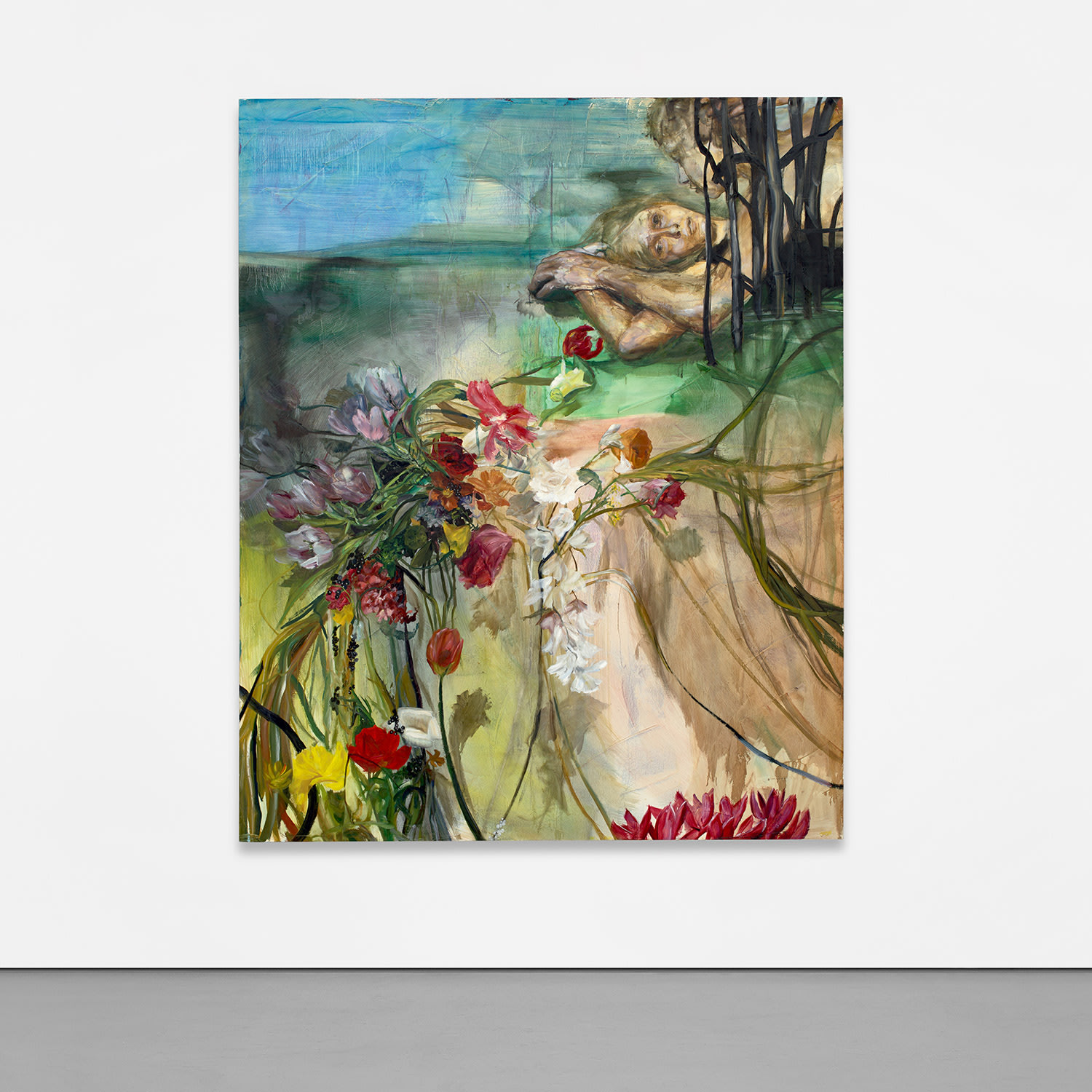
Instead it gave her the confidence to be wild. The development of Frank's artistic voice in the years following her graduate training was rapid and assured. Her early oil paintings on canvas, several of which date to 2005, show a painter already operating at a high pitch of emotional and formal intensity. Works from that period such as Brothel, The End of Romance, War, and Topiary share a quality of compressed psychological drama rendered in bold, sometimes lurid color and gestural figuration that refuses prettiness or comfort.
Natalie Frank
The End of Romance, 2005
The figures in these paintings are not decorative presences. They are bodies in states of desire, conflict, and metamorphosis, occupying spaces that feel simultaneously mythic and viscerally immediate. It is painting that demands something from the viewer in return. Over the following decade Frank refined and deepened her practice, expanding into works on paper and embracing gouache and pastel as primary media alongside oil.
This shift was significant. The intimacy of works on paper suited her subject matter perfectly, allowing a kind of directness and even vulnerability that oil on large canvas sometimes holds at arm's length. Her Grimm series, produced over several years and exhibited at the Drawing Center, brought her international attention and stands as one of the more ambitious literary illustration projects in recent American art. She approached the tales not as a children's book illustrator but as a peer of the Brothers Grimm, someone equally interested in what the stories are really about beneath their encoded morality.
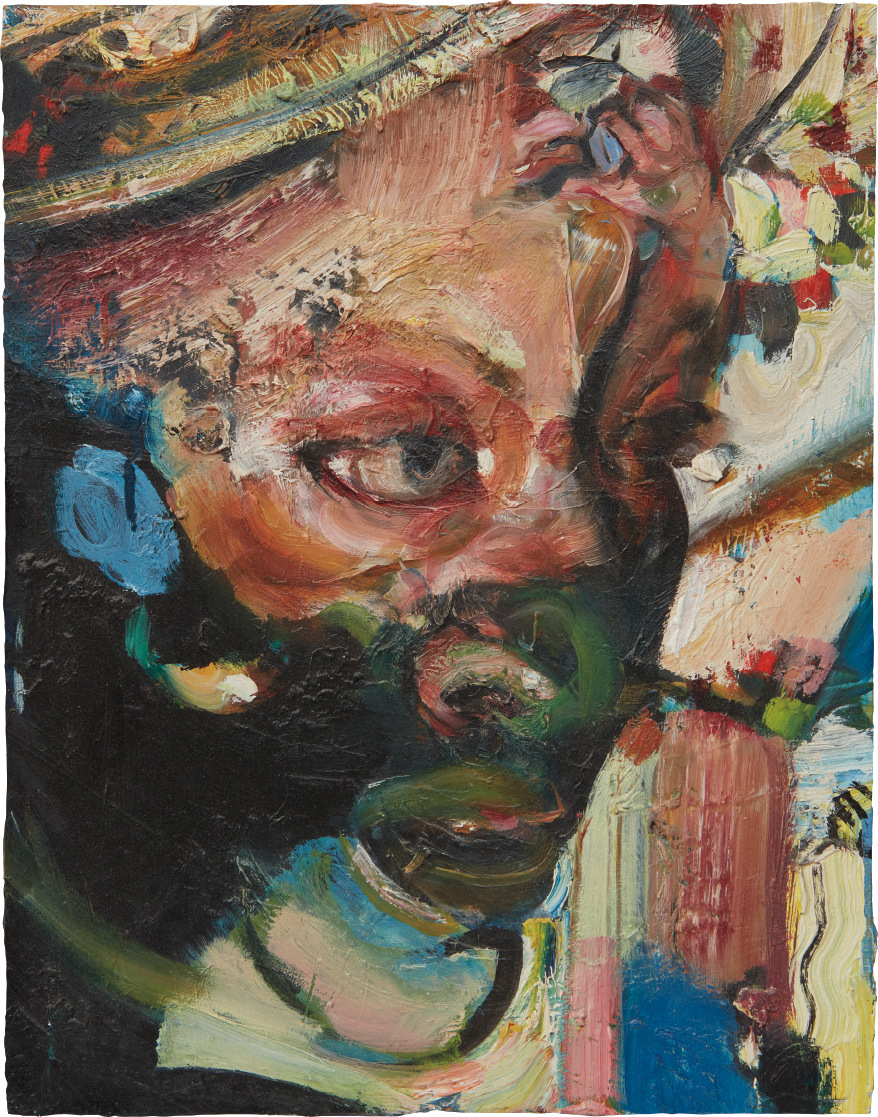
Natalie Frank
Portrait 3, 2011
The result was a body of work that was simultaneously scholarly and visceral, beautiful and deeply unsettling in the best possible sense. Frank also engaged substantively with the writings of Anaïs Nin, producing work that explored erotic literature and female authorship with the same unflinching intelligence she brought to folklore. This thread of her practice connects her to a long tradition of artists who have taken seriously the question of how desire, particularly female desire, gets represented and who controls that representation. In Frank's hands the answer is always the woman.
Her figures are not objects of a voyeuristic gaze. They are subjects with interior lives, appetites, and power, even when they are also vulnerable or in extremis. This is a distinction that matters enormously and it is one that collectors who live with her work feel in an ongoing way. The market for Frank's work reflects the depth of critical regard she has accumulated.
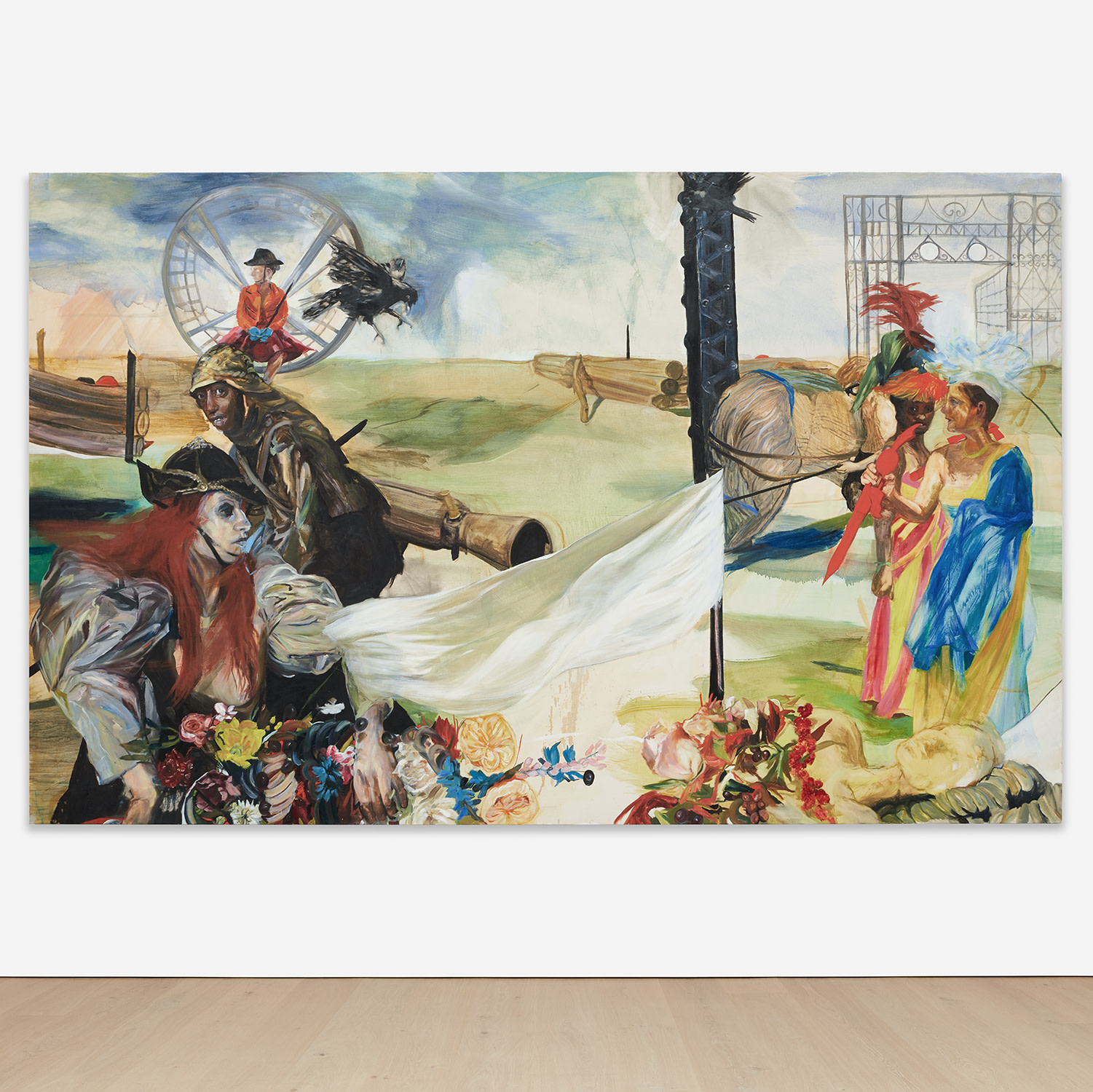
Natalie Frank
War, 2005
Her paintings and works on paper are held by serious private collectors across the United States and Europe, and her institutional footprint continues to grow. Works like Portrait 3 from 2011, painted in oil on board, demonstrate the intimacy and psychological acuity she brings to even relatively contained formats. Study for One Train May Hide Another, a gouache and pastel work, shows the luminous surface quality she achieves in the works on paper, where color seems to glow from within rather than sitting on the surface. Collectors drawn to expressive figuration, to work that engages seriously with literature and feminist thought, and to painting that rewards repeated looking will find Frank to be a deeply rewarding acquisition.
Her prices reflect her standing as a genuinely significant artist rather than a market phenomenon, which means there is still meaningful opportunity for collectors approaching her work now. In terms of her context within art history and among her contemporaries, Frank occupies a position that is entirely her own while also being in productive conversation with a number of important lineages. Her work resonates with the psychological intensity of Paula Rego, whose fairy tale and literary paintings explore similar territory of female experience and power. There are affinities too with the expressive figuration of Nicole Eisenman and the raw, confrontational energy of artists like Cecily Brown.
Frank shares with all of these painters a commitment to figuration as a vehicle for ideas rather than merely a stylistic position, and a willingness to go to uncomfortable places in the service of truth. She is also deeply engaged with art historical precedent, with the German Expressionists, with Egon Schiele, with the way that European modernism used distortion and color as emotional registers. What makes Natalie Frank matter in 2024 is not simply that she is a skilled painter, though she is unquestionably that. It is that she has identified a territory where mythology, feminism, literary history, and painterly ambition converge, and she has worked it with sustained commitment and expanding authority over two decades.
The questions her paintings ask about bodies, desire, power, and storytelling are not peripheral questions. They are central to how we understand the human experience, and they are rendered here with a beauty and a force that stays with you long after you leave the room. For collectors who want work that is both intellectually serious and genuinely alive as painting, Natalie Frank represents exactly what private collecting at its best is for.