Morris Louis
Morris Louis and the Poetry of Pure Color
Artist Spotlight · The Collection Editorial
There is a moment, standing before a Morris Louis canvas, when the eye simply surrenders. The color comes before the thought. It arrives as sensation, as weather, as something closer to music than to painting. That experience has drawn curators, scholars, and collectors back to Louis's work with remarkable consistency across the decades since his death in 1962, and it shows no sign of diminishing.
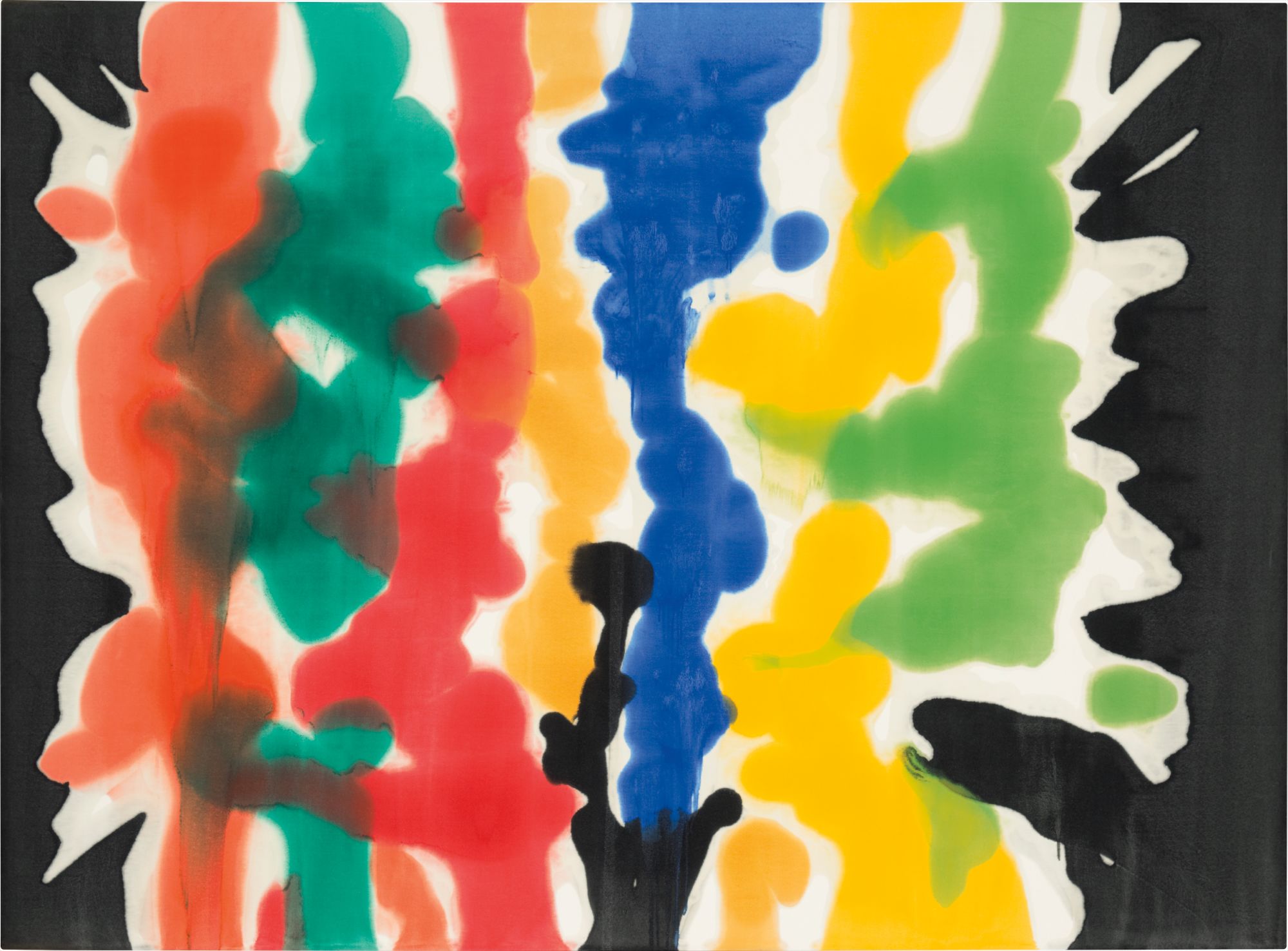
Morris Louis
Para IV
The Museum of Modern Art, the Hirshhorn, and the National Gallery of Art all hold major examples of his work, and major auction appearances consistently confirm his status as one of the defining voices of postwar American abstraction. Louis remains, in the fullest sense, a painter whose time has never really passed. Morris Louis Bernstein was born in Baltimore, Maryland in 1912, the son of Russian Jewish immigrants. Baltimore in those years was a city of neighborhoods, of workshop culture, of practical ambition, and Louis absorbed something of that temperament.
He began formal art study at the Maryland Institute of Art at just seventeen, showing early dedication and a seriousness of purpose that would characterize his entire career. He later spent a brief period in New York in the 1930s, where he encountered the social realist currents of the Works Progress Administration, even working under that program for a time. Yet the prevailing styles of the era never quite claimed him. He was looking, always, for something more elemental.
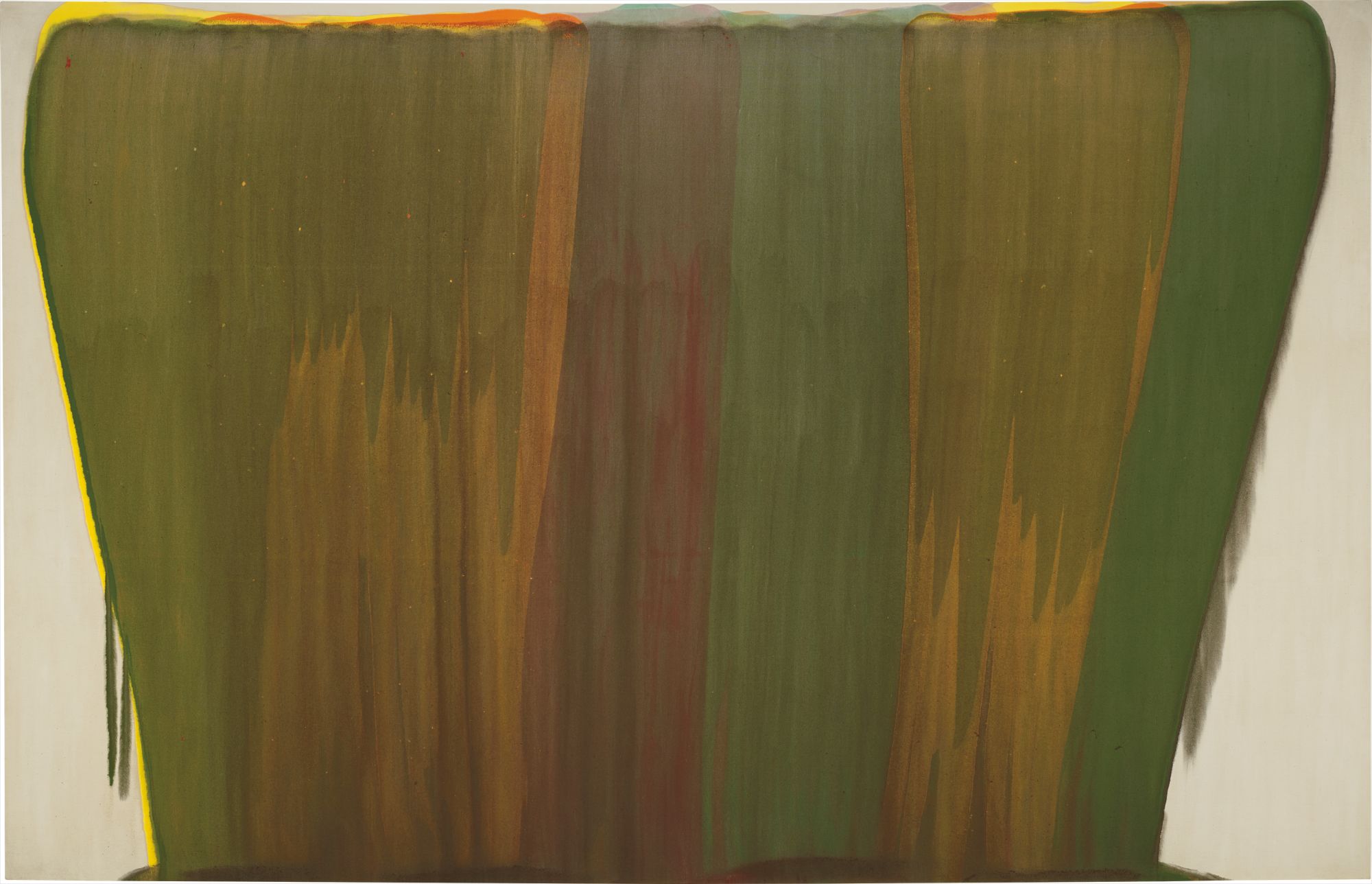
Morris Louis
Tzadik, 1958
Louis returned to Baltimore and then settled in Washington, D.C., where he taught and painted in a kind of productive privacy for years. Washington in the 1940s and early 1950s was not the center of the art world, and Louis worked largely outside the circuits of critical attention and gallery visibility that shaped careers in New York.
This distance, which might have been a disadvantage, arguably gave him room. He was not performing for an audience. He was solving a problem, quietly and with great concentration, in his own studio. That sustained solitude would prove essential to what came next.
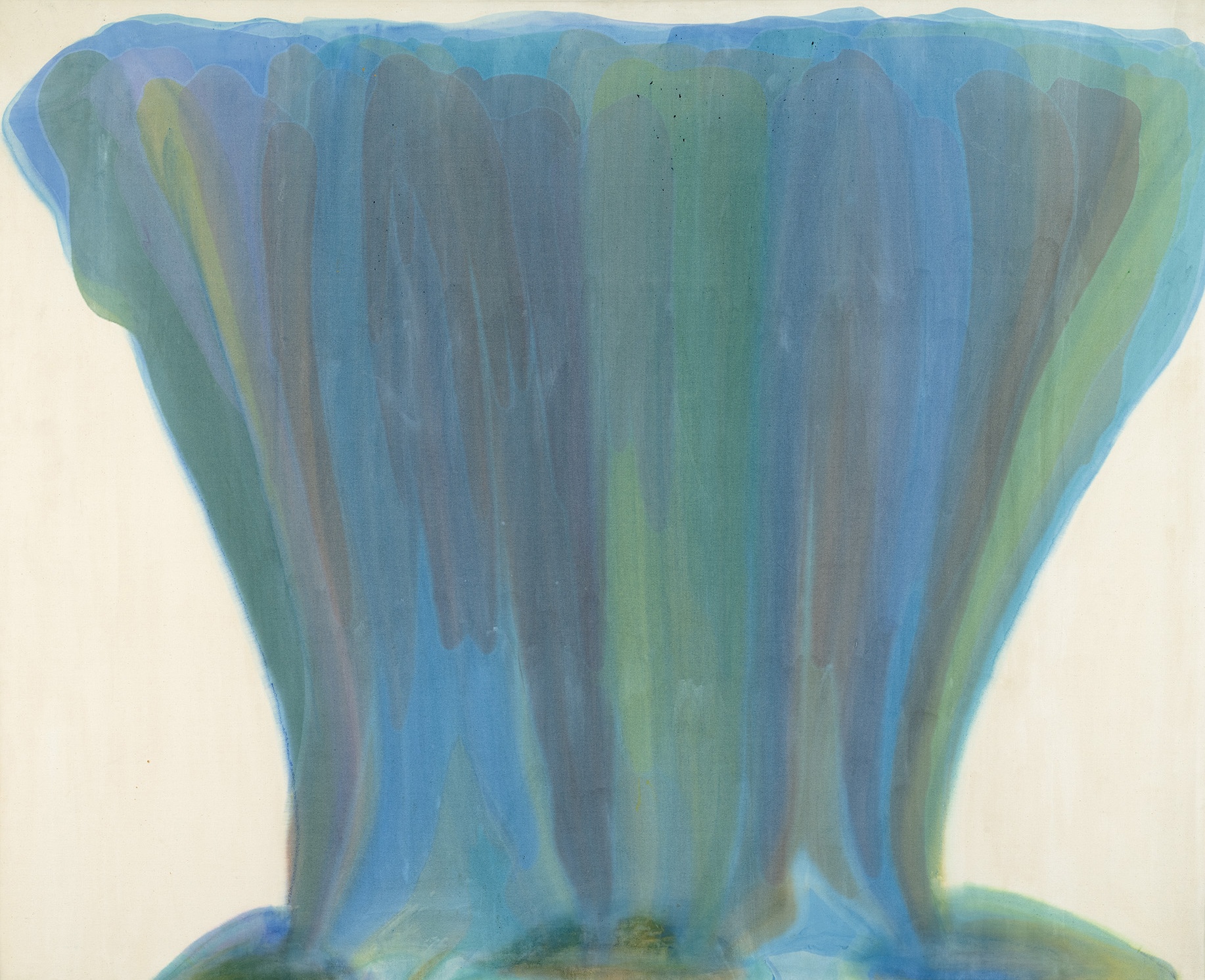
Morris Louis
Beth Sin
The pivot arrived in 1953. Louis traveled to New York with his fellow Washington painter Kenneth Noland to visit the studio of Helen Frankenthaler, whose breakthrough canvas Mountains and Sea, completed in 1952, had introduced a method of pouring thinned paint directly onto unprimed, unpreparated canvas so that the pigment soaked into the fabric rather than sitting on its surface. The effect was unlike anything produced by conventional brushwork or gesture. Seeing Frankenthaler's work in person was, by all accounts, a genuine revelation for Louis.
He returned to Washington and began to fundamentally reimagine what painting could be. Working with Magna, a solvent based acrylic resin paint that could be thinned to an extraordinary fluidity, Louis began pouring, tilting, and guiding rivulets of color across vast expanses of unprimed canvas. The brush became largely irrelevant. The artist's touch was replaced by something more mysterious: the collaboration of gravity, pigment, and fabric.
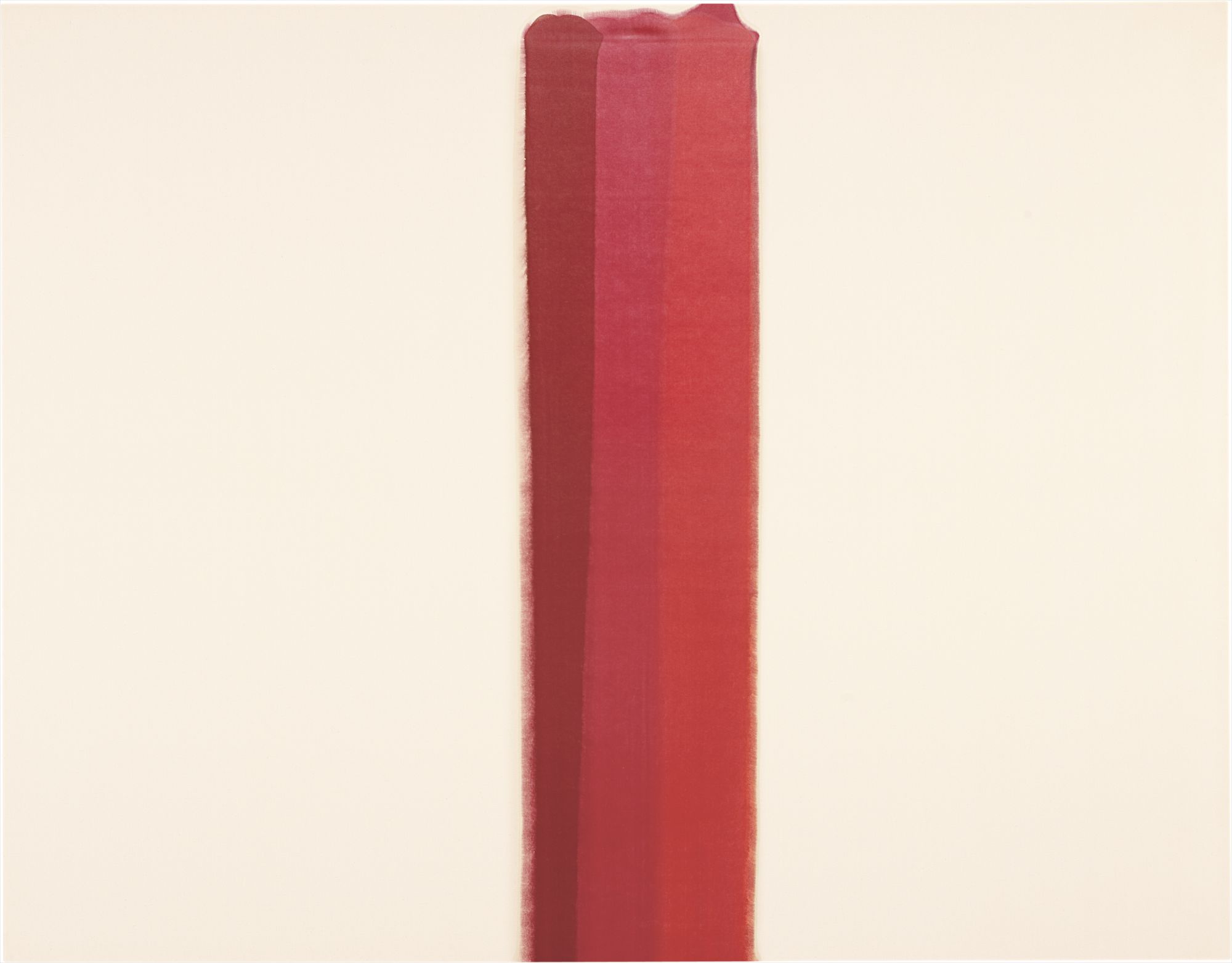
Morris Louis
Roseate
What emerged over the following years was a body of work organized around several distinct series, each representing a different investigation of the same core question: what can color do on its own terms? The Veils, begun in 1954 and revisited in the late 1950s, present overlapping floods of translucent color that seem to breathe within the canvas, luminous and weightless. The Unfurleds, produced between 1960 and 1961, pull cascading diagonal streams of color to the outer edges of enormous canvases, leaving great expanses of bare linen at the center in a gesture of thrilling negative space. The Stripes, among the last works Louis completed before his death from lung cancer in 1962 at just fifty years of age, arrange close packed bands of pure hue in vertical columns that hum with optical intensity.
Works from all three series appear among the most celebrated examples of Color Field painting ever produced. Tzadik, Beth Sin, and Dalet Kuf, each painted in 1958 and each rendered in Magna on canvas, belong to the Hebrew letter series that marks one of his most lyrical and concentrated periods. Roseate, Singing, and Notes of Recession from 1961 demonstrate the full, ripe confidence of his final years. Infield, also from 1962, belongs to that last extraordinary surge of productivity before illness took hold.
For collectors, the appeal of Louis is both aesthetic and historical. His work sits at the very center of one of the most consequential chapters in American art, bridging the emotional intensity of Abstract Expressionism and the rigorous, optical clarity that would define Color Field and Minimalism. The critic Clement Greenberg, who championed Louis alongside Noland, Frank Stella, and Jules Olitski, recognized in his work a formal purity that felt both inevitable and unprecedented. Collectors who live with a Louis describe something similar to what museum visitors experience: the painting changes with the light, with the time of day, with the mood of the room.
These are not static objects. They are sustained events. On the auction market, significant works from the Veils and Unfurleds series have achieved prices well into the millions of dollars, with examples appearing regularly at Christie's, Sotheby's, and Phillips. Works on paper and smaller format pieces offer points of entry for collectors earlier in their journey with the artist.
To understand Louis fully, it helps to see him within his community. Kenneth Noland, who made that 1953 visit with him and who also settled in Washington, developed his own rigorous Color Field language of targets and chevrons. Together, alongside Gene Davis, Thomas Downing, and Paul Reed, they formed what came to be called the Washington Color School, a genuinely distinctive regional contribution to postwar abstraction. The New York critics and galleries eventually came to them, rather than the other way around.
Louis showed with the André Emmerich Gallery in New York beginning in 1959, and the relationship between his work and the broader Color Field generation that included Frankenthaler, Olitski, and Larry Poons remains one of the richest dialogues in the period's history. What makes Morris Louis matter today, more than six decades after his death, is precisely what made him difficult to categorize in his lifetime. He is not easily reduced to a slogan or a movement. His work insists on being experienced directly, physically, slowly.
In an era of images consumed at speed on small screens, a Louis canvas demands patience, presence, and a willingness to be genuinely moved by something as ancient and inexplicable as color meeting light. He gave American painting some of its most generous and purely beautiful moments, and those moments remain entirely, gloriously alive.
Explore books about Morris Louis
Morris Louis: A Catalogue Raisonné
Diane Upright
Morris Louis
Michael Fried

Morris Louis: Paintings and Drawings
The Metropolitan Museum of Art
Color Field Painting
Jane Livingston
Morris Louis: American Abstract Painter
Clement Greenberg
American Painting of the 1960s
Barbara Rose
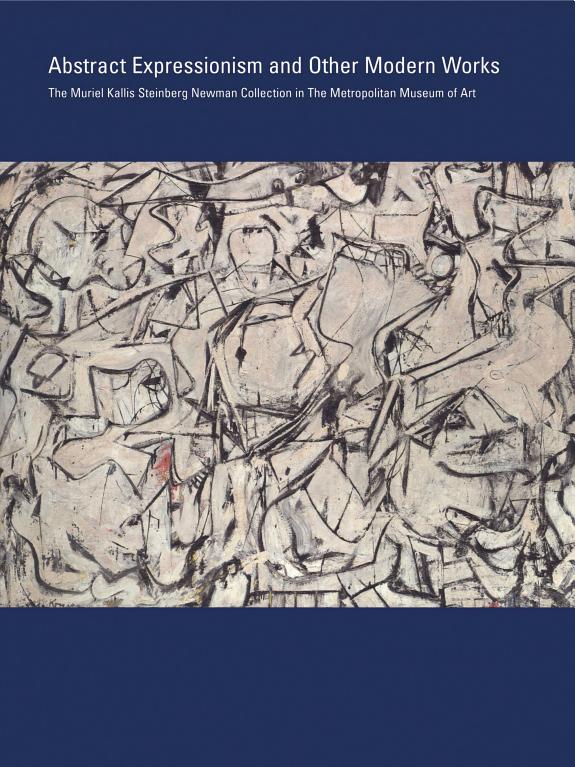
Abstract Expressionism and Other Modernist Movements
David Anfam