Minjung Kim
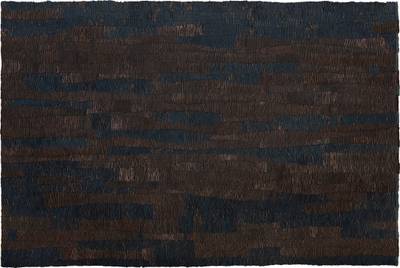
Minjung Kim Burns Beauty Into Being
Artist Spotlight · The Collection Editorial
In the spring of 2023, the Galerie Templon in Paris mounted a luminous presentation of Minjung Kim's work that stopped visitors in their tracks. The canvases, if one can even call them that, seemed to glow from within, their edges singed and softened, their surfaces hovering between opacity and light. Critics who had long admired Kim from a respectful distance found themselves standing closer than usual, leaning in, as though the works were quietly breathing. It was a moment that crystallised what serious collectors and curators have known for years: Minjung Kim is one of the most quietly commanding artists working anywhere in the world today.
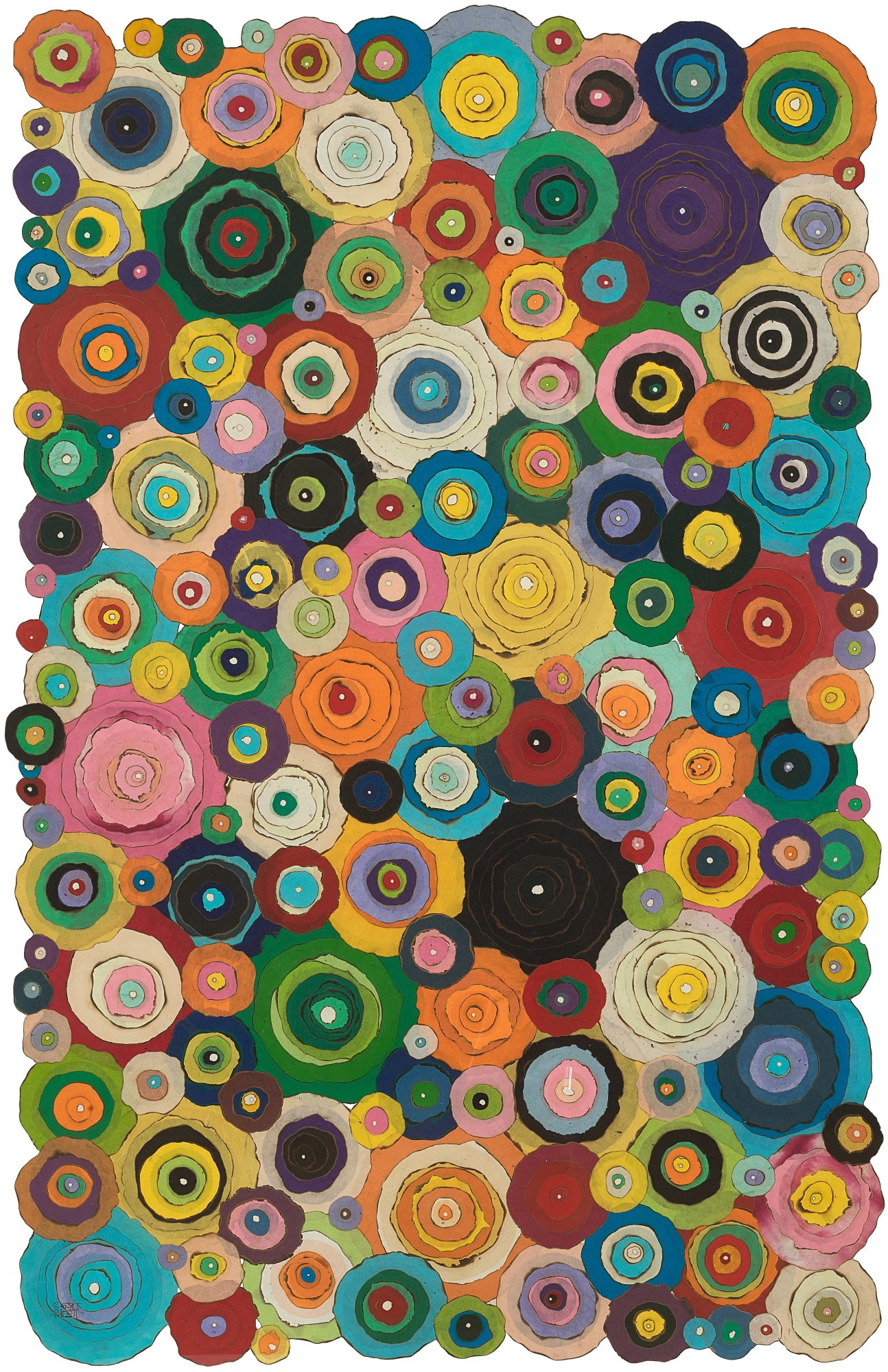
Minjung Kim
di Vuoto-2 浮濫空虛-2
Kim was born in Seoul in 1962, during a period of rapid transformation in South Korea that was reshaping the country's relationship to its own cultural heritage. She trained in fine art in Korea before making the decisive move to Italy, where she settled and built her studio practice over decades. Italy gave her something essential: a deep immersion in the Western tradition of painting, fresco, and material history, alongside the slow rhythms of a country that takes beauty seriously as a civic and intellectual value. Yet she never abandoned the artistic vocabulary of her origins.
Instead, she learned to hold both worlds simultaneously, and that tension became the generative force of her entire career. The material at the heart of Kim's practice is hanji, the traditional Korean mulberry paper that has been made by hand for over a thousand years. Hanji is not simply a support for her work. It is a collaborator, a subject, and in many ways the emotional protagonist of every piece she makes.
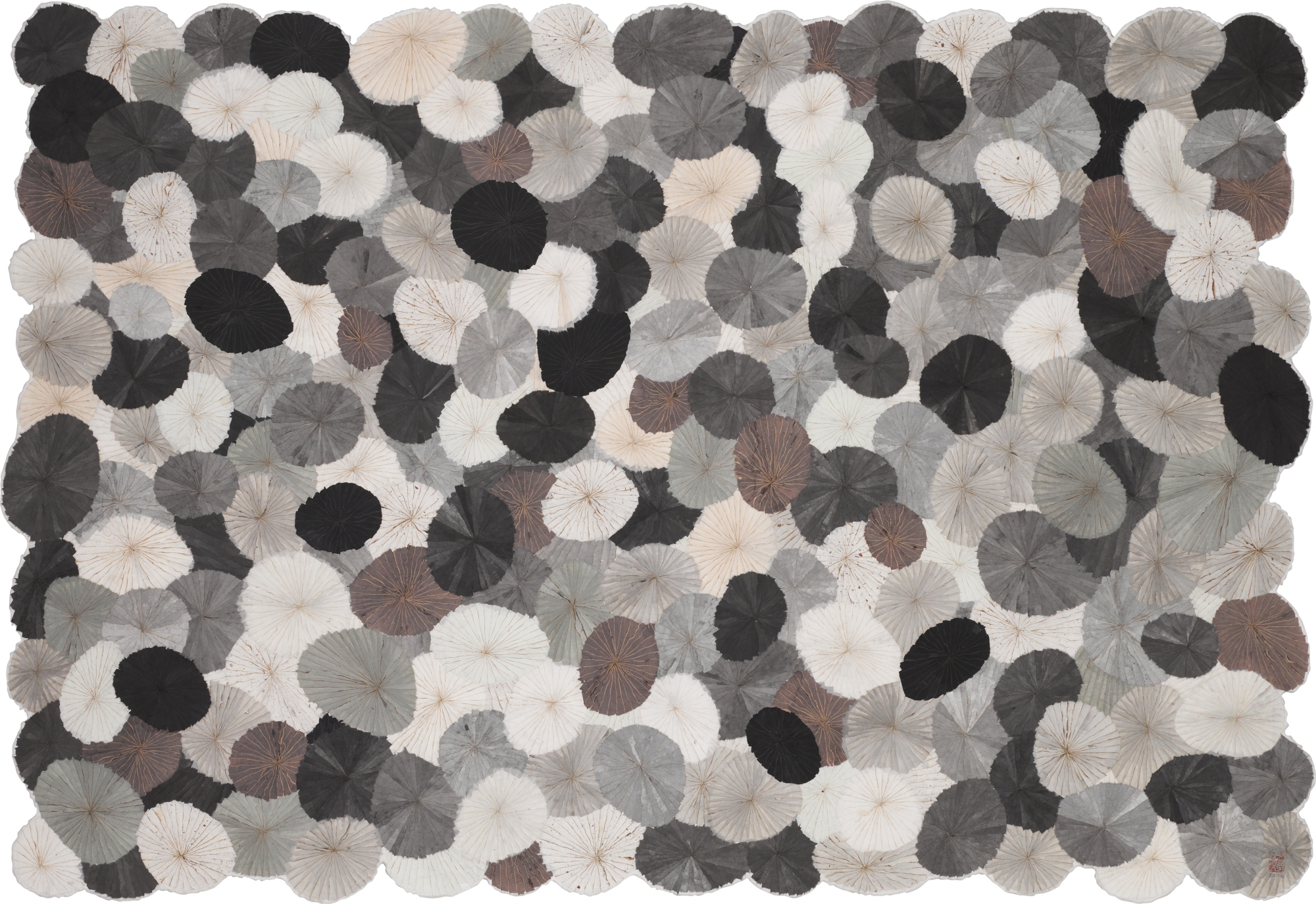
Minjung Kim
The Street
The paper is extraordinarily strong despite its translucency, and Kim exploits this paradox with great intelligence. She layers sheets, applies watercolour and ink, and then introduces fire, burning the edges and surfaces in a process that requires both precision and surrender. The results are works that feel ancient and immediate at once, as though they have been excavated from somewhere just beyond memory. Her artistic development has moved through several distinct registers while maintaining a remarkable internal consistency.
Early works established her interest in landscape as a psychological space rather than a descriptive one. Over time, her compositions became more abstract, more atmospheric, the references to mountain, mist, and water becoming suggestions rather than statements. The work began to concentrate more intensely on the physical qualities of hanji itself, on the way light travels through its fibres, on the way burning transforms its edges into something resembling the borders of a dream. By the 2000s, she had arrived at a body of work that was genuinely unlike anything else being made, occupying a space between meditation and painting, between object and phenomenon.
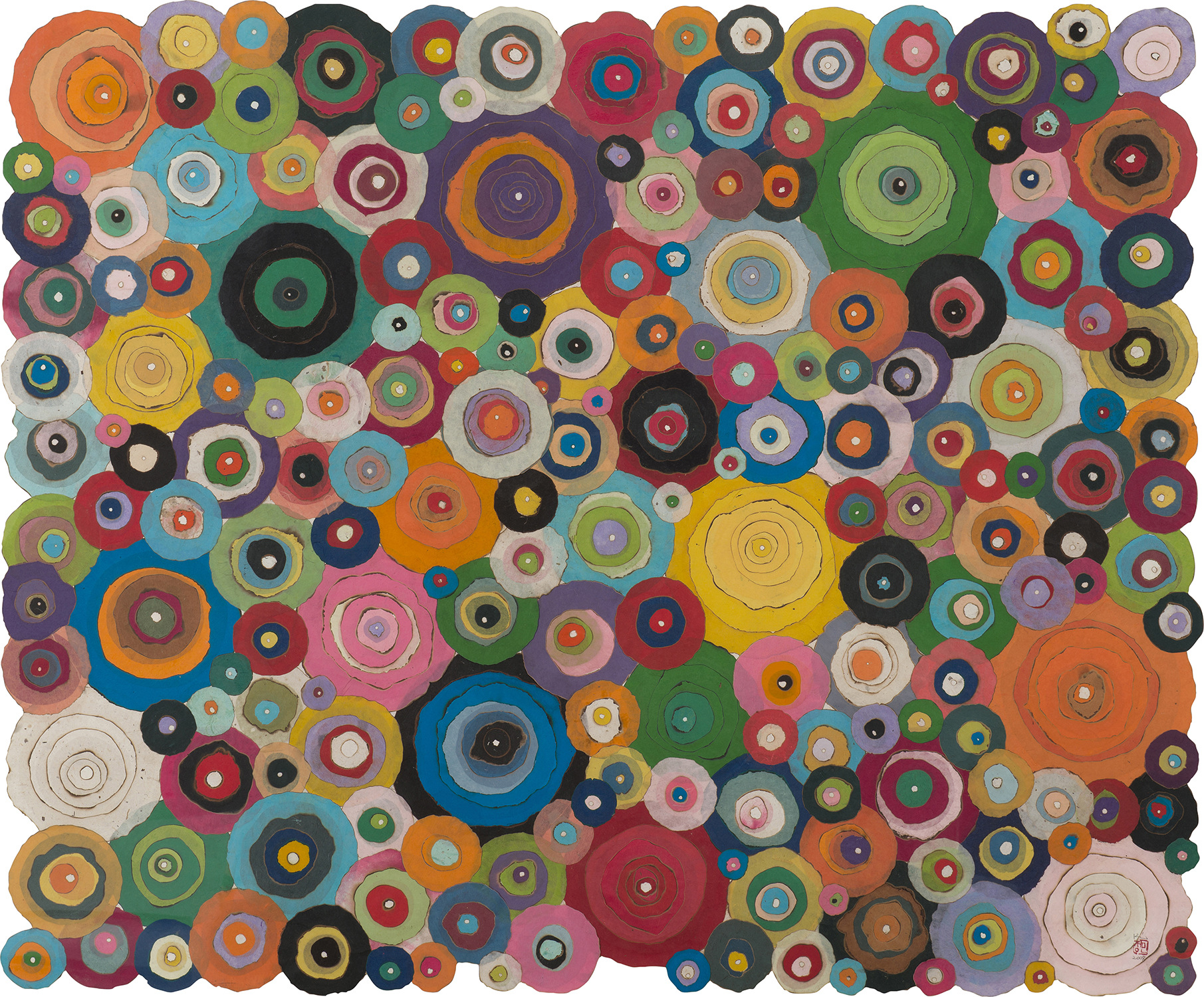
Minjung Kim
Pieno di vuoto, 2008
Among her most celebrated works are those in her ongoing mulberry hanji series, including pieces such as "Story" from 2007 and "Pieno di vuoto" from 2008, titles that reveal her bilingual sensibility and her sustained interest in emptiness as an active rather than a passive condition. "Pieno di vuoto" translates from the Italian as "full of emptiness," and the phrase captures something essential about her aesthetic philosophy. Her works are not empty in any cold or austere sense. They are filled with a quality of attention, with the residue of the artist's sustained engagement with materials and time.
The shaped, collaged works on hanji paper carry within them the logic of both Eastern ink painting and Western abstraction, yet they belong fully to neither tradition. They have made their own category. From a collecting perspective, Kim's work represents one of the more compelling opportunities in the current market for artists working at the intersection of Asia and Europe. Her international profile has grown steadily across major art markets, with strong interest documented in Europe, the United States, and across Asia.
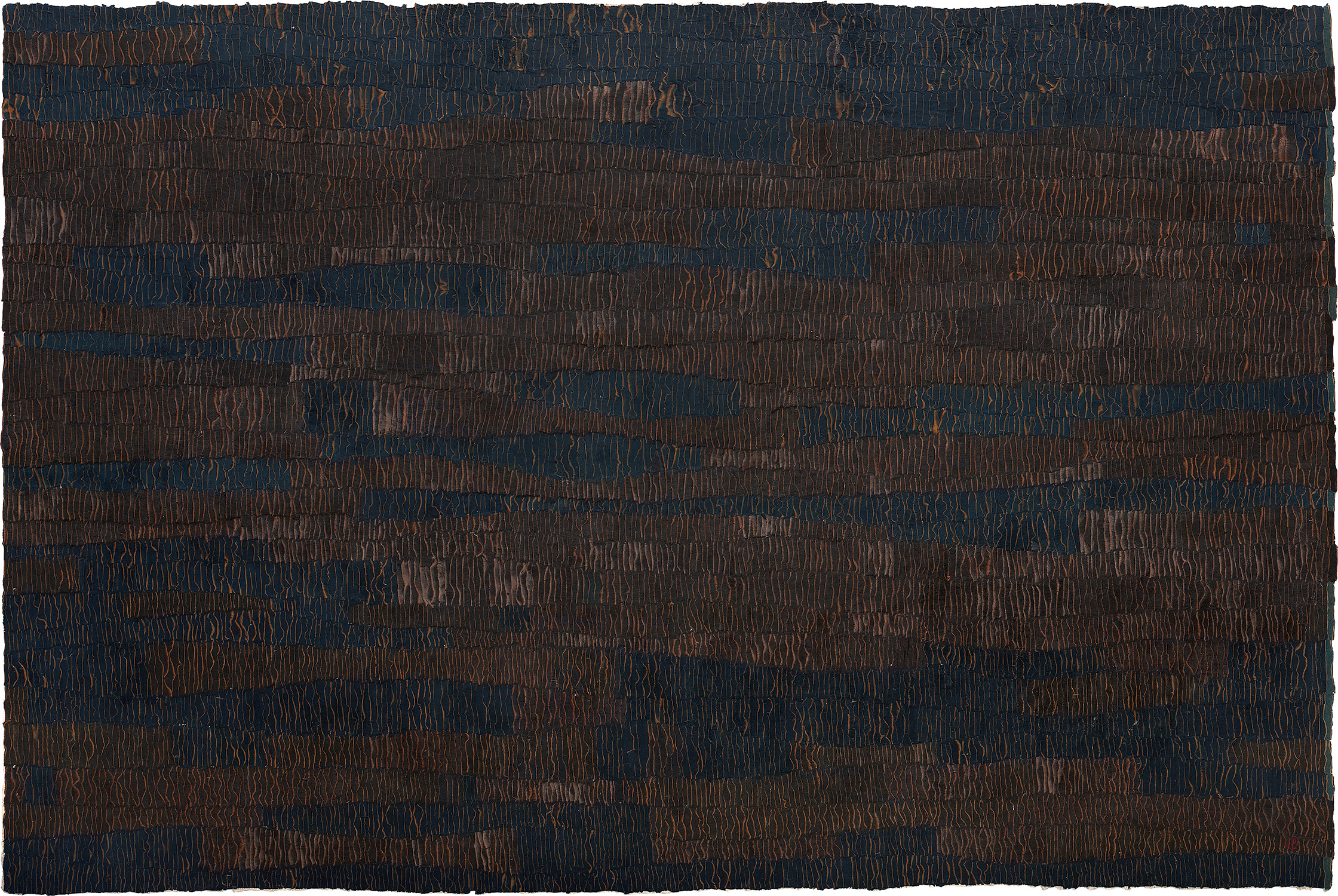
Minjung Kim
Story, 2007
Collectors are drawn not only to the beauty of individual works but to the integrity and coherence of the practice as a whole. Acquiring a Minjung Kim is not simply acquiring an object. It is entering into a relationship with a body of thought that rewards sustained looking. Works on shaped mulberry hanji paper, particularly those that demonstrate her signature burning technique across significant scale, represent the clearest expression of her mature vision and are the pieces that serious collectors prioritise.
In the broader context of art history, Kim's practice invites comparison with several artists who have similarly navigated between cultural traditions and material experimentation. The Korean Dansaekhwa movement, associated with artists such as Park Seo Bo and Ha Chong Hyun, shares her interest in process, repetition, and the spiritual dimensions of mark making. Yet Kim's work diverges from Dansaekhwa's characteristic monochrome restraint, embracing colour, luminosity, and a more overtly lyrical sensibility. Her Italian formation also connects her to the Arte Povera tradition's deep respect for raw and elemental materials.
She sits comfortably in conversation with artists such as Cy Twombly, whose late works share something of her investment in poetry, trace, and the passage of time. What makes Minjung Kim matter urgently in the present moment is the quality of her attention to slowness. In a cultural environment saturated with speed, provocation, and spectacle, her work insists on a different register of experience. To spend time with a Minjung Kim is to feel time change its character, to become less pressured, more spacious.
This is not a nostalgic or escapist quality. It is a rigorous artistic position, one that has been earned through decades of sustained practice and international dialogue. Her work argues, without argument, that beauty is a form of knowledge. Collectors, curators, and anyone fortunate enough to encounter her art in person will find that argument entirely persuasive.