Mike Kelley
Mike Kelley: America's Most Fearless Creative Mind
Artist Spotlight · The Collection Editorial
“I use the aesthetics of the lowest cultural forms because they are the most repressed.”
Mike Kelley, interview with John Miller, 1992
In 2023, the Mike Kelley Foundation for the Arts continued its mission of preserving and expanding the legacy of one of the most consequential American artists of the twentieth century, organizing archival exhibitions and supporting new scholarship that has introduced Kelley's work to entirely new generations of collectors and curators. His influence is everywhere right now, from the irreverent conceptualism of younger Los Angeles artists to the renewed critical appetite for work that treats popular culture not as decoration but as genuine subject matter. Auction houses have taken note, with major works on paper and his celebrated photographic series commanding serious attention at Christie's, Sotheby's, and Phillips. To spend time with a Mike Kelley work is to feel the full weight of American life pressing in from every direction, insistent, funny, and deeply strange.
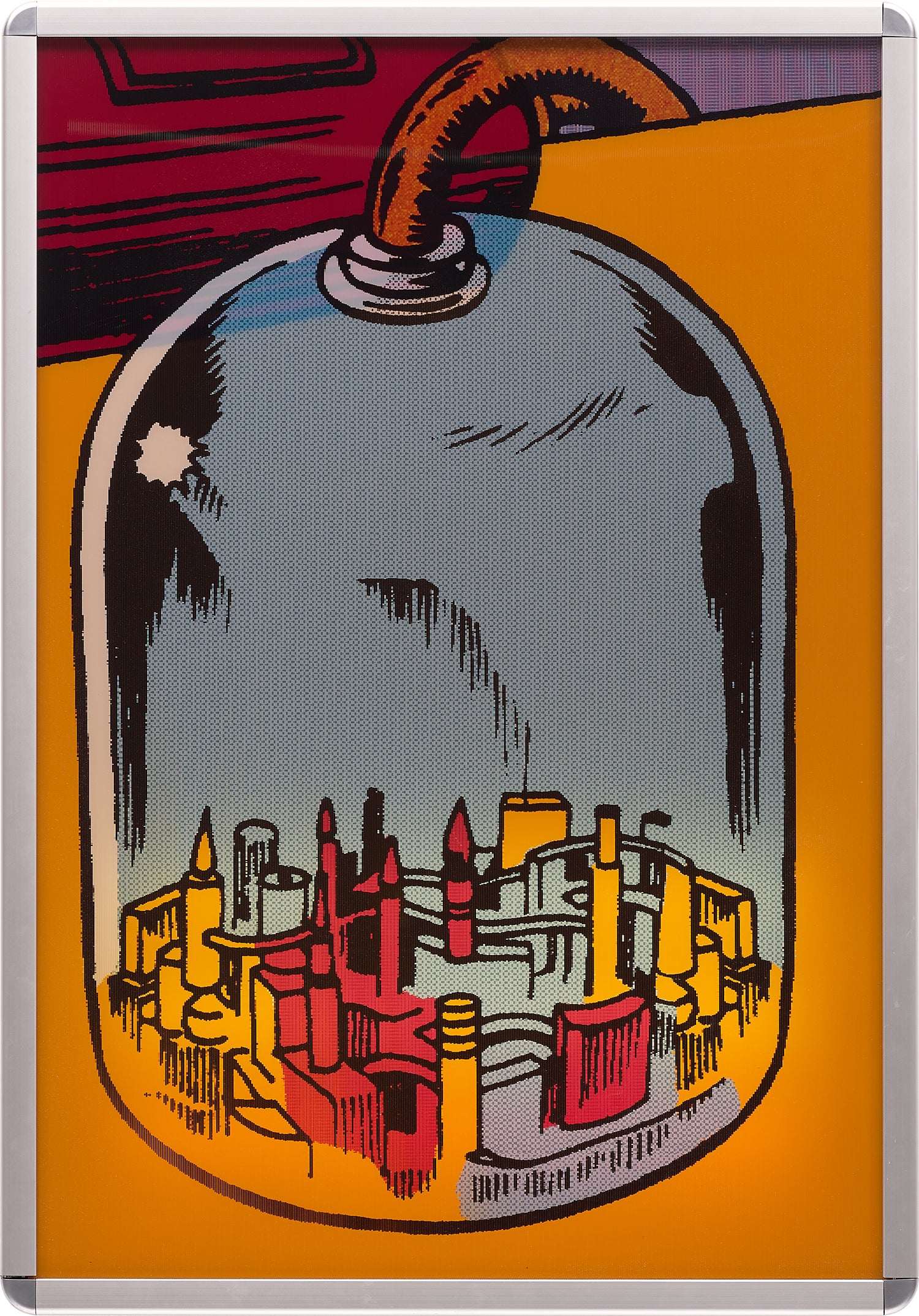
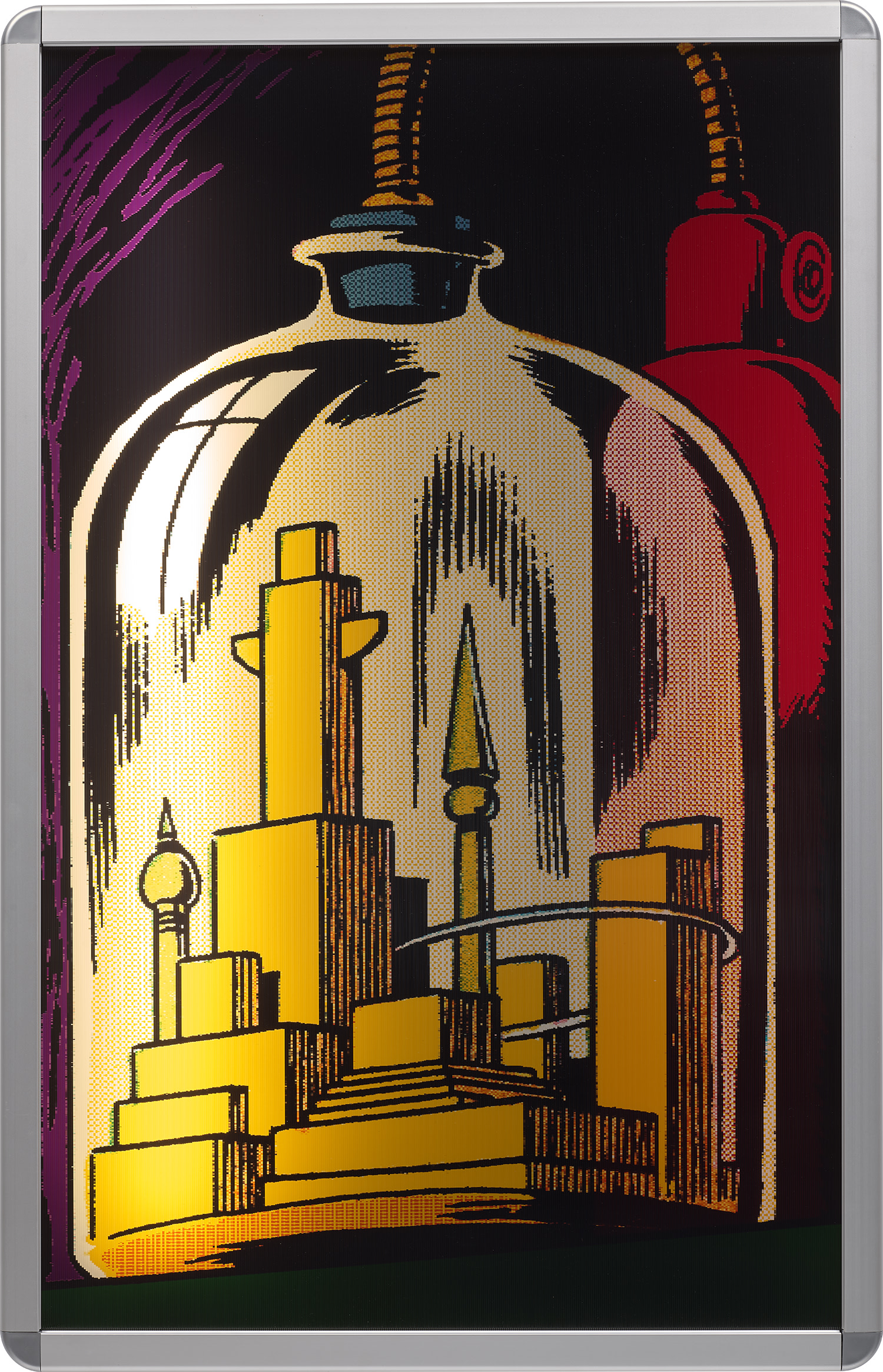
Mike Kelley
Lenticular 4
Mike Kelley was born in 1954 in Wayne, Michigan, a working class suburb of Detroit, and the particular texture of that upbringing never left him. The industrial Midwest, its Catholic churches, its shopping malls, its television sets glowing in darkened living rooms, became the raw material from which he built an entirely singular artistic language. He studied at the University of Michigan in Ann Arbor before moving to Los Angeles in 1976 to attend the California Institute of the Arts, known as CalArts, where he studied under John Baldessari and Laurie Anderson. That environment, crackling with post conceptual energy and a willingness to dissolve the boundaries between high art and low culture, proved transformative.
At CalArts, Kelley became a central figure in a remarkable cohort that included fellow students and future art world luminaries David Salle and Tony Oursler. He co founded the influential noise rock band Destroy All Monsters and later performed with the group Extended Phantoms, bringing a visceral, performative dimension to his practice that would inform his visual work throughout his career. His early performances in Los Angeles in the late 1970s and early 1980s were confrontational and deliberately uncomfortable, testing the audience's relationship to authority, spectacle, and shared cultural memory. This was never provocation for its own sake; Kelley was always asking serious questions about what American culture does to the people who grow up inside it.
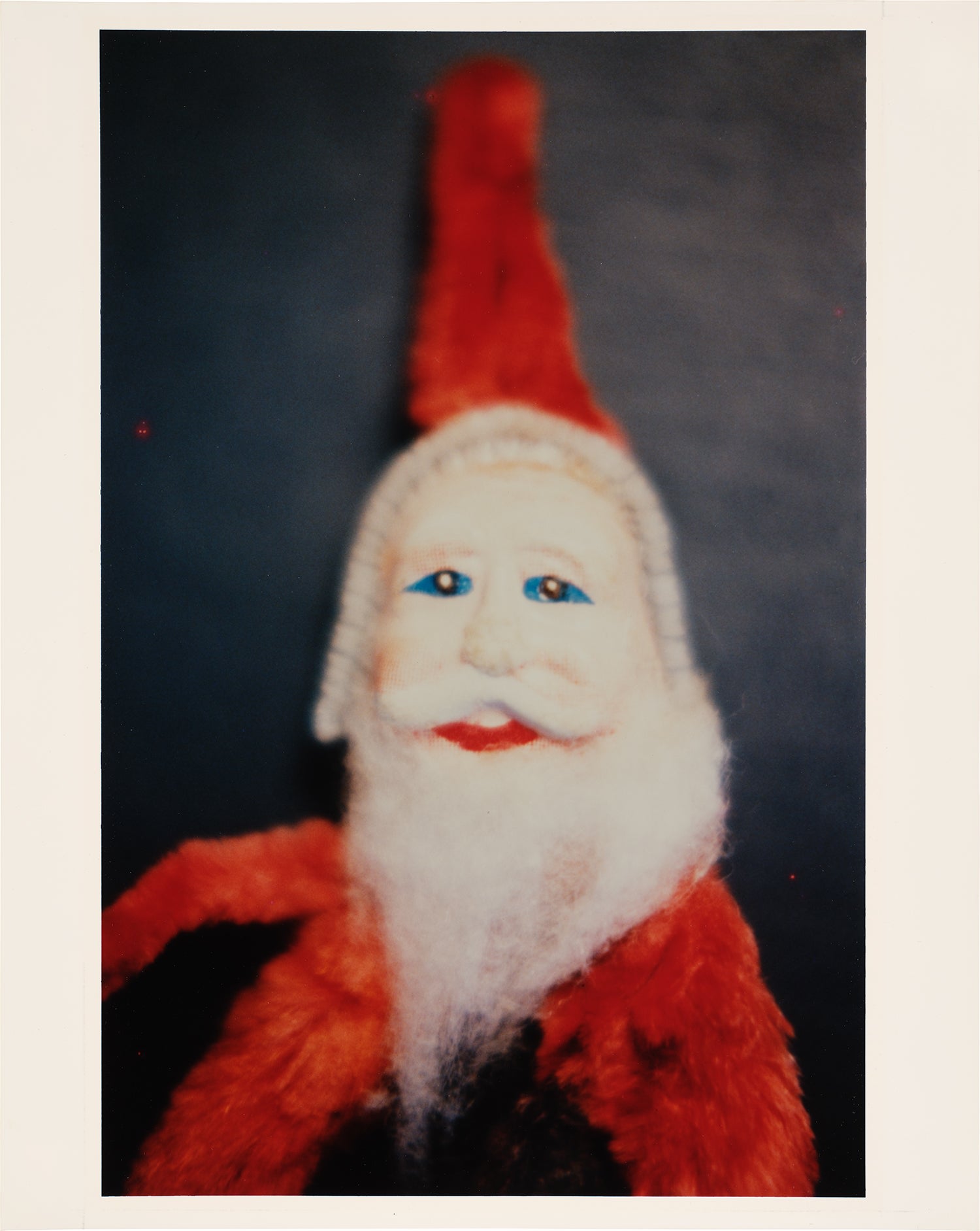
Mike Kelley
Toy Santa Claus
By the late 1980s, Kelley had developed the dense, layered visual language that would define his mature practice. Works like the Garbage Drawings series from 1988, including pieces such as Garbage Drawing No. 46 in acrylic on paper, exemplify his ability to treat discarded and undervalued material as worthy of sustained artistic attention. His celebrated series of stuffed animal arrangements, sewn together into elaborate figurative tableaux, arrived in the early 1990s and brought him international recognition, with major presentations at Documenta in Kassel and exhibitions at Metro Pictures in New York, the gallery with which he maintained a long association.
“I am interested in the relationship between high and low culture, and how that maps onto class.”
Mike Kelley, Art in America interview
These soft sculpture works were not about childhood innocence; they were about the complicated aftermath of childhood, the residue that culture leaves behind. The breadth of Kelley's practice is genuinely astonishing. He worked fluidly across painting, drawing, photography, video, installation, and performance, and his engagement with any given medium was always intellectually purposeful. His photographic series, including Photo Show Portrays the Familiar 1 through 26 from 2001, a set of twenty six gelatin silver prints in artist's frames, demonstrates his deep interest in found imagery and the way vernacular photography constructs social reality.
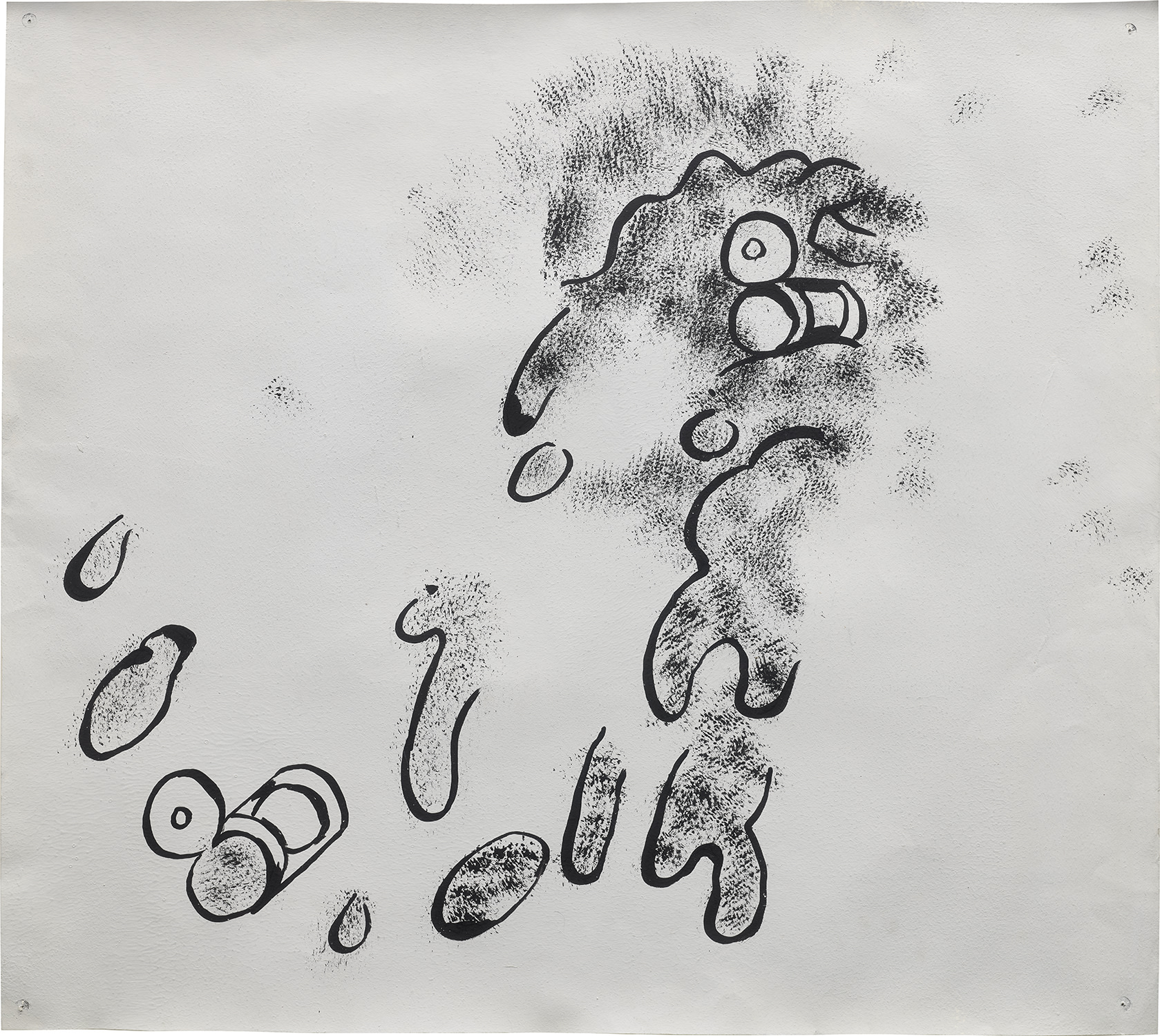
Mike Kelley
Garbage Drawing #46, 1988
The multi part work Kappa, Pond of Desire, executed in acrylic and graphite on paper and presented in seven parts within artist's frames, reflects his sustained engagement with folk mythology, Japanese folklore, and the uncanny dimensions of collective belief. His screenprints, including Emerald Eyehole from the Pansy Metal and Clovered Hoof series, show equal command in the print medium, combining psychedelic imagery with a rigorous formal intelligence. For collectors, Kelley's work on paper and his photographic works represent a particularly compelling entry point into a practice of enormous art historical significance. His drawings reward close attention and carry the directness of his thinking in a way that larger installations sometimes disperse across space.
The Garbage Drawings are considered foundational works in the context of American neo conceptualism, and examples in strong condition with clear provenance are genuinely scarce on the market. Works from his various series in photography, especially those that retain their original artist's frames and are presented as complete suites, hold exceptional value both aesthetically and historically. Collectors who appreciate artists such as Paul McCarthy, with whom Kelley collaborated on the landmark video work Heidi in 1992, or Raymond Pettibon, Jim Shaw, and Christopher Williams, will find in Kelley a central node connecting all of these practices. Kelley's relationship to art history was itself a subject of his art.
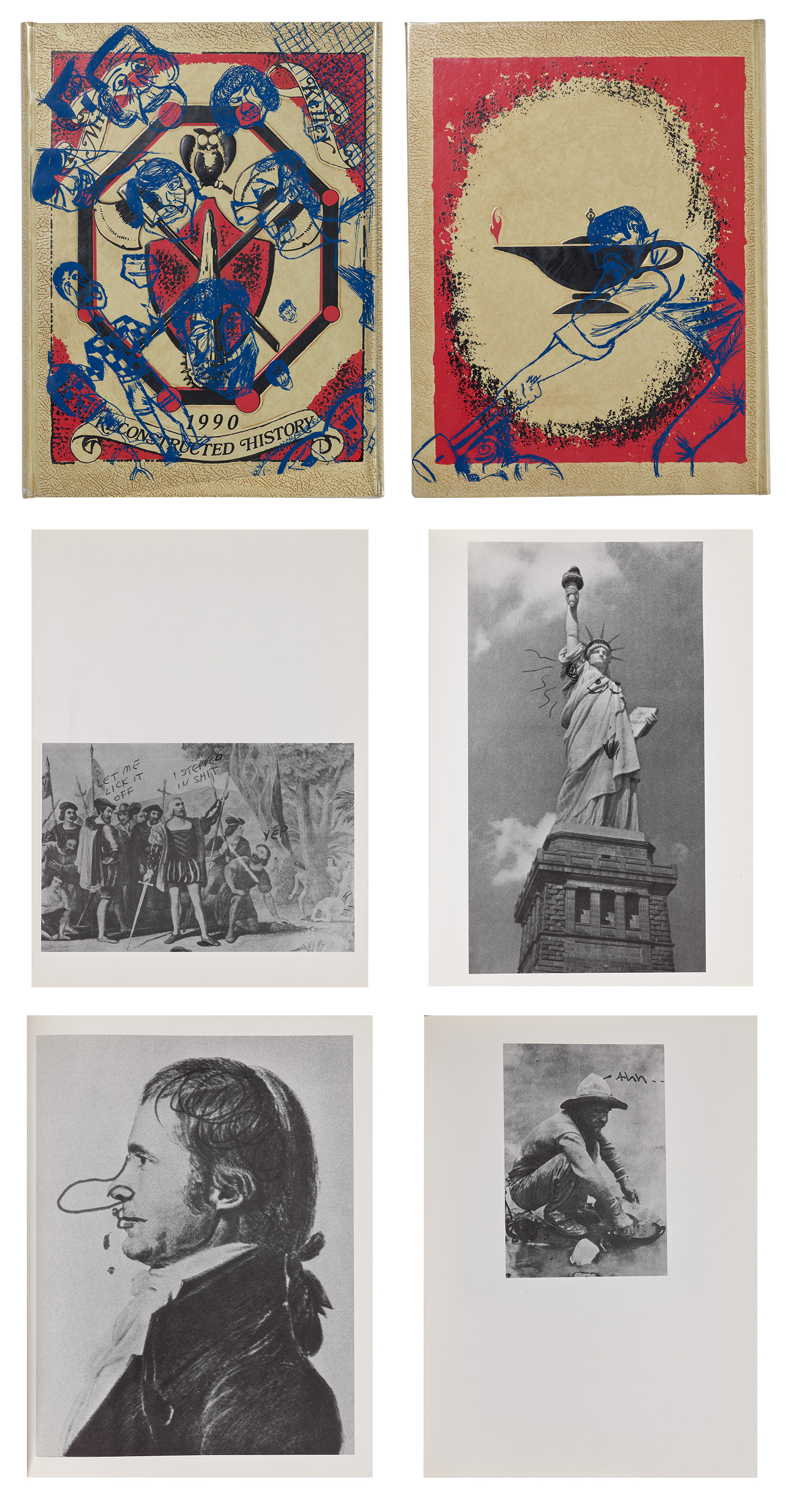
Mike Kelley
Reconstructed History
His ongoing series Poetry of Form: Part of an Ongoing Attempt to Develop an Auteur Theory of Naming, comprising thirty four gelatin silver prints in painted wood and Plexiglas frames, takes the language of critical theory as both tool and target, asking how naming and categorization shape what we are able to see and think. This kind of recursive self awareness places him in conversation not only with his immediate Los Angeles contemporaries but also with the Pictures Generation in New York, with figures such as Cindy Sherman, Richard Prince, and Louise Lawler, all of whom were interrogating representation and cultural production during the same fertile period. Kelley's contribution was to bring to that conversation the specific heat of the American suburbs, the garage, the gymnasium, the parish hall. Mike Kelley died in January 2012 in South Pasadena, California, at the age of fifty seven, and the loss was felt immediately and deeply across the art world.
What has followed is a decade and more of growing recognition that he was not simply an important artist of his generation but one of the essential figures of American art in the twentieth century. Institutions including the Museum of Contemporary Art in Los Angeles, the Stedelijk Museum in Amsterdam, and the Museum of Modern Art in New York have all engaged seriously with his legacy. The Mike Kelley Foundation continues to steward his estate with care and ambition. To collect Kelley is to hold a piece of a genuinely radical intelligence, an artist who looked at the culture that formed him and turned it into something strange, honest, and permanently illuminating.
Explore books about Mike Kelley
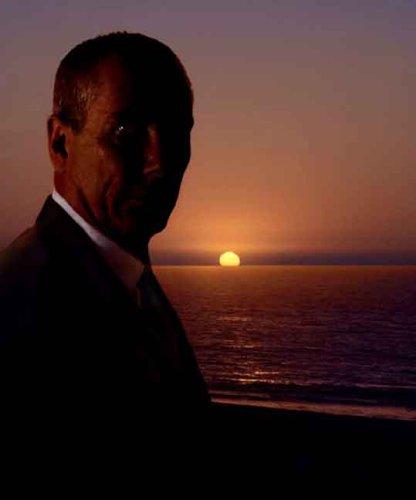
Mike Kelley
John C. Welchman
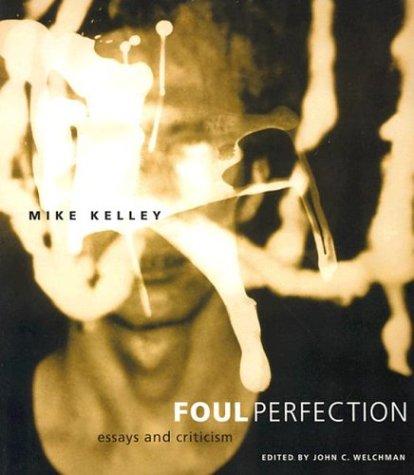
Mike Kelley: Foul Perfection
Joan Rothfuss
Mike Kelley: Catholic Tastes
Various
Mike Kelley: Rectal Hygienics
Various
Mike Kelley: Extracurricular Activities
John C. Welchman
Mike Kelley: Collected Essays and Notes
Mike Kelley
Mike Kelley: Memory Ware
Various

Mike Kelley: Kandors, 1991-2009
Various