Michelangelo Pistoletto
Pistoletto: The Mirror That Reflects Everything
Artist Spotlight · The Collection Editorial
“The mirror is the only material that is one hundred percent reflection. It gives back the image of reality.”
Michelangelo Pistoletto, interview
In the spring of 2023, the Galleria Borghese in Rome staged something quietly extraordinary: a dialogue between Michelangelo Pistoletto's mirror works and the institution's baroque masterpieces. Bernini's sculptures and Pistoletto's reflective steel surfaces faced each other across centuries, and visitors found themselves caught between them, literally part of the composition. It was a reminder, if one were needed, that Pistoletto is not simply a living legend of Arte Povera but one of the most philosophically alive artists working anywhere in the world today. At ninety years of age, he continues to make work, write manifestos, and challenge the boundary between art and society with a restlessness that younger artists might envy.
Michelangelo Pistoletto
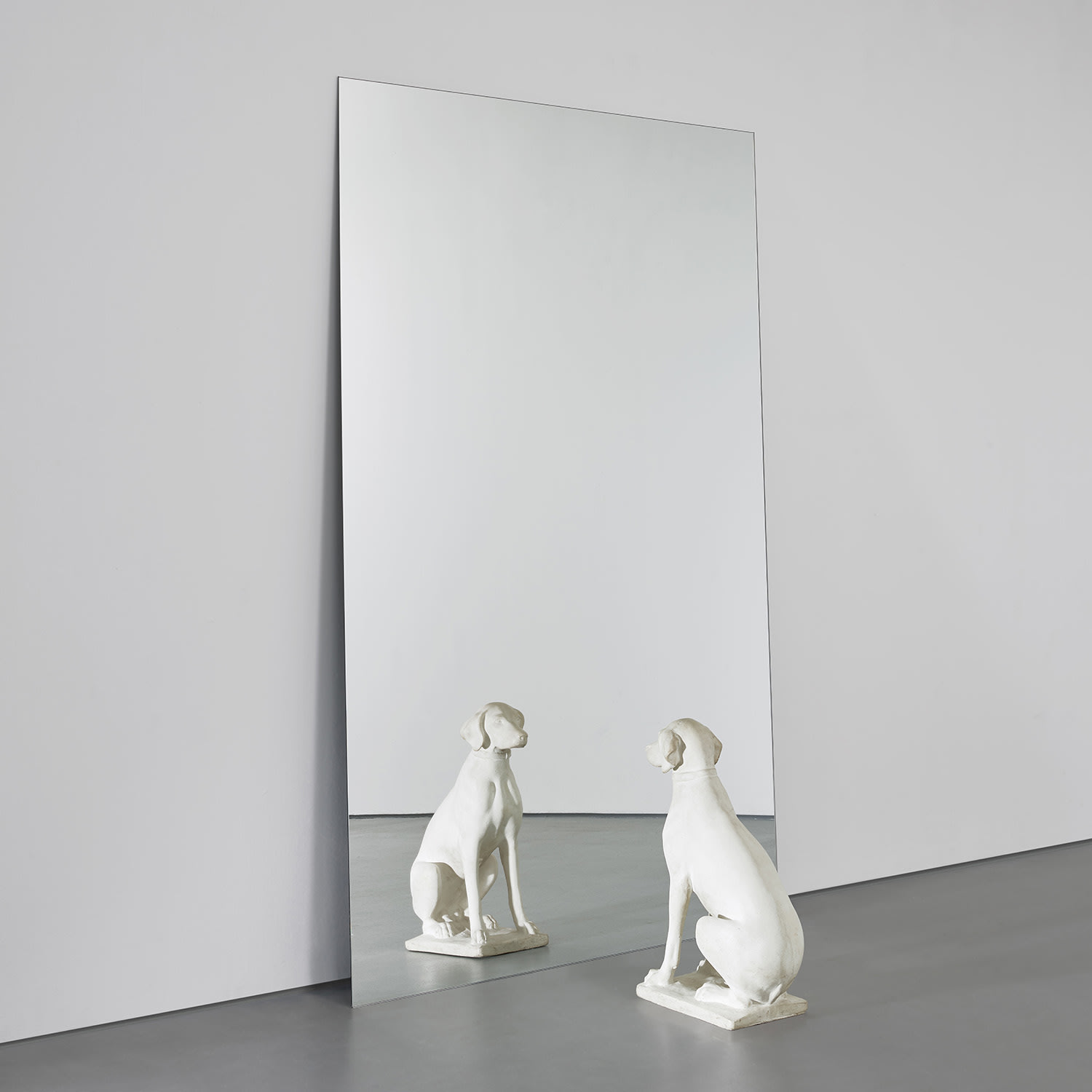
Cane allo Specchio (Dog in the Mirror), 1971
Michelangelo Pistoletto was born in Biella, in the Piedmont region of northern Italy, in 1933. His father, Ettore Pistoletto, was a restorer and art dealer, and the young Michelangelo grew up surrounded by Old Master paintings and the patient, intimate labor of conservation. He joined his father's restoration studio as a teenager, developing a craftsman's understanding of surface, light, and the material life of images. That early formation never left him.
The extraordinary sensitivity to how paint or pigment sits on a surface, and the awareness that a work of art exists in time and space alongside the viewer, can be traced directly to those apprentice years in Piedmont. Pistoletto moved through a period of conventional portraiture and self portraiture in the late 1950s before arriving at the breakthrough that would define his career. Working in Turin in the early 1960s, he began experimenting with highly polished surfaces and discovered that a painted or printed figure placed against a reflective ground did something no other painted figure could do: it pulled the room and the viewer into the picture plane itself. The first mirror paintings emerged around 1962, and they caused an immediate sensation when shown at the Galleria Galatea in Turin in 1963.

Michelangelo Pistoletto
Pagina Di Specchio (Mirrored Page)
Critics and fellow artists recognised almost instantly that Pistoletto had dissolved the frame in a way that was conceptually rigorous rather than merely theatrical. These mirror paintings, executed on sheets of polished stainless steel, became the cornerstone of his practice and remain among the most discussed works in postwar Italian art. The technique evolved over decades, from early painted figures to the screenprinted images that characterise many of his most celebrated works. Pieces such as Paga Pedaggio, created in 1974, place a quotidian human scene onto that luminous, mercurial surface, so that the printed figures share their space with whoever happens to be standing in front of the work at any given moment.
“Art must help to transform society. That is the only reason for its existence.”
Michelangelo Pistoletto
The image is never the same twice. Time, light, and the movement of people through a gallery are all absorbed into the composition. Cane allo Specchio, the 1971 work in plaster and mirror, extends this logic into three dimensions, a sculptural intervention that questions where representation ends and reality begins. By the late 1960s, Pistoletto had become a central figure in Arte Povera, the movement associated with curator Germano Celant and a constellation of Italian artists including Jannis Kounellis, Mario Merz, and Giovanni Anselmo.
Michelangelo Pistoletto
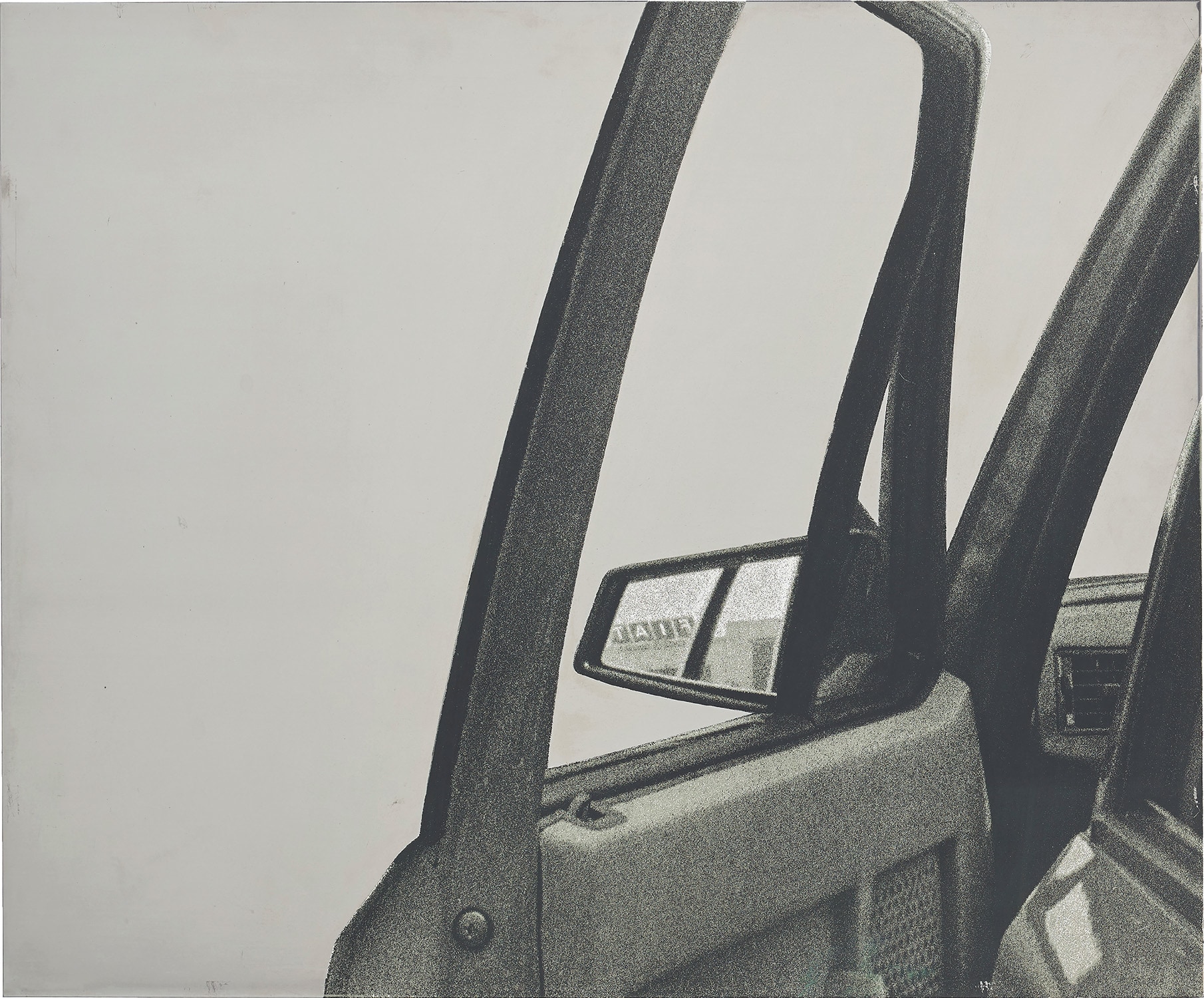
Fiat-Ritmo
Like his peers, Pistoletto was committed to demystifying the art object, to finding the poetic and the philosophical in everyday materials. But his relationship to Arte Povera was always his own. Where others turned to fire, earth, and raw organic matter, Pistoletto returned again and again to the mirror: the most conceptually loaded of all surfaces, simultaneously humble and infinite. His Oggetti in meno, or Minus Objects, from 1965 and 1966, are among the movement's defining achievements, a series of works that refused conventional categories and insisted on the artwork as a prompt for thought rather than a commodity.
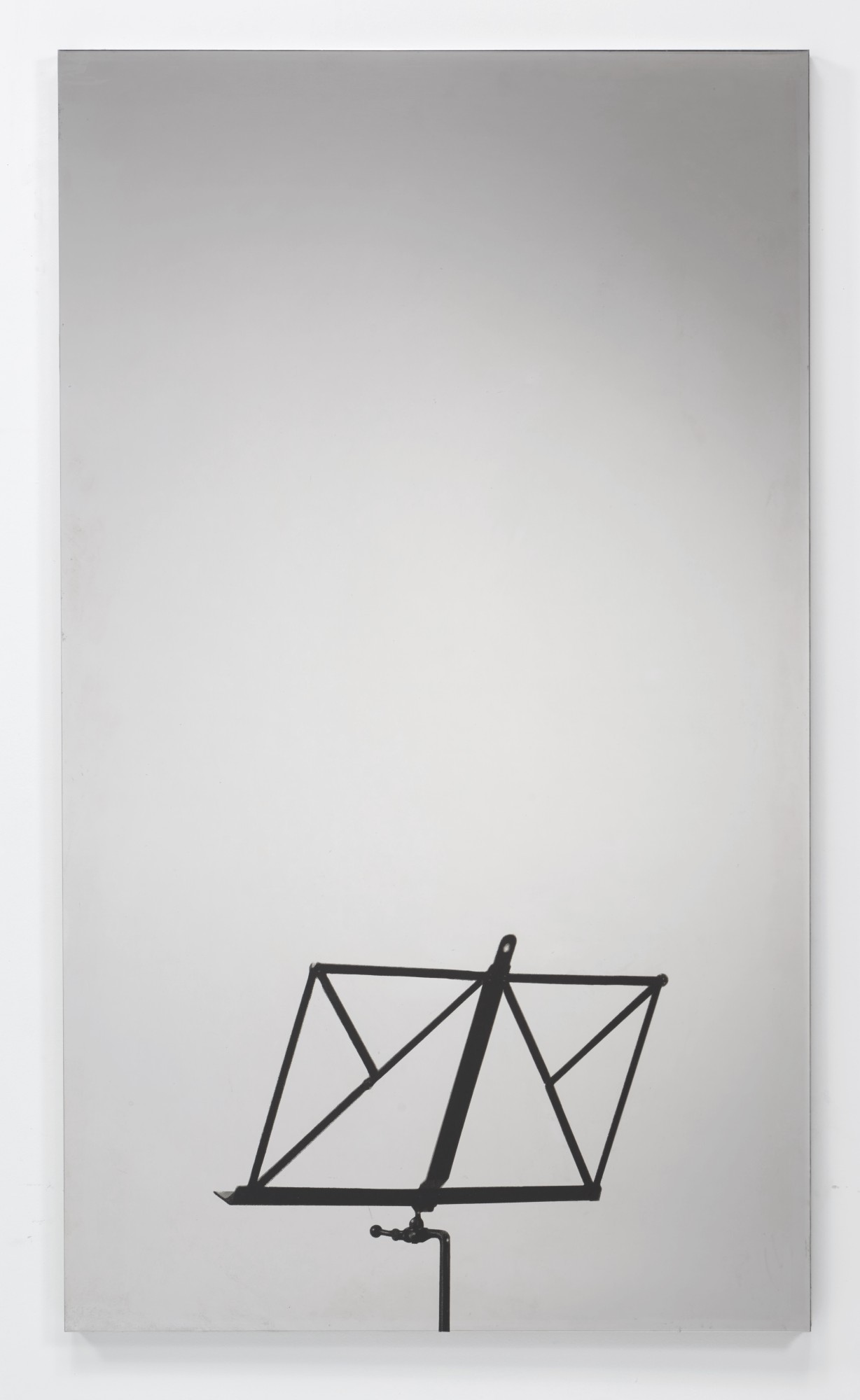
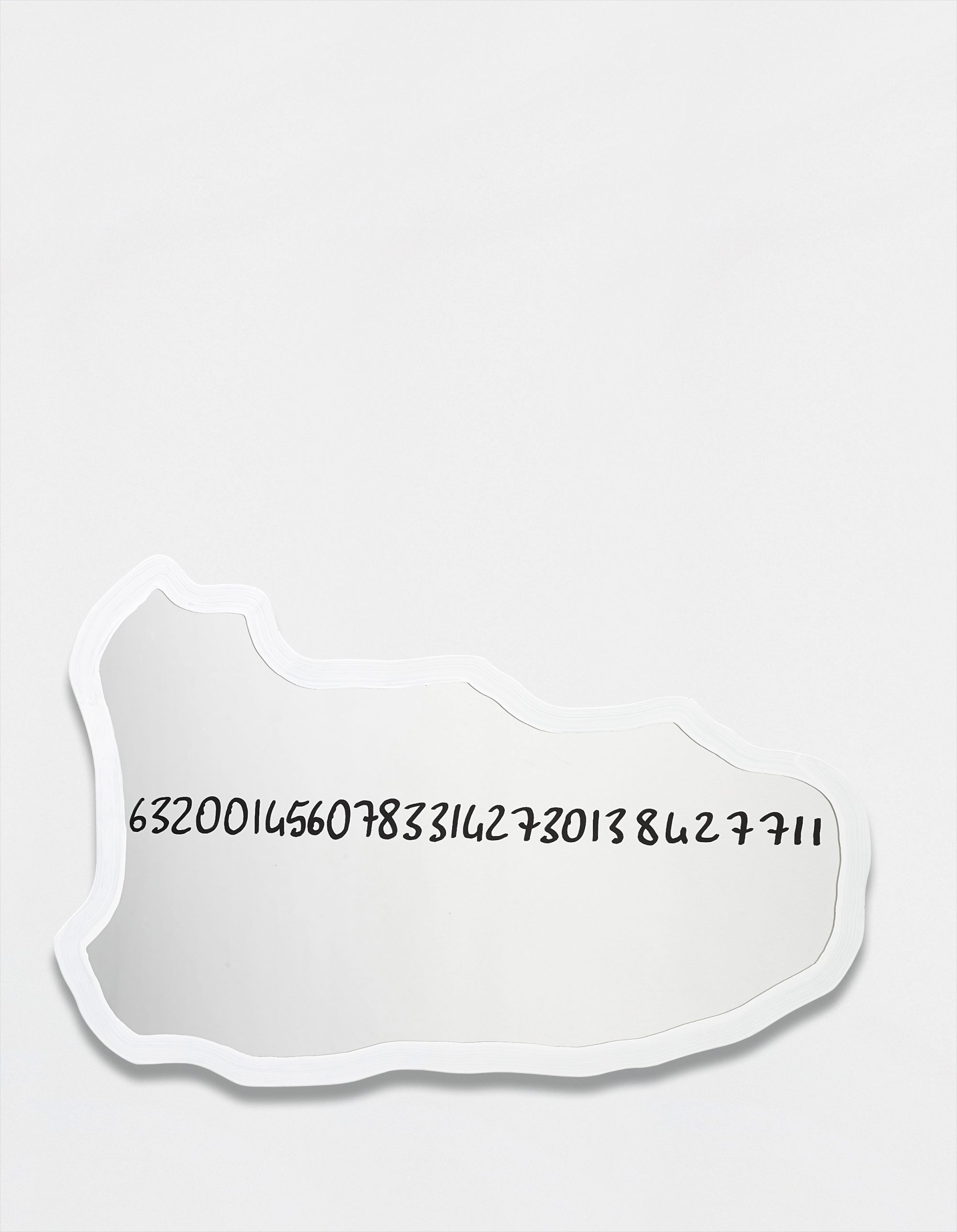
The Frattali series, in which acrylic paint is applied in dense fractal patterns onto mirrored glass, demonstrates the continuing vitality of his engagement with reflection and surface. Works from this series in white, yellow, and red each carry a different emotional register, the color modifying the temperature of the reflection so that viewers see themselves through a particular lens, literally and figuratively. Leggio musicale, a music stand rendered in silkscreen on mirror polished stainless steel, brings the poignancy of human creative life into that familiar reflective theater. These are not decorative objects.
Michelangelo Pistoletto
Frattali (White)
They are instruments for thinking about presence, absence, and the relationship between art and lived experience. For collectors, Pistoletto's work occupies a position of unusual strength in the market. His prints and works on mirrored surfaces are held in major public collections including the Museum of Modern Art in New York, the Tate in London, and the Centre Pompidou in Paris. At auction, his mirror paintings have achieved significant results at Christie's, Sotheby's, and Phillips, with demand consistently underpinned by strong institutional interest and the growing recognition of Arte Povera as one of the twentieth century's most intellectually serious movements.
Collectors are drawn to the works' combination of formal elegance and conceptual depth, the sense that a Pistoletto is never simply hanging on a wall but is actively engaging with the room around it. Works on paper and mirrored acrylic from the Gemelle and Pagina di Specchio series offer compelling points of entry for those newer to his practice. Pistoletto's influence on subsequent generations of artists is difficult to overstate. His insistence that the viewer is always part of the work anticipates the participatory and relational practices that would flourish in the 1990s and 2000s.
Artists as varied as Olafur Eliasson, who works extensively with light and reflection, and Kara Walker, whose silhouettes create charged dialogues with the viewer's own shadow, owe something to the conceptual territory Pistoletto opened. His founding of Cittadellarte, a foundation and community in Biella dedicated to the relationship between art and social change, reflects a lifelong conviction that art's responsibility extends beyond the gallery wall. What makes Pistoletto essential now, at this particular cultural moment, is precisely that conviction. In an era when questions about the role of culture in public life feel urgent and unresolved, his career stands as a sustained argument that art can be both rigorous and generous, both intellectually demanding and genuinely open.
When you stand before a Pistoletto and find your own face looking back at you from within the composition, you are not being asked to contemplate someone else's vision. You are being invited into it. That is a rare and remarkable gift.
Explore books about Michelangelo Pistoletto
Michelangelo Pistoletto: From One to Many 1956-1974
Germano Celant
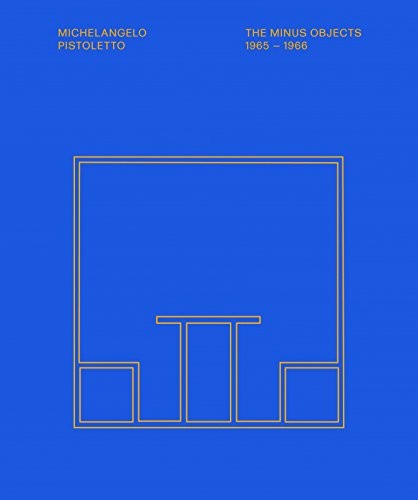
Michelangelo Pistoletto: Minus Objects
Achille Bonito Oliva

Michelangelo Pistoletto: The Third Paradise
Various curators
Michelangelo Pistoletto: Cittadelarte
Giandomenico Romanelli
Pistoletto: Mirror Paintings and Related Works
Rosalind Krauss

Michelangelo Pistoletto: The Divinities of Judgment
Carolyn Christov-Bakargiev
Pistoletto: Retrospective
Pierre Restany
Michelangelo Pistoletto: Arte Povera and Beyond
Germano Celant