Maurice Brianchon
Maurice Brianchon, Master of Luminous Intimate Life
Artist Spotlight · The Collection Editorial
There is a particular quality of afternoon light that belongs almost exclusively to French painting: golden, unhurried, suffused with the particular warmth of a room where someone you love has just been sitting. It is the light of Vuillard and Bonnard, of Matisse at his most domestic and dreaming. And it is, unmistakably, the light of Maurice Brianchon. As museum curators and private collectors across Europe and North America have quietly rediscovered the mid century School of Paris painters who fell between the cracks of modernist canon making, Brianchon has emerged as one of the most rewarding and emotionally direct figures of his generation.
Maurice Brianchon
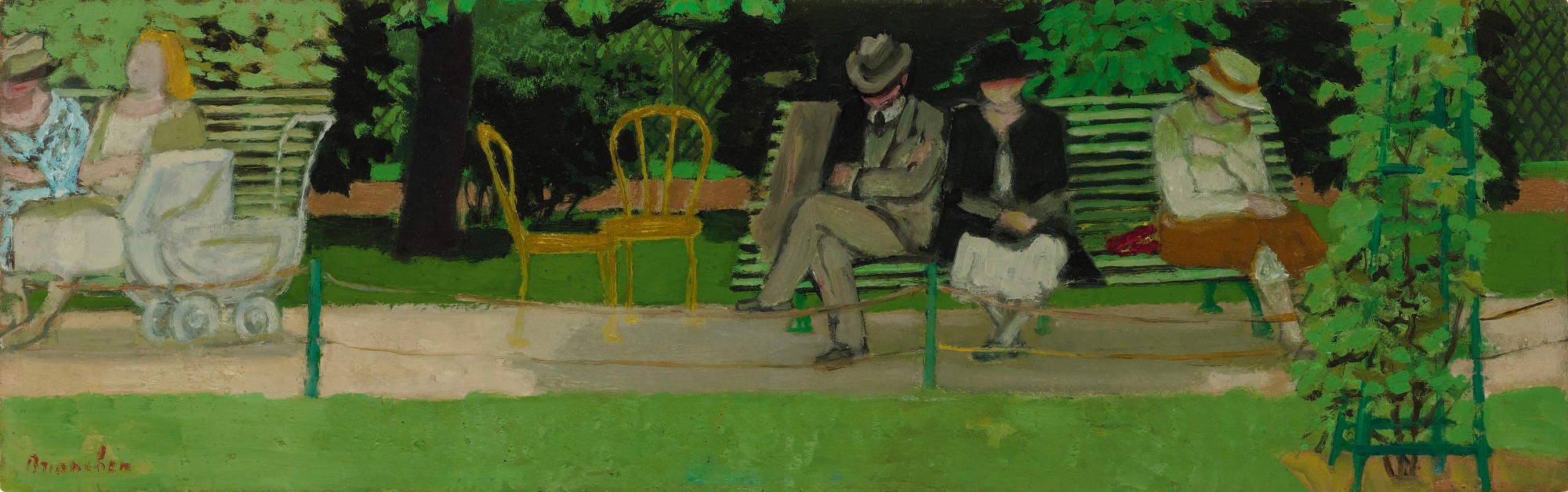
Un après-midi au parc, 1958
His paintings, rich with the textures of daily life rendered in color that seems to glow from within, feel more necessary now than perhaps at any point since his own lifetime. Maurice Brianchon was born in 1899 in Fromenteau, in the Vienne department of western France. He came of age in a country still absorbing the shock of one world war and bracing, unknowingly, for another, and his formation as an artist unfolded against a backdrop of extraordinary creative ferment in Paris. He enrolled at the École Nationale Supérieure des Arts Décoratifs in Paris, the school that trained generations of French artists in the applied and decorative arts alongside fine painting.
The education he received there was rigorous and grounded in craft, instilling in him a respect for surface, material, and the physical act of making that would define his work throughout his long career. The Paris that shaped Brianchon during the 1920s was a city intoxicated by color. The legacy of the Impressionists had settled into the cultural bloodstream, and a generation of painters was working to synthesize that inheritance with more classical ideas of composition and emotional restraint. Brianchon found himself drawn to the great French colorists: Renoir above all, but also Fragonard and Watteau further back, artists who understood that sensuality and elegance were not opposed to seriousness but were instead a form of it.
Maurice Brianchon
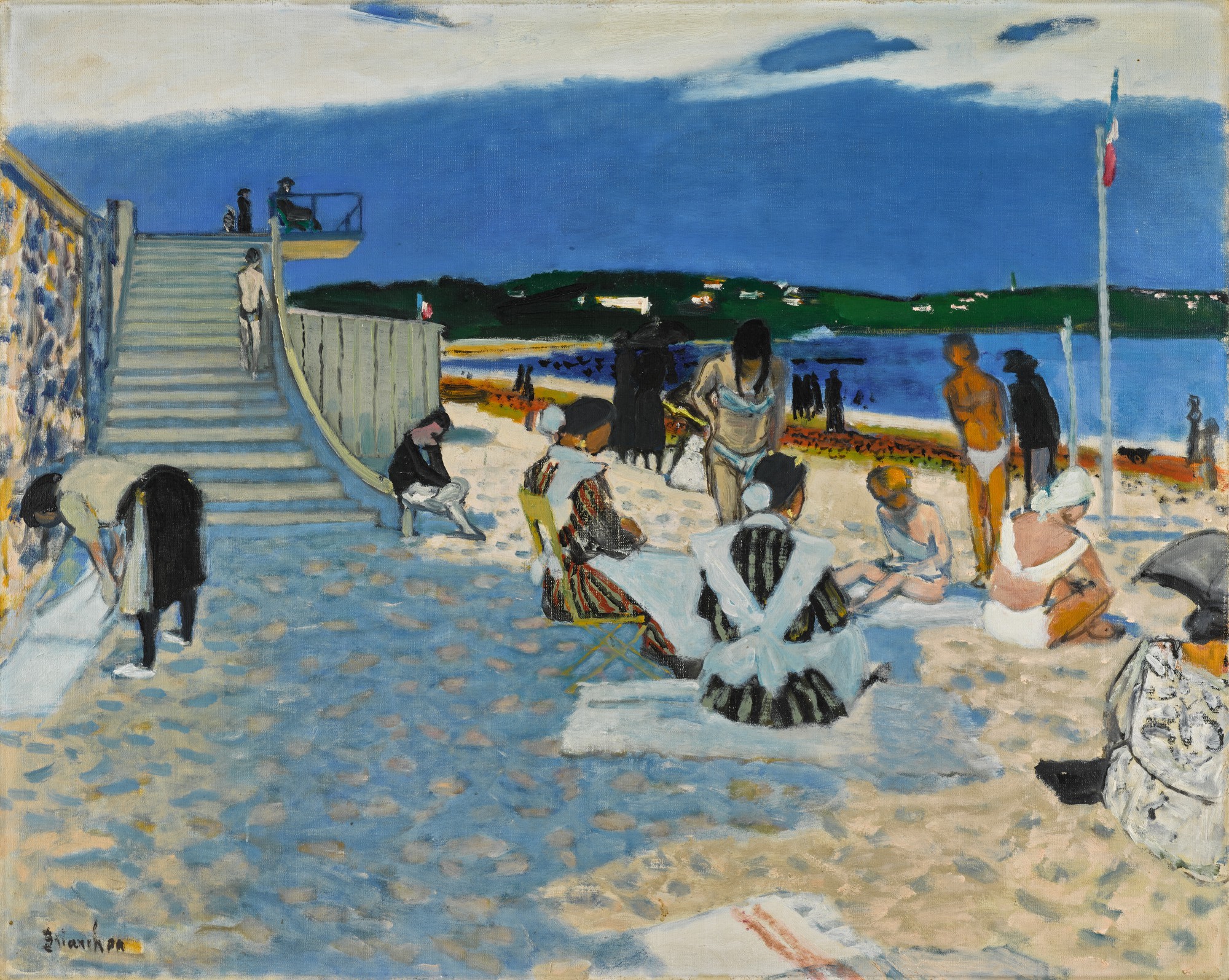
La Plage à Saint-Jean-de-Luz, 1949
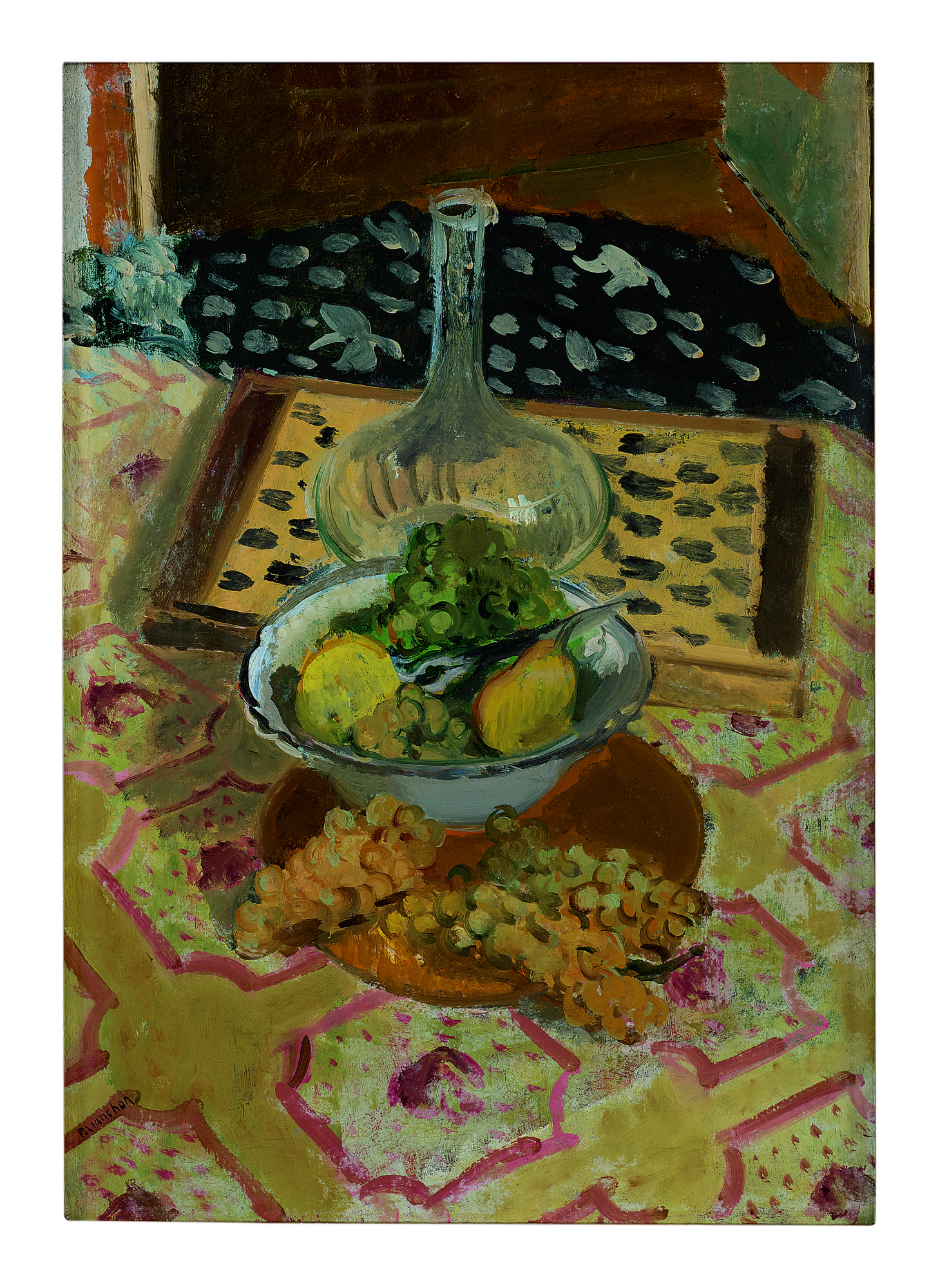
His earliest exhibited works, including his still lifes from the late 1920s such as the luminous "Nature Morte Aux Raisins" of 1927, already show a painter in full command of his instincts: the arrangement of objects becomes a meditation on light and time, the grapes on the canvas almost palpably present. Through the 1930s and into the postwar decades, Brianchon developed the range of subjects that would make his name. He returned again and again to the female figure, often shown in domestic interiors, reading or resting or simply occupying a room with the ease of someone at home in their own skin. He painted theatrical scenes with the warmth of a devotee who genuinely loved the stage, capturing the particular shimmer of performance space and costume.
And he painted landscapes and beach scenes of a kind that feel like memories of joy: his 1949 canvas "La Plage à Saint Jean de Luz" is a luminous record of the Basque coast, the figures on the beach rendered with a looseness and pleasure that recalls Boudin but is entirely Brianchon's own. Saint Jean de Luz, the elegant resort town near Biarritz, appears in his work as a recurring site of summer ease, and the painting stands as one of his most beloved and widely recognized images. The postwar period brought Brianchon considerable public recognition. He was awarded the Grand Prix National des Arts, a distinction that placed him among the most honored painters working in France at the time.
Maurice Brianchon
Nature Morte Aux Raisins, 1927
His work was exhibited widely throughout the mid twentieth century, finding enthusiastic audiences in France and internationally among collectors drawn to the lyrical, post Impressionist tradition he embodied so fully. His 1958 oil on board "Un après midi au parc" represents the mature confidence of an artist who has found his mode entirely: figures in dappled outdoor light, color at once warm and complex, the scene radiating the particular pleasure of a day well spent. That same year produced "Nu Aux Bas Rouges," a nude study of striking directness and sensory richness, the red stockings providing a note of almost theatrical color against the warmth of the figure's skin. It is a painting that wears its influences lightly while feeling entirely contemporary.
For collectors approaching Brianchon today, the appeal is layered and genuine. His work offers something that is surprisingly rare in the mid century European market: painting of real technical accomplishment that is also emotionally generous, that does not demand of the viewer a particular theoretical framework or art historical expertise in order to give pleasure. At the same time, the pleasures it offers reward sustained looking. His surfaces repay close attention, the paint applied with a freedom that is never careless, color relationships built with the sensitivity of someone who understood the tradition he was working within and knew exactly how far to push against it.
Maurice Brianchon
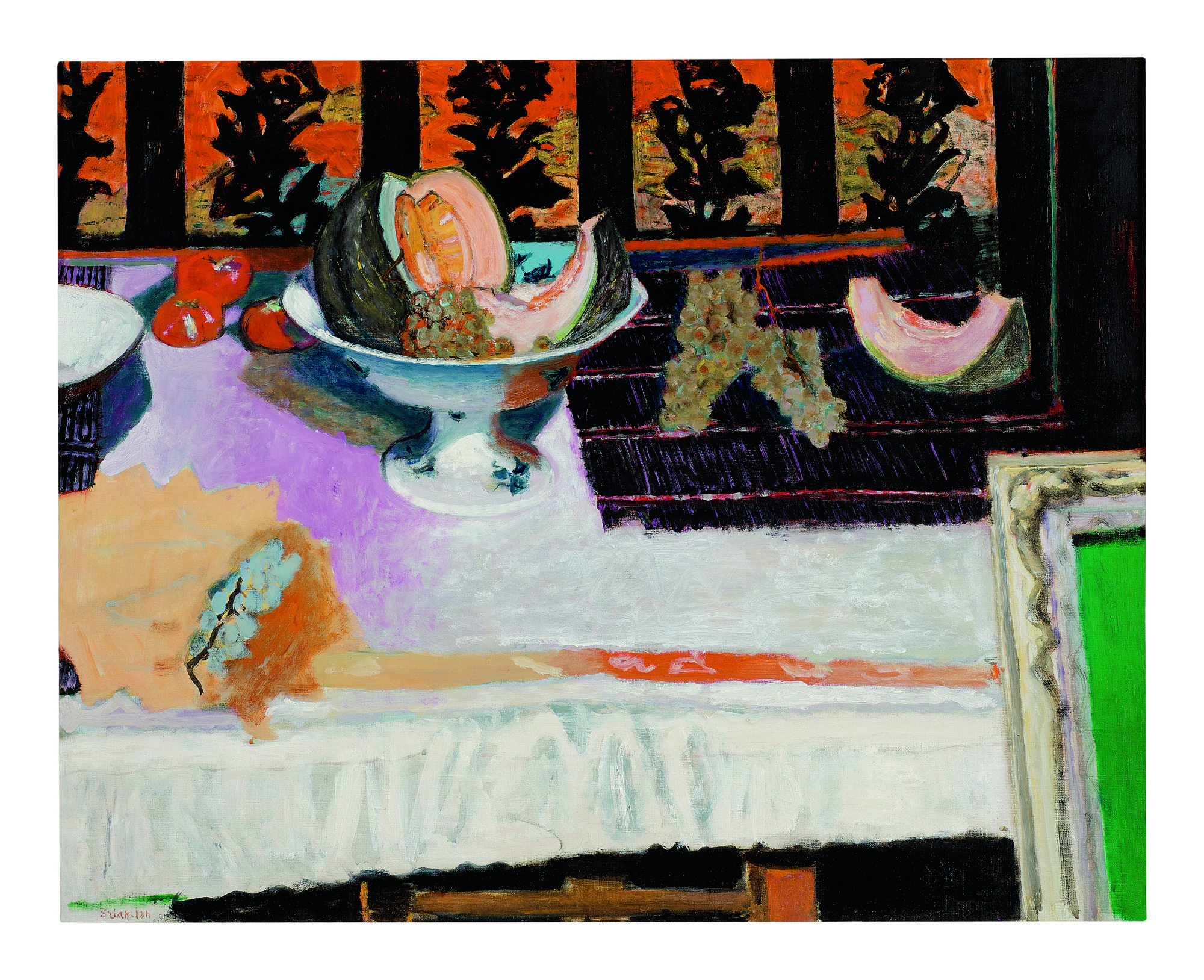
Nature Morte Au Melon, 1946
In the auction rooms, his works have attracted steady interest from European and American collectors alike, with his figure paintings and beach scenes commanding particular enthusiasm. Still lifes from his earlier career, such as the 1946 "Nature Morte Au Melon," offer a point of entry for collectors at a range of price points, with the painterly intelligence on display no less impressive for the smaller scale of the subject. To understand Brianchon fully is to understand the broader tradition of the School of Paris in the mid twentieth century, a tradition that included figures such as Jean Puy, André Planson, and Raymond Legueult, painters who shared Brianchon's commitment to the lyrical interior and the luminous figure. Like these contemporaries, Brianchon was working in the long shadow of the Post Impressionists and the Nabis, particularly Bonnard and Vuillard, whose influence on French painting of intimate domestic life was enormous and enduring.
Brianchon's particular gift was to bring to that tradition a warmth and directness that felt genuinely his own, less literary than Vuillard, less saturated than Bonnard, but no less accomplished in its command of mood and atmosphere. Maurice Brianchon died in 1979, leaving behind a body of work that has only grown in resonance in the decades since. At a moment when collectors and curators are actively reassessing the mid century French tradition, looking beyond the canonical names to the painters who gave that era its full texture and variety, Brianchon stands out as a figure of real importance and genuine delight. His paintings ask nothing more difficult of us than that we slow down, look carefully, and allow ourselves to feel the warmth of an afternoon that he has, with remarkable skill and evident love, preserved for us across the years.
Explore books about Maurice Brianchon