Matthew Barney
Matthew Barney: Mythology, Body, and Boundless Vision
Artist Spotlight · The Collection Editorial
“I think of the work as an ecosystem. Each part feeds the others, and the whole thing is alive.”
Matthew Barney, interview with Hans Ulrich Obrist
When the Guggenheim Museum in New York dedicated its rotunda to Matthew Barney's Cremaster cycle in 2003, something genuinely rare occurred in the art world: a living American artist received the kind of institutional embrace typically reserved for the canonized masters of previous centuries. The exhibition drew enormous crowds and critical attention from every corner of the cultural world, confirming what a generation of collectors and curators had already understood. Barney was not simply making art. He was constructing a cosmology.
Matthew Barney
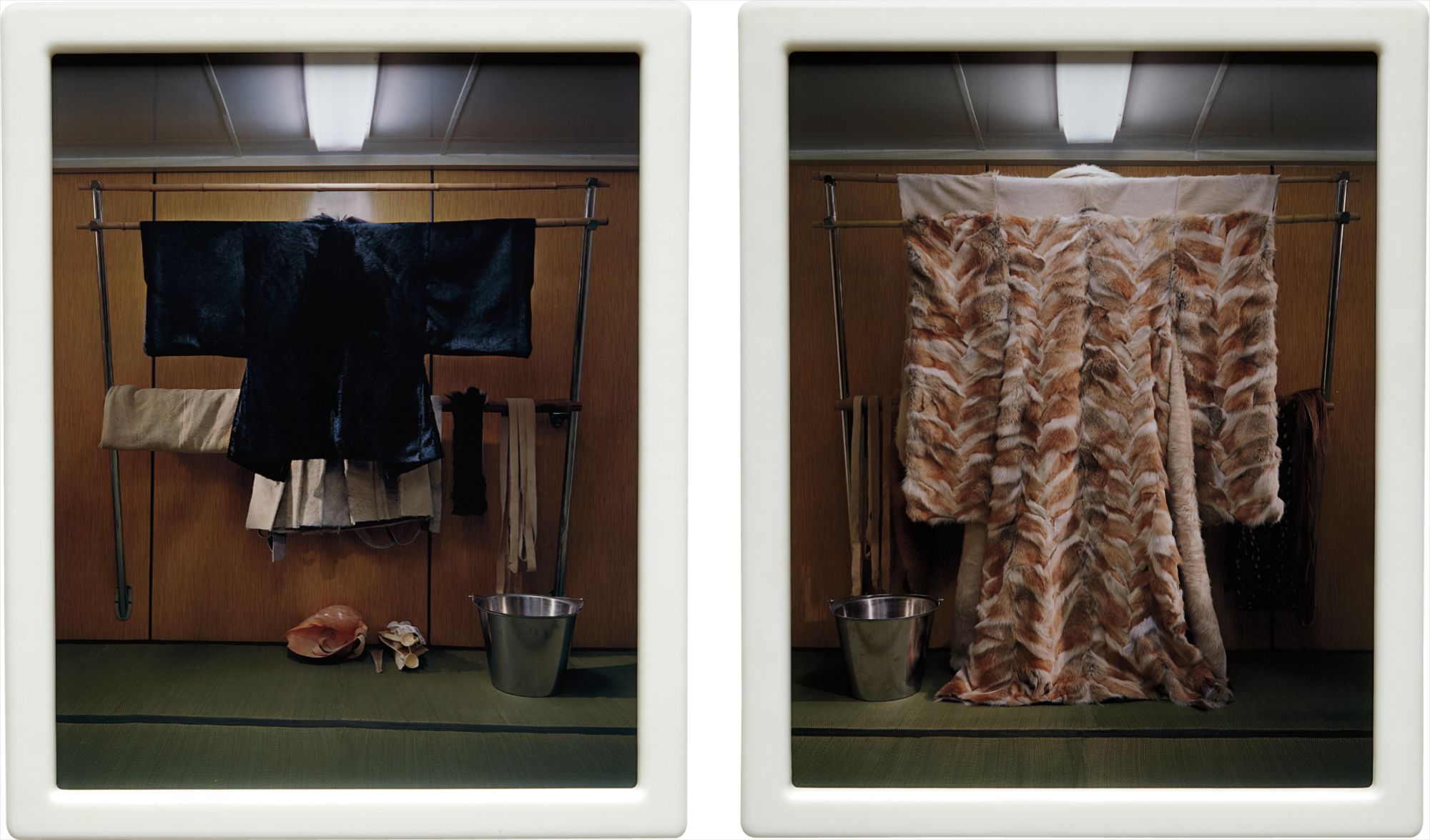
Drawing Restraint 9: The Terrestrials
Born in San Francisco in 1967 and raised in Boise, Idaho, Barney came of age in a landscape defined by wide open terrain, Mormon architecture, and a particular strain of American self reinvention. He attended Yale University, where he studied art and played football, and both pursuits left a lasting imprint on his practice. The athletic body, its discipline, its limits, and its almost ritualistic preparation became the central subject of his earliest work. He graduated in 1989 and almost immediately began attracting serious attention in New York galleries with performances and installations that treated the human form as a testing ground for ideas about restraint, endurance, and transformation.
Barney's early work in the late 1980s and early 1990s announced a sensibility that was wholly original. Works like the Drawing Restraint series, begun in 1987 while he was still a student, established a conceptual framework he has returned to across decades. The premise was deceptively simple: the artist would attempt to draw while physically constrained, the resistance itself becoming a generative force. What emerged was a body of work that drew on Joseph Beuys, Bruce Nauman, and Vito Acconci while moving in an entirely different direction, one that was lush, mythological, and deeply invested in narrative.
Matthew Barney
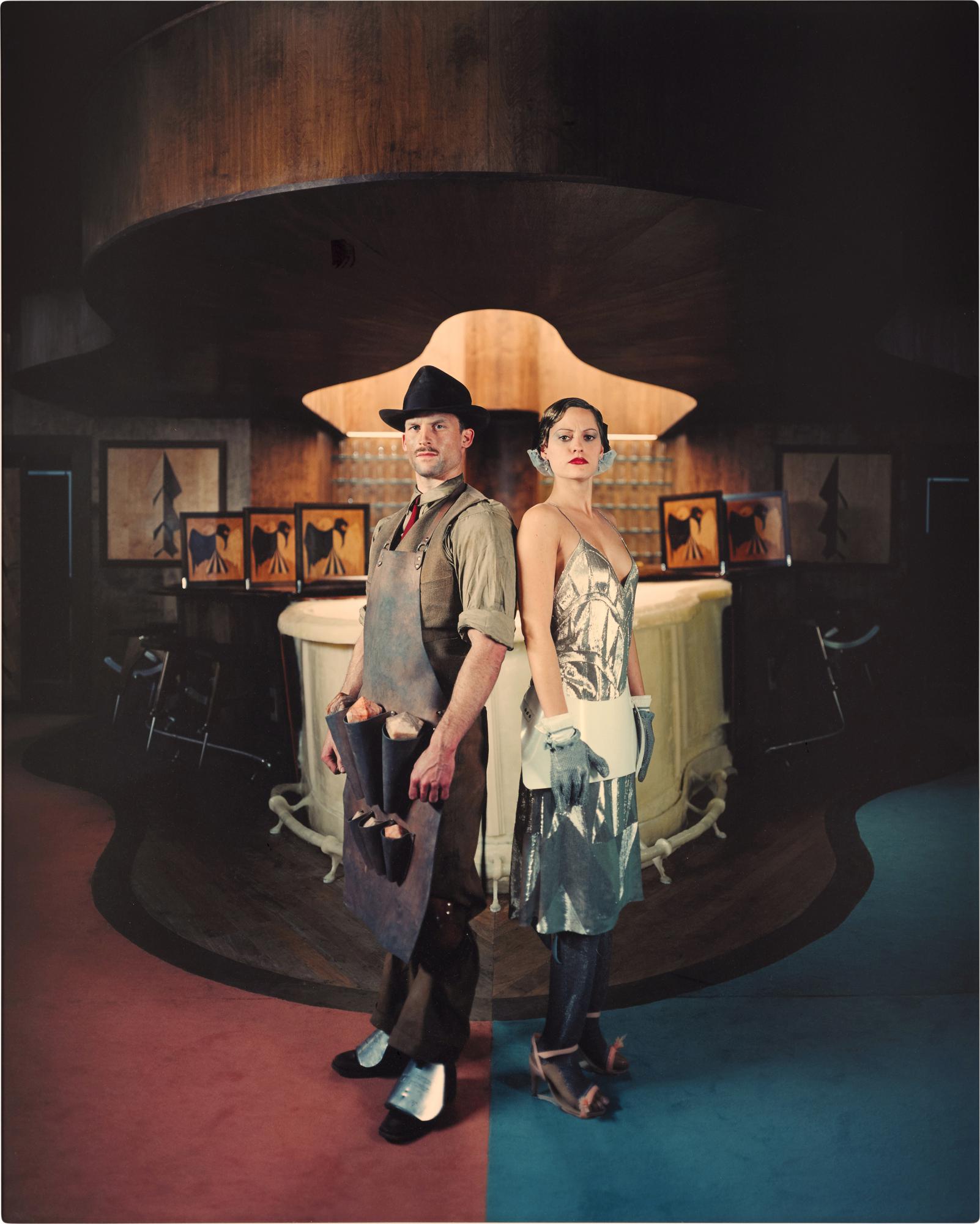
Cremaster 3: Entered Novitiate
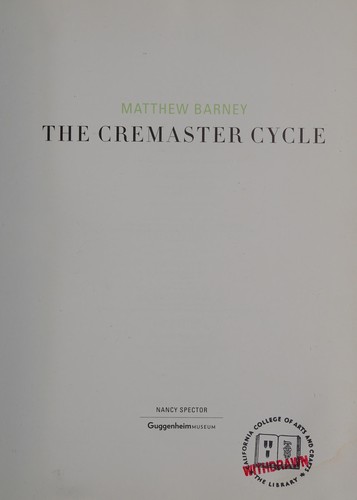
The chromogenic print "T1: ascending HACK decending HACK" from 1994, housed in one of his signature self lubricating acrylic frames, gives a sense of how even his documentation objects were conceived as complete aesthetic experiences. The Cremaster cycle, produced between 1994 and 2002, stands as one of the most ambitious undertakings in the history of contemporary art. Five feature length films shot across locations including the Isle of Man, Budapest, Utah, and New York, the cycle takes its name from the cremaster muscle, which regulates the position of the testes in response to temperature and stimulus. From that biological starting point, Barney constructed an elaborate symbolic universe drawing on Freemasonry, Celtic mythology, athletics, and the history of American landscape.
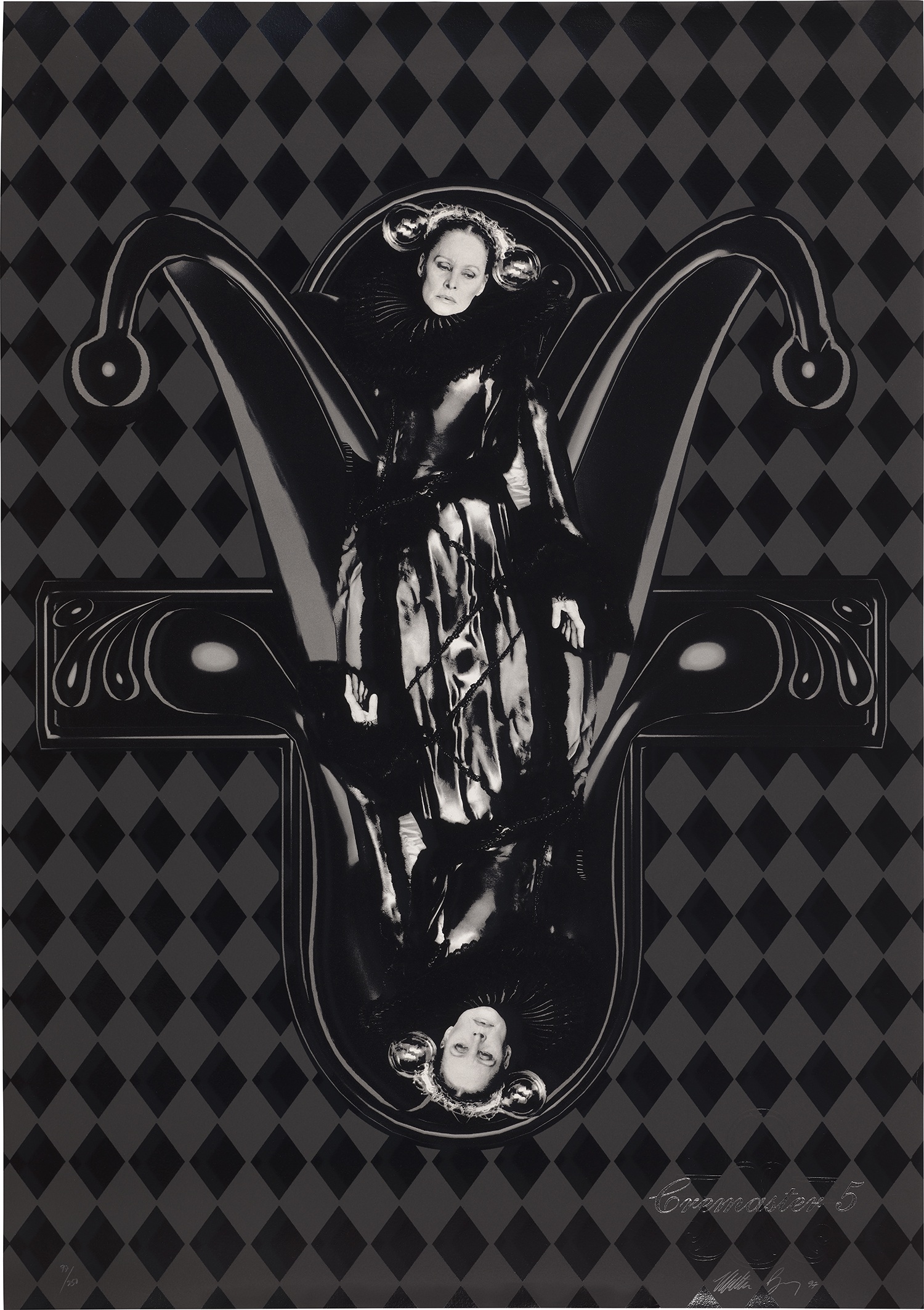
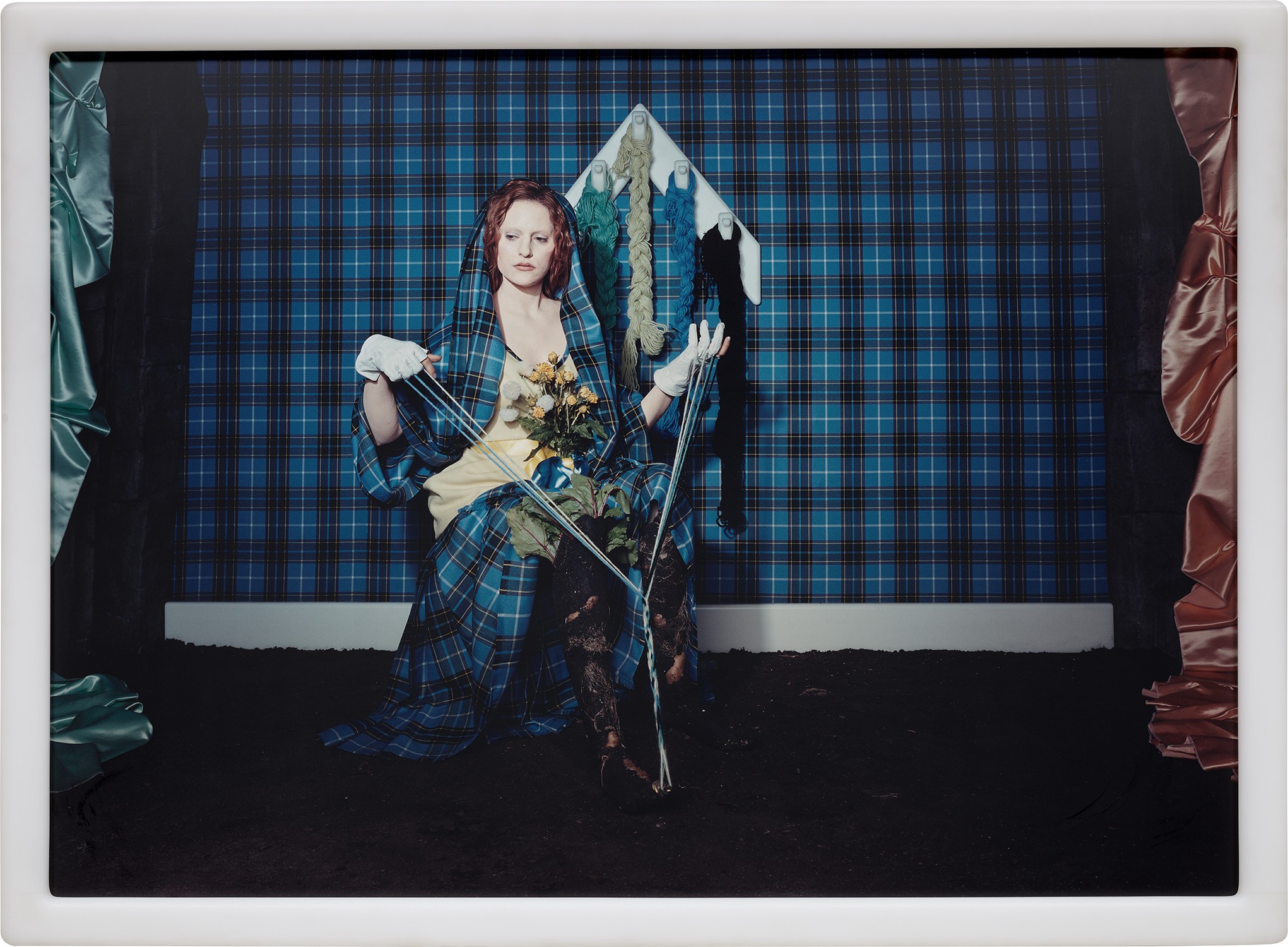
Each film is a self contained world with its own visual logic, its own cast of characters, and its own emotional register. The accompanying photographic and sculptural works, including the extraordinary Cremaster 3 series featuring images taken at the Chrysler Building and the Guggenheim itself, and the Cremaster 5 photo lithographs with their hot stamped foil and embossing, are not merely documentation. They are fully realized artworks that extend the symbolic language of the films into physical form. Barney has always treated his materials with the same level of intention he brings to narrative.
Matthew Barney
Cremaster 3: Oonagh MacCumhail, 2002
The self lubricating plastic used for his frames is not decorative whimsy but a direct reference to the biological and industrial systems that run through his iconography. The cast sugar and Viratex epoxy resin of "Sweet Bolus," a work made for the artist collective publication Parkett, carries a similar weight: sweetness, preservation, and the meeting of natural and synthetic substances compressed into a single elegant object. Drawing Restraint 9, produced in 2005 and shot aboard a Japanese whaling vessel in the North Pacific, extended the series into a full feature film collaboration with the musician Bjork, with the accompanying photographic diptychs, including "Drawing Restraint 9: The Terrestrials" in chromogenic prints within self lubricating plastic frames, offering some of the most visually arresting images of his career. For collectors, Barney's work presents an unusually rich field.
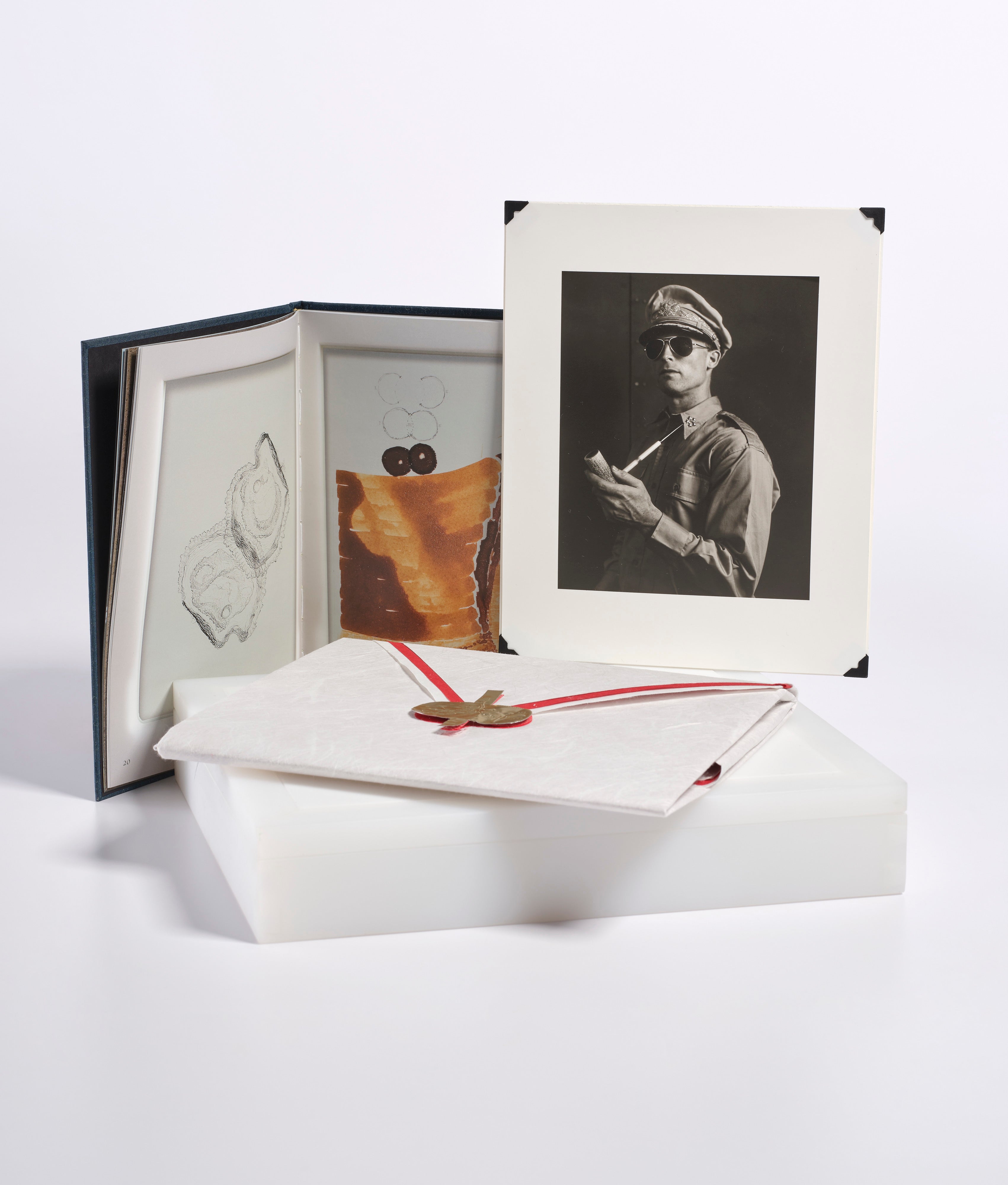
The editions and artist's books, such as the deluxe edition of Drawing Restraint Volume IV with its C print housed in a Japan paper folio within a self lubricating plastic case, reward close attention to material and production detail. The Cremaster Field Suite, a set of signed and numbered prints published by Jean Yves Noblet in Brooklyn, has become a touchstone for collectors seeking an entry into the full symbolic range of the cycle across a single cohesive body of work. At auction, Barney's photographs and prints have consistently held strong, with the Cremaster 3 chromogenic prints in their distinctive artist frames appearing at major houses and drawing competitive bidding from institutional and private collectors alike. What distinguishes the most desirable works is precisely the integration of frame and image, object and meaning, that runs through everything he makes.
Matthew Barney
Drawing Restraint Volume IV (General MacArthur)
Within the broader context of contemporary art, Barney occupies a singular position. He shares with Cindy Sherman an investment in the construction of identity through elaborate staging and costume. He shares with Mike Kelley and Paul McCarthy a willingness to draw on vernacular American culture as mythological raw material. His commitment to the total artwork, encompassing film, sculpture, photography, and performance within unified symbolic systems, places him in conversation with artists like Bill Viola and Douglas Gordon, though his visual language is entirely his own.
Internationally, his influence on a generation of artists working across disciplines has been profound and ongoing. Barney's legacy is still actively being written. His subsequent project, the River of Fundament, released in 2014 and based on Norman Mailer's novel Ancient Evenings, demonstrated that his appetite for large scale mythological storytelling had only deepened. Now in his late fifties, he remains one of the most intellectually demanding and visually generous artists working anywhere in the world.
To collect his work is to participate in a symbolic universe that grows richer with each encounter, and to recognize that some of the most vital art of this era was made by someone who understood from the very beginning that the body, in all its striving and constraint, is the oldest and most eloquent language we have.
Explore books about Matthew Barney