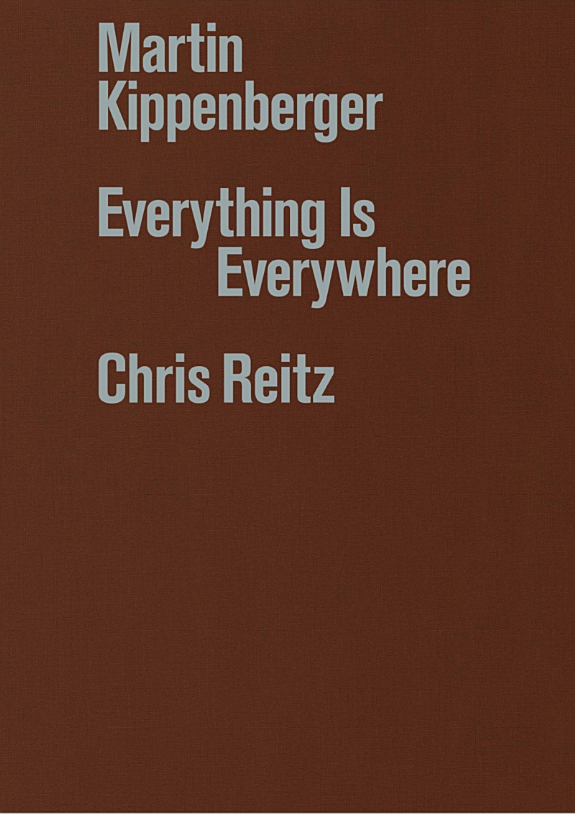
Martin Kippenberger
Martin Kippenberger, Forever Gloriously Himself
Artist Spotlight · The Collection Editorial
“I don't want to be interesting. I want to be good.”
Martin Kippenberger
In the spring of 2023, the art world paused to marvel once again at a familiar provocation. A major survey of Martin Kippenberger's work, drawing from institutional collections across Europe and the United States, reminded a new generation just how thoroughly this German artist had rewired the possibilities of contemporary painting and sculpture. Standing before his canvases and objects, visitors encountered something rare: art that was simultaneously hilarious, heartbreaking, and historically aware. Kippenberger had been gone for more than two decades, yet the work felt as alive and argumentative as ever.
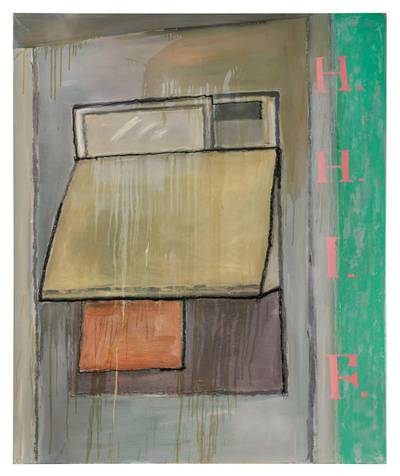
Martin Kippenberger
Warnung Vor Der Natur, 1984
Martin Kippenberger was born in 1953 in Dortmund, Germany, the fourth of six children in a family that moved frequently owing to his father's work in the mining industry. He grew up in a postwar Germany still negotiating its own identity, and that sense of cultural unmooring would prove formative. As a young man he studied at the Hochschule für bildende Künste in Hamburg, though formal education never quite contained him. He was constitutionally restless, drawn to bars, conversations, friendships, and the chaotic social world of the bohemian European city.
Hamburg gave way to Berlin, and then Florence, then São Paulo, then Los Angeles, and eventually back to Europe. Each city left a deposit in his work, a layer of observed behavior, borrowed aesthetics, and sharp self awareness. Kippenberger arrived in Berlin in the late 1970s and immediately became a gravitational force. He managed the legendary club SO36 in Kreuzberg, a venue that sat at the turbulent intersection of punk music and the nascent German art scene.
Martin Kippenberger
Haus Schloss Case (G. & C. 33)
This was not a detour from his practice but an extension of it. For Kippenberger, the boundary between life and art was a fiction worth exploiting. He understood that curating a social space, performing a persona, or organizing an event could be as artistically serious as stretching a canvas. By the early 1980s he had established himself alongside artists like Albert Oehlen and Georg Herold as part of a loose but influential formation of painters and conceptualists who were reclaiming figuration and irreverence in equal measure.
“Art is like going to the dentist. People are afraid, but afterwards they feel better.”
Martin Kippenberger
His painting practice was deliberately wayward and genuinely virtuosic. Works like Warnung Vor Der Natur from 1984 exemplify his approach: a raw, confrontational image delivered with an intelligence that rewards sustained looking. He painted fast and prolifically, often working in series, and he never allowed a single style to calcify into a signature. Self portraiture was a recurring obsession, but these were never vanity exercises.
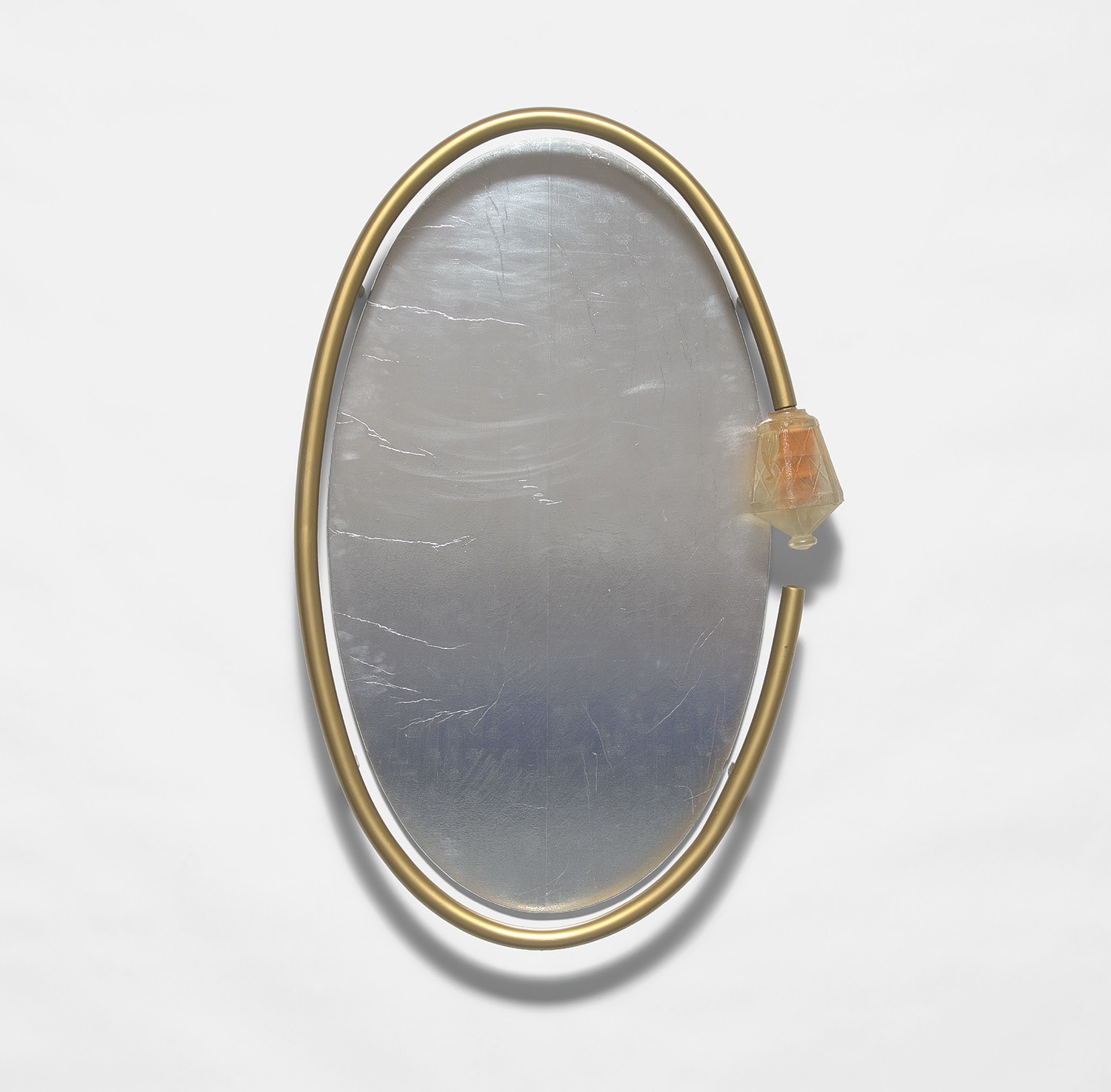
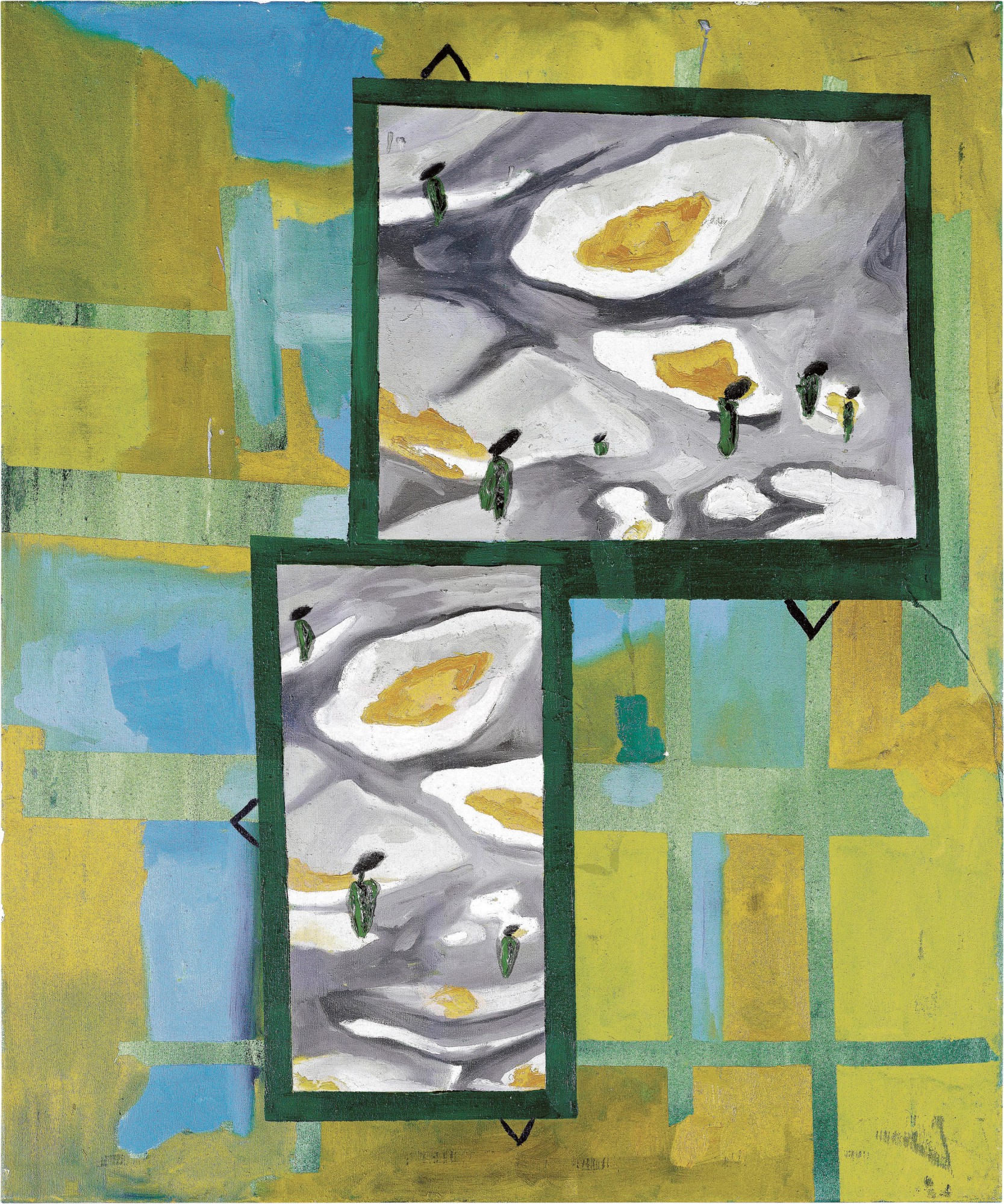
Martin Kippenberger
Mirror for Hang-Over Bud, 1990
Kippenberger placed himself in humiliating, tender, and absurd situations on canvas, making his own body a site of cultural commentary. His use of artist's frames, those elaborately conceived surrounds that extended the work beyond its painted surface, added yet another layer of wit and formal ambition. The frame became part of the argument. Sculpture and installation expanded his reach considerably.
His series of subway entrance sculptures, begun in the 1990s under the conceptual umbrella of the Metro Net project, proposed a utopian and deeply comic global underground railway connecting disparate and improbable locations. These green iron staircases descending nowhere appeared in places including Syros in Greece and a field in Dawson City in Canada. The project was grandiose in concept and absurdist in execution, which was precisely the point. Anlehnungsbedürfnis, also known as I Am Lonely, a wooden playpen paired with a bronze broomstick bearing a brown patina, captures another dimension of his sculptural thinking: everyday objects charged with emotional and art historical resonance, reframed through unexpected combination.
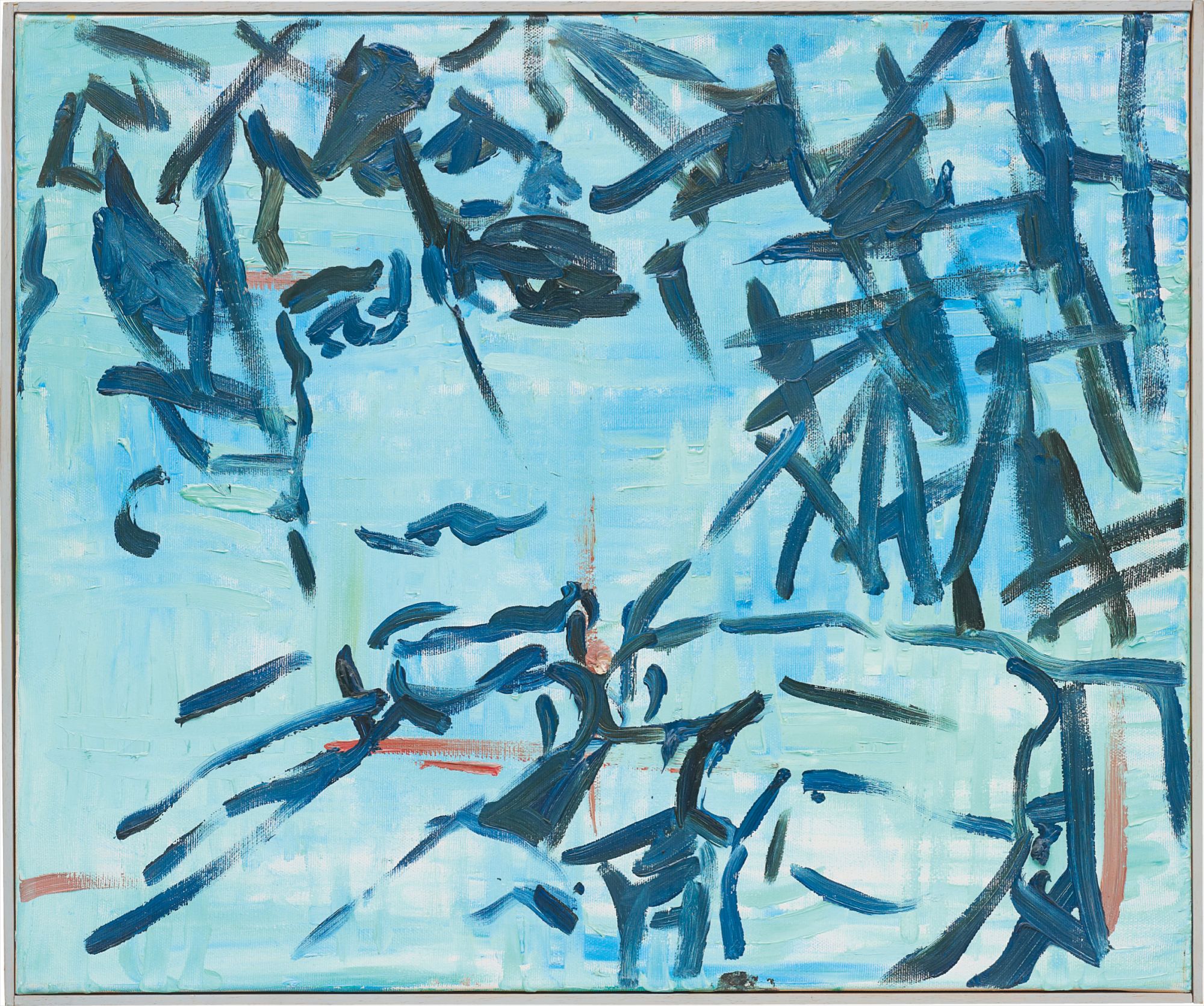
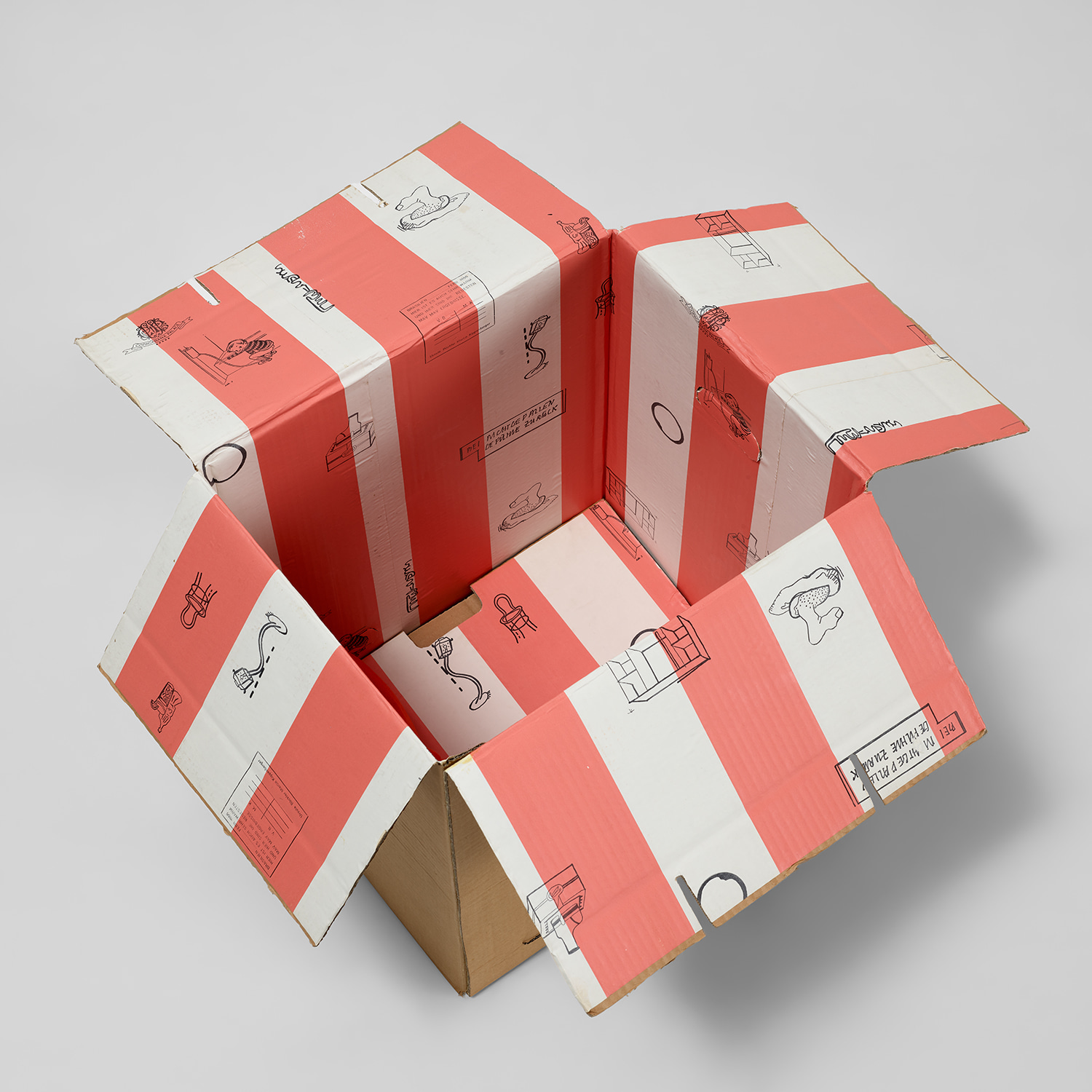
Martin Kippenberger
Der griechische pickelausdrucker (The Greek pimple squeezer)
His multiples and editions, including carved wood objects and elaborate print installations like 35 Mirror Babies, demonstrated that he could work across every register of art world production without losing his critical edge. For collectors, Kippenberger presents a thrilling and substantial opportunity. The market for his work has grown steadily since his death in 1997 at the age of 44, with major auction houses regularly presenting paintings, sculptures, works on paper, and editions from his estate. His output was enormous by design, and that abundance means works in various media and at various price points remain accessible to dedicated collectors.
What unites the best examples, whether an oil on canvas from the mid 1980s or a delicate watercolor and pencil study like I Had A Vision from 1991, is a quality of intelligence that never becomes cold. Kippenberger always left room for feeling, for genuine emotion underneath the layers of irony and reference. His works on paper are particularly valued by collectors who appreciate the directness and spontaneity that that medium demanded of him. To understand Kippenberger fully it helps to situate him alongside his contemporaries and predecessors.
He absorbed the legacy of German Expressionism and wrestled openly with it, while also engaging the Conceptualism of Joseph Beuys, against whom he defined himself in pointed and productive ways. Among his peers, painters like Sigmar Polke and Gerhard Richter cast long shadows that he navigated with characteristic swagger. Internationally, his practice rhymes with that of Mike Kelley, with whom he shared an interest in low culture, abjection, and the comedy of failure. Bruce Nauman's institutional critique also resonates through Kippenberger's assault on art world convention, though Kippenberger delivered his critique with considerably more schnapps and laughter.
What endures is his insistence that art be fully alive: connected to the mess of experience, willing to embarrass itself, capable of genuine affection even while dismantling pretension. Institutions including MoMA, the Tate, and Museum Ludwig have long understood this. So have the generations of younger artists, from painters to performance makers, who cite him as essential. Kippenberger died before he could see how thoroughly his ideas would seep into contemporary practice, but the work he left behind is inexhaustible.
It argues, it sings, it falls down and gets back up. It is, in the best possible sense, exactly what art should be.
Explore books about Martin Kippenberger