Marlene Dumas

Marlene Dumas: The Painter Who Sees Everything
Artist Spotlight · The Collection Editorial
“I am not interested in how people look. I am interested in who they are.”
Marlene Dumas, exhibition catalogue
In the autumn of 2023, the Fondation Louis Vuitton in Paris presented a sweeping retrospective of Marlene Dumas that drew enormous crowds and reignited critical conversation around one of the most morally serious and visually daring painters alive today. The exhibition, tracing decades of her singular practice, reminded the art world of something it already knew but occasionally needed restating: that Dumas occupies a position in contemporary painting that is entirely her own, built on unflinching honesty, psychological depth, and a technical fluency that makes difficult subjects not merely bearable but genuinely beautiful. Visitors stood for long minutes in front of canvases that refused to let them go, which is perhaps the most accurate measure of great art. Marlene Dumas was born in 1953 in the Cape Province of South Africa, growing up on a wine farm outside Cape Town during the height of the apartheid era.
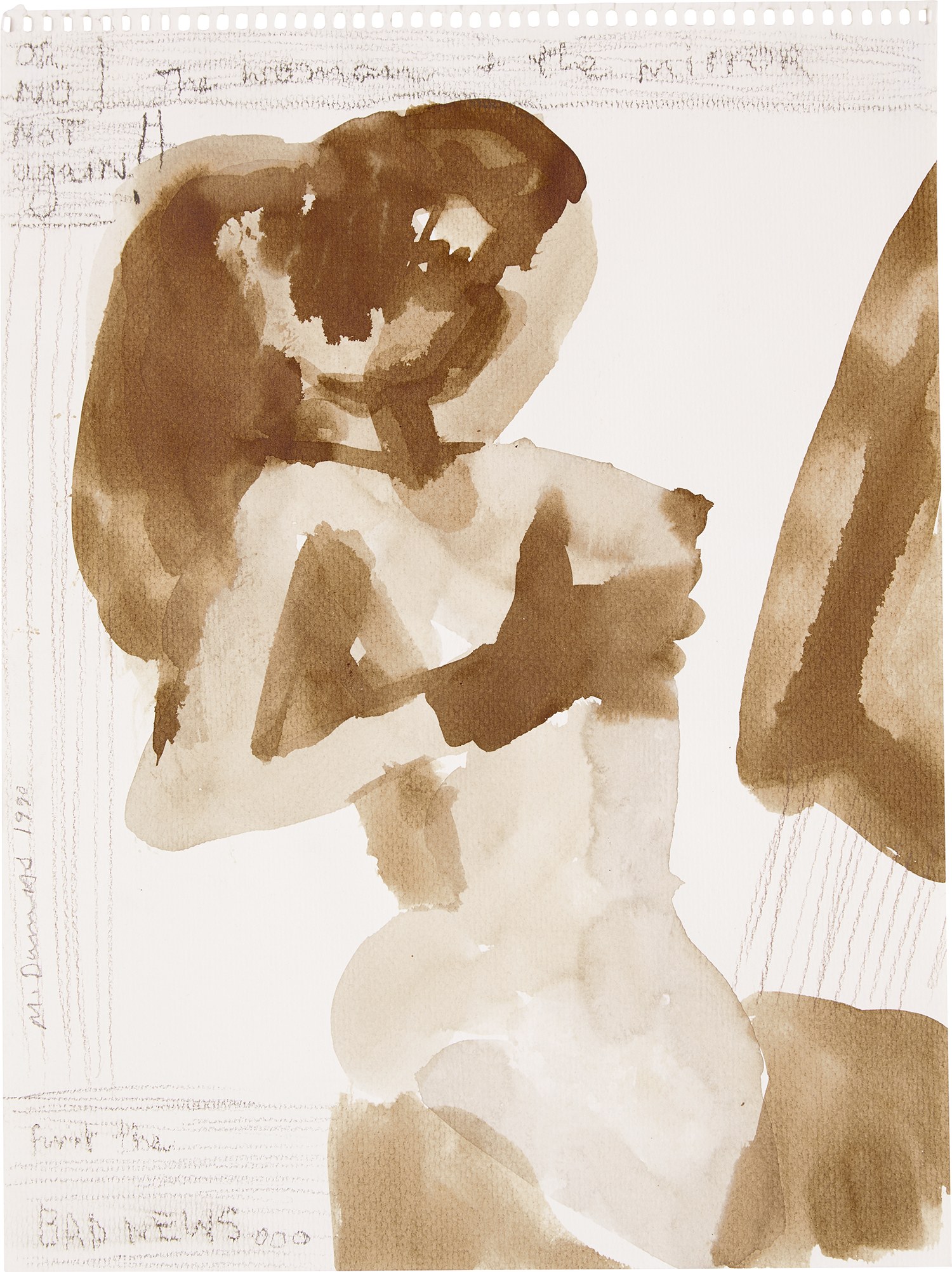
Marlene Dumas
The Woman and the Mirror, 1990
That political and moral landscape, defined by enforced separation, racial hierarchy, and collective denial, would leave an indelible mark on the consciousness she brought to her work. She studied art at the University of Cape Town, where she developed an early interest in the human figure and began grappling with questions about identity, visibility, and who gets to be seen. In 1976 she moved to Amsterdam to study at the Ateliers 63 in Haarlem, and the Netherlands became her permanent home, giving her both distance and perspective on the country of her birth. Her early years in Amsterdam were formative in a different register.
She encountered the rich tradition of Dutch and Flemish painting, the direct engagement with bodies and surfaces, the moral weight placed on looking, and she absorbed it without becoming beholden to it. She also encountered the political energies of European feminism and postcolonial thought, which gave her a critical framework to place alongside her instinctive emotional intelligence. By the 1980s she was developing the vocabulary that would come to define her: loose, wet, urgent marks in ink and watercolor and oil, figures that emerge from the paint as if surfacing from some inner sea, portraits that feel less like likenesses and more like encounters. The works from the mid to late 1980s established her reputation firmly.
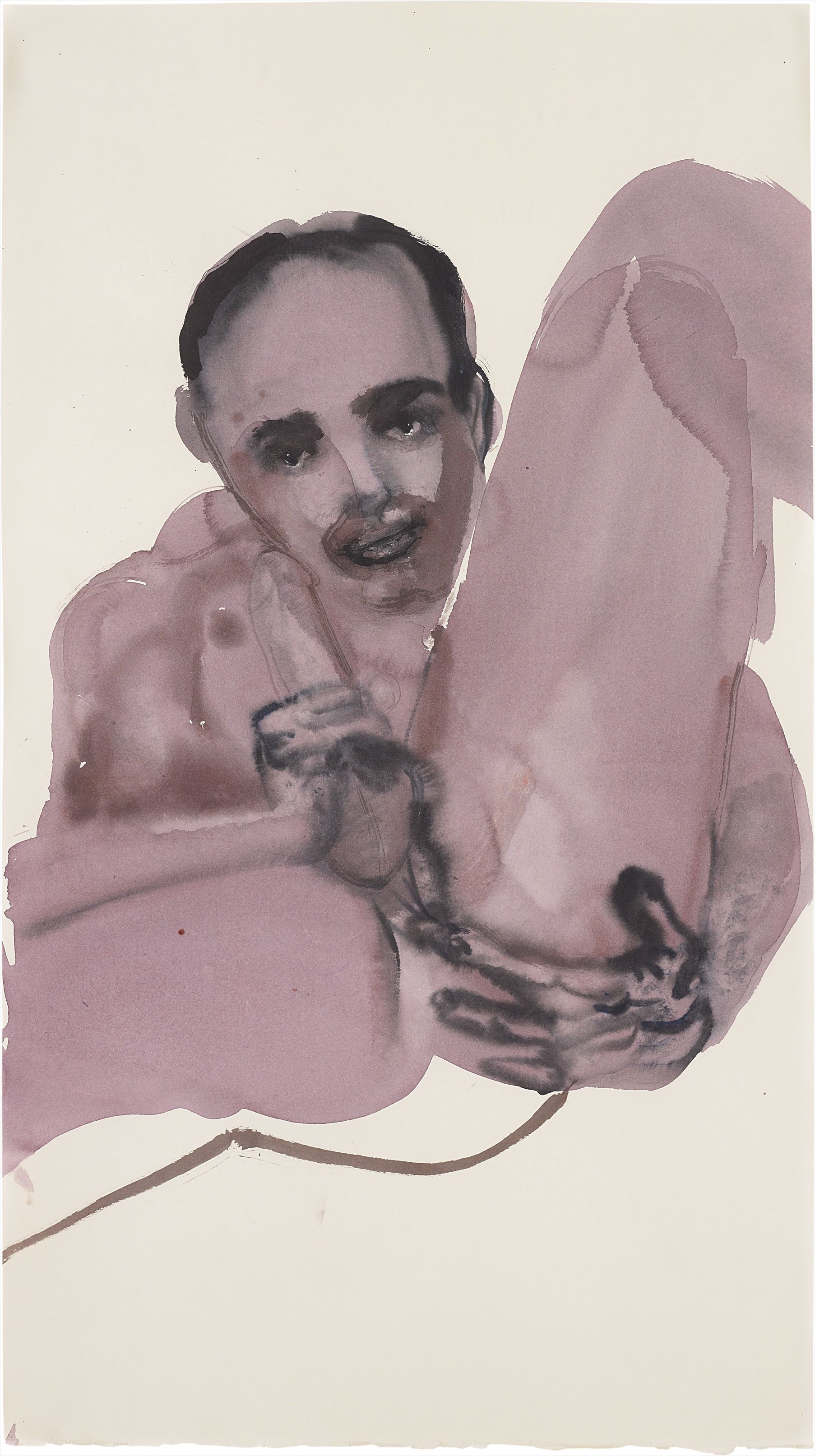
Marlene Dumas
Fingers
"Snow White in the Wrong Story" from 1988 is a painting that manages to be funny, melancholy, and politically pointed at once, a child figure adrift in a narrative not built for her. "De gele vingers van de kunstenaar" (The yellow fingers of the artist) from 1985, a diptych in oil on linen, places the artist's own body in the frame as instrument and subject simultaneously, asserting presence through process. These were not paintings that sought approval. They asked questions and sat with the discomfort of not answering them, which gave them a staying power that polished, resolved painting rarely achieves.
“Painting is about the trace of the human touch. It is about mortality and the desire to transcend it.”
Marlene Dumas, interview
By 1990, works such as "The Woman and the Mirror," rendered in watercolor and pencil on paper, demonstrated how fully she had mastered the expressive possibilities of works on paper, a medium she has continued to treat with the same seriousness as her large canvases. What draws collectors and institutions to Dumas with such consistency is precisely this refusal to separate beauty from difficulty. Her portraits of public figures, her meditations on desire and mortality, her engagement with images sourced from newspapers and pornography and art history alike, all of these threads are woven into paintings that ask the viewer to do real ethical work. "The Pilgrim" from 2006, in oil on canvas, carries the weight of spiritual longing without resolving it into doctrine.
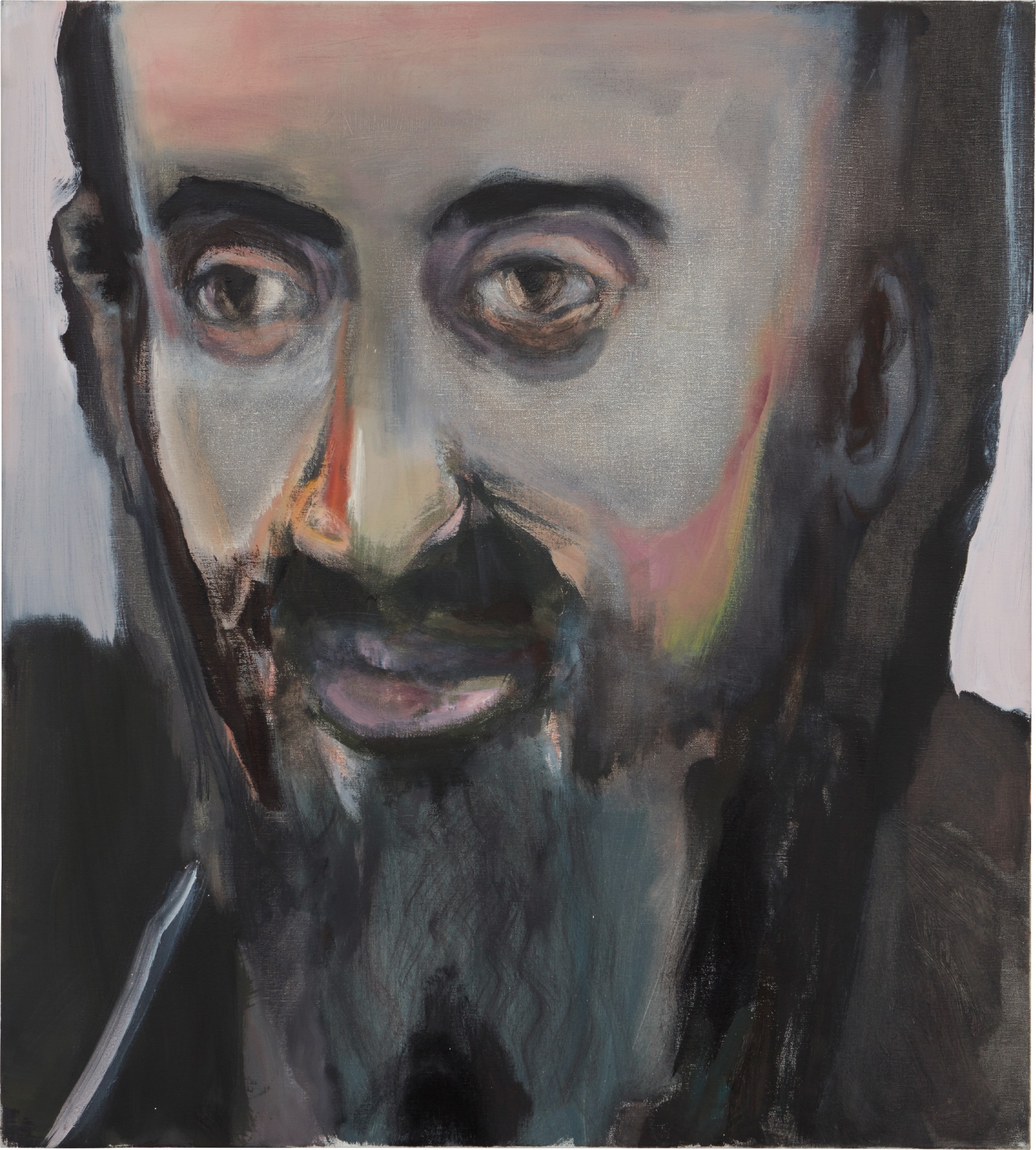
Marlene Dumas
The Pilgrim, 2006
"Cultural Exchange (Mummie wants to go home)" from 2008 addresses the violence of colonial displacement through an image that is tender and devastating in equal measure. More recently, "Mouth" from 2018 reduces the human face to a single aperture, a portal for speech or silence or song, painted with a directness that feels almost confrontational in its simplicity. These are works that age exceptionally well in a collection, not because they are decorative but because they continue to generate thought. On the market, Dumas is among the most significant and collectible painters of her generation, with major works held at the Museum of Modern Art in New York, Tate Modern in London, the Stedelijk Museum in Amsterdam, and the Museum of Contemporary Art in Los Angeles, among many others.
Her paintings have achieved strong results at auction, with large oil on canvas works regularly attracting serious institutional and private competition. Works on paper, including her lithographs and watercolors, represent an accessible point of entry into a body of work whose depth rewards sustained engagement. The "Portrait of a Young Nelson Mandela" in lithograph on Hahnemühle paper connects her South African origins to her European present, and it remains a work of genuine historical resonance. Collectors who have built relationships with her work often speak of it as transforming how they understand painting itself.
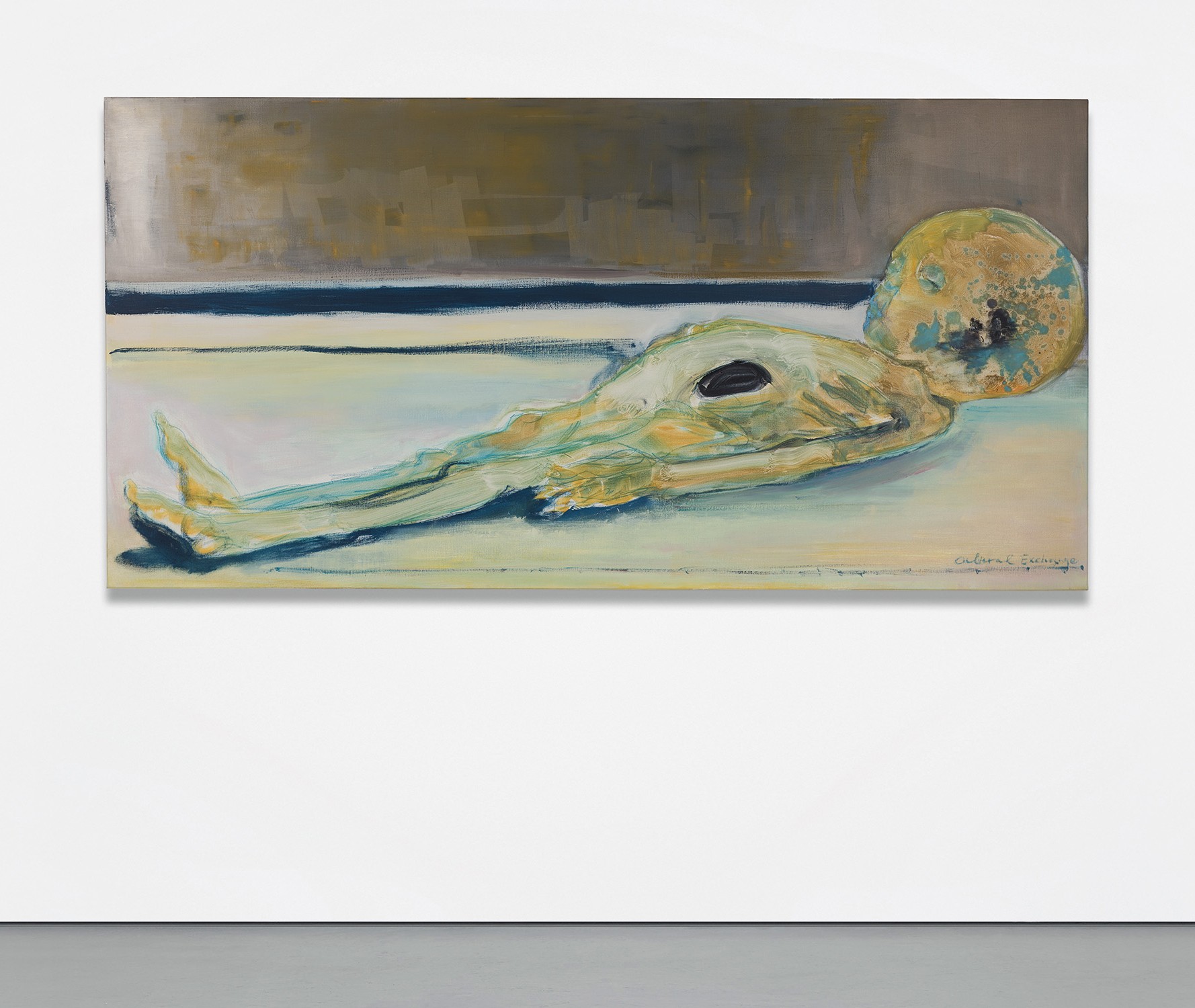
Marlene Dumas
Cultural Exchange (Mummie wants to go home), 2008
In situating Dumas within art history, one reaches naturally for figures who shared her commitment to the figure and to psychological truth. Francis Bacon, Egon Schiele, and Edvard Munch all made images of bodies under pressure that her work is sometimes measured against, and she engages knowingly with those traditions. Among her contemporaries, artists such as Kara Walker, Jenny Saville, and Cecily Brown share something of her willingness to make painting do emotional and political labor simultaneously. But Dumas is not reducible to any of these comparisons.
Her specific combination of South African formation, Dutch residency, feminist consciousness, and sheer painterly intelligence produces work that sits in a category of its own. She has spoken and written about her practice with unusual candor and intellectual rigor, contributing essays and poems to exhibition catalogues that read as genuine extensions of the paintings. What Marlene Dumas means today, at a moment when painting is being reassessed and celebrated across the globe, is something like this: that to paint the human figure with honesty is an act of courage, and that courage in art produces work that outlasts the moment of its making. She has given collectors, institutions, and viewers images that insist on being seen on their own terms, which is the deepest form of respect an artist can offer an audience.
To live with her work is to live with more questions than answers, and that, it turns out, is exactly what a collection needs.
Explore books about Marlene Dumas
Marlene Dumas: The Image as Burden
Marlene Dumas, Michael Pye
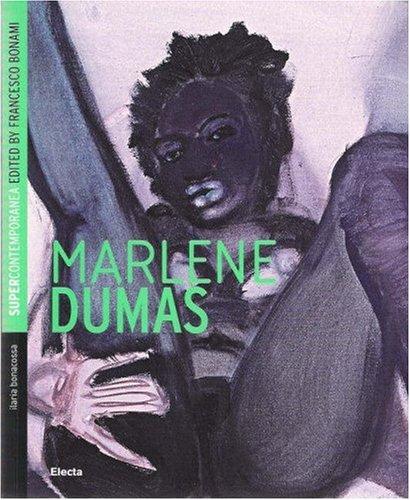
Marlene Dumas
Julien Friedmann
Marlene Dumas: Sweet Europe
Museum catalogue, various editors
Marlene Dumas: Measuring Your Own Grave
Various authors, museum editors

Marlene Dumas: The Image as Burden
Various contributors
Marlene Dumas: Broken White
Museum catalogue editors
Marlene Dumas: The Paintings
Robert Storr, Okwui Enwezor
Marlene Dumas: Redefining the Real
Museum catalogue editors