Marcos Acosta
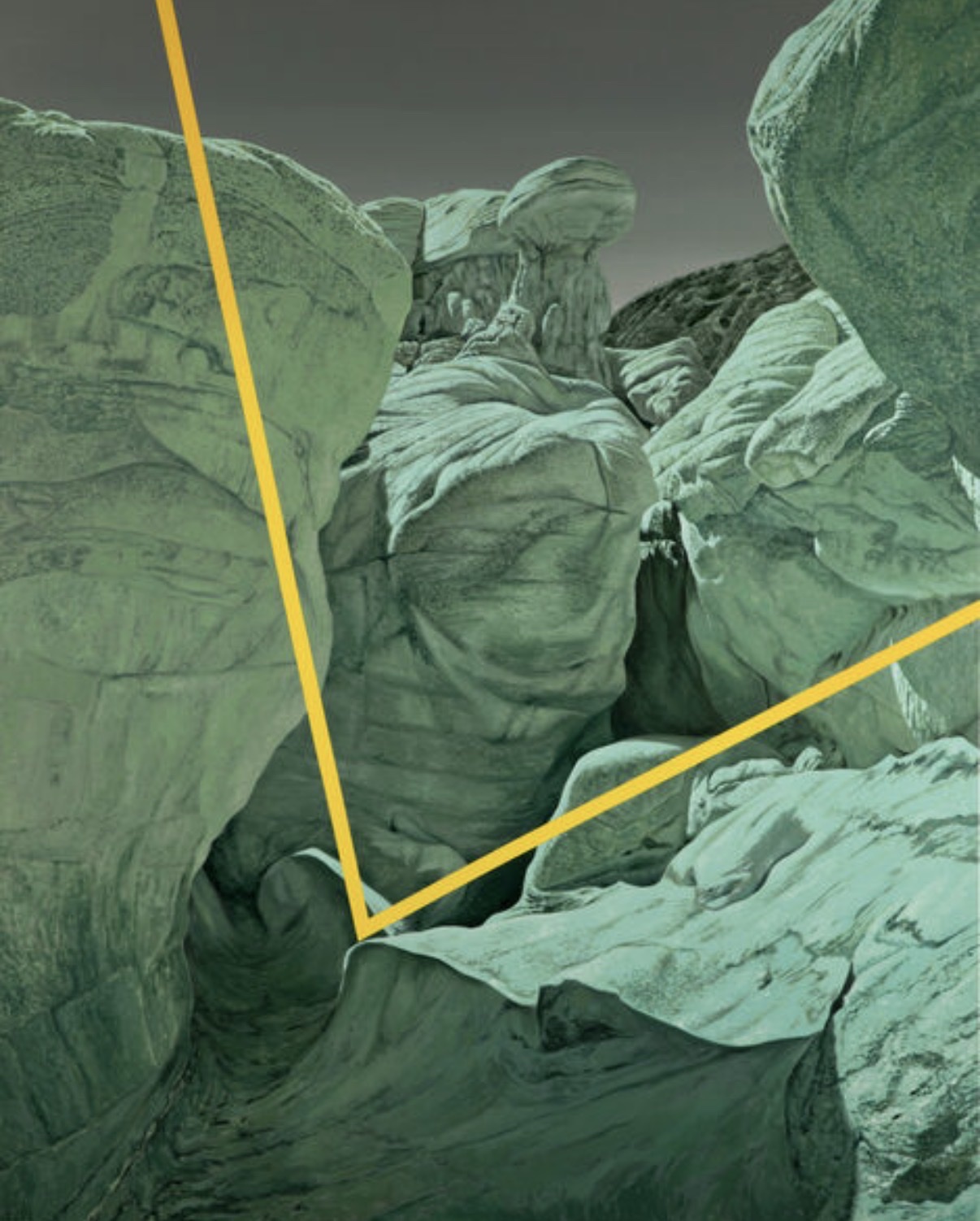
Marcos Acosta Paints the World Whole
Artist Spotlight · The Collection Editorial
Something is shifting in the conversation around Chicano painting, and Marcos Acosta is at the center of it. In 2025, the Los Angeles based artist released his most focused body of work to date, the ongoing "Imaginary Boundaries" series, a suite of large scale oil paintings that feel simultaneously urgent and timeless. The series arrives at a moment when American museums and collectors are reconsidering the full breadth of the nation's visual culture, and Acosta's canvases demand to be part of that reckoning. They are paintings that do not wait to be discovered.
Marcos Acosta
Imaginary Boundaries I, 2025
They announce themselves. Born in 1982, Marcos Acosta grew up navigating the layered, often contested terrain of Mexican American life in the United States. That experience of living between cultures, of belonging fully to more than one world while sometimes feeling fully claimed by neither, became the animating force of his artistic vision. From an early age, Acosta showed a sensitivity to the visual languages that surrounded him: the rich chromatic traditions of Mexican folk art, the bold graphic energy of urban muralism, and the deeply personal imagery of domestic life.
These were not influences he catalogued from a distance. They were the textures of his daily existence. Acosta's artistic formation reflects the particular richness of the Chicano cultural moment he inherited. The generation of artists who preceded him, figures working in the legacy of the muralist tradition and the Chicano civil rights movement, had already established that painting could be both politically engaged and aesthetically ambitious.
Marcos Acosta
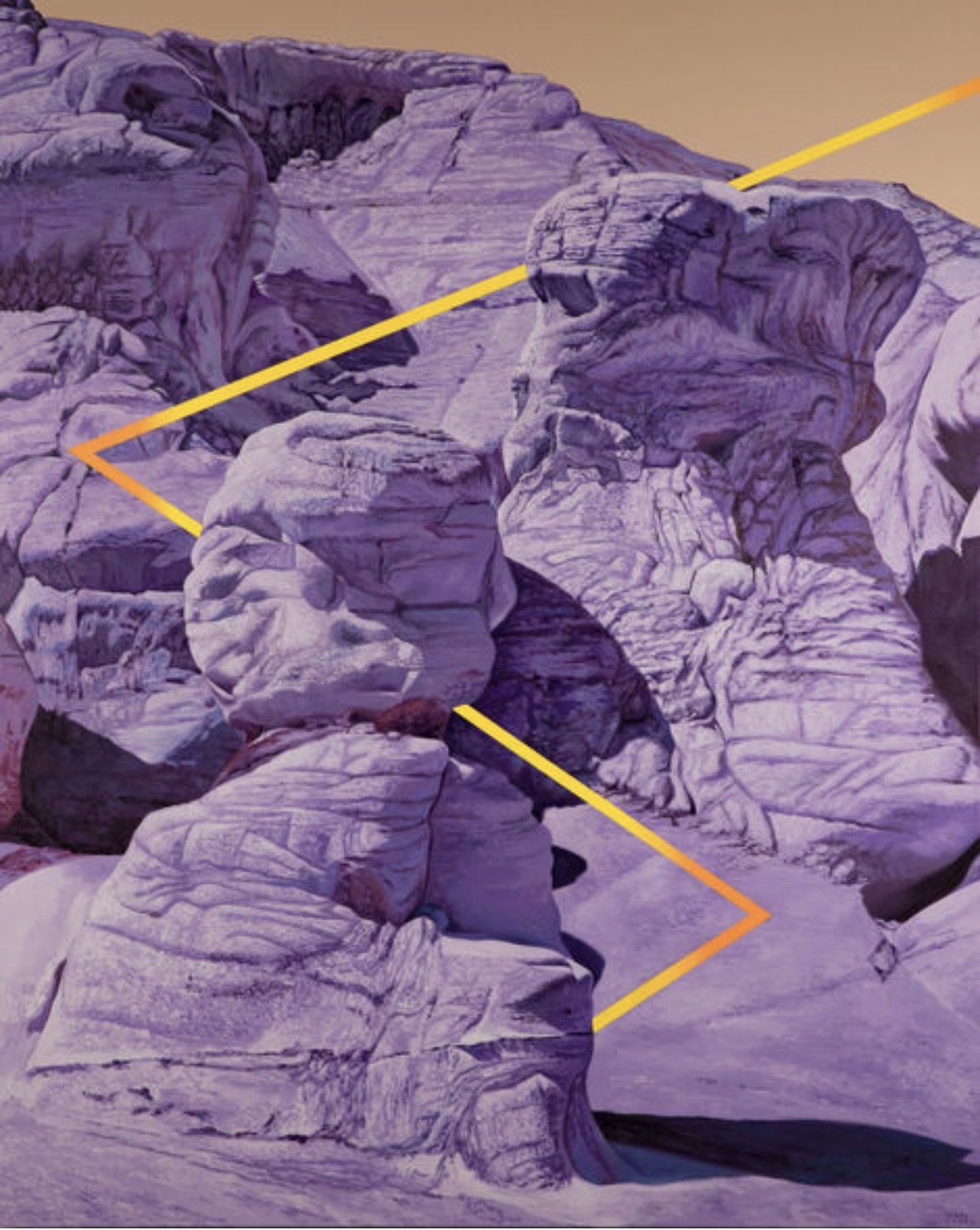
Imaginary Boundaries III, 2025
Acosta absorbed those lessons and pushed further, developing a practice rooted in the visceral directness of Neo Expressionism while drawing on the narrative complexity of artists like Kerry James Marshall and the figurative boldness of painters in the broader Latin American tradition. His work reads as deeply American while remaining in constant, loving dialogue with Mexico. Over time, Acosta refined a signature approach that sets him apart within his generation. He works primarily in oil on canvas at a large scale, building surfaces through layered imagery that rewards close looking.
A single painting might contain passages of near folkloric flatness alongside areas of gestural intensity, figures that emerge from dense color fields only to dissolve back into them. This push and pull between clarity and immersion is not accidental. It reflects the way memory actually works, how identity is not a fixed picture but a living, shifting accumulation of moments, stories, and inherited images. His color palettes are among the most distinctive in contemporary American painting: warm, saturated, and deeply intentional, never garish but always alive.
Marcos Acosta
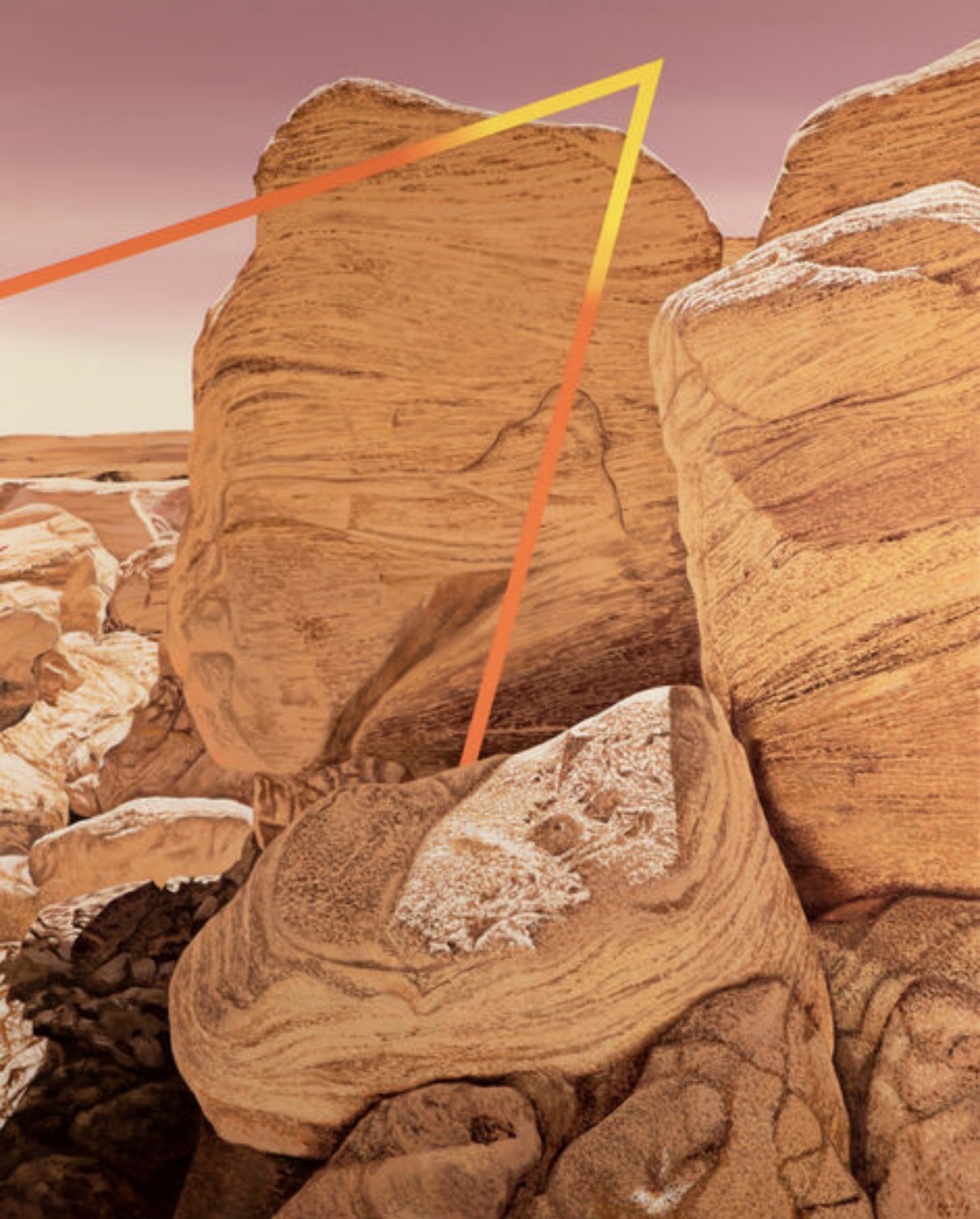
Imaginary Boundaries IV, 2025
The "Imaginary Boundaries" series, with works including "Imaginary Boundaries I," "Imaginary Boundaries III," and "Imaginary Boundaries IV," all produced in 2025, represents the fullest expression of everything Acosta has been building toward. The title itself is quietly radical, pointing to the constructed nature of the divisions that shape lives, nations, and self understanding. The paintings in this series use figuration and abstraction in equal measure, building visual worlds where the human form anchors compositions of extraordinary chromatic and emotional complexity. Collectors who have encountered these works in person describe the experience as unexpectedly physical, the paintings seem to breathe.
They carry within them a conviction that is rare in contemporary art. From a collecting perspective, Acosta represents exactly the kind of artist that informed collectors are watching closely right now. He is a living artist at a pivotal moment in his career, producing work that is intellectually rigorous, visually compelling, and culturally significant. His position within the Chicano art tradition connects him to a lineage that is finally receiving the institutional recognition it has long deserved, with major American museums expanding their acquisitions in this area meaningfully over the past decade.
Collectors who position themselves early in Acosta's trajectory are acquiring not just individual objects of beauty but works that will hold an important place in the larger story of American art. The "Imaginary Boundaries" series in particular feels like the kind of sustained statement that defines an artist's reputation. To understand Acosta's place in the broader landscape, it helps to think about the conversation he is participating in. The renewed critical energy around figurative painting, the growing institutional commitment to Chicano and Latin American artists, and the collector appetite for work that engages meaningfully with questions of identity and social justice have all converged to create exactly the right conditions for his practice to be fully understood.
His work speaks to the legacies of the Chicano muralist tradition while remaining in dialogue with the international Neo Expressionist movement and the long history of narrative painting. He is an artist who belongs in collections alongside painters from across that full spectrum. What Marcos Acosta ultimately offers is something that art at its best has always provided: a way of seeing the world more fully and more honestly. His paintings do not simplify the experience of living between cultures.
They honor its complexity, its beauty, its grief, and its resilience. The "Imaginary Boundaries" series feels like a definitive statement from an artist who has found his fullest voice, and the collectors and institutions who are paying attention right now will be glad they were. Acosta is not an artist who is about to arrive. He is here.