Maggi Hambling

Maggi Hambling, Painting Life With Fearless Joy
Artist Spotlight · The Collection Editorial
“Every mark I make is about life and death.”
Maggi Hambling, interview with The Guardian
There are few living British artists whose presence in a room commands quite the same electric charge as Maggi Hambling. In recent years, retrospective attention to her decades of work has grown considerably, with major survey exhibitions and renewed critical interest affirming what her admirers have long understood: that Hambling is one of the most vital, emotionally courageous painters and sculptors working in Britain today. Her canvases do not ask for your attention politely. They take it, hold it, and leave you altered.
Maggi Hambling
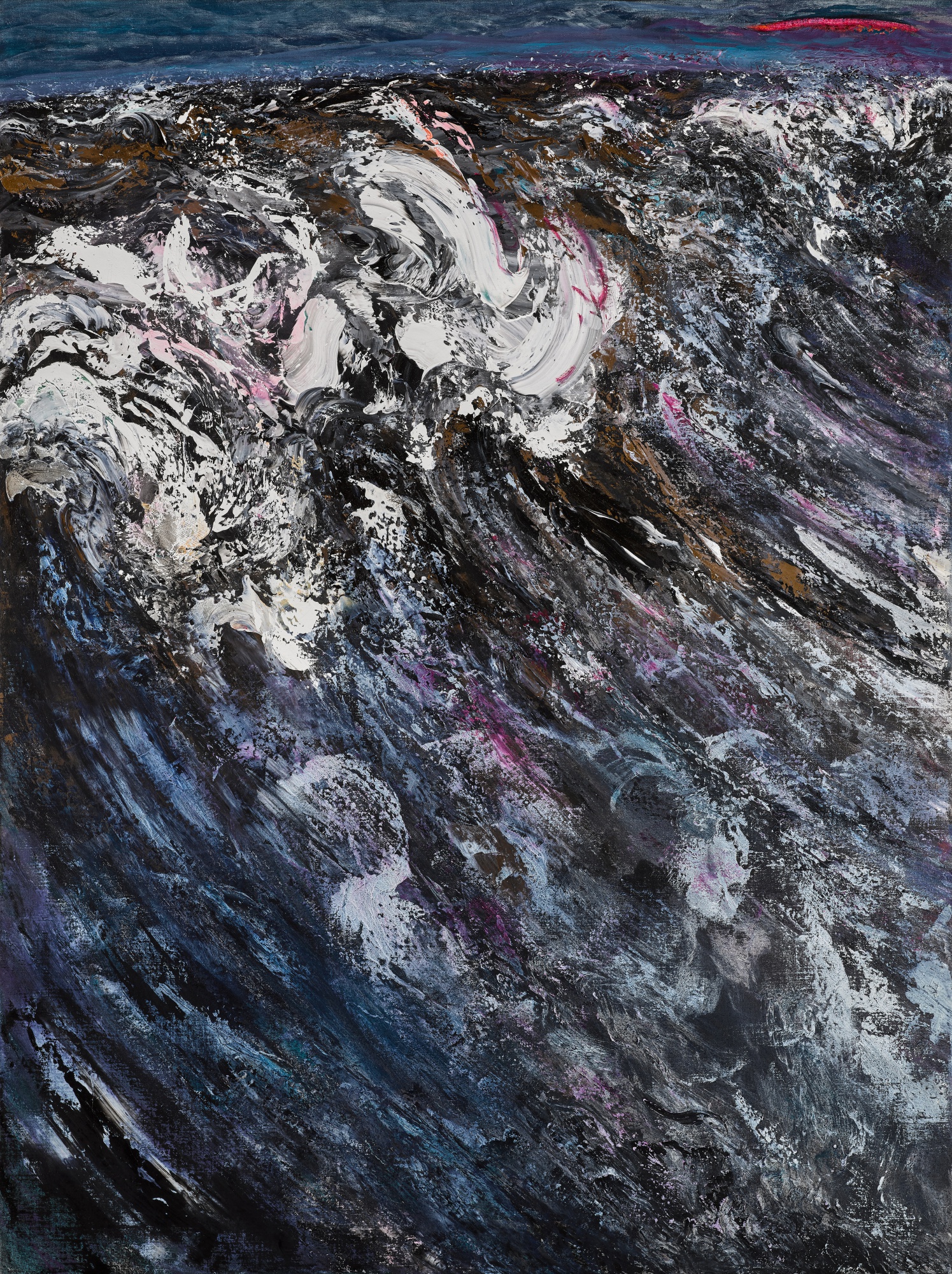
Waves at Sunset, 2009
That quality, so rare and so hard won, is what has secured her place among the most significant British artists of her generation. Born in Sudbury, Suffolk, in 1945, Hambling grew up in a landscape that would shape her sensibility permanently. The flat, luminous skies and restless coastline of East Anglia gave her an early intimacy with the natural world, particularly with water and light in their most unstable, elemental forms. She studied under the figurative painter Lett Haines and the legendary Cedric Morris at the East Anglian School of Painting and Drawing in Hadleigh, an institution that nurtured independence of spirit above all else.
She later studied at Camberwell College of Arts and the Slade School of Fine Art in London, where she absorbed the traditions of European figuration while beginning to forge something entirely her own. Her artistic development accelerated dramatically when she became the first Artist in Residence at the National Gallery in London in 1980, a landmark appointment that signalled institutional recognition of her exceptional gifts. During that residency she engaged deeply with the Old Masters, studying the way painters from Rembrandt to Velázquez handled light, emotion, and the weight of a human face. Rather than producing derivative work, she emerged from the experience more fiercely herself.
Maggi Hambling
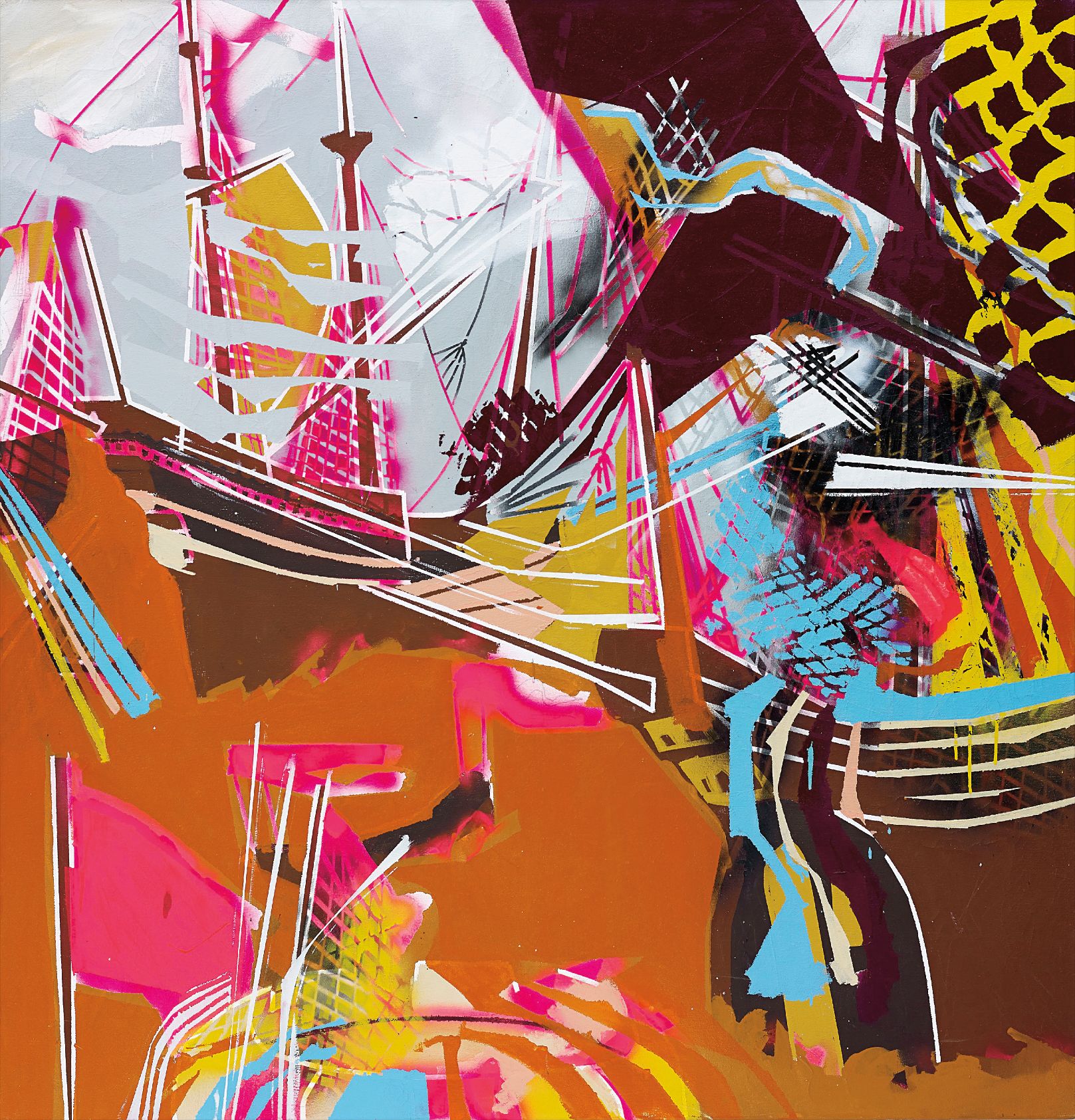
Lett Asleep
The portraits and figure studies she made during this period showed a painter utterly unafraid of psychological intensity, someone willing to push past surface likeness toward something rawer and more truthful. The series of paintings Hambling devoted to the comedian Max Wall in the 1980s remains one of her most celebrated bodies of work. Wall, with his grotesque stage persona and melancholy private depths, was a perfect subject for an artist drawn to the comedy and tragedy that coexist in every human face. These paintings, held in public and private collections across the country, established her reputation for portraiture that operates on a philosophical as well as visual level.
“The sea is the nearest thing to nothing that there is, and yet it is everything.”
Maggi Hambling, on her Wave paintings
Her later series devoted to her close friend, the jazz musician and critic George Melly, continued in this vein, capturing his exuberant personality with brushwork that seems almost to improvise in sympathy with its subject. Her painting of the writer and activist Iris Murdoch, acquired by major institutions, stands as one of the defining portraits of late twentieth century British art. Hambling's relationship with the sea deserves particular attention because it represents a sustained and deepening meditation rather than a motif. Her Wave paintings, developed from direct observation on the Suffolk coast near Aldeburgh, use thick, churning oil paint to capture not merely the appearance of waves but their force, their rhythm, and their indifference to human presence.
Maggi Hambling
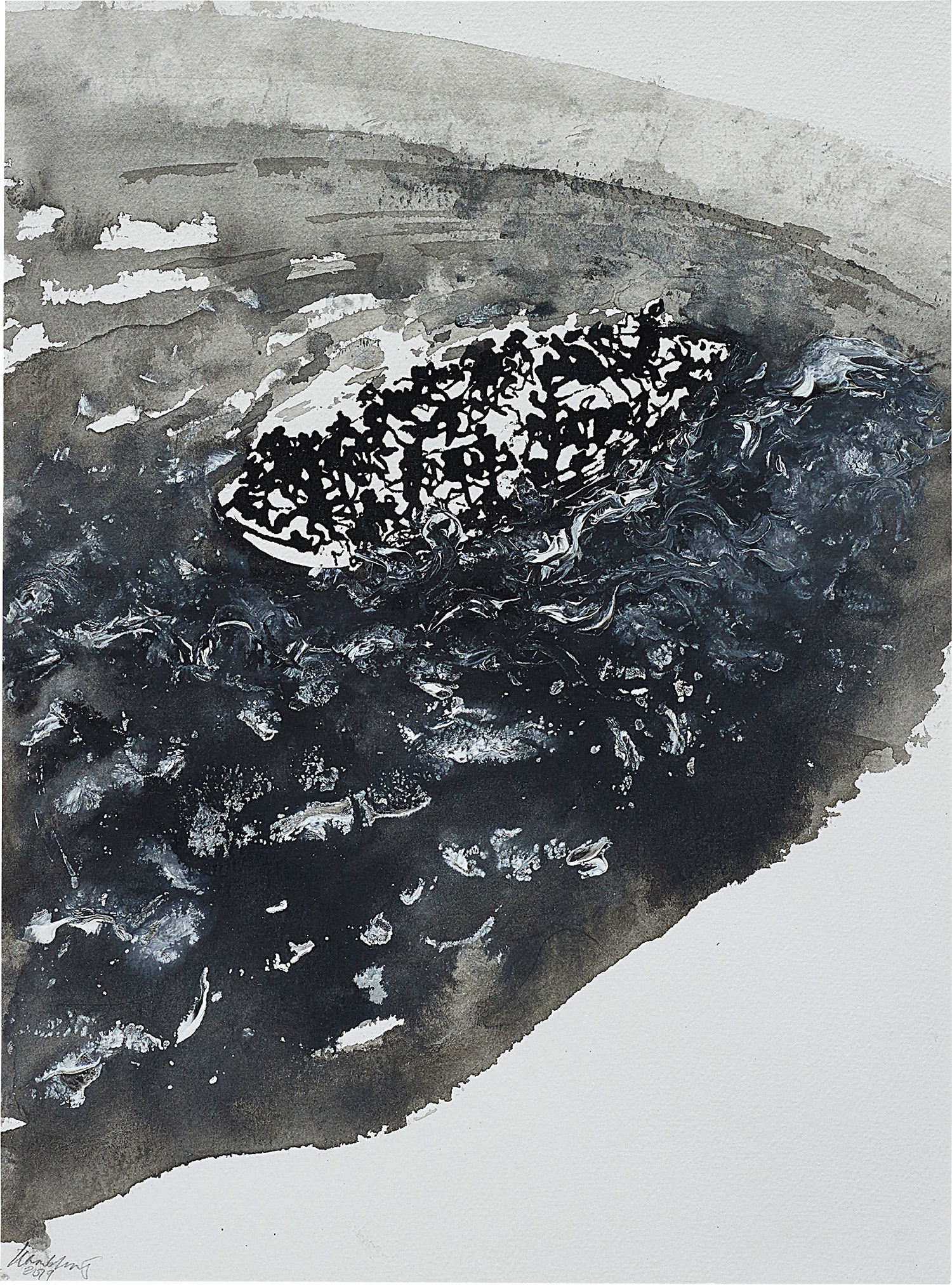
Maggi Hambling, 2019
Works such as Waves at Sunset from 2009 demonstrate her ability to locate the sublime in the immediate and the physical. The surface of such a canvas is an event in itself, built up with a physical urgency that recalls the elemental forces being described. For collectors, these Wave paintings represent some of the most sought after and emotionally resonant works in her output, combining landscape tradition with something far more primal. As a sculptor, Hambling has courted both controversy and conversation in equal measure.
Her monument to Oscar Wilde, unveiled in Adelaide Street near Trafalgar Square in London in 1998, depicts Wilde emerging from a large sarcophagus of dark granite, one hand extended holding a cigarette, wit and sorrow balanced on a single bronze face. The work invited debate precisely because it refused sentimentality and easy commemoration. Her memorial to the victims of the AIDS crisis, and her large scallop shell sculpture on the beach at Aldeburgh dedicated to Benjamin Britten, have similarly generated public discussion, which she has always welcomed as evidence that art is doing its proper work in the world. For collectors approaching Hambling's work, the range of her practice across painting, drawing, and printmaking means there are meaningful points of entry at many levels.
Maggi Hambling
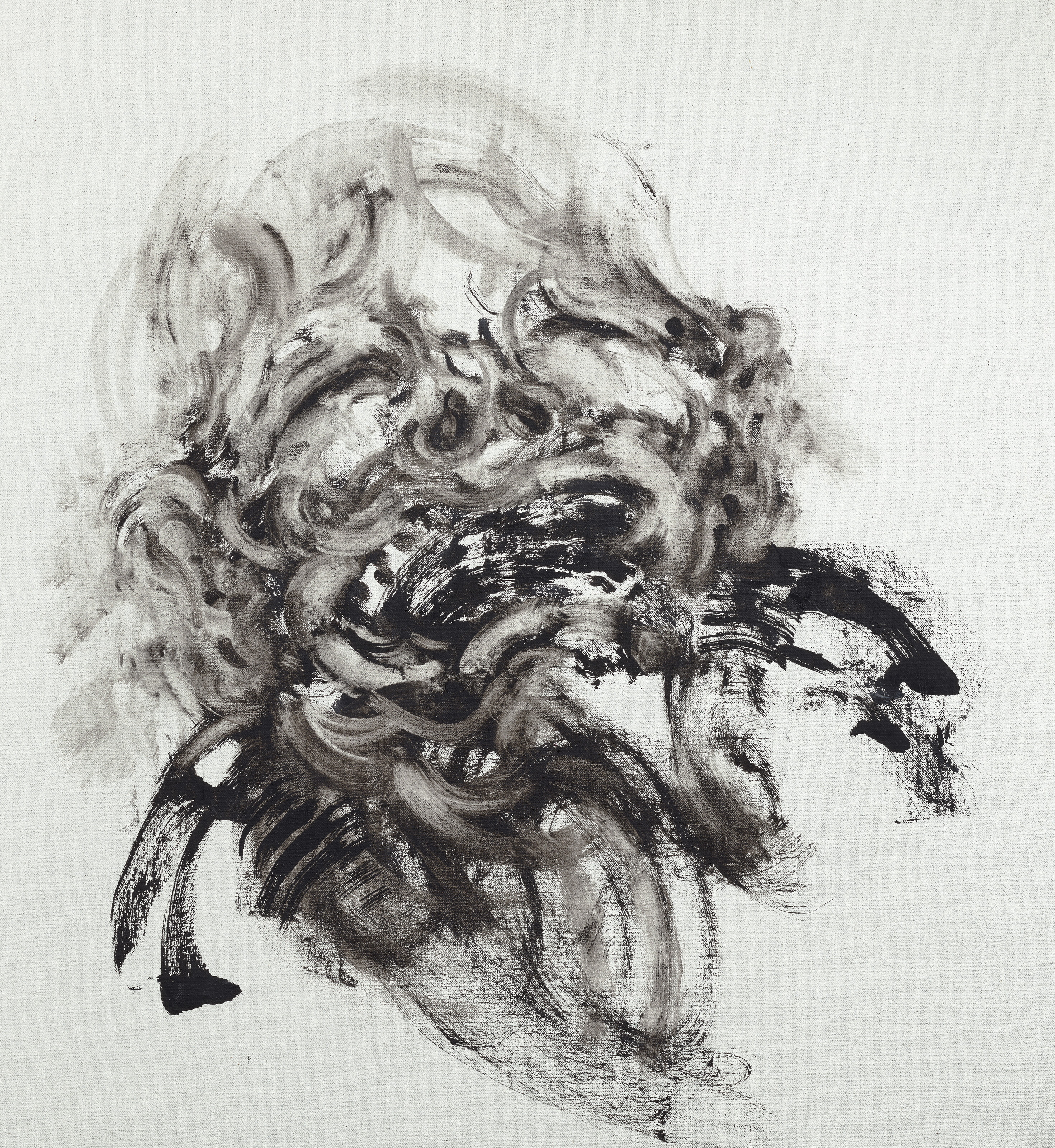
Laughing II
Her drawings and works on paper, including ink and acrylic studies that capture a face or a wave in a few electrifying marks, offer the chance to see her instinctive mark making at its most direct and unmediated. Paintings from her Wave series and her figurative portraits are the works most actively sought by serious collectors. The market for her work has remained robust and consistent, reflecting both institutional esteem and genuine public affection. Galleries including Marlborough Fine Art have represented her work to international audiences, and her presence in major public collections including the National Portrait Gallery and Tate reinforces her standing.
In the broader context of British art history, Hambling occupies a singular position. She shares with painters such as Frank Auerbach and Leon Kossoff a commitment to expressive, loaded surfaces and a refusal of easy elegance, yet her emotional register is distinctly her own, warmer and more exuberant, shot through with humour and sensuality. Like her mentor Cedric Morris, she has never subordinated feeling to fashion. International comparisons might reach toward the energies of Chaim Soutine or the late works of de Kooning, artists for whom the act of painting is itself a form of reckoning with life.
What makes Hambling matter today, beyond her extraordinary body of work, is the example she sets. She is an artist who has painted grief and desire and fury and joy without flinching, who has taken on public commissions knowing they would provoke argument, and who has continued to develop and surprise well into the later decades of her career. Her work reminds us that painting can still be urgent, that a brush loaded with paint can tell the truth about what it feels like to be alive. For collectors who understand that art at its best is not decoration but encounter, Hambling's work offers something genuinely rare: the chance to live alongside an intelligence that sees the world with uncompromising clarity and undiminished love.
Explore books about Maggi Hambling