Lucy Bull
Lucy Bull Paints the World Into Being
Artist Spotlight · The Collection Editorial
Something extraordinary happens when you stand before a Lucy Bull painting. The canvas seems to breathe. Swirling forms pull inward and outward simultaneously, color bleeds into color with the confidence of someone who has made a deep peace with uncertainty, and the viewer finds themselves suspended in a space that feels at once interior and infinite. Bull, who came to wider international attention through her exhibitions at Night Gallery in Los Angeles, has steadily built one of the most compelling bodies of work in contemporary American abstraction, earning passionate collectors across continents and the kind of critical attention that follows artists whose vision is genuinely original.

Lucy Bull
The Morning Effect 晨朝效應
Born in 1990, Lucy Bull belongs to a generation of painters who inherited both the full weight of abstraction's history and the freedom to remake it entirely on their own terms. Growing up American and coming of age artistically in a moment when painting had been declared dead so many times it had become almost fashionable to revive it, Bull chose to engage with the medium not as a provocation but as a genuine home. Her formation as an artist reflects a deep commitment to the act of painting itself, to the physical and psychological experience of standing before a surface and coaxing something alive out of pigment and material. That commitment has never wavered, and it gives her work a quality of hard won authenticity that resonates immediately.
Bull's practice is built around the wet on wet technique, a method that demands both precision and surrender. Paint applied to a wet surface moves, bleeds, and responds to itself in ways that cannot be fully controlled, and it is in this productive tension between intention and accident that Bull's paintings find their character. She works at scale, and the scale matters enormously. These are not paintings you encounter from a polite distance.
Lucy Bull
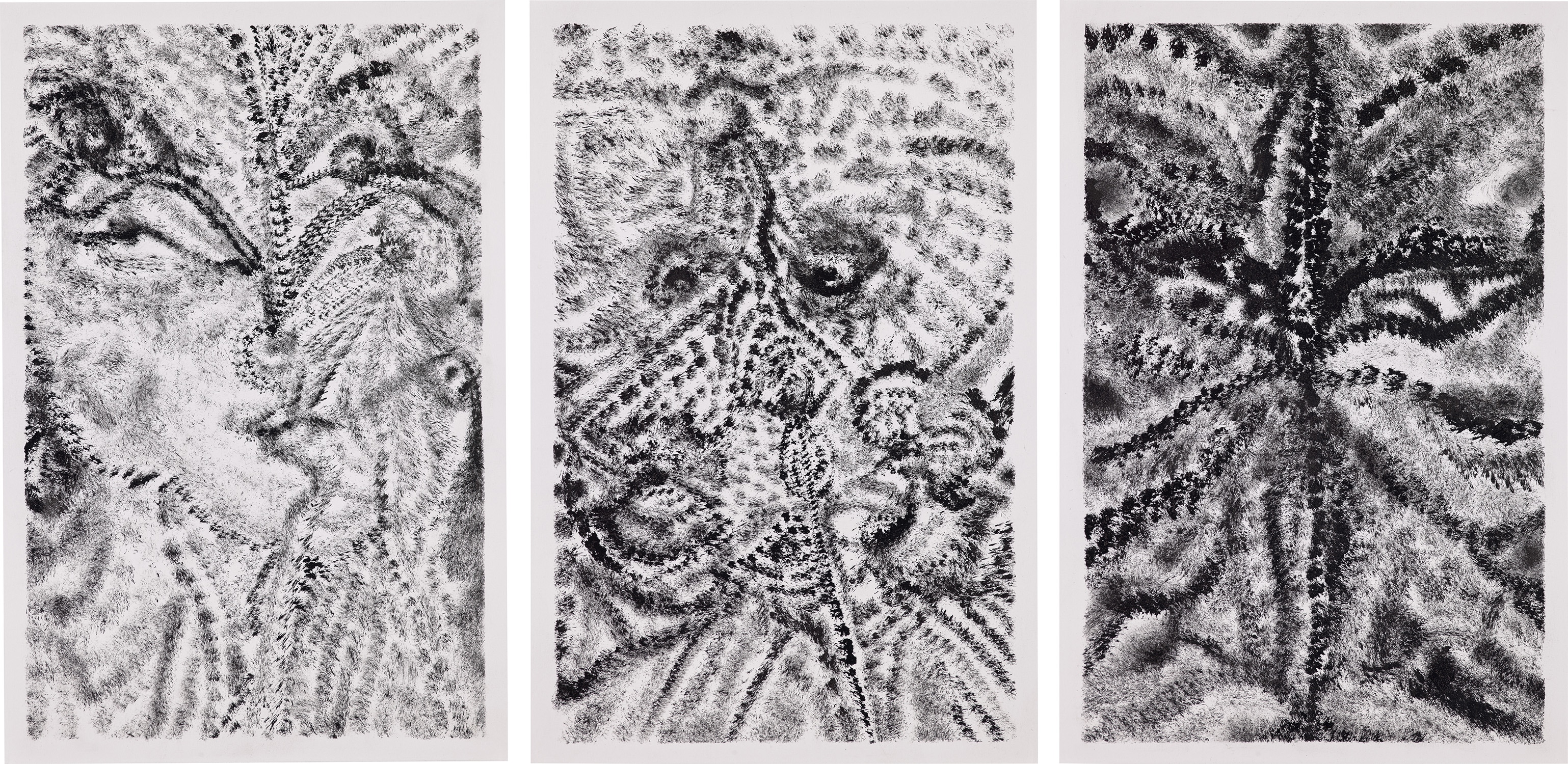
Three works: (i), 2018
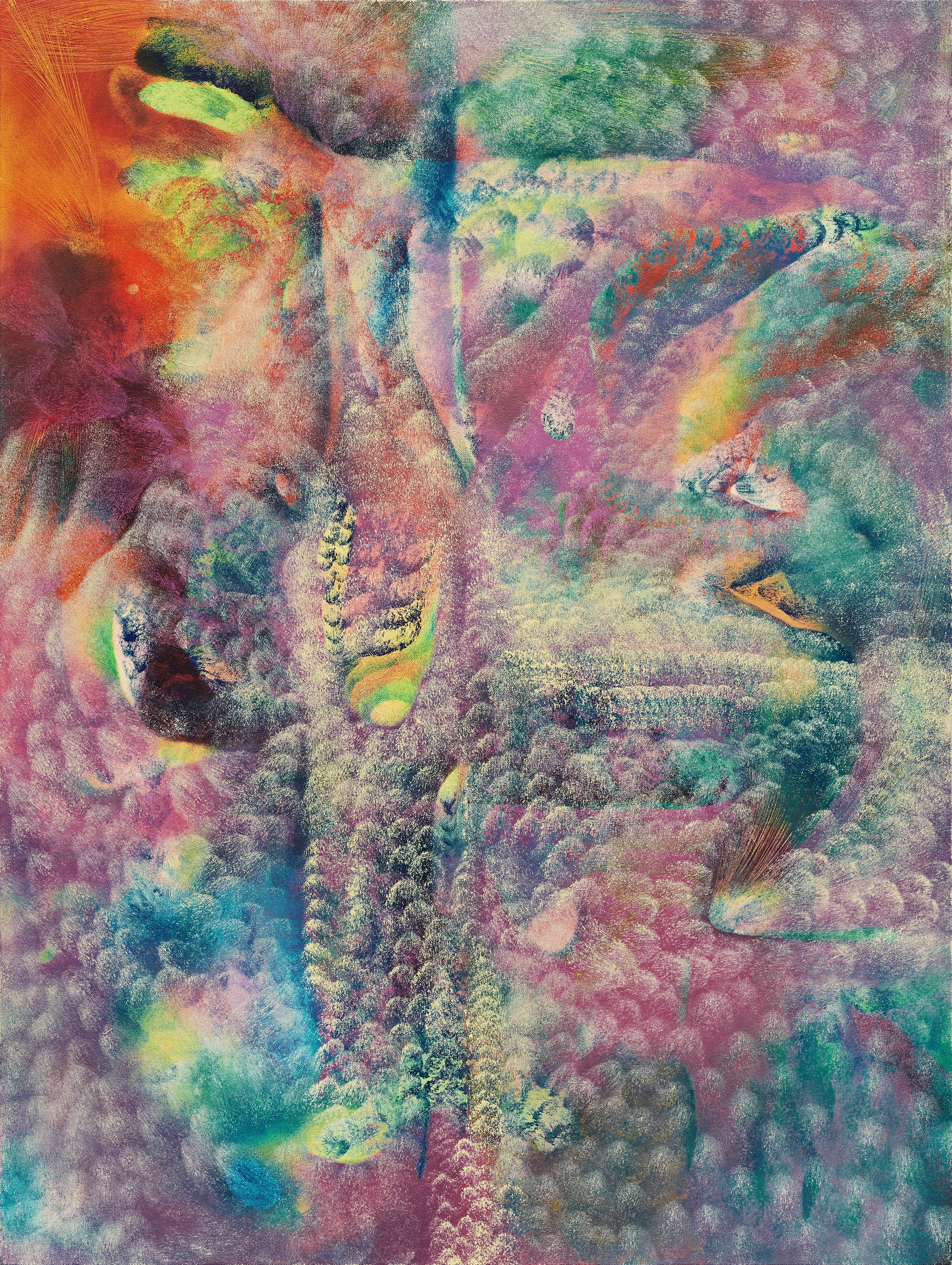
They surround the eye, activating peripheral vision and drawing the body into a relationship with color and form that feels almost somatic. Critics and collectors alike have noted how her canvases evoke both landscape and the human body without depicting either directly, existing instead in a liminal register that is entirely her own. Among her most celebrated works, the oils on linen such as "The Morning Effect" (titled bilingually as "晨朝效應" in a nod to cross cultural resonance) and "Time Beads" ("時光珠子") demonstrate the full range of her ambition. The bilingual titling itself speaks to something important about Bull's orientation: she is an artist who thinks about how work travels, how meaning translates, and how art can create bridges across very different visual and linguistic cultures.
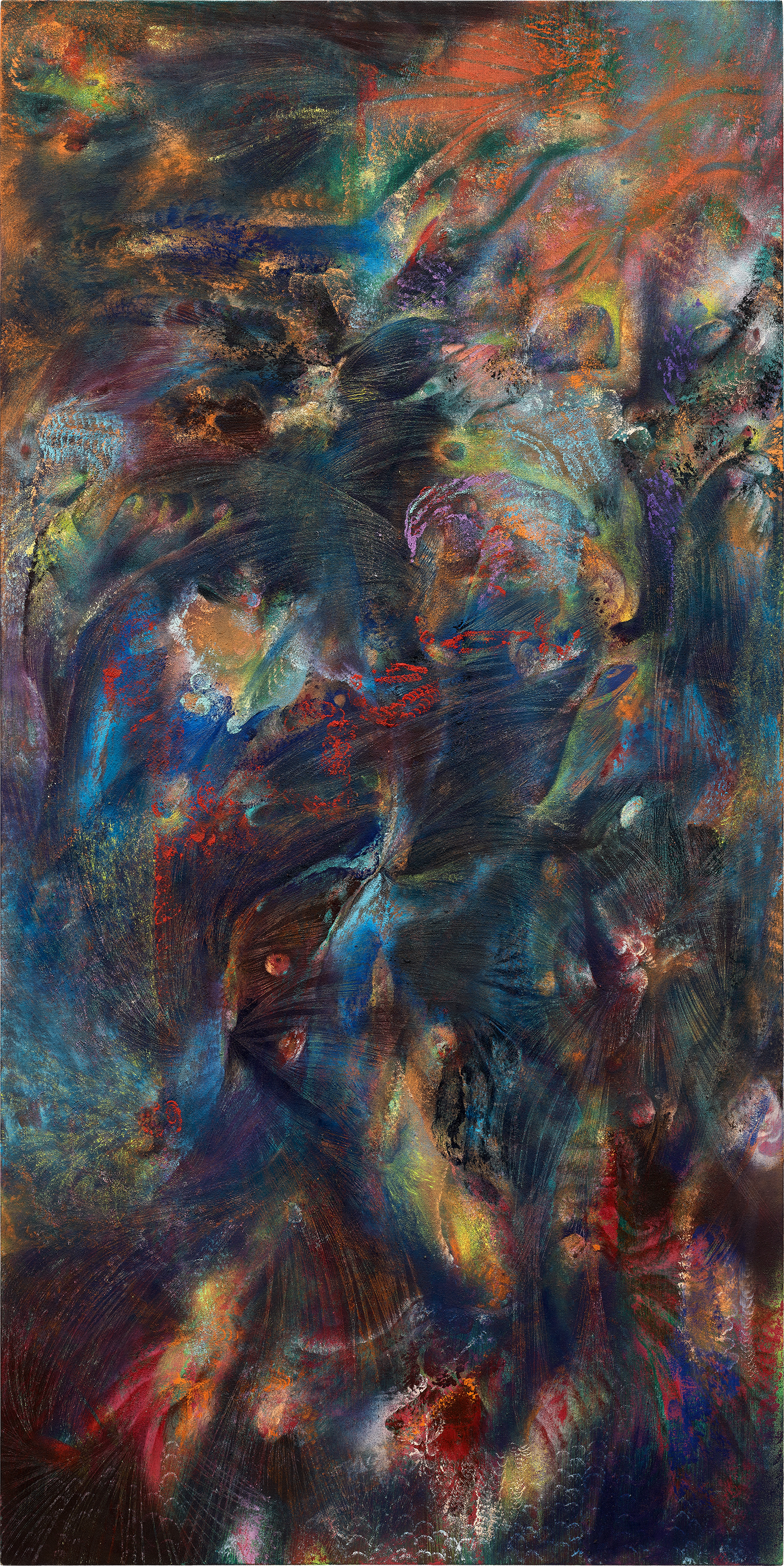
"Special Guest" from 2019 and "Giving Tree" from the same year show her command of linen as a surface, its warm tooth giving the oil paint a particular luminosity that canvas does not always offer. The 2020 oils on canvas, including "Dark Companion," "False Tail," "Claps Jaw," and "8:50," read almost as a suite, a concentrated period of work that refined and deepened the concerns she had been developing across the preceding years. It is worth noting that Bull's practice is not limited to large scale oil painting. Works on paper, including charcoal drawings and pieces executed in marker and pen on calligraphy paper, reveal an artist who thinks rigorously about line and mark in their most distilled form.
Lucy Bull
Dark companion, 2020
"Three Works: (i)" from 2018 demonstrates a facility with charcoal that many painters who work primarily in oil never develop, and "Untitled (A Double Sided Work)" from 2019, made with marker and pen on calligraphy paper, is a genuinely surprising object. Double sided works demand a different kind of engagement, asking the viewer to move around and through the piece rather than settling into a fixed frontal relationship. It is a quietly radical gesture from an artist who is always thinking about the full dimension of the viewing experience. From a collecting perspective, Bull represents exactly the kind of opportunity that informed collections are built around.
She is an artist with a clear and coherent vision, a rigorous and evolving practice, and an international profile that continues to grow. Her works on linen from 2019 and the focused group of oils on canvas from 2020 already read as key moments in a developing career, and the bilingual works point toward an artist whose reach across global collecting markets is intentional and expanding. Collectors drawn to the lineage of American abstract painting, particularly those who admire the color field painters and the expressive abstract tradition, find in Bull an artist who honors that lineage while refusing to be contained by it. In the broader context of art history, Bull occupies a productive position in conversation with artists who have explored the intersection of abstraction, color, and bodily experience.
Lucy Bull
Time Beads 時光珠子
Her work invites comparison with painters who have similarly used scale and chromatic intensity to create immersive environments, from the atmospheric fields of Mark Rothko to the more turbulent energies of Joan Mitchell, and among her contemporaries, she shares a commitment to painting as lived experience with artists like Cecily Brown and Amy Sillman. But comparisons only go so far with Bull. Her voice is genuinely her own, rooted in a specific way of seeing and making that becomes more distinctly itself with each body of work. What Lucy Bull ultimately offers, to viewers, to collectors, and to the larger conversation about what painting can do right now, is a reminder that abstraction is not an exhausted language but a living one.
Her canvases are generous objects. They do not demand that you decode them or situate them within an art historical argument before you are permitted to feel their force. They ask only that you be present, that you give them the time and physical proximity they were made for. In an art world that sometimes rewards cleverness over feeling, Bull insists on painting that moves you first and rewards thinking second.
That is not a small thing. It is, in fact, exactly what the best art has always done.