Lucien Smith
Lucien Smith, Art's Most Fearless Young Visionary
Artist Spotlight · The Collection Editorial
In the spring of 2023, when the art world gathered in New York for its seasonal rituals of openings and auction previews, the name Lucien Smith surfaced again and again in the conversations that matter most: those held quietly between serious collectors and their trusted advisors. His works were circulating, being reconsidered, being coveted anew. For an artist still in his early thirties, Smith has already lived several creative lifetimes, and the renewed appetite for his output speaks to something deeper than trend. It speaks to genuine, durable artistic power.
Lucien Smith
vinyl, foam and plywood, in artist's frame, 2011
Smith was born in 1989 and came of age in a New York that was simultaneously old and entirely new, a city still metabolising the wreckage of the 2008 financial crisis while birthing the cultural conditions that would define the following decade. He attended The Cooper Union in Manhattan, one of the most rigorous and selective fine arts institutions in the United States, where the tradition of conceptual rigour sits alongside a fierce commitment to craft. Cooper Union graduates carry a particular intellectual seriousness, and Smith absorbed that culture deeply while also pushing hard against its boundaries. His formation there gave him a foundation in art history and critical thinking that would later allow him to make work that felt both instinctive and layered with meaning.
It was at Cooper Union that Smith first developed the impulse to treat the studio as a laboratory rather than a sanctuary. He was drawn to process, to accident, to the question of what happens when the artist steps back and lets physics, gravity, and material do some of the deciding. This sensibility would crystallise into his most celebrated early work: the Rain Paintings, begun around 2011 and 2012, in which Smith affixed a fire extinguisher nozzle to a long pole and dispersed paint across large unprimed canvases from a considerable distance. The results were explosively beautiful, fields of radiating splatter and atmospheric drift that recalled Abstract Expressionism while utterly refusing its machismo and its mythology.
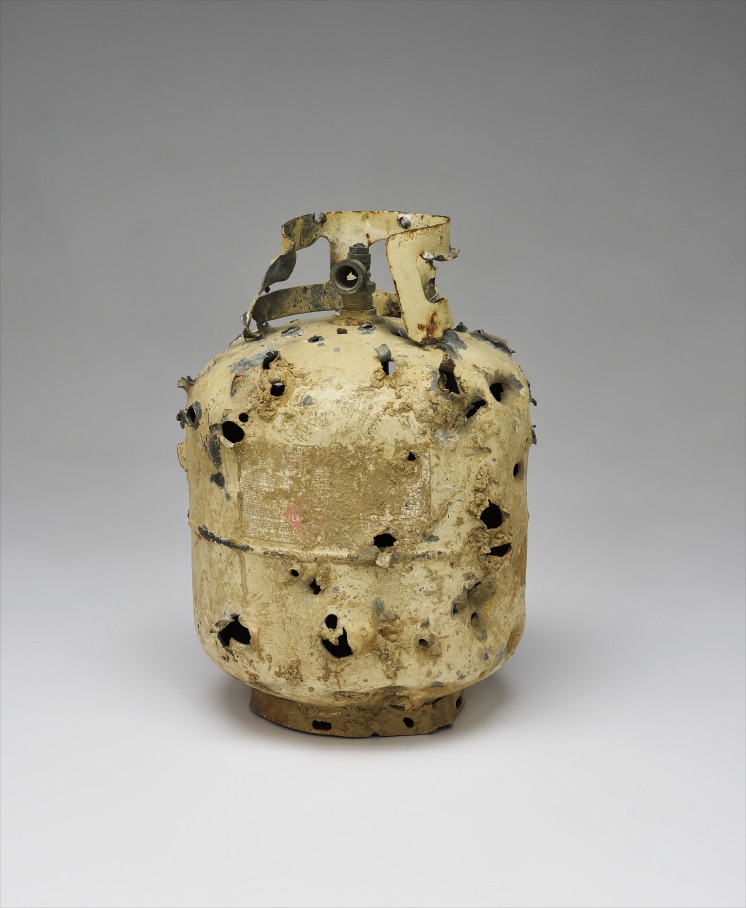
Lucien Smith
propane canister, 2013
These were paintings made with air and pressure and chance, and they announced a genuinely new voice. The Rain Paintings brought Smith to immediate international attention. Works from this period, including pieces executed on unprimed canvas with acrylic in 2012, entered significant collections and appeared at exhibitions at galleries including Salon 94 in New York. The critical response was extraordinary for someone so young.
The New York Times dubbed him the art world's wunderkind, and Forbes named him to its 30 Under 30 list for Art and Style not once but twice, a distinction that underscored just how thoroughly he had captured the imagination of both the art world and the broader cultural conversation. Yet Smith, characteristically, did not linger. Even as the market for his Rain Paintings accelerated, he was already thinking about what came next. What followed was a practice of relentless and sincere expansion.
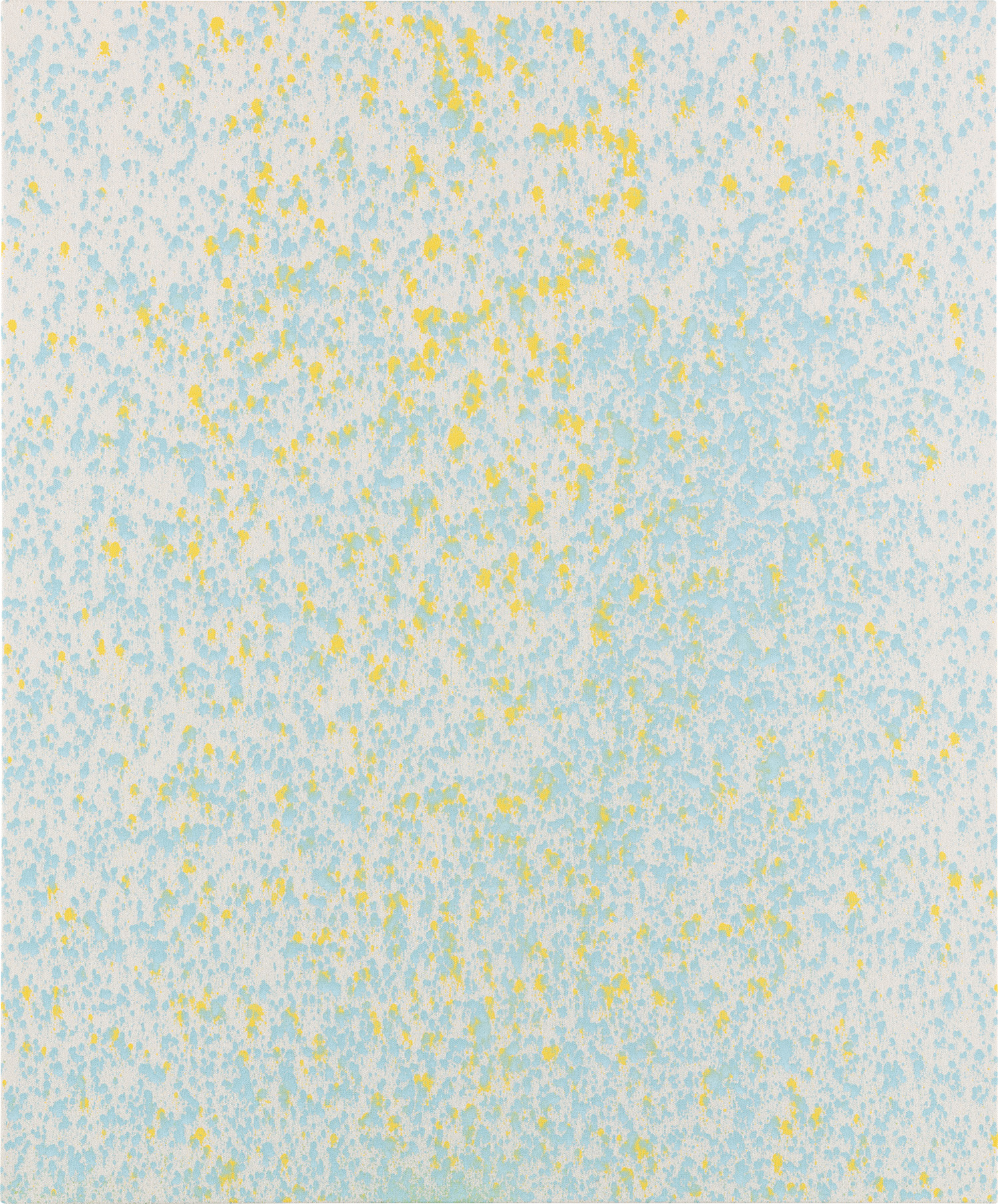
Lucien Smith
7th Heaven 2, 2012
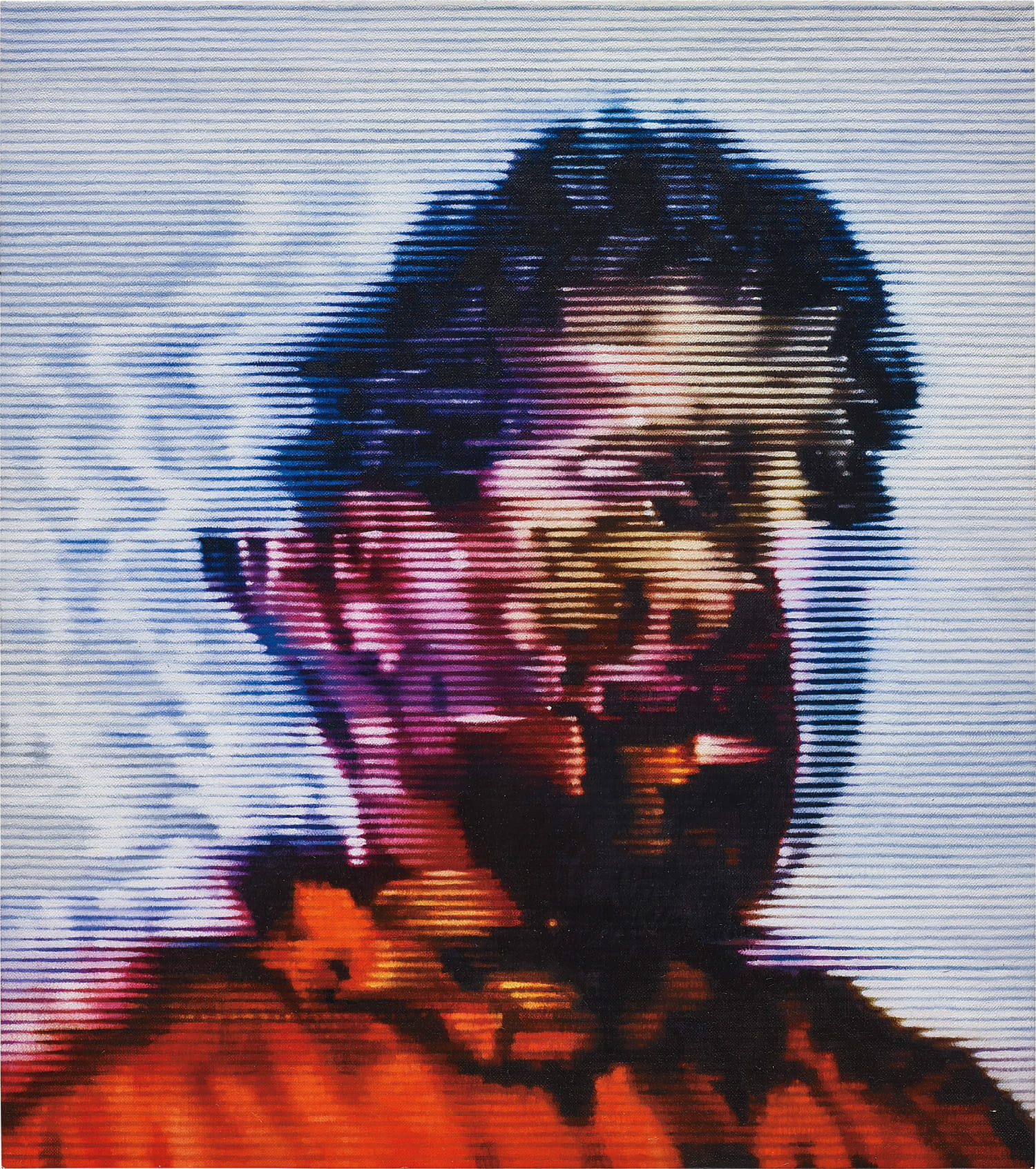
Smith moved through sculpture, through works incorporating industrial materials, through paintings made with enamel on canvas laid on panel, and through deeply personal figurative works in oil. A piece such as Hobbes, The Rain Man, and My Friend Barney Under the Sycamore Tree reveals a painterly intimacy quite different from the spectacular mechanised gestures of the Rain Paintings, and it demonstrates Smith's willingness to be vulnerable on the canvas. His Flood Paintings from 2018, executed in oil, brought a meditative quality to his work, an almost environmental awareness that felt attuned to the anxieties of the moment without being reducible to them. Works like Rally against apathy draws small crowd, incorporating aluminium trays, moulding paste, and enamel on gessoed canvas, show a sculptor's appetite for material play existing happily alongside a painter's concern for surface and light.
Smith's collaborations with figures from outside the traditional art world have extended his cultural reach considerably. His creative dialogue with the late Virgil Abloh, the designer and cultural polymath, and with the musician Travis Scott placed him at the intersection of contemporary art and the broader creative culture that surrounds it. These relationships were never merely strategic. They reflected a genuine shared sensibility: a belief that creativity does not respect institutional borders, and that the most interesting work happens when disciplines collide.
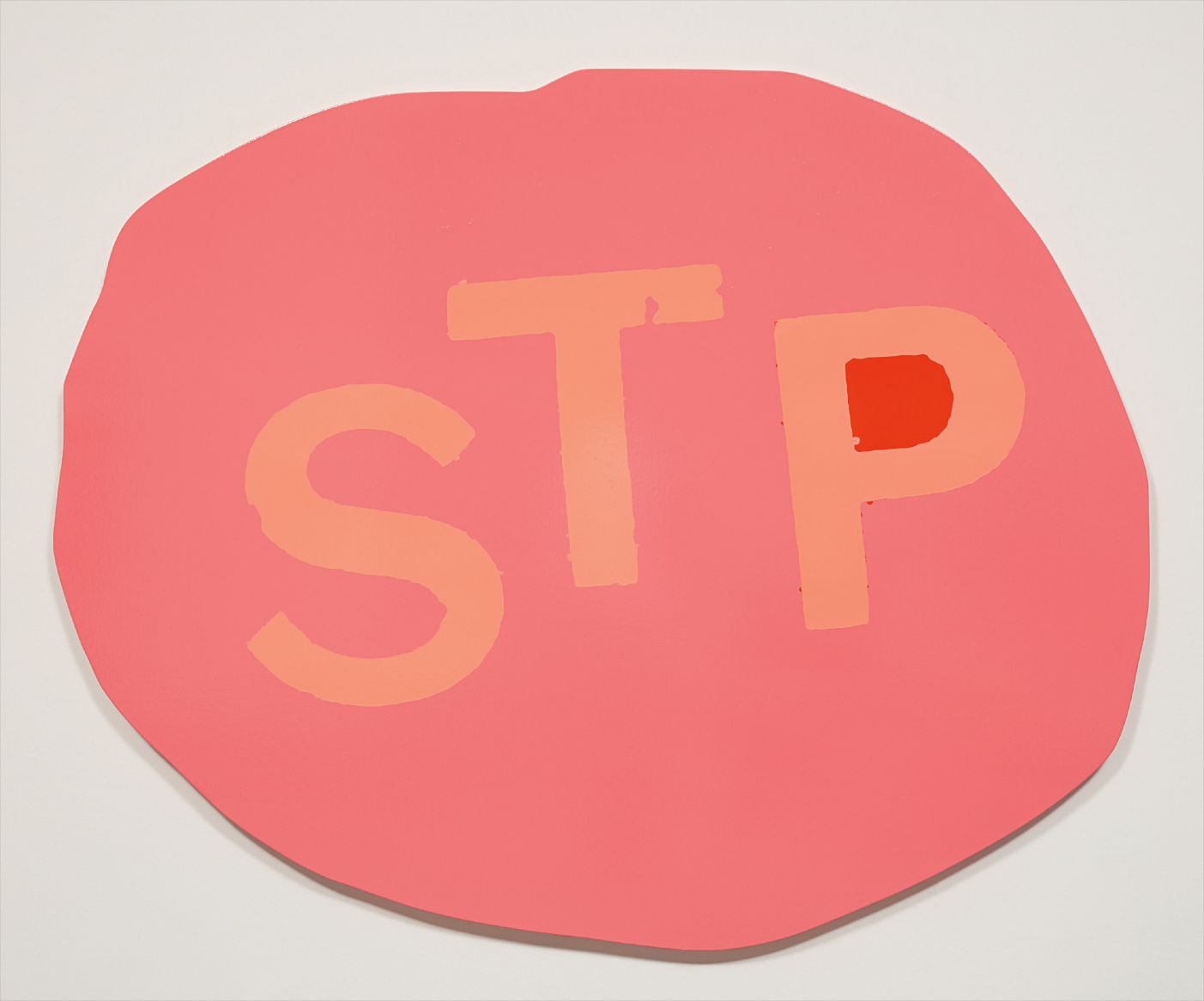
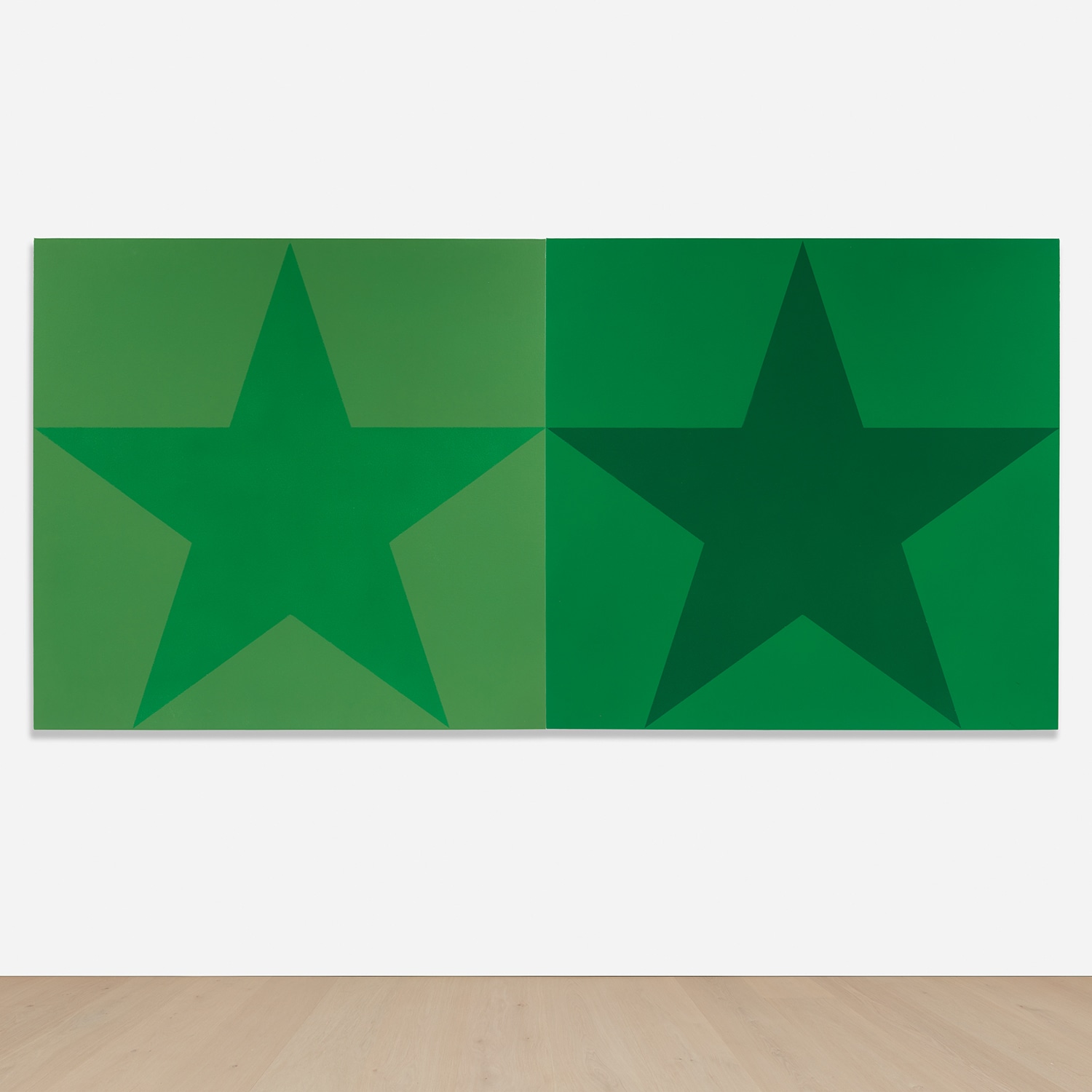
Lucien Smith
STP (709c, 170c, 171c), 2014
Smith engaged with these worlds on his own terms, and the collaborations produced outcomes that enriched both parties. For collectors, Smith's work presents an unusually compelling proposition. His output spans a remarkable range of media and scale, from intimate editions such as the screenprint Cats and Dogs, published in a numbered edition of one hundred by Exhibition A in New York, to monumental canvases that command entire walls. Works like STP from 2014, with its precise enamel application on canvas laid on panel, and the toner, pigment and solvent work TBT demonstrate Smith's technical adventurousness and his commitment to exploring what paint and surface can do when pushed toward unfamiliar territory.
The early works on unprimed canvas carry particular historical weight as documents of a breakthrough moment in contemporary painting. Collectors drawn to artists who sit at the intersection of critical seriousness and cultural vitality will find in Smith a figure whose market trajectory reflects genuine art historical significance rather than mere fashionability. In the broader context of contemporary abstract and post conceptual painting, Smith occupies a fascinating position. His work enters into conversation with artists who have similarly interrogated the boundary between control and surrender in painting, and who have asked what gestural abstraction can mean in a post digital world.
He shares certain preoccupations with peers who came of age in the same cultural moment, artists grappling with how to make painting feel urgent again after decades of post modern ironisation. Smith's answer has always been sincerity: a willingness to mean it, to invest genuinely in the act of making, and to trust that the viewer will sense that investment. Lucien Smith matters today because he has refused to be defined by any single gesture, however spectacular that gesture may have been. The Rain Paintings could have been a ceiling.
Instead they proved to be a doorway. More than a decade into a career that has already produced works held in serious private and institutional collections, exhibited at Gagosian and Skarstedt among others, and celebrated across two continents, Smith continues to ask the same question with undiminished appetite: what else is possible. That question, and the body of work it has generated, is precisely what the best art collecting is made for.