Louise Fishman
Louise Fishman: Power, Paint, and Pure Feeling
Artist Spotlight · The Collection Editorial
“I want the painting to have a life of its own. I want it to surprise me.”
Louise Fishman, interview
When the Cheim & Read gallery in New York mounted a major survey of Louise Fishman's work, it confirmed what many in the art world had long understood: here was one of the most formidable painters of her generation, an artist whose canvases demanded both physical and emotional reckoning. Fishman's reputation had been building quietly and then all at once, the way rivers gather before they surge. By the time of her death in 2021, she had secured her place not only in the history of American abstraction but in the broader story of what painting can do when it refuses to separate the personal from the universal. Louise Fishman was born in Philadelphia in 1939 into a family steeped in art and ideas.
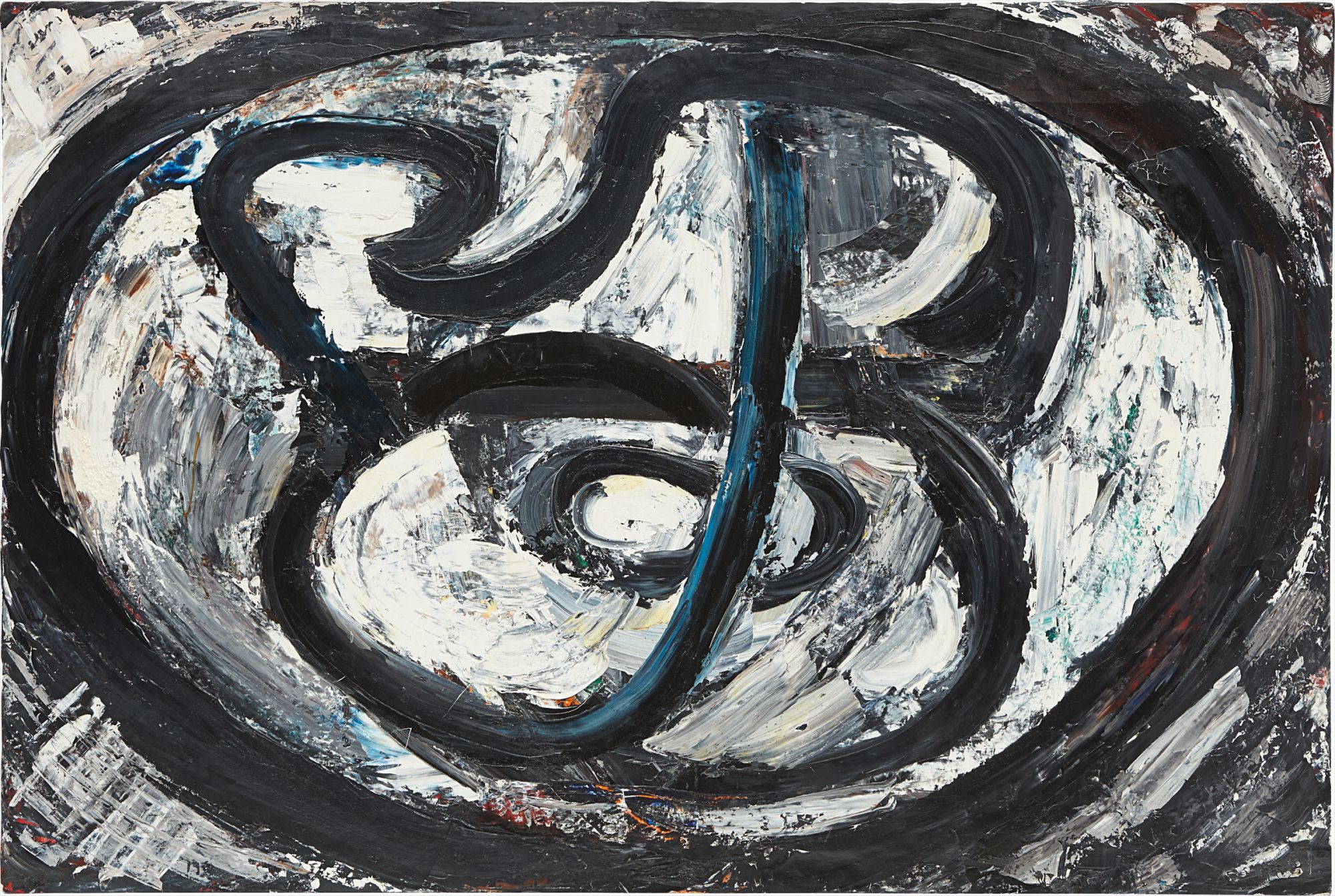
Louise Fishman
Tabernacle
Her aunt was the painter Gertrude Fisher Barrer, a second generation Abstract Expressionist who gave the young Fishman early and intimate access to serious studio practice. She studied at the Philadelphia College of Art and later at the University of Illinois, arriving in New York in the 1960s just as the city was convulsing with new movements and countercultural energy. The feminist art movement of the early 1970s became a crucible for her development, and she was deeply involved in activist circles that pushed women artists to claim space they had long been denied. Fishman's early radicalism was not only political but formal.
In 1973 she made a striking series of small paintings titled Angry Paintings, each one inscribed with the name of a woman she admired, from Billie Holiday to Käthe Kollwitz to her own mother. These works were acts of dedication as much as they were aesthetic statements, insisting that abstraction could carry the weight of names, histories, and love. They were also a kind of clearing, a way of burning through constraint to find what lay beneath. After this series she pulled back for a period, retreating from painting to reckon with what she wanted her practice to truly be.
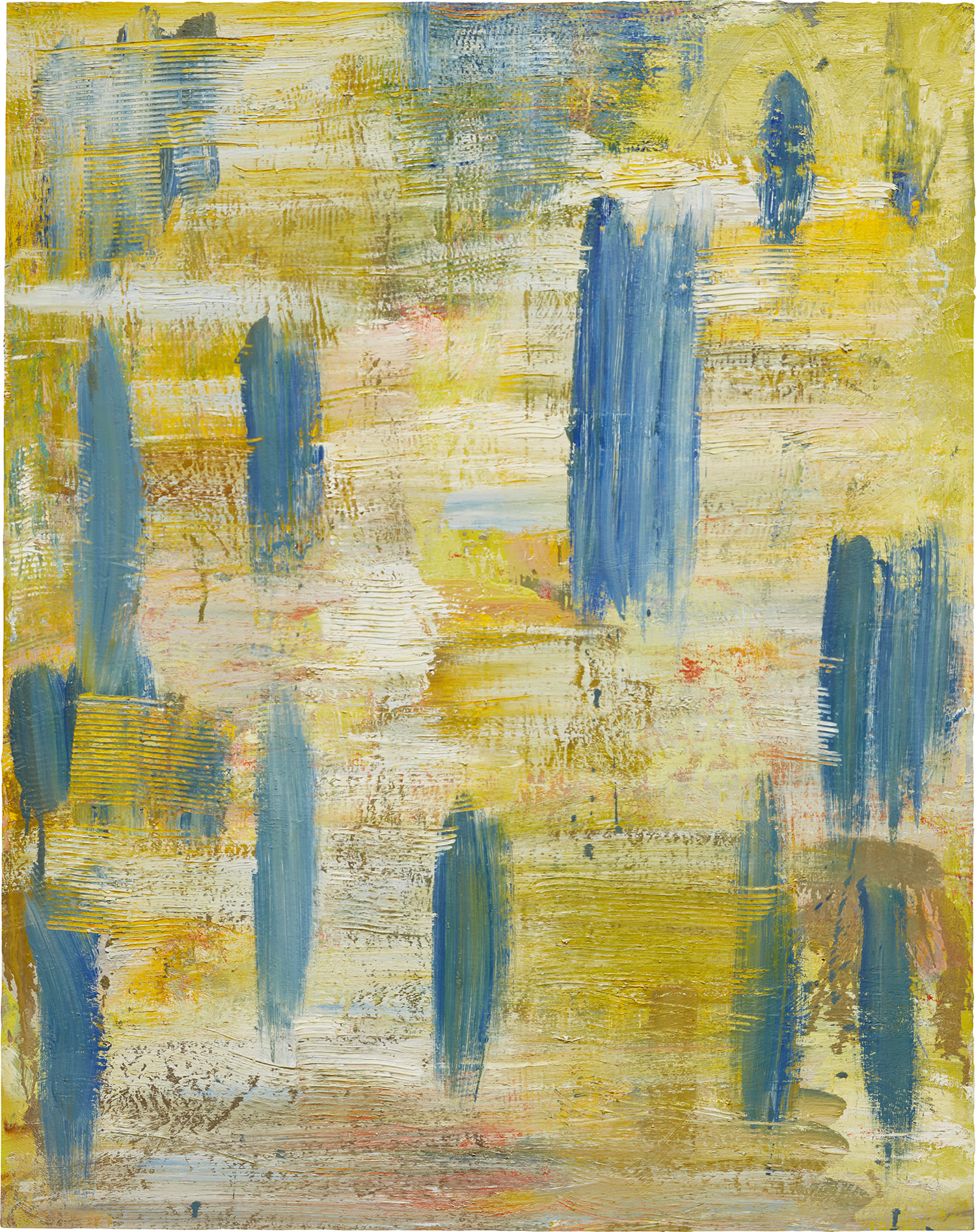
Louise Fishman
I Like a Church, 2000
The breakthrough came in 1977 when Fishman traveled to Czechoslovakia and Poland and visited concentration camp sites including Auschwitz. The experience shattered and reshaped her simultaneously. Back in New York, she began the work that would define her mature practice: large scale gestural paintings in which dense, layered brushwork seemed to carry the physical memory of that confrontation with history and grief. Her Jewish identity, always present, became inseparable from her painterly language.
Works from the late 1970s and 1980s carry titles drawn from Jewish liturgy and tradition, including Yikhudim from 1979 and the devastating Kaddish from 1988, the latter named for the Jewish prayer of mourning. These are not illustrative works. They do not depict. They embody.
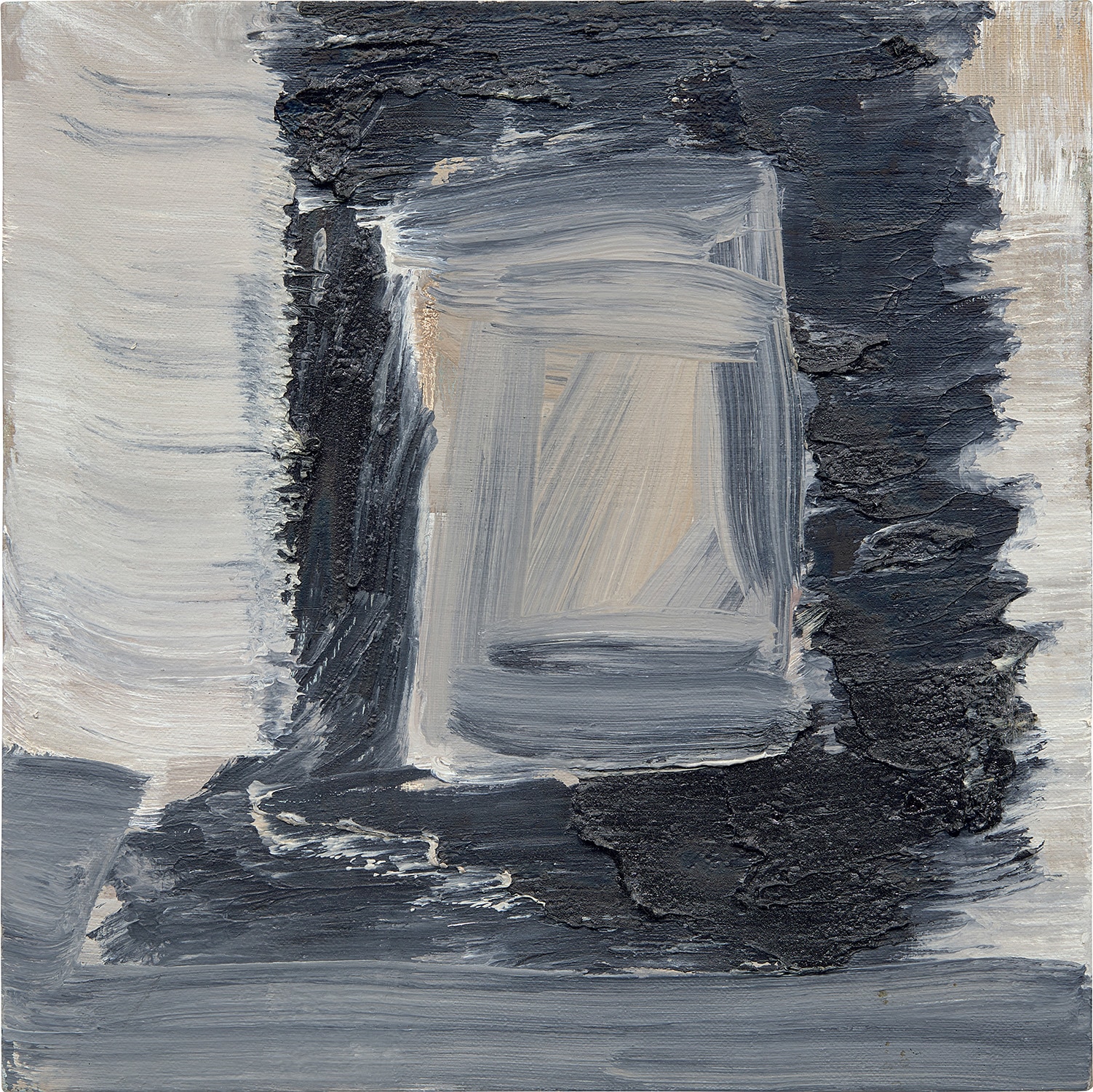
Louise Fishman
Door to the Studio, 1994
Fishman's signature approach involved building up surfaces through repeated, muscular gestures, often working the canvas or linen over long periods, scraping back and reapplying paint until the surface achieved a density that felt geological. She worked on the floor as well as the wall, bringing a full bodied physical commitment to the act of painting that placed her in direct conversation with the legacy of Abstract Expressionism while insisting on her own terms within it. Her grids, which appear as organizing structures beneath or within the gestural layers, are not cool or conceptual in the manner of minimalism. They are armatures for feeling, scaffolding that holds turbulence in place just enough for the viewer to enter it.
Works like Tabernacle and Magma from 1989 show this tension at its most eloquent: structure and release in constant, productive negotiation. Among the works available on The Collection, Door to the Studio from 1994 offers a compelling entry point for new collectors. It is a work that is simultaneously intimate and expansive, rooted in the daily ritual of the artist's practice yet opening outward into something that feels mythic. Violets for My Furs from 2010, painted on jute, demonstrates how Fishman continued to push her materials late in her career, the rough texture of the support adding yet another layer of friction and physicality to the painted surface.
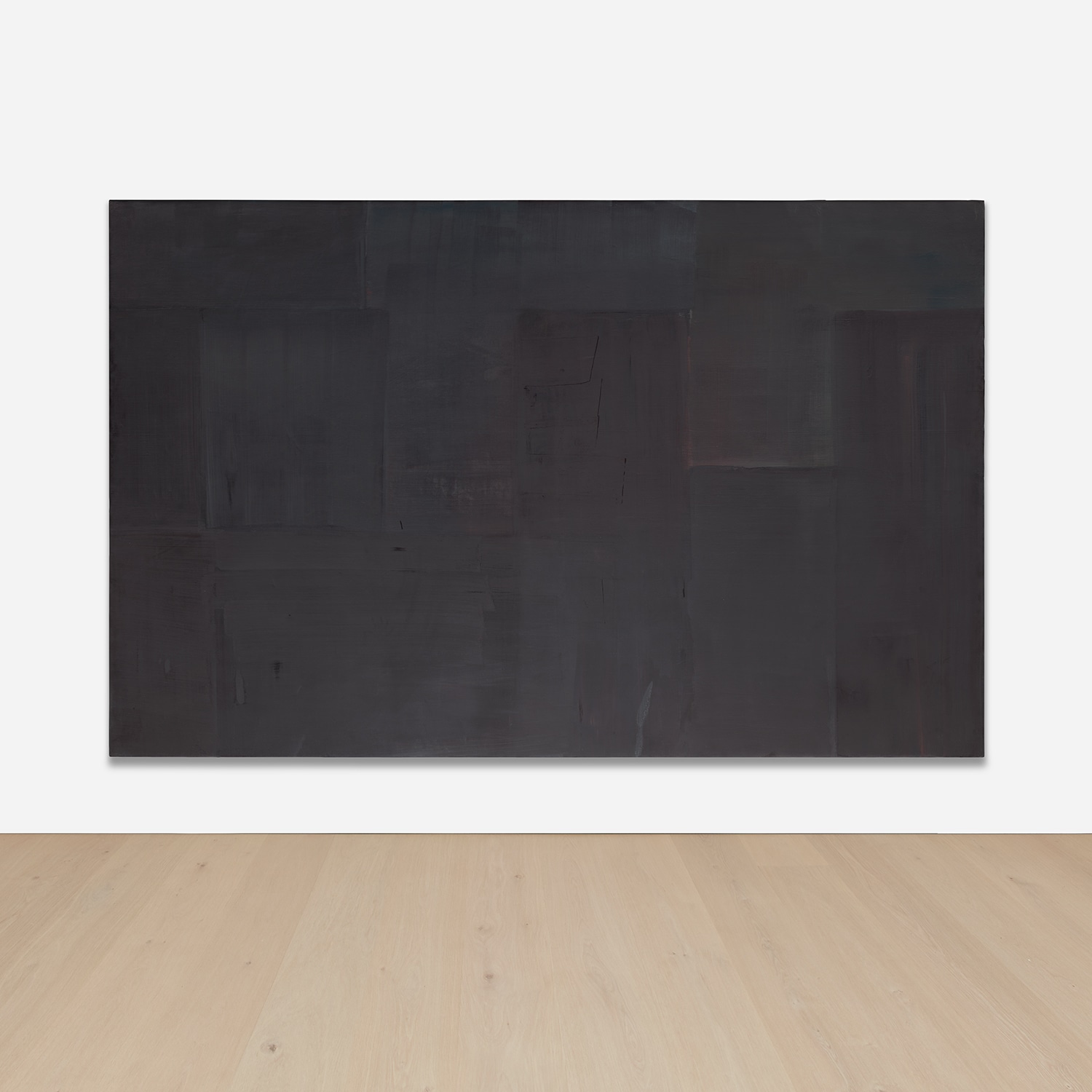
Louise Fishman
Kaddish, 1988
Moment of Change from 2013 is among her most luminous works, the color finding a new openness that feels earned after decades of difficult, pressured making. I Like a Church from 2000 shows her capacity for spiritual weight without sentimentality, a quality that distinguishes her from many painters working in related territory. For collectors, Fishman's market represents a genuine opportunity. Her work has been undervalued relative to her male peers in Abstract Expressionism and second generation gestural abstraction, a fact that has begun to correct itself as the art world undertakes a long overdue reassessment of women painters.
Her works are held in the permanent collections of the Whitney Museum of American Art and the Museum of Modern Art in New York, institutions whose endorsement carries real weight in the market. Collectors drawn to artists such as Joan Mitchell, Pat Steir, and Cecily Brown will find in Fishman a practice that is equally rigorous and emotionally alive, with the added dimension of a deeply considered engagement with history, identity, and memory that gives her work unusual intellectual depth. Works on linen and jute tend to command particular attention for the way they interact with her layered technique. Fishman occupies a singular position in the lineage of American abstraction.
She absorbed the lessons of Abstract Expressionism fully and honestly, without either deferring to its machismo or rejecting its genuine achievements. She brought to that inheritance her identity as a Jewish woman and a lesbian, not as a corrective footnote but as generative material that expanded what gestural painting could mean and hold. Artists like Joan Mitchell and Lee Krasner were clear predecessors, and her work speaks forward to younger painters who understand that abstraction and autobiography are not opposites. Her influence on a generation of painters working today is difficult to overstate, even where it operates quietly, through the example of a practice sustained with total integrity over more than five decades.
Louise Fishman made paintings that cost her something. That cost is visible in every square inch of surface she produced, and it is also what makes standing before them such a profound experience. She did not soften her vision to make it more palatable, and she did not separate her art from her life, her politics, her grief, or her joy. What she left is a body of work that grows more important with time, a testament to what painting becomes when an artist refuses every available shortcut and insists, year after year, on going deeper.
Explore books about Louise Fishman