Louis Valtat
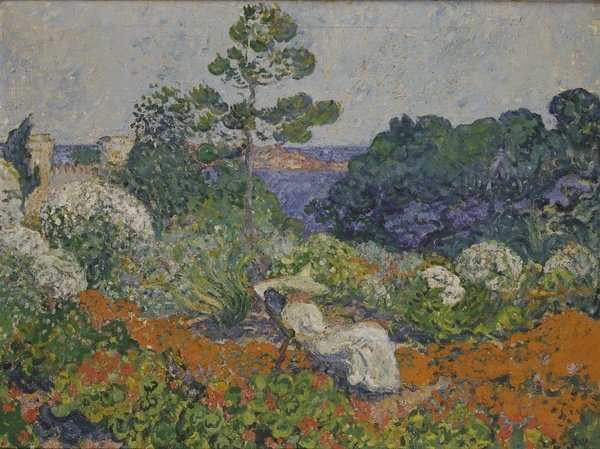
Louis Valtat, Where Pure Color Finds Joy
Artist Spotlight · The Collection Editorial
There is a moment, standing before a Louis Valtat canvas, when the eye simply surrenders. The Mediterranean light does not merely suggest warmth; it insists upon it. Cobalt shadows pool beneath terracotta walls, bougainvillea riots against pale sky, and the whole scene vibrates with a conviction that painting can, on its best days, feel like happiness made visible. Renewed scholarly attention to the generation that bridged Post Impressionism and the first eruptions of twentieth century modernism has brought Valtat back into focus, and rightly so.
Louis Valtat
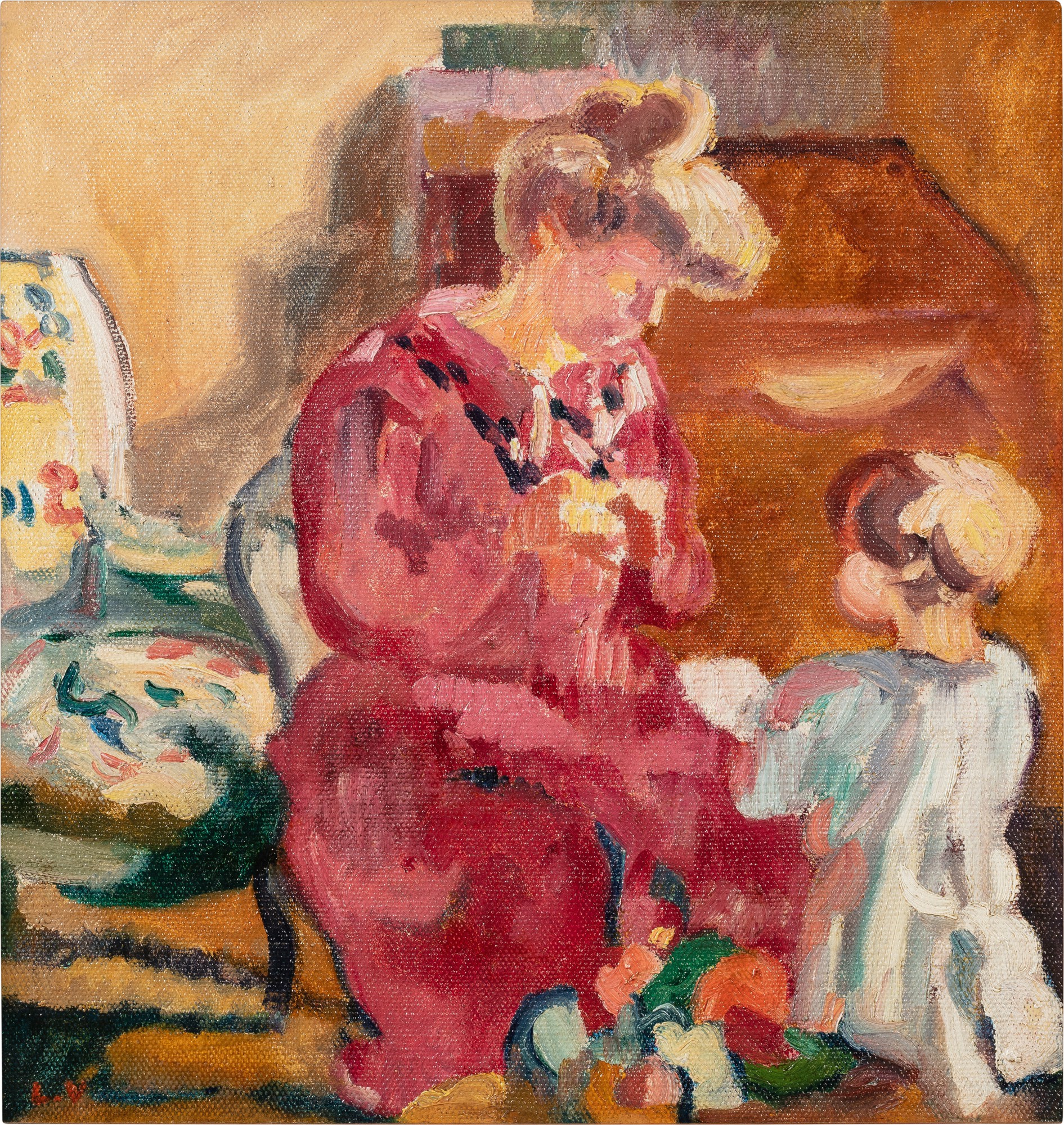
Suzanne et Jean enfant, 1910
His place in the story of modern art is not a footnote but a foundation stone, and collectors who have followed that story closely have long known it. Louis Valtat was born in Dieppe in 1869, a coastal city whose shifting northern light would leave its mark on any painter formed within its harbor mists. He moved to Paris to study at the École des Beaux Arts and later at the Académie Julian, two institutions that produced an extraordinary concentration of talent in the final decades of the nineteenth century. At the Académie Julian he encountered Edouard Vuillard, Pierre Bonnard, and Maurice Denis, the nucleus of what would become the Nabis, and the dialogue with that group sharpened his instinct for decorative boldness and the emotional weight of pure, unmodulated color.
His training was rigorous, but his temperament pulled him steadily away from academic convention and toward something more urgent. The decisive turn came with travel. Valtat spent extended periods in the south of France, and the Provençal and Mediterranean landscapes he encountered there transformed his palette almost immediately. By the mid 1890s, working around Agay on the Esterel coast, he was producing work that reads today as startlingly advanced.
Louis Valtat
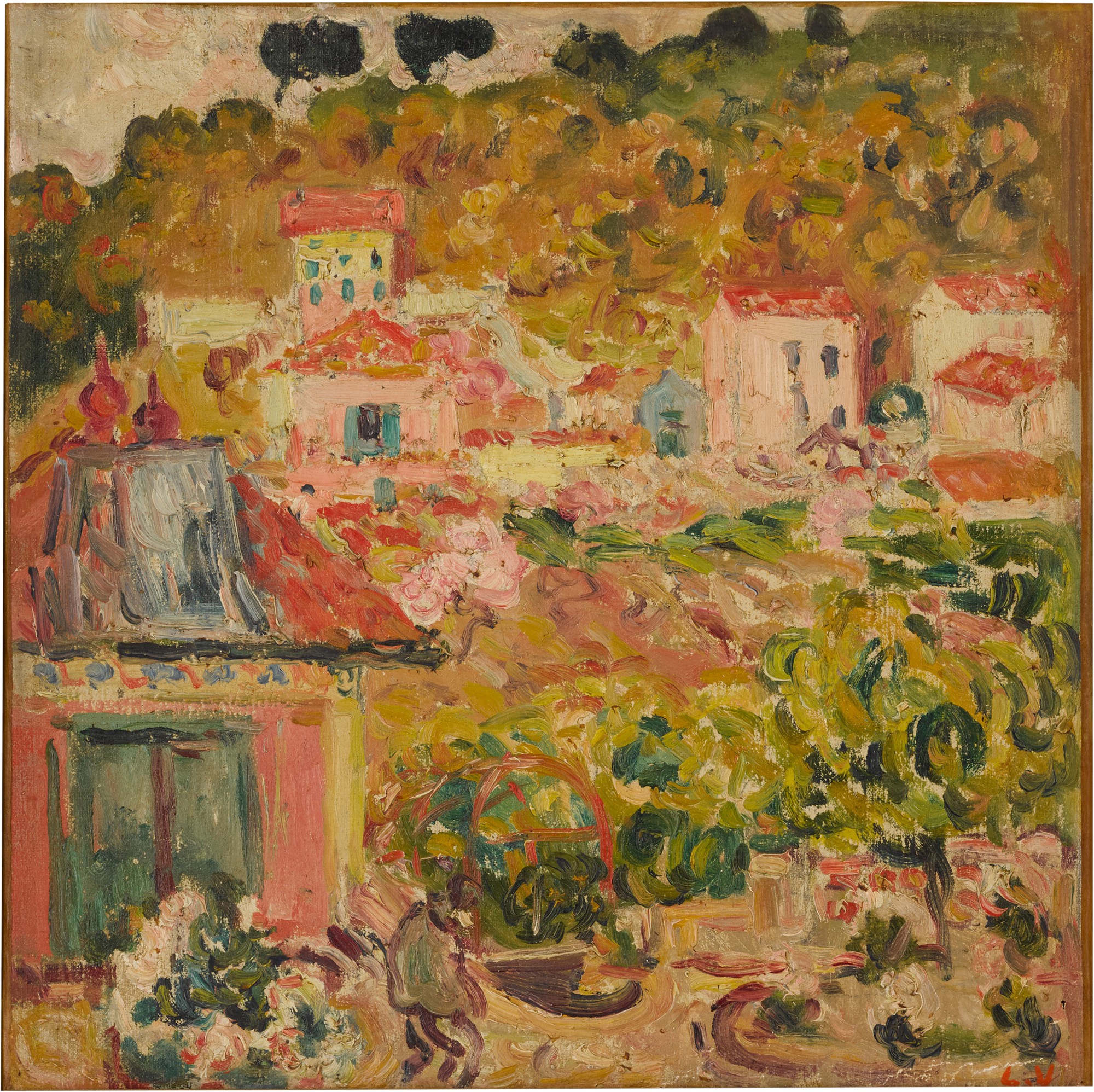
Village aux maisons roses, 1896
He had absorbed the Divisionist lessons of Seurat and Signac, absorbed them deeply enough to move through them and beyond, loosening the scientific dot into something freer and more emotionally charged. He also formed a friendship with Auguste Renoir, whose home at Cagnes sur Mer was not far from Valtat's own favored haunts, and the two artists shared a reverence for sensory pleasure and the lived beauty of the southern coast. That friendship, and the broader community of artists working in the Midi at the turn of the century, gave Valtat both companionship and permission to push further. The year 1905 is the fixed star by which Valtat's reputation is often navigated.
The Salon d'Automne that autumn in Paris became one of the defining exhibitions in the history of modern art. The room that gathered Henri Matisse, André Derain, Maurice de Vlaminck, and their circle was famously labeled the cage aux fauves, the cage of wild beasts, by critic Louis Vauxcelles, and from that epithet a movement took its name. Valtat exhibited in the same Salon, his Mediterranean canvases hanging among work that announced a new visual language based on liberated color and expressive distortion. Art historians have been careful ever since to note that Valtat was not an afterthought in that company but a genuine contributor to the atmosphere that made Fauvism possible.
Louis Valtat
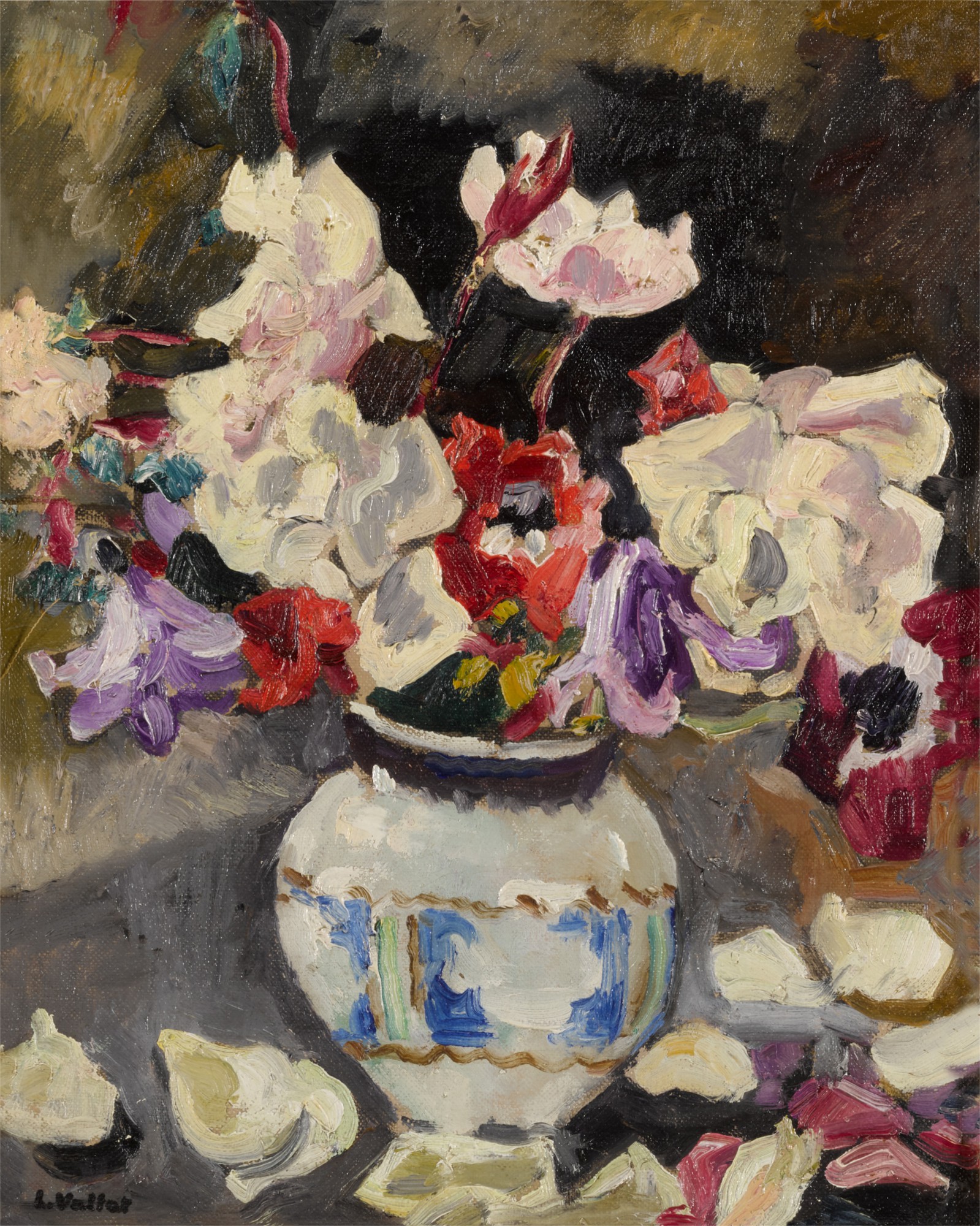
Vase d'anémones, 1930
His canvases from the years just before 1905 show him already operating in the chromatic territory that Matisse and Derain would soon colonize more systematically. To walk through the body of work that Valtat produced across his long career is to encounter a painter of remarkable range and consistency. His landscapes and seascapes carry the most immediate charge, the views of the Esterel coast and the villages of Provence singing with oranges, crimsons, and the particular acid greens he made his own. Works such as Village aux maisons roses, painted in 1896, reveal how early his command of this vocabulary was in place, the pink walls of the village tilting toward abstraction while remaining entirely grounded in observed reality.
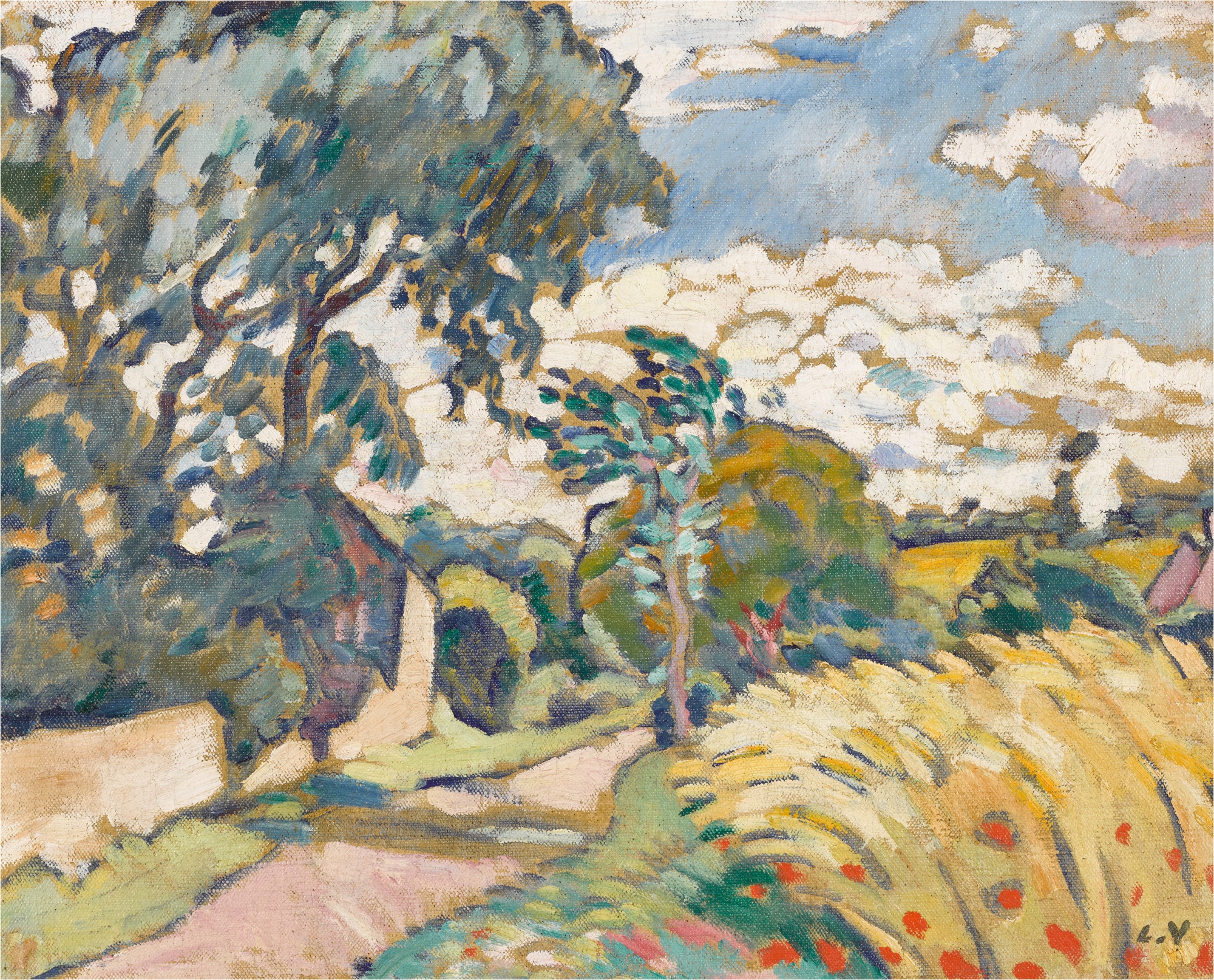
His paintings of the Norman countryside, including La maison au bord de la route en Normandie from 1916, demonstrate that his feeling for light was not limited to the south; he brought the same attentiveness to the cooler, more diffuse luminosity of the north. His still lifes, among them the exuberant Vase d'anémones of 1930 and Dahlias au vase jaune of 1942, have a directness and generosity that makes them immediately livable, the kind of paintings that become companions rather than decorations. And his intimate figure paintings, such as Suzanne et Jean enfant of 1910, show a tenderness that balances the more assertive energy of his outdoor work. For collectors, Valtat represents one of those genuinely rewarding convergences of art historical significance and aesthetic pleasure.
Louis Valtat
La maison au bord de la route en Normandie, 1916
He is not a speculative discovery; his importance was recognized by major French institutions and dealers across much of the twentieth century, and his works have appeared consistently at auction houses in Paris, London, and New York. What distinguishes Valtat in the current market is the breadth of entry points available: a collector drawn to Mediterranean light and early modernism can find in his seascapes and landscapes direct visual dialogue with Matisse and Derain, while his still lifes speak to admirers of Bonnard and the Nabis. The works on paper and oil on paper compositions offer opportunities at different price levels without sacrificing quality, and his paintings from the key period of roughly 1895 to 1910 command the strongest attention from serious collectors. Condition and provenance matter, as always, but Valtat's works were carefully handled by the artist and his family, and many pieces carry excellent documentation.
To understand Valtat fully is to understand him in relation to the constellation of artists who shared his world and his concerns. Beyond Matisse, Derain, and Vlaminck, he belongs in conversation with Cross and Signac as a painter who metabolized Neo Impressionism into something more personal. His friendship with Renoir connects him backward to the Impressionist tradition, while his boldest canvases reach forward toward the Expressionist currents that would define the following decade in German and northern European painting. Bonnard is perhaps his closest spiritual relative: both painters pursued a domestic and sensory warmth that sat somewhat outside the more programmatic ambitions of the avant garde, and both were quietly vindicated by history's eventual recognition that feeling and beauty are not lesser ambitions than theory.
Louis Valtat lived until 1952, a long life that allowed him to witness the full arc of modern art from its first provocations through to mid century abstraction. He kept painting throughout, his commitment to color and observed sensation unwavering. His legacy is the legacy of a painter who trusted his eyes and his instincts at a moment when both were revolutionary acts. The canvases he left behind are not artifacts of a historical argument but living presences, warm and immediate, capable of stopping a viewer in their tracks just as they did when the cage aux fauves first opened its doors.