Louis Faurer
Louis Faurer, New York's Most Tender Eye
Artist Spotlight · The Collection Editorial
There is a photograph taken around 1950 that stops you cold. A man stands at the edge of Times Square, the city's electric signage blooming behind him in soft halos of light, his expression caught somewhere between exhaustion and wonder. Louis Faurer made this image, and countless others like it, during the years when New York was reinventing itself after the war. That body of work, made largely between 1947 and the early 1960s, has come to be understood not merely as documentary street photography but as something closer to visual poetry.
Louis Faurer
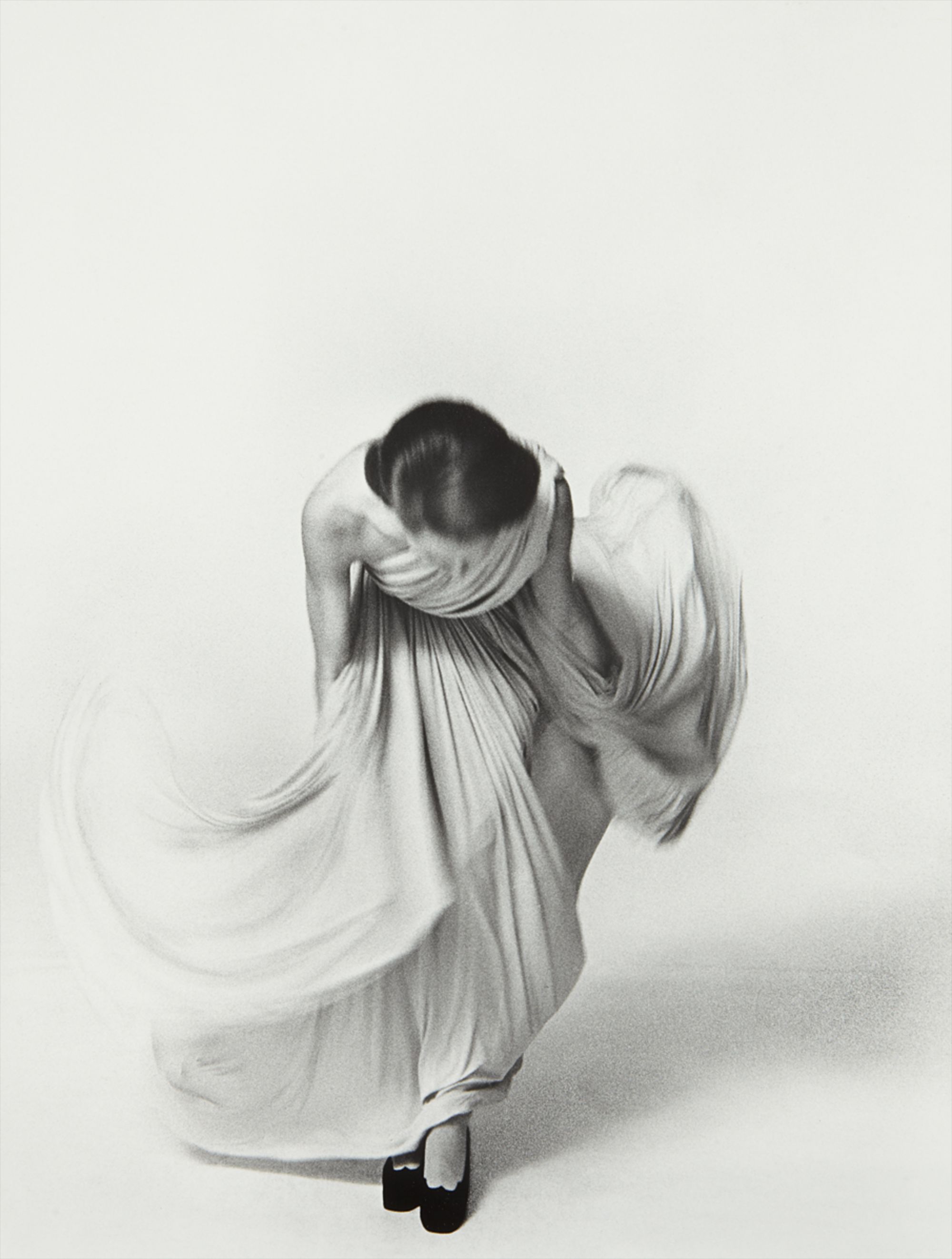
Bowing for the Vogue Collections, Paris
Institutions and collectors alike have steadily rediscovered Faurer's singular vision, and today his prints hold a place of genuine distinction in the canon of postwar American photography. Louis Faurer was born in Philadelphia in 1916, the son of Jewish immigrants, and grew up in a working class neighborhood that gave him an early, intuitive feel for people living at the margins of prosperity. He taught himself lettering and sign painting as a young man, skills that sharpened his eye for typography and the visual texture of commercial urban life, details that would later appear in his photographs as deliberate compositional elements rather than mere backdrop. He moved to New York in 1947 after a period working as a commercial photographer in Philadelphia, and the city received him like a revelation.
The streets of Manhattan, and Times Square in particular, became his permanent studio and his true subject. Faurer's formation as an artist was shaped in part by his friendship and collaboration with Robert Frank, with whom he shared darkroom space and a restless commitment to the expressive possibilities of the camera. The two men admired each other, and their parallel investigations of American life in the postwar years make for one of the great dialogues in the history of the medium. Where Frank's vision tended toward irony and social critique, Faurer's lens was warmer, more lyrical, more given to empathy.
Louis Faurer
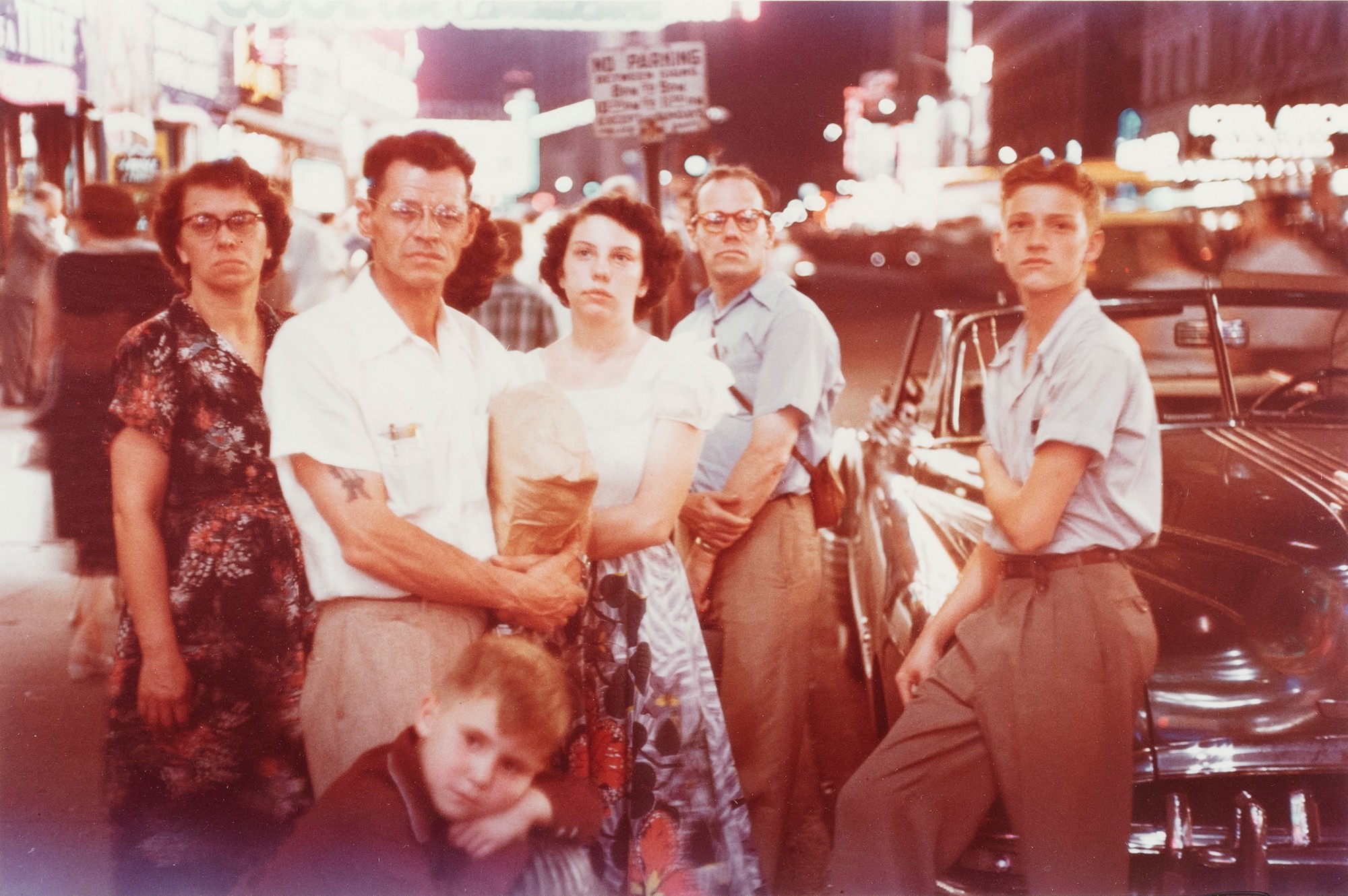
New York City, 1950.
He was also deeply influenced by his commercial work shooting for magazines including Vogue and Harper's Bazaar, assignments that took him to Paris and sharpened his instinct for elegance within the everyday. The photograph known as Bowing for the Vogue Collections, Paris, a gelatin silver print from 1950 printed in 1991, shows exactly this fusion of fashion world access and street photographer's soul. What distinguishes Faurer's practice above all is his mastery of atmosphere. He worked with available light, embraced motion blur, and used reflections in shop windows and car hoods to create images that seem to hover between the real and the dreamed.
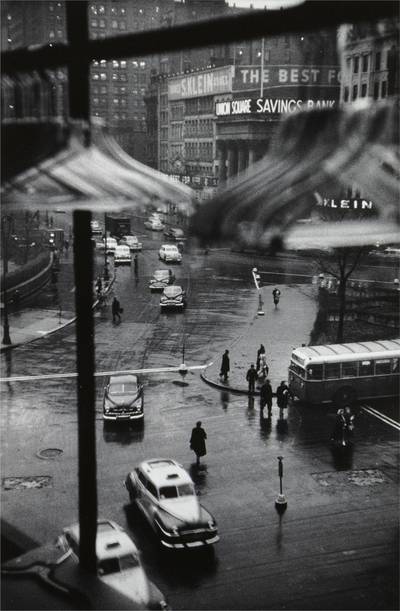
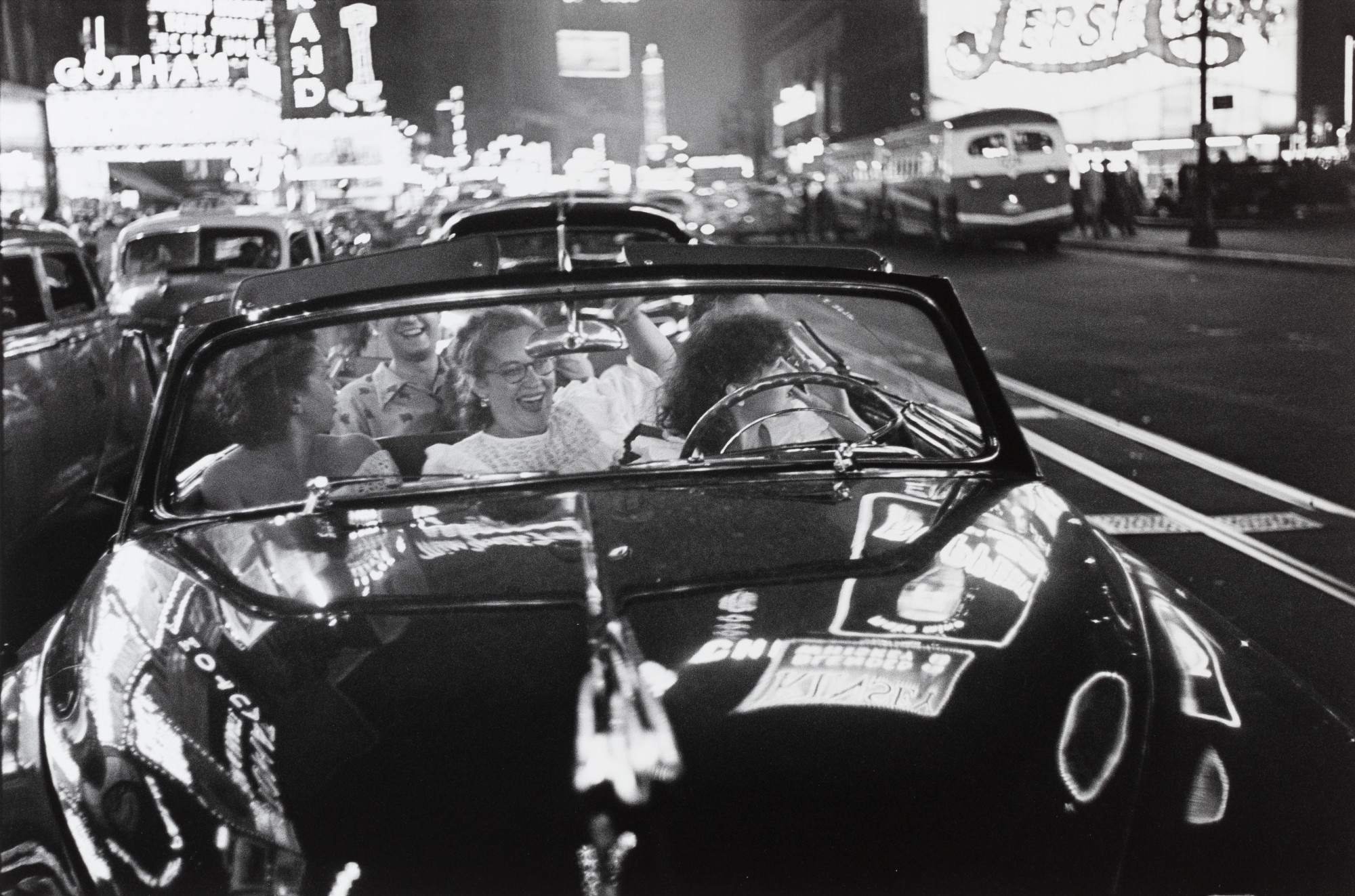
His Union Square, New York City is a masterclass in this approach, the figures in the frame simultaneously present and apparitional, caught in the flow of a city that never quite holds still. His Broadway Convertible, Times Square, made around 1949, captures a gleaming automobile and its passengers with the same tender attention he gave to solitary figures on late night sidewalks. Cars, storefronts, neon signs, and human faces all existed for Faurer within a single unified field of feeling. Family, Times Square, available as a dye transfer print from 1980, demonstrates his extraordinary capacity for warmth, the ordinary intimacy of a family group transformed by his framing into something almost mythological.
Louis Faurer
Broadway convertible, Times Square, NYC, c. 1949
From a collecting perspective, Faurer's work represents one of the most compelling opportunities in the postwar photography market. His prints were produced in relatively small numbers and the range of printing dates, from vintage silver prints made close to the time of exposure to later authorized editions, offers collectors entry points at various levels of rarity and investment. Gelatin silver prints occupy the center of serious Faurer collections, valued for their tonal richness and their fidelity to the photographer's darkroom sensibility. Works like Garage, Park Avenue, New York, a gelatin silver print from 1981, and George Barrows in Robert Frank's Loft demonstrate the breadth of his vision beyond his signature Times Square imagery.
Auction results for Faurer have climbed meaningfully over the past two decades as curators and scholars have reassessed the first generation of New York street photographers, and demand continues to outpace the available supply of fine examples. To place Faurer within art history properly is to understand his position within a constellation of photographers who transformed the medium in the late 1940s and 1950s. Alongside Robert Frank, Diane Arbus, Lisette Model, and William Klein, Faurer helped define a distinctly American approach to the street photograph, one rooted in subjective vision rather than journalistic neutrality. His influence is also visible in the work of later photographers who privileged emotion and formal experimentation over strict documentation.
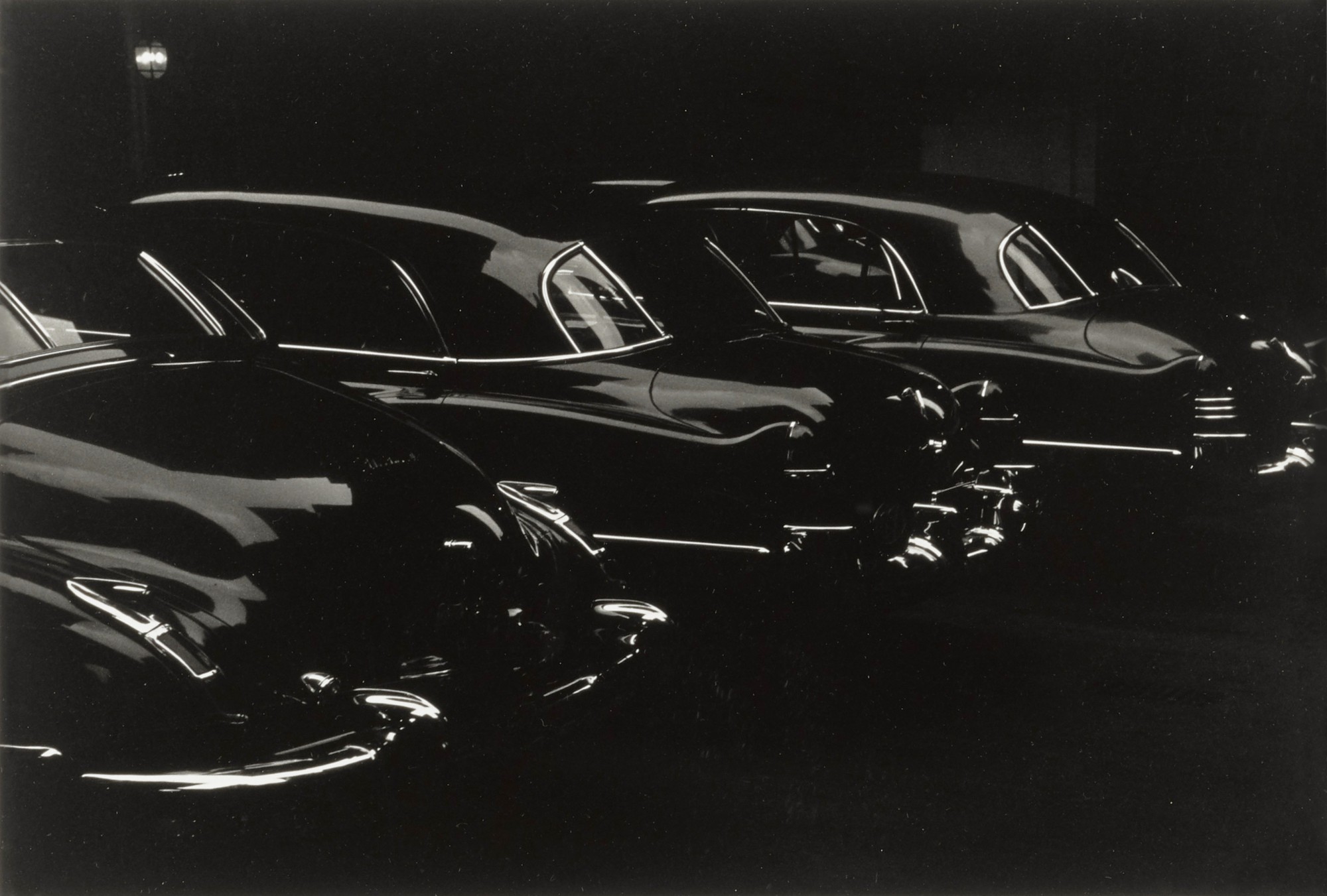
Louis Faurer
Park Avenue Garage, New York City
The Photo League, which brought together socially engaged photographers in New York during this period, provided part of the intellectual context for his practice, even as Faurer's sensibility remained stubbornly personal. He was a figure who moved between the commercial and fine art worlds with unusual fluency, never fully claimed by either, which may partly explain why recognition came slowly. The story of that delayed recognition is itself instructive. Faurer did not receive a major museum retrospective during the height of his career, and he spent portions of the 1960s and 1970s in comparative obscurity, returning to Philadelphia and working outside the art world's spotlight.
It was not until the 1970s and especially the 1980s that galleries and curators began to revisit his archive with the attention it deserved. The photographs had not changed, but the culture's capacity to understand them had grown. Today Faurer is rightly celebrated as a pivotal figure, his name spoken alongside Frank and Arbus without hesitation by anyone seriously engaged with the history of the medium. What endures most powerfully in Faurer's work is its fundamental generosity toward its subjects.
His camera never condescends, never exploits, never reduces the people it finds on the street to mere specimens of social condition. There is in every frame a sense that the photographer loved the city and its inhabitants, that he was grateful to be among them, that the act of photographing was itself an act of connection. For collectors who bring his prints into their lives, that quality translates into something rare: images that reward sustained looking and that grow more resonant with time. Louis Faurer made New York visible in a way that no one had before and no one has quite replicated since, and the photographs he left behind are among the most humane documents of American life in the twentieth century.
Explore books about Louis Faurer