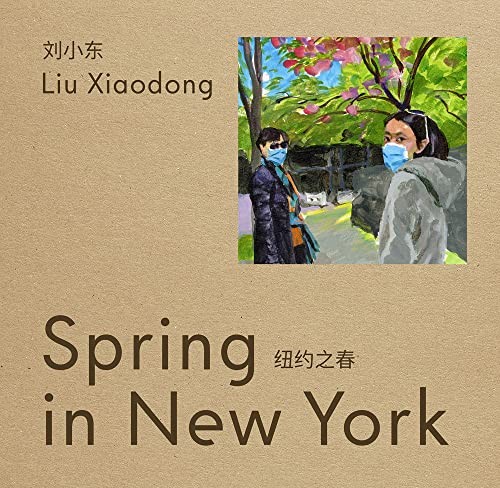
Liu Xiaodong
Liu Xiaodong Paints the World Alive
Artist Spotlight · The Collection Editorial
“I want to paint what I see in front of me. The most real thing is what is happening right now.”
Liu Xiaodong
Few painters working today command a room quite like Liu Xiaodong. His large scale canvases have a gravitational pull that is almost physical: figures rendered with such attentive tenderness, such unflinching warmth, that standing before them feels less like viewing art and more like being welcomed into a life. In recent years, major retrospectives and institutional presentations across Asia, Europe, and North America have confirmed what serious collectors have long understood. Liu is among the most significant figurative painters of his generation, an artist whose work grows more vital and more necessary with each passing year.
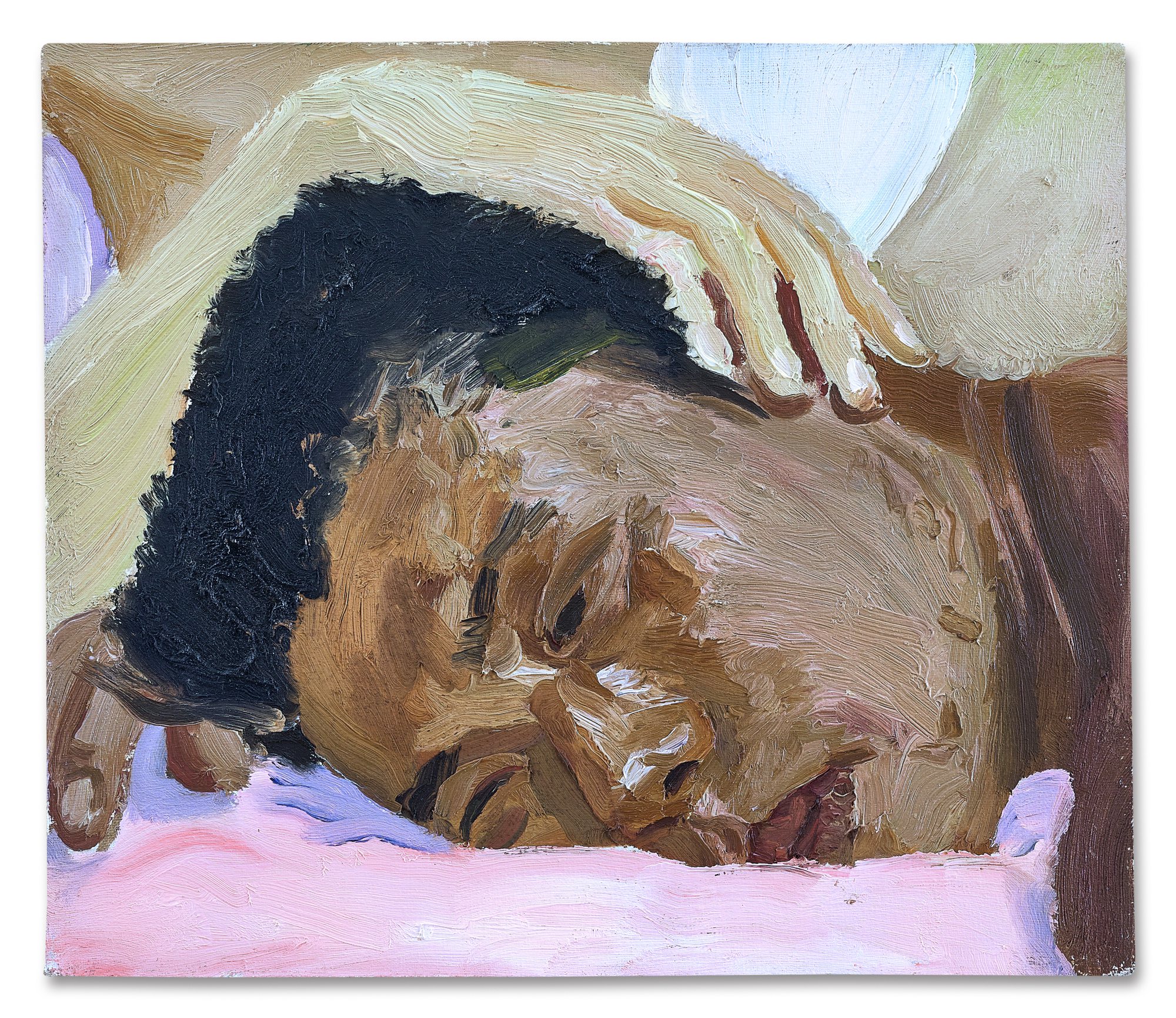
Liu Xiaodong
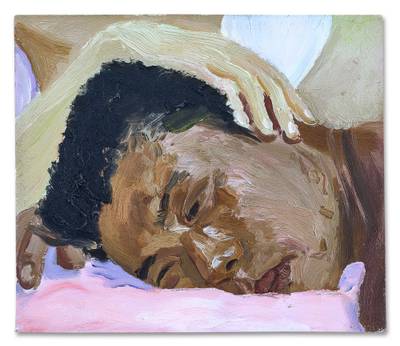
Sleep 21 睡 21
Liu Xiaodong was born in 1963 in Jincheng, a small town in Liaoning Province in northeastern China. He came of age during one of the most turbulent and transformative periods in modern Chinese history, and that experience of living through upheaval and change left a permanent mark on his artistic sensibility. He studied at the Central Academy of Fine Arts in Beijing, graduating in 1988, before completing further study in Spain. The Central Academy was the crucible of Chinese realism, and Liu absorbed its rigorous training deeply while quietly developing his own convictions about what painting could do and who it could serve.
The generation Liu belongs to came of age in the immediate aftermath of the Cultural Revolution and witnessed China's seismic opening to the outside world. Rather than turning toward abstraction or conceptual art as many of his contemporaries did, Liu doubled down on the figure, on the body, on the face. He became associated with a movement that Chinese critics called New Generation painting, a tendency that emerged in the early 1990s and was defined by its coolly observational, psychologically direct approach to depicting ordinary contemporary life. Where earlier socialist realism had painted idealized heroic workers, Liu and his peers painted their actual friends: slouching, smoking, staring into space, existing without grandeur and without apology.
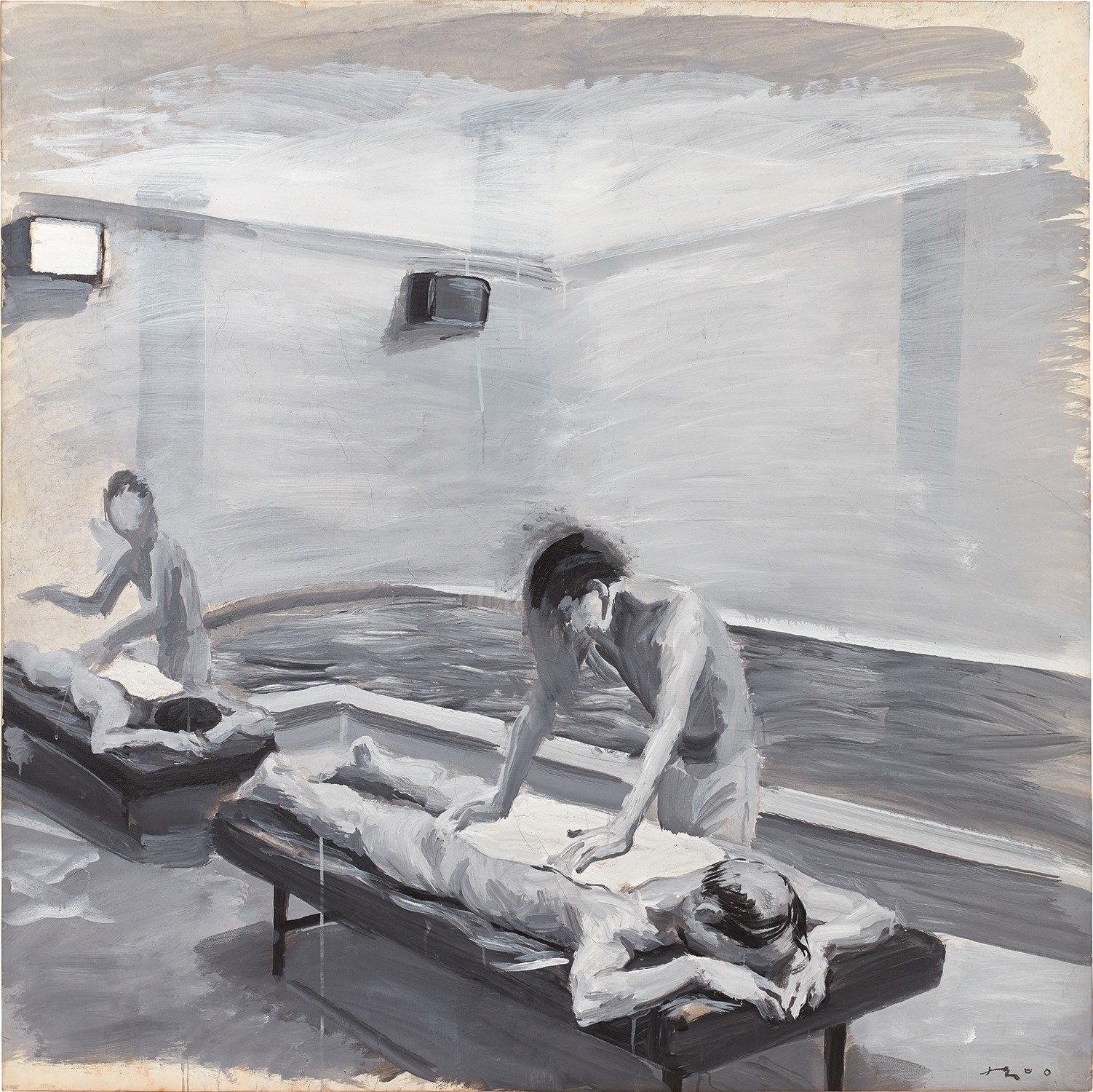
Liu Xiaodong
Boys in the bathhouse no. 5, 2000
Over the decades, Liu's practice evolved from studio based portraiture into something far more ambitious and peripatetic. He began traveling to sites of social tension and environmental disruption, setting up his easel directly in the field and painting the people he encountered there in real time. This commitment to on site painting is central to his identity as an artist. He has painted workers and families displaced by the construction of the Three Gorges Dam, communities living along the border between the United States and Mexico, Tibetan nomads navigating the pressures of modernization, and survivors of natural disasters in Japan following the 2011 Tohoku earthquake.
In each case the work is preceded by months of research and genuine relationship building with his subjects. Liu does not parachute in and extract. He arrives, he listens, he stays. The paintings themselves are extraordinary objects.
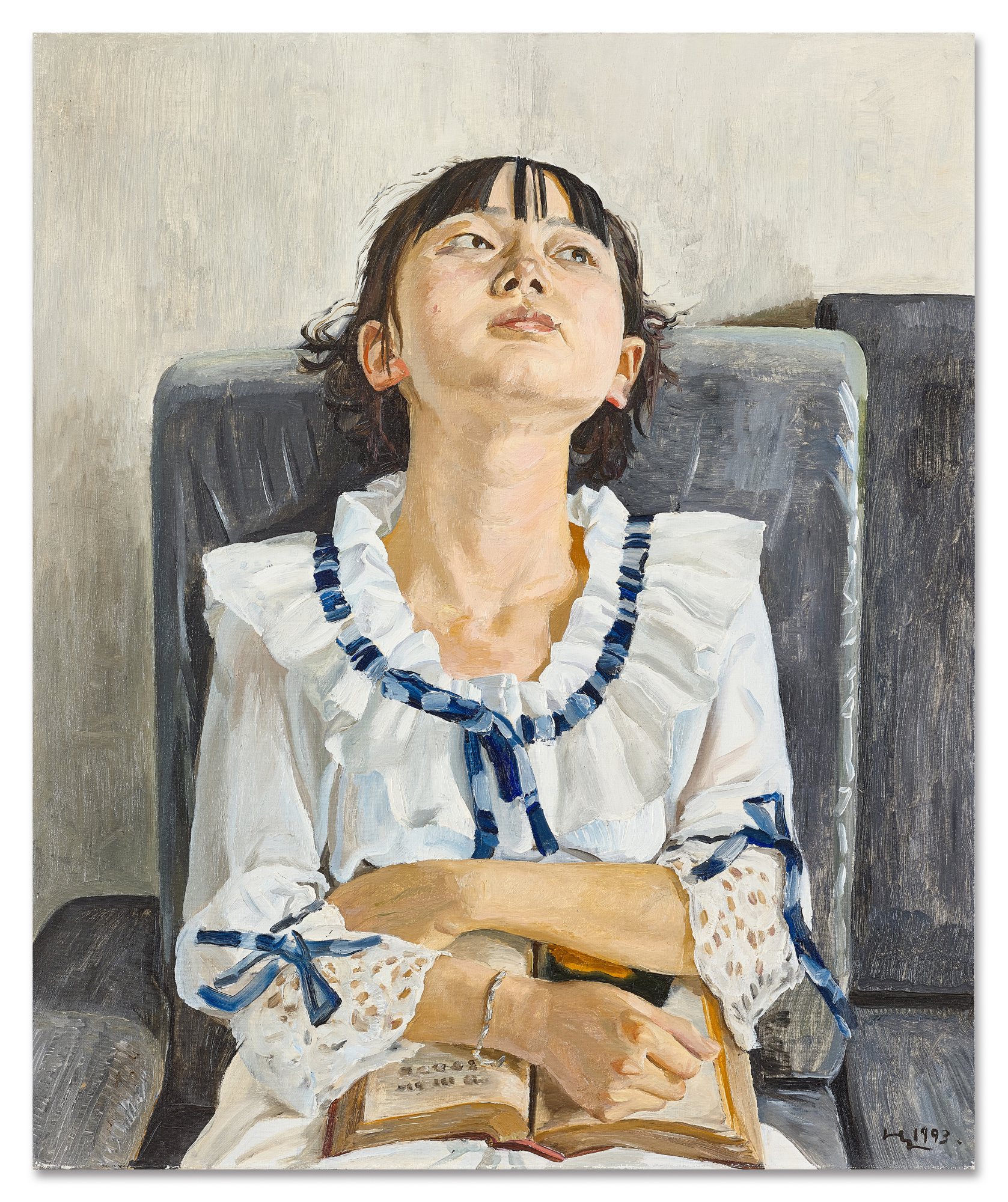
Liu Xiaodong
Young Girl Leisurely Reading 少女閒讀
Working primarily in oil on canvas, often at very large scale, Liu employs a loaded brush and a confident directness that recalls the great realist traditions of both East and West. There are echoes of Lucian Freud in his unflinching proximity to the body, of Eric Fischl in his attunement to social and psychological tension, and of the great Chinese ink painting tradition in the way his compositions breathe and leave room for feeling. Works such as Sleep 21 and Relaxing in Water demonstrate his particular genius for capturing the human form in states of repose, moments when the social mask falls away and something raw and essential becomes visible. The Only Son and Watching reveal his gift for psychological portraiture, images where the relationship between painter and subject feels charged with mutual recognition.
Across all these works, there is a quality of light that is unmistakably his own: warm without being sentimental, honest without being harsh. For collectors, Liu Xiaodong represents a remarkable convergence of art historical importance and genuine emotional power. His works have been acquired by major institutions including the Ullens Center for Contemporary Art in Beijing, and his auction results have reflected growing international recognition over the past two decades. Works on paper, including acrylic compositions like Boys in the Bathhouse No.
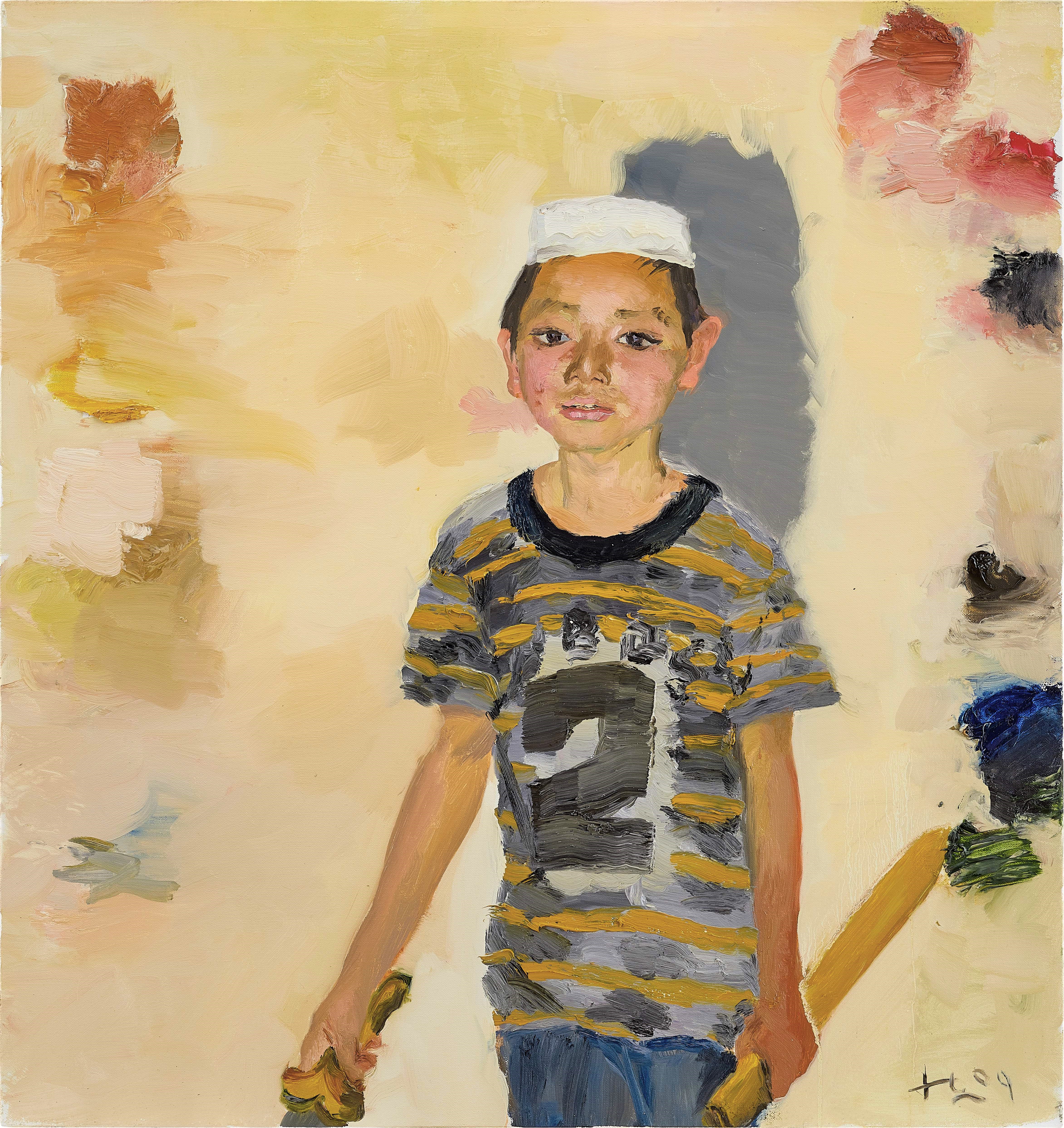
Liu Xiaodong
The Only Son 何帥
5, offer a more intimate window into his practice and represent compelling entry points for collectors who wish to engage with his world across different scales and media. The mixed media works, such as Green Pub 2, which combines acrylic with chromogenic print, show his willingness to interrogate and expand the boundaries of painting itself. Collectors drawn to artists such as Lucian Freud, Peter Doig, or Neo Rauch will find in Liu a painter of equal stature whose work carries the additional dimension of being deeply rooted in a specific historical moment and geography of profound global consequence. What distinguishes Liu Xiaodong from many of his contemporaries is not simply technical mastery, impressive as that is.
It is his ethical seriousness about the act of looking. In a cultural moment saturated with images, Liu insists on the slow, accountable, bodily practice of painting from life as a form of witness. His journeys to sites of displacement and transformation are not exercises in documentary journalism. They are acts of solidarity.
He places himself in relationship to vulnerability and change, and then he paints. The resulting works carry the weight of that encounter in every brushstroke. Liu Xiaodong's legacy is already substantial and continues to grow. He holds a professorship at the Central Academy of Fine Arts in Beijing, where he has influenced a generation of younger Chinese painters.
His practice has helped redefine what figurative painting can mean in a global contemporary art context, demonstrating that realism is not a retreat from the present but one of the most demanding and courageous ways to engage with it. To own a work by Liu Xiaodong is to own a piece of this ongoing conversation between art and the world, between the painter's eye and the irreducible dignity of the human face. There is nothing quite like it.
Explore books about Liu Xiaodong