LaToya Ruby Frazier
LaToya Ruby Frazier Illuminates America With Love
Artist Spotlight · The Collection Editorial
“I'm not interested in making work that exploits or sensationalizes. I want to honor the people I photograph.”
LaToya Ruby Frazier, interview with Aperture
When the Museum of Modern Art in New York presented LaToya Ruby Frazier's work as part of its permanent collection programming, it confirmed what thoughtful collectors and curators had long understood: this artist occupies a singular and irreplaceable position in contemporary American photography. Her recent recognition through major institutional acquisitions and her continued presence in international biennials and art fairs has brought fresh waves of collectors and admirers into her orbit. At a moment when questions of industrial decline, environmental justice, and the dignity of working communities feel urgently alive in public discourse, Frazier's practice speaks with a clarity and moral depth that few artists of any generation can match. Frazier was born in 1982 in Braddock, Pennsylvania, a small town on the outskirts of Pittsburgh that had once been the beating heart of American steel production.
LaToya Ruby Frazier
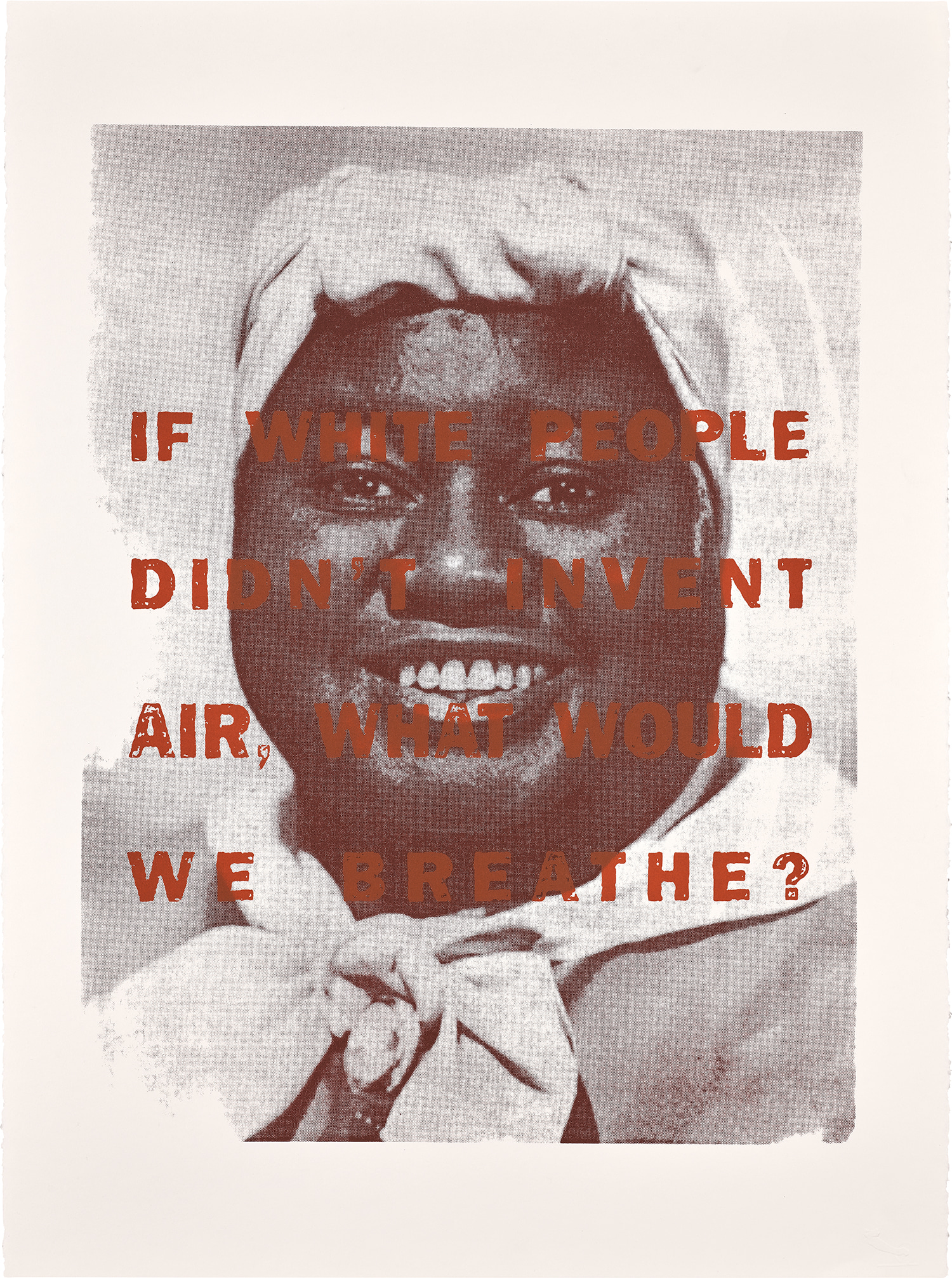
If Everybody's Work Is Equally Important? (I)
By the time she came of age, Braddock was a landscape of hollowed out factories, declining public services, and a community left behind by the forces of deindustrialization. Growing up there shaped not only her subject matter but her entire way of seeing. She was raised surrounded by three generations of resilient women, her grandmother Ruby, her mother, and herself, and it was within that constellation of love and struggle that her artistic voice first took root. She went on to study photography at the Art Institute of Pittsburgh and later earned her MFA from Syracuse University, where her documentary instincts were sharpened into a fully realized artistic language.
Frazier's early work drew deeply on the tradition of American social documentary photography, placing her in conscious conversation with titans of the form including Dorothea Lange, Gordon Parks, and Walker Evans. But from the beginning she brought something these predecessors could not: she was inside her subject, not standing outside it with a concerned outsider's gaze. Her camera turned inward as much as outward, situating her own body and health alongside those of her family members, acknowledging that the environmental and economic conditions she documented were also conditions she was living within. This autobiographical dimension gave her work an intimacy and an ethical weight that distinguished it immediately from conventional photojournalism.
LaToya Ruby Frazier
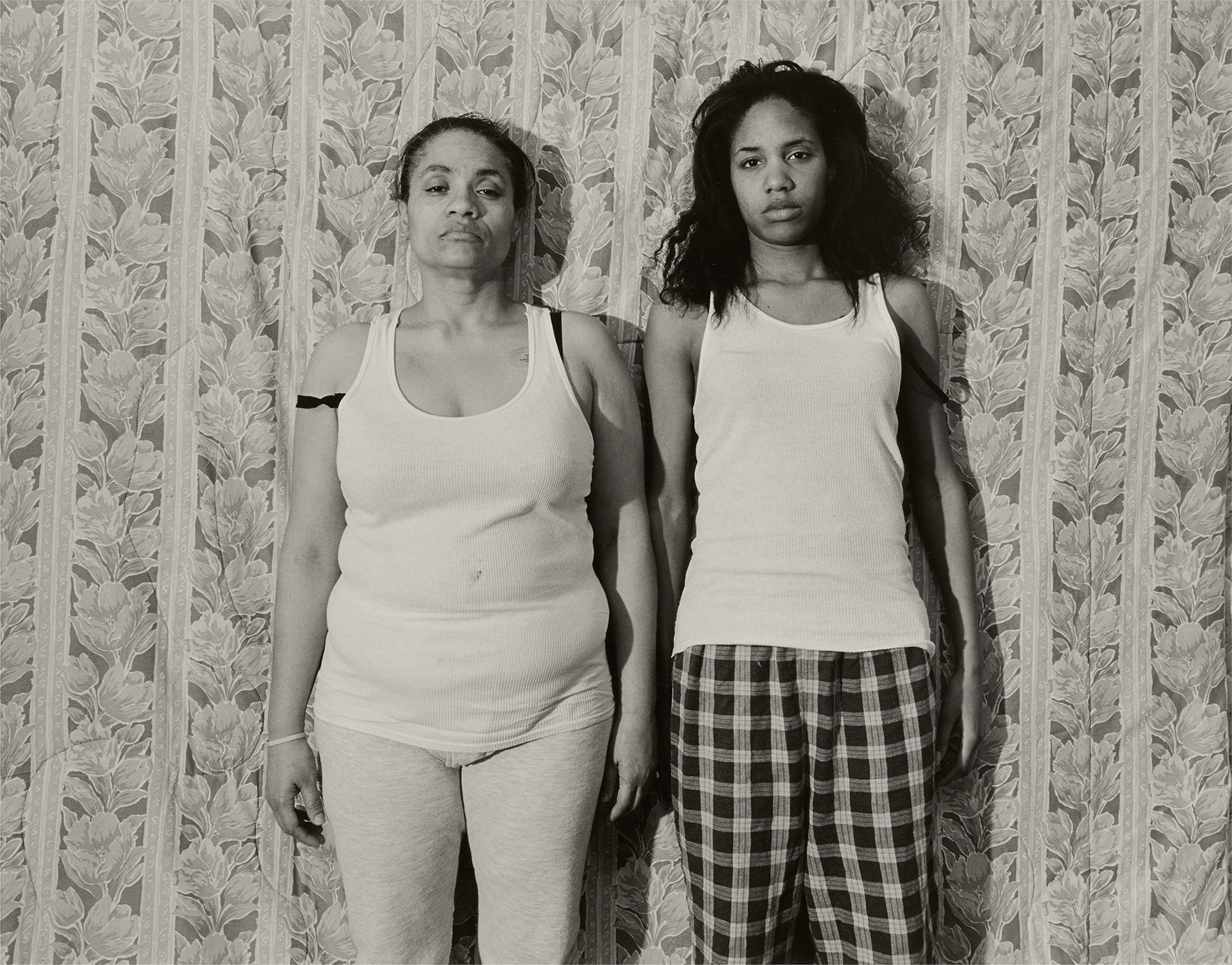
Momme (floral comforter) from Notion of Family
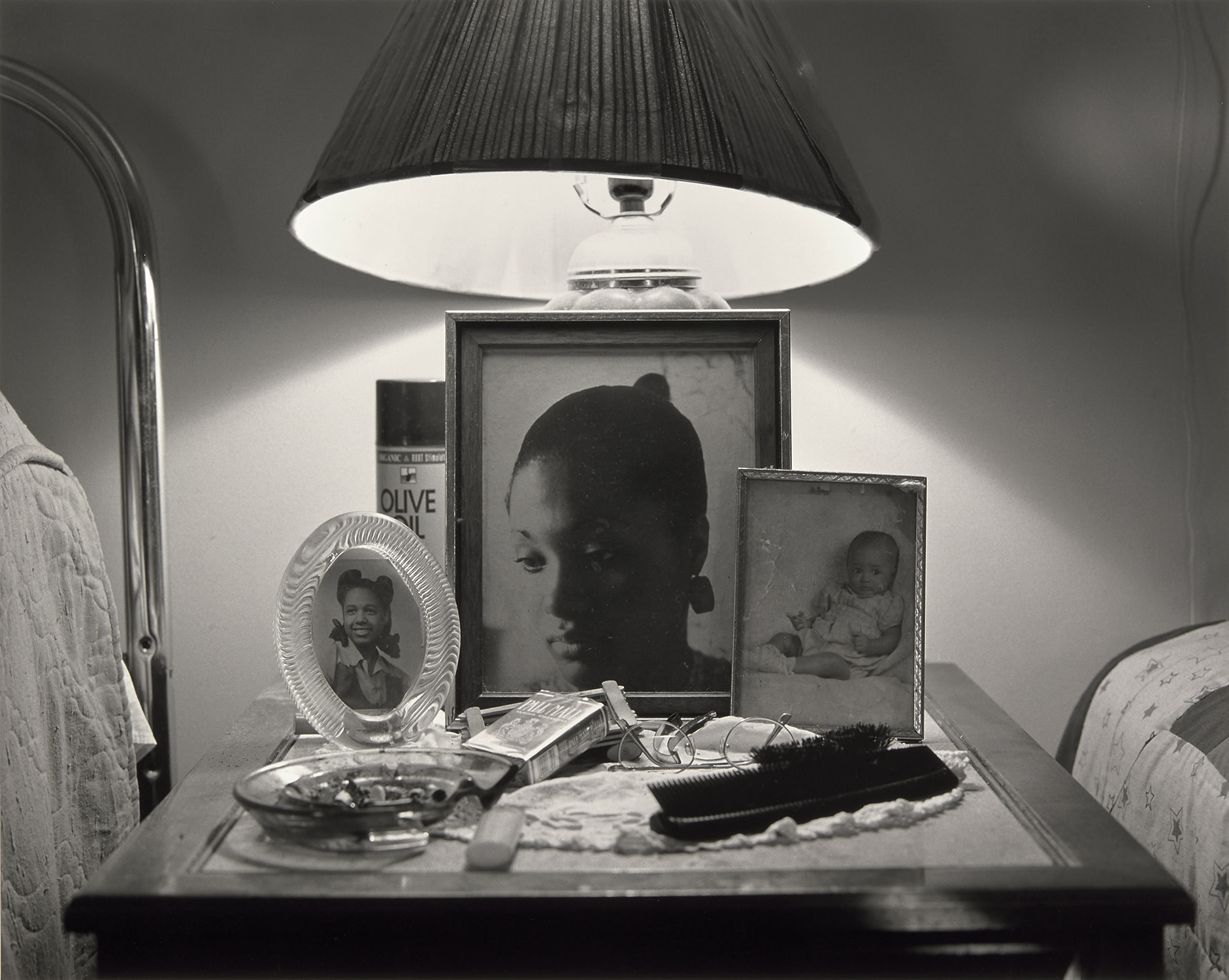
The project that established her international reputation is 'The Notion of Family,' a long term body of work begun around 2001 and developed over more than a decade. Rendered in luminous gelatin silver prints, the series chronicles three generations of women against the backdrop of Braddock's decline, weaving together domestic interiors, medical realities, community spaces, and the faces of women navigating hardship with extraordinary grace. Works such as 'Momme (Shadow)' and 'Aunt Midgie and Grandma Ruby' exemplify the series at its most powerful: formally exquisite photographs that carry enormous emotional and political freight without ever reducing their subjects to symbols or victims. The printing quality throughout is exceptional, and the mounted gelatin silver format gives these works a material presence that rewards careful, close attention.
“Braddock is a mirror of what is happening all across America in communities that have been abandoned.”
LaToya Ruby Frazier, The New York Times
'The Notion of Family' was published as a monograph by Aperture in 2014, bringing her vision to a global readership and cementing her place in the canon of contemporary photography. Beyond Braddock, Frazier has extended her documentary practice to other communities navigating systemic neglect and industrial harm. Her ongoing engagement with Flint, Michigan, following the city's catastrophic water crisis produced some of the most important socially engaged photography of the past decade. She also created a deeply moving body of work in collaboration with workers and communities in other post industrial contexts, always centering the humanity and agency of the people she photographs rather than aestheticizing their suffering.
LaToya Ruby Frazier
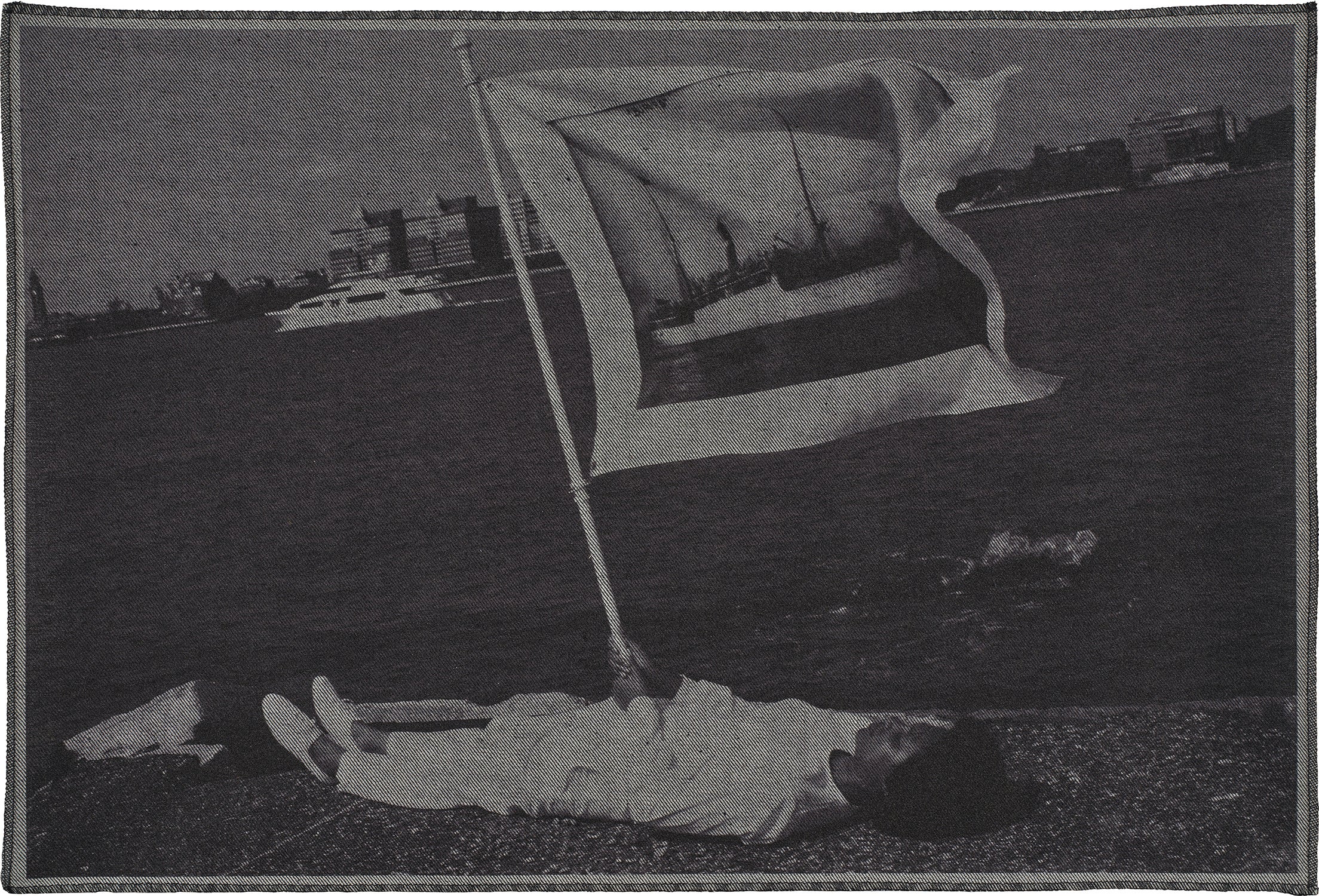
Holding flag laying at the edge of Pier 54 and the Hudson River
Her print 'Holding Flag Laying at the Edge of Pier 54 and the Hudson River,' published by Carré d'Art in Nimes in 2016, shows her moving fluidly between intimate portraiture and larger historical narratives, connecting personal gestures to collective memory with characteristic elegance. From a collecting perspective, Frazier's work offers a rare combination of aesthetic rigor, historical significance, and growing institutional validation. Her editions are carefully managed and relatively limited, with works such as 'If Everybody's Work Is Equally Important?' published through the Lower East Side Printshop in numbered editions of 22 plus artist's proofs, reflecting a commitment to accessibility without sacrificing exclusivity.
Collectors who have entered her market early have found themselves holding works that appreciate not only in financial terms but in cultural resonance, as her themes become ever more central to public conversation. Her gelatin silver prints in particular are prized for their tonal richness and archival integrity, and the care with which they are mounted and presented speaks to a practice that respects both the subject and the collector. Frazier stands in productive dialogue with a generation of artists who use photography and documentary methods to reckon with race, class, and place in America. Her practice resonates with the work of Carrie Mae Weems, whose long term engagement with African American history and identity transformed what documentary photography could mean and do.
LaToya Ruby Frazier
Aunt Midgie and Grandma Ruby from The Notion of Family
There are also clear connections to the socially conscious photography of Dawoud Bey and to the critical traditions explored by artists like Hank Willis Thomas. Yet Frazier's voice remains entirely her own, rooted in a specific geography and a specific lineage that no other artist could claim or replicate. What ultimately makes LaToya Ruby Frazier one of the most important artists working today is the quality of attention she brings to people and places that dominant culture prefers to ignore. Her photographs do not ask for pity or deliver polemics.
They bear witness, with love and precision, to lives that are fully human and fully worthy of the frame she gives them. As institutions continue to collect and exhibit her work, and as new generations of collectors discover the depth and beauty of her practice, her legacy grows more assured with each passing year. To own a work by Frazier is to hold a piece of American history told from the inside, with honesty, artistry, and an abiding faith in the power of the image to make us see each other more clearly.