Kim Yong-Ik
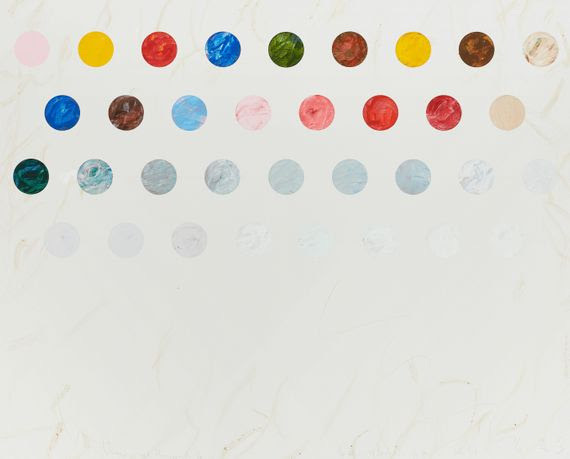
Kim Yong-Ik: Order, Light, and Liberation
Artist Spotlight · The Collection Editorial
There is a quiet revolution happening in the rooms where Kim Yong Ik's paintings hang. It begins the moment a viewer steps close enough to feel the optical pull of his geometric arrangements, that vertiginous sense of a surface breathing, of color vibrating at a frequency just below sound. Across decades of sustained, disciplined practice, this South Korean master has built a body of work that rewards the kind of looking most of us have forgotten how to do. As global interest in Korean modernism reaches a new intensity, with institutions from the National Museum of Modern and Contemporary Art in Seoul to major European galleries turning fresh attention toward the postwar Korean avant garde, Kim Yong Ik stands as one of the most significant and still underrecognized figures in that remarkable generation.
Kim Yong-Ik
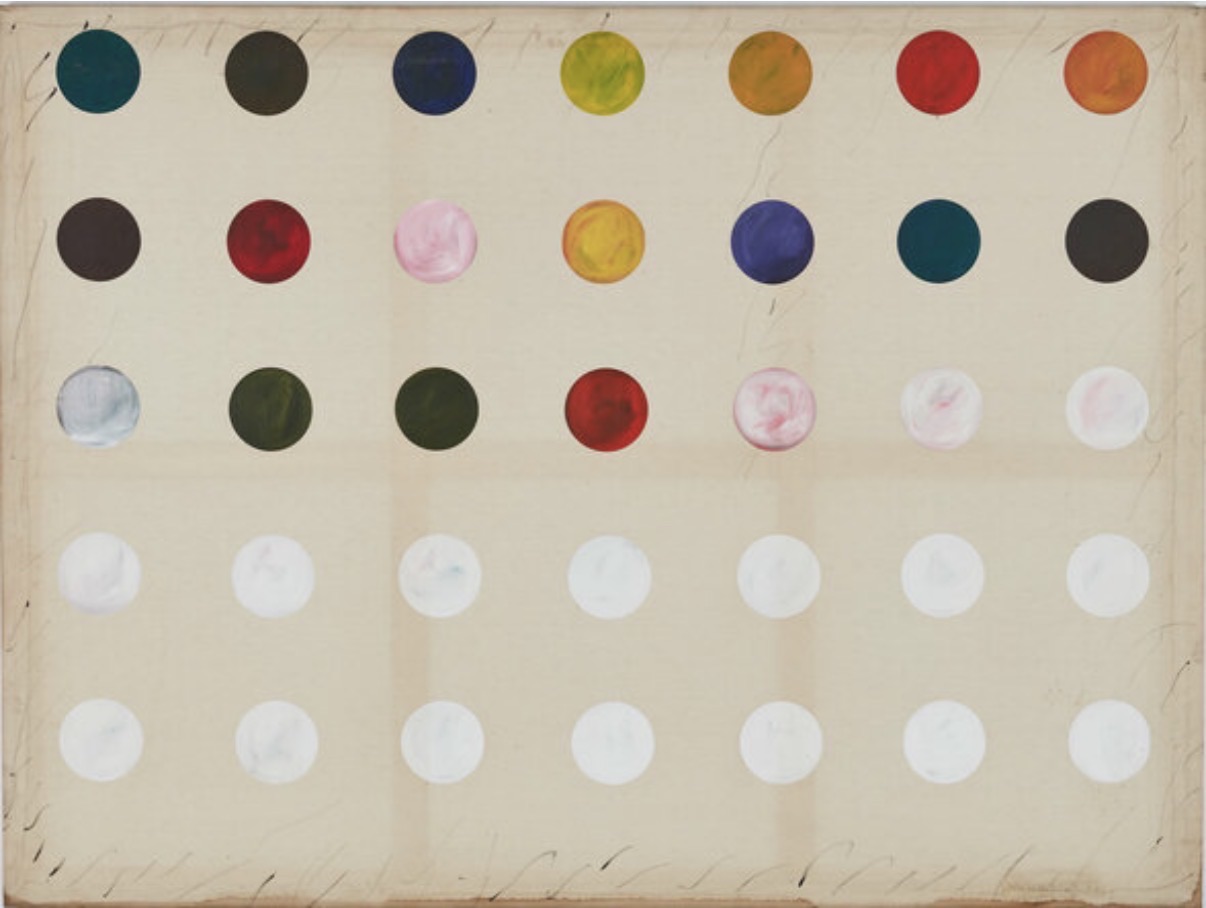
Untitled, 1990
Kim was born in 1947, arriving into a Korea in the midst of profound upheaval. The peninsula had only recently emerged from decades of Japanese colonial rule, and the Korean War would reshape the country's geography, politics, and psyche within the first years of his life. Growing up in this atmosphere of reconstruction and urgent national self definition, Kim came of age alongside a generation of Korean artists who faced a singular challenge: how to build a contemporary artistic identity that was neither a replica of Western modernism nor a retreat into tradition. That tension, productive and at times painful, became the generative pressure behind some of the most compelling art produced anywhere in Asia during the latter half of the twentieth century.
By the 1970s, Kim had emerged as a committed voice within the Korean avant garde, a loose but energized community of painters, sculptors, and conceptual artists who were asking hard questions about materiality, perception, and the role of the artist in a rapidly industrializing society. It was a period of intense cross pollination, with Korean artists absorbing influences from European Constructivism, American Color Field painting, and the Op Art movement while simultaneously grounding their work in distinctly Korean sensibilities around space, restraint, and the meditative discipline of mark making. Kim navigated these currents with a clarity of purpose that set him apart. Rather than adopting the vocabularies of the West wholesale, he distilled them, finding within geometric abstraction a language flexible enough to carry meaning that was unmistakably his own.
Kim Yong-Ik
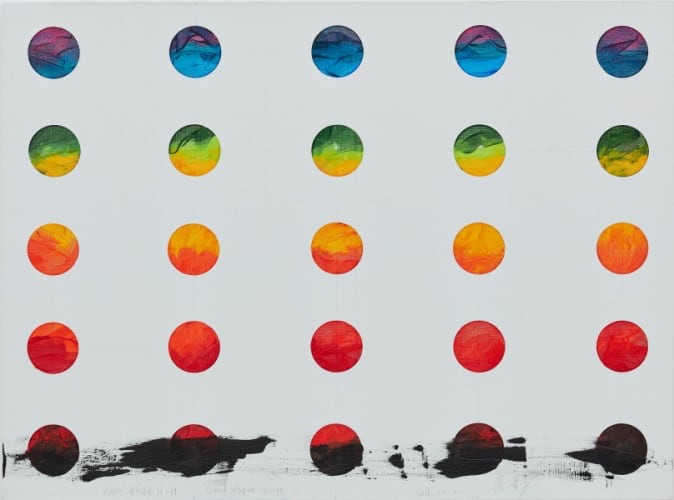
Erased Utopia #16-11, 2016
The evolution of Kim's practice over the following decades reveals an artist of remarkable intellectual consistency. His canvases from the 1980s and 1990s demonstrate a mastery of systematic arrangement, grids and sequences that activate the picture plane without ever tipping into mere decoration. His 1990 acrylic on canvas work simply titled Untitled exemplifies this period beautifully. The painting operates through precise tonal gradations and carefully calibrated intervals, creating a visual rhythm that feels simultaneously mathematical and deeply intuitive.
There is nothing accidental in Kim's compositions, yet they never feel mechanical. The hand is always present, even in its most disciplined moments, and it is this quality, the warmth beneath the geometry, that gives his work its lasting emotional resonance. Perhaps nowhere is Kim's philosophical ambition more visible than in his ongoing Erased Utopia series, which he has developed across multiple decades and continues to refine into the present. Erased Utopia Number 16 to 11, a mixed media work on canvas completed in 2016, is a particularly compelling entry in this cycle.
Kim Yong-Ik
Untitled
The title alone announces something tender and defiant: utopia not destroyed but erased, suggesting both loss and the possibility of redrawing, of beginning again. In this series, Kim layers processes of addition and subtraction, building up surfaces only to work back into them, creating a palimpsest of intention and revision. For collectors who encounter this work, there is a powerful sense of being invited into an ongoing conversation rather than presented with a closed statement. These are paintings that change as you live with them.
From a collecting perspective, Kim Yong Ik represents exactly the kind of artist that serious advisors are increasingly directing their clients toward. As the market for Korean modernism and postwar Asian abstraction has matured significantly through the 2010s and into the 2020s, with auction houses and private sales reflecting growing demand for work by figures associated with movements such as Dansaekhwa and the broader Korean avant garde, artists like Kim who maintained rigorous, independent practices across decades are attracting new scrutiny and appreciation. His work sits in productive conversation with contemporaries and near contemporaries including Lee Ufan, Chung Sang Hwa, and Park Seo Bo, artists whose international profiles have risen dramatically in recent years. For collectors who missed early opportunities with those figures, Kim's practice offers a comparable depth of vision and historical significance.
Works on canvas and his prints alike present genuine opportunities, and the mixed media pieces in particular demonstrate a material intelligence that holds up beautifully under sustained attention. Art historically, Kim occupies a fascinating position at the intersection of several important lineages. His engagement with optical and kinetic effects places him in dialogue with European masters such as Victor Vasarely and Bridget Riley, while his systematic approach to surface and process connects him to the quieter, more meditative wing of American abstraction associated with artists like Agnes Martin. Yet Kim's work never feels derivative of any of these predecessors.
The Korean context, the particular quality of light in his color choices, the relationship between discipline and spontaneity that runs through his practice, all of this locates his paintings firmly within a tradition that is his own. He is an artist who absorbed the twentieth century's most significant visual ideas and made them speak in a new register. What makes Kim Yong Ik matter today, at a moment when the art world is finally doing the long overdue work of expanding its canon, is precisely his commitment to a practice built on genuine inquiry rather than trend or spectacle. Now in his late seventies and still working, he represents a living link to one of the most creatively fertile periods in Korean cultural history.
His canvases ask us to slow down, to look again, to find within precise arrangements of form and color a kind of meaning that does not announce itself but accumulates. For collectors fortunate enough to bring a work by Kim into their lives, that accumulation is the gift: a painting that grows richer with every year it is lived alongside.