Kehinde Wiley
Kehinde Wiley Rewrites the Portrait Forever
Artist Spotlight · The Collection Editorial
“I want to take that same language of power and grandeur and use it to celebrate people who've been denied that.”
Kehinde Wiley, interview with The Guardian
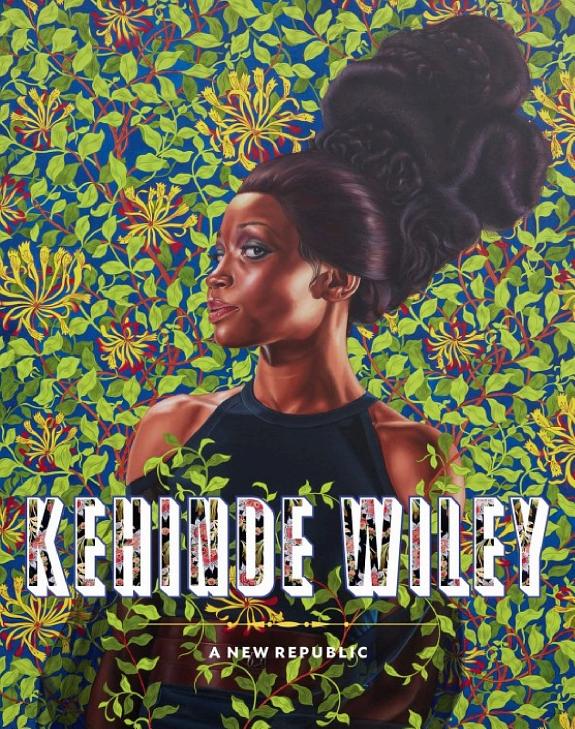
When the Smithsonian's National Portrait Gallery unveiled Barack Obama's official portrait in February 2018, the art world held its breath. Kehinde Wiley had painted the 44th President of the United States seated against a vivid explosion of botanical imagery, ivy and chrysanthemums and African blue lilies weaving around a figure of quiet authority. The image became an instant cultural landmark, shared millions of times, debated on every platform, and wept over by visitors standing before it in Washington. It was a moment that confirmed what serious collectors and museum curators had understood for years: Wiley is among the most consequential painters working anywhere in the world today.
Kehinde Wiley
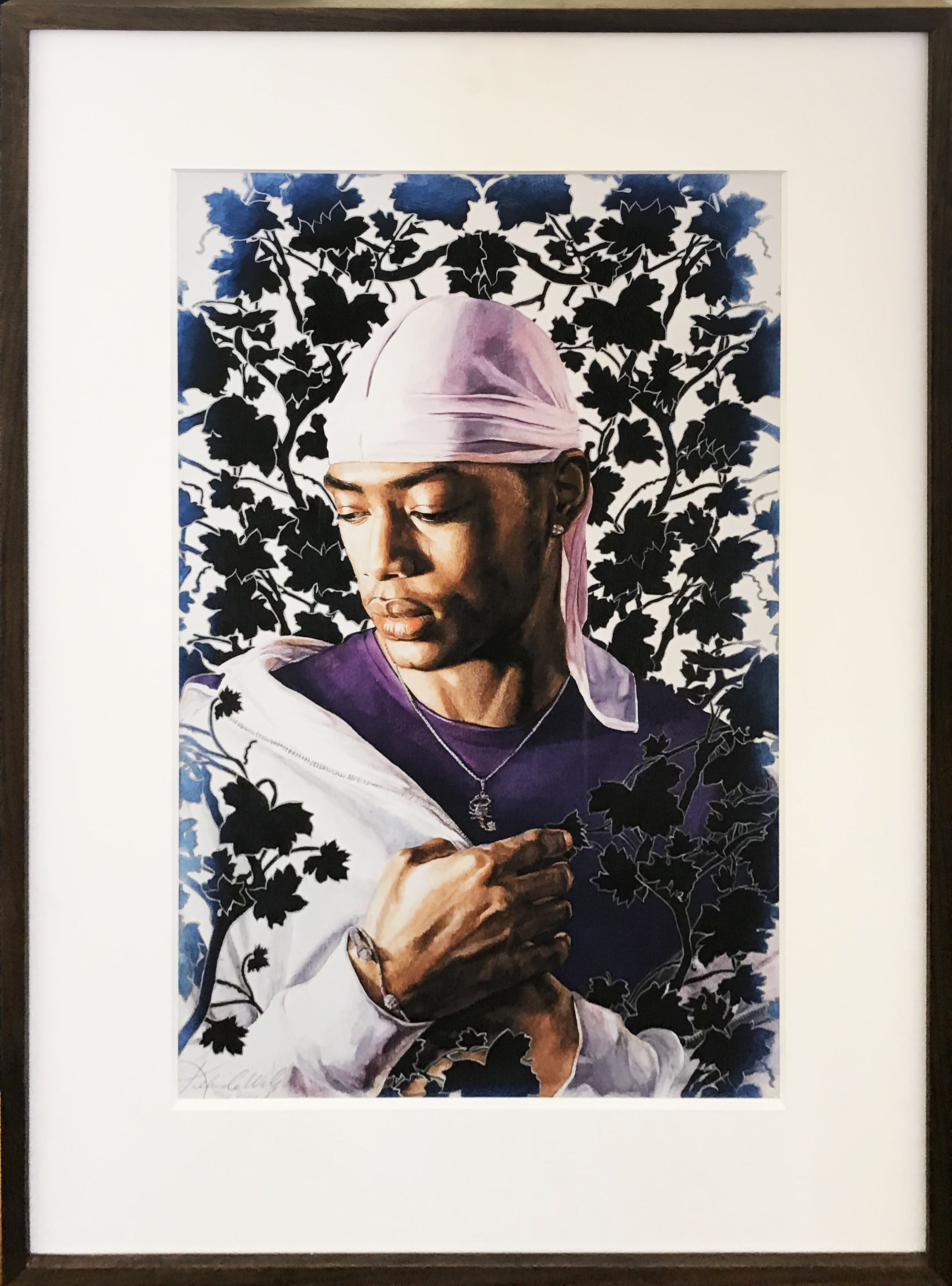
Sophie Arnould Study II, 2016
Wiley was born in Los Angeles in 1977 and grew up in South Central, a neighborhood that shaped his understanding of visibility, power, and who gets to be seen. His mother, a single parent, enrolled him and his siblings in art classes at the Los Angeles County Museum of Art, an early intervention that proved decisive. He went on to study at the San Francisco Art Institute before earning his MFA from Yale University's School of Art in 2001. Yale placed him inside one of the most rigorous intellectual environments in American art education, and it was there that the conceptual architecture of his mature practice began to take form.
After Yale, Wiley moved to New York City, where an early residency at the Studio Museum in Harlem proved transformative. The Studio Museum had long served as an incubator for Black artists working at the highest levels, and the institution's community gave Wiley both resources and context. He began approaching young Black men on the streets of Harlem and asking them to pose for him in the manner of figures he had drawn from the canon of Western painting. The process was improvisational and collaborative, a conversation between the grandeur of European art history and the living, breathing energy of contemporary Black urban life.
Kehinde Wiley
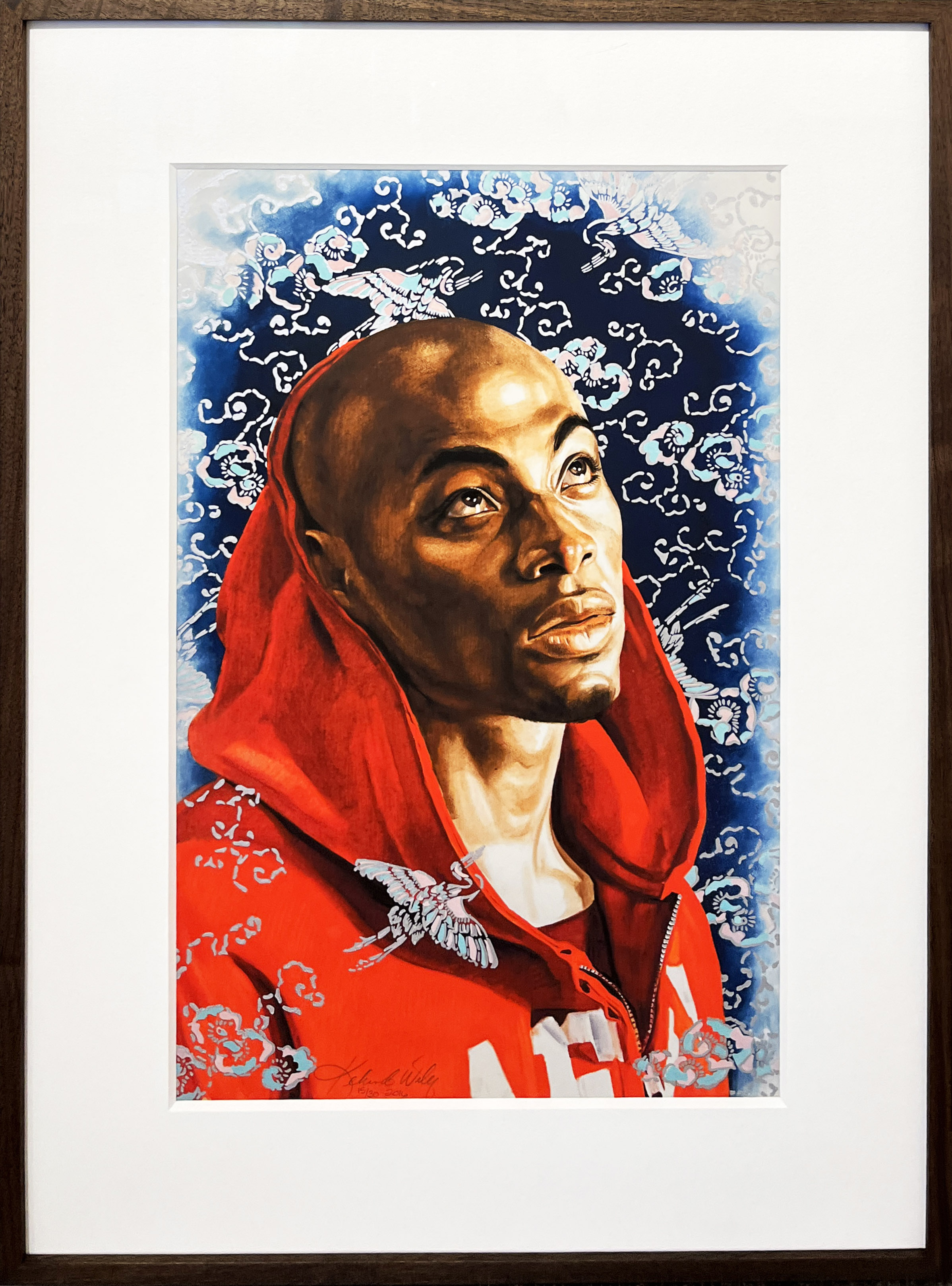
Tomb of Pope Alexander VII Study I, 2016
The results were immediately arresting. Wiley's breakthrough as a recognized force in the contemporary art market came in the early 2000s, when works from his World Stage series and his Passing and Posing series began appearing in major exhibitions and entering significant institutional collections. The Museum of Modern Art in New York, the Brooklyn Museum, and the Los Angeles County Museum of Art all became stewards of his work. The Brooklyn Museum mounted a major survey of his practice in 2015, bringing together paintings from across his career and drawing the kind of sustained critical attention that ratifies an artist's place in the canon.
“Painting has always been about power. I'm interested in who gets to be powerful.”
Kehinde Wiley, Brooklyn Museum, 2015
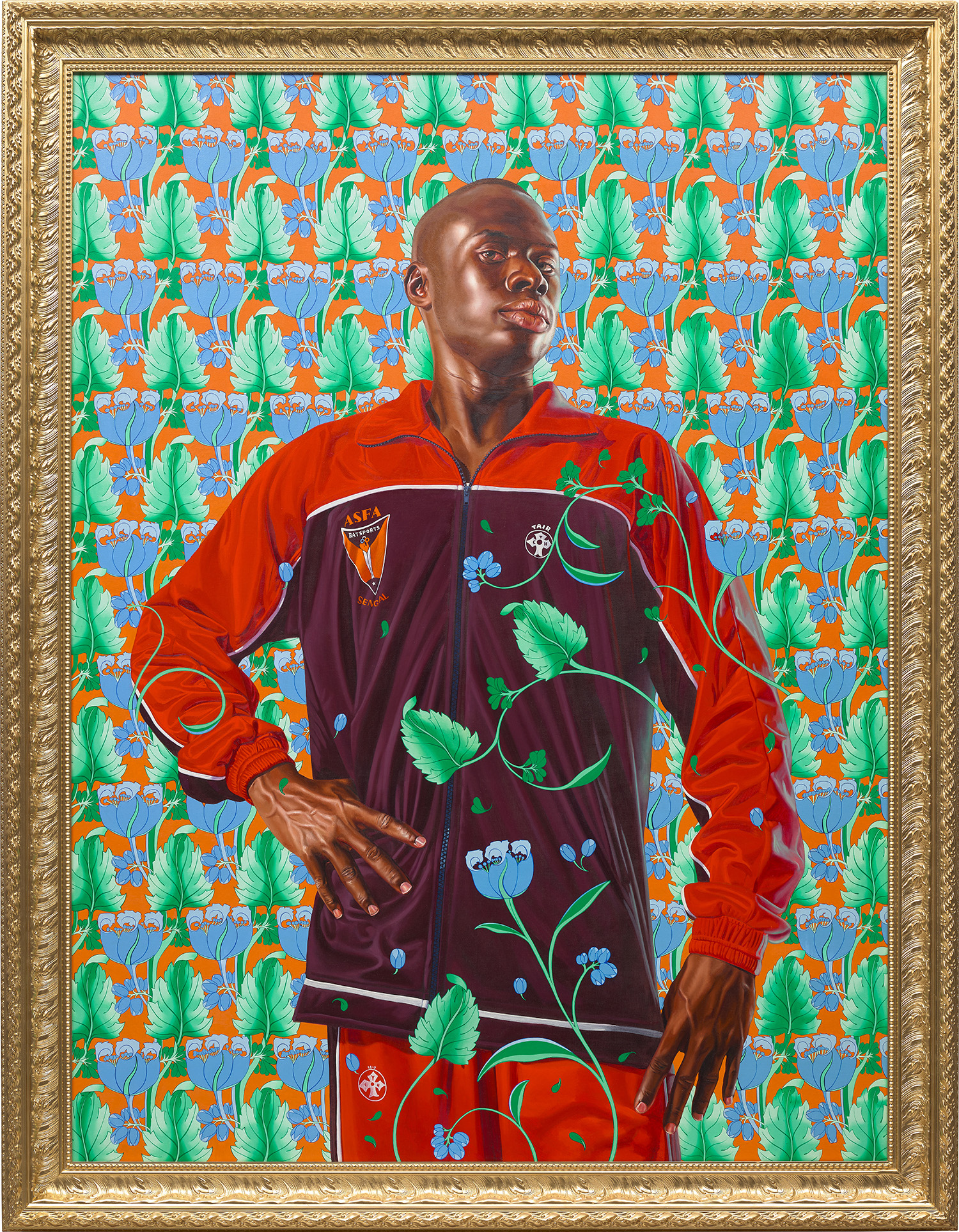
Galleries including Roberts Projects in Los Angeles and Sean Kelly Gallery in New York have been important partners in bringing his work to collectors over the years. The works available through The Collection offer a generous window into the full range of Wiley's ambition and technical virtuosity. His oil paintings on linen and canvas, including Ferdinand Philippe Louis Henri, Duc d'Orléans from 2014 and works from the Passing and Posing series, reveal the extraordinary painterly confidence he brings to compositions borrowed from centuries of European tradition. A work like Charles I and Henrietta Maria takes a dynastic image of royal power and quietly, irrevocably shifts its meaning by placing contemporary Black subjects within the frame.
Kehinde Wiley
Ferdinand-Philippe-Louis-Henri, Duc d'Orléans, 2014
Saint Francis of Assisi from 2008, rendered in oil wash and graphite on paper, demonstrates that his command of drawing is equal to his gifts as a colorist. The hand embellished pigment prints, including Sophie Arnould Study II and Tomb of Pope Alexander VII Study I, both from 2016, show his willingness to work across media while maintaining the conceptual integrity that defines everything he makes. For collectors, Wiley occupies a rare position in the current market: a living American artist whose work has achieved blue chip status while remaining intellectually vital and culturally urgent. His auction results have grown substantially over the past decade, with major canvases regularly achieving significant sums at Christie's, Sotheby's, and Phillips.
Works on paper and the hand embellished prints represent an accessible entry point for collectors building a relationship with his practice, while the large scale oil paintings carry the full weight of his most ambitious thinking. Condition and provenance are particularly valued in Wiley's market, as is the presence of the artist's frames, which he designs as integral components of each composition rather than mere presentation. To understand Wiley's place in art history, it helps to consider the dialogue he is conducting across time. He is in conversation with Titian and Velázquez, with Jacques Louis David and John Singer Sargent, with the entire tradition of Western portraiture as an instrument of power and legitimacy.
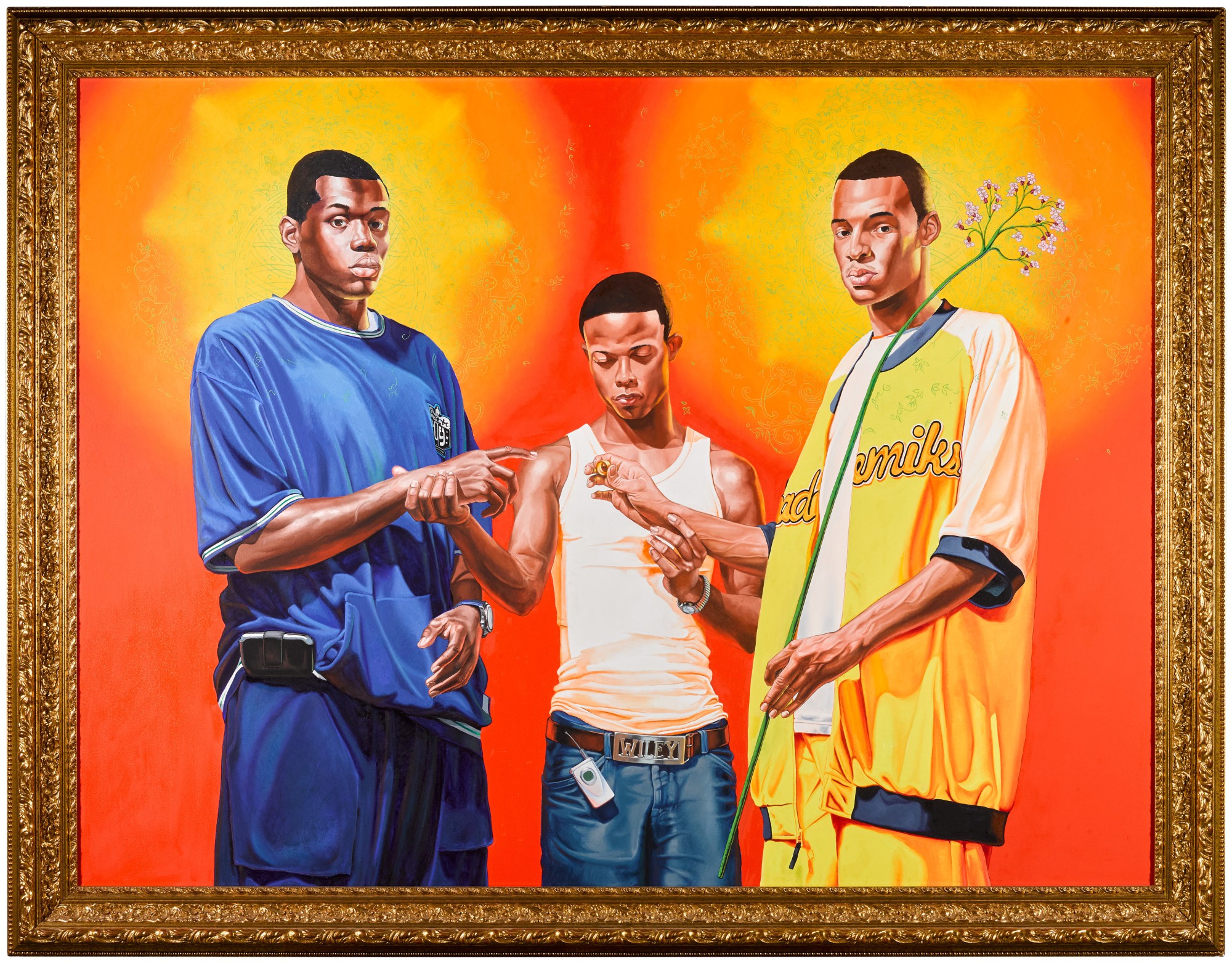
Kehinde Wiley
Passing/Posing (Marriage of the Virgin)
At the same time, his work shares intellectual territory with artists like Mickalene Thomas, whose photographic and painting practice similarly reclaims art historical imagery for Black subjects, and Kerry James Marshall, whose monumental paintings insist on the presence and dignity of Black life in ways that reframe the entire history of American art. Wiley's contribution is distinct in its directness: he does not critique the canon from a distance but steps inside it, claiming its vocabulary of grandeur and applying it without irony to people who have historically been excluded from it. The legacy Wiley is building is one of radical generosity. His work argues that beauty, heroism, and monumentality belong to everyone, and that the visual languages we have inherited can be transformed rather than merely inherited or rejected.
He has extended his practice globally through the World Stage series, traveling to China, Brazil, Nigeria, Israel, and beyond, finding his subjects and their stories wherever he goes. He founded Black Rock Senegal, an artist residency in Dakar, providing space and support for artists from across the African diaspora to work and think and make. Decades from now, when art historians map the transformation of portraiture in the twenty first century, Kehinde Wiley's name will be among the first spoken.
Explore books about Kehinde Wiley