KAWS: The Artist Who Rewrote Everything
Artist Spotlight · The Collection Editorial
“I want to make things that can be experienced by a lot of people and still resonate on a deeper level.”
KAWS, Interview Magazine
In the spring of 2019, a single painting changed the conversation. KAWS's "The KAWS Album," a large scale riff on a classic Simpsons scene rendered in his signature style, sold at Sotheby's Hong Kong for approximately 14.7 million USD, shattering every estimate and announcing to the broader art world something that street culture devotees had known for years: Brian Donnelly was not a footnote in contemporary art history. He was writing its next chapter.
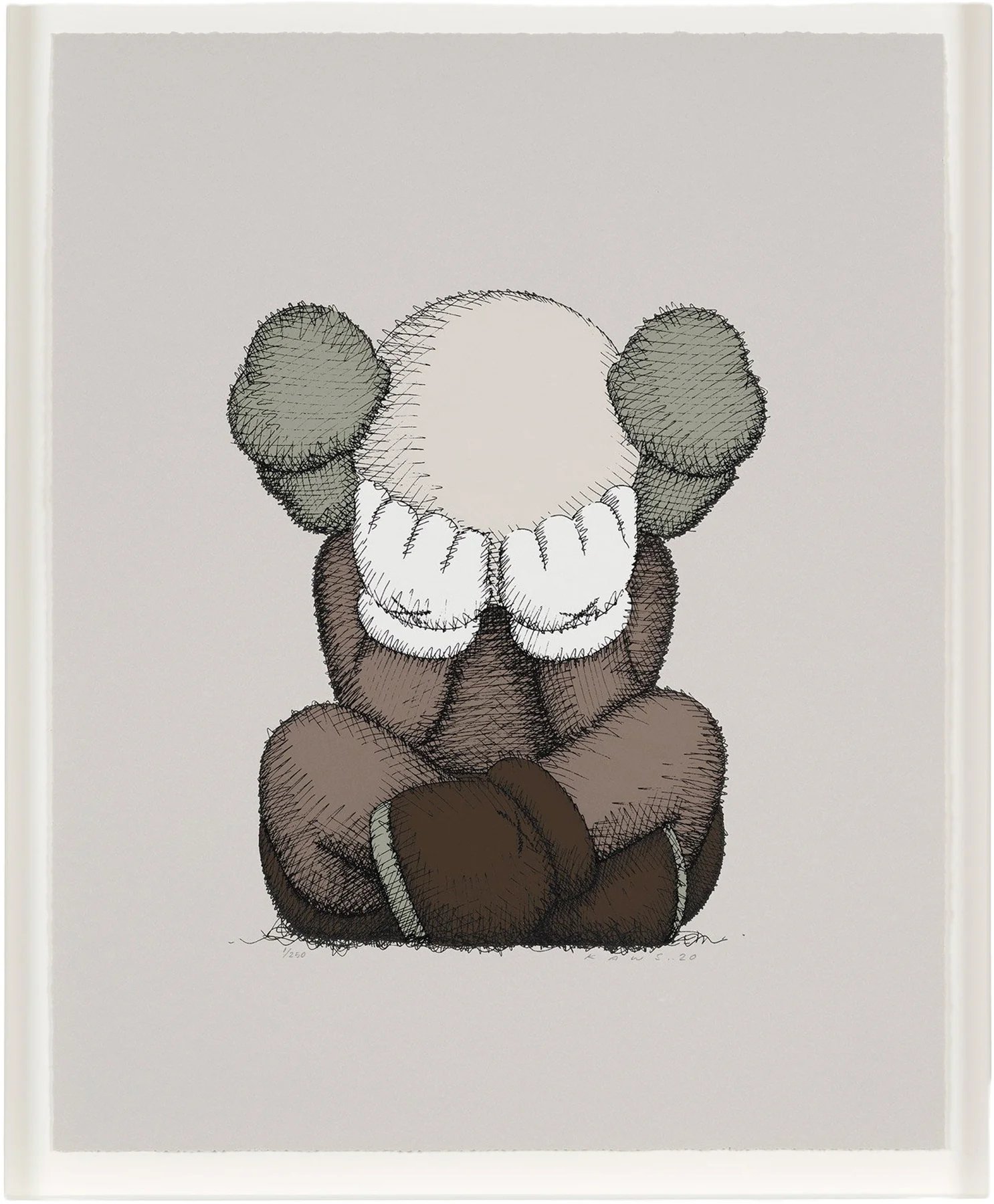
KAWS
Separated, 2021
That same year, his monumental inflatable sculpture "COMPANION (PASSING THROUGH)" floated across Victoria Harbour in Hong Kong, drawing crowds in the hundreds of thousands and becoming one of the most photographed art moments of the decade. Few artists alive today command that kind of attention across such radically different audiences. Brian Donnelly was born in 1974 in Jersey City, New Jersey, and grew up in a working class environment that was close enough to New York City to feel its gravitational pull. He studied illustration at the School of Visual Arts in New York, where he developed a rigorous understanding of draftsmanship that would later underpin even his most conceptually playful work.
But his real education happened in the streets. In the mid 1990s, Donnelly began infiltrating New York City bus shelter advertisements and phone booth posters, adding his own hand drawn characters to fashion campaigns for Calvin Klein and others. He was not simply tagging. He was engaging in a sophisticated act of visual critique, inserting his skull faced figures into the dream machinery of consumer culture and asking the viewer to look again.
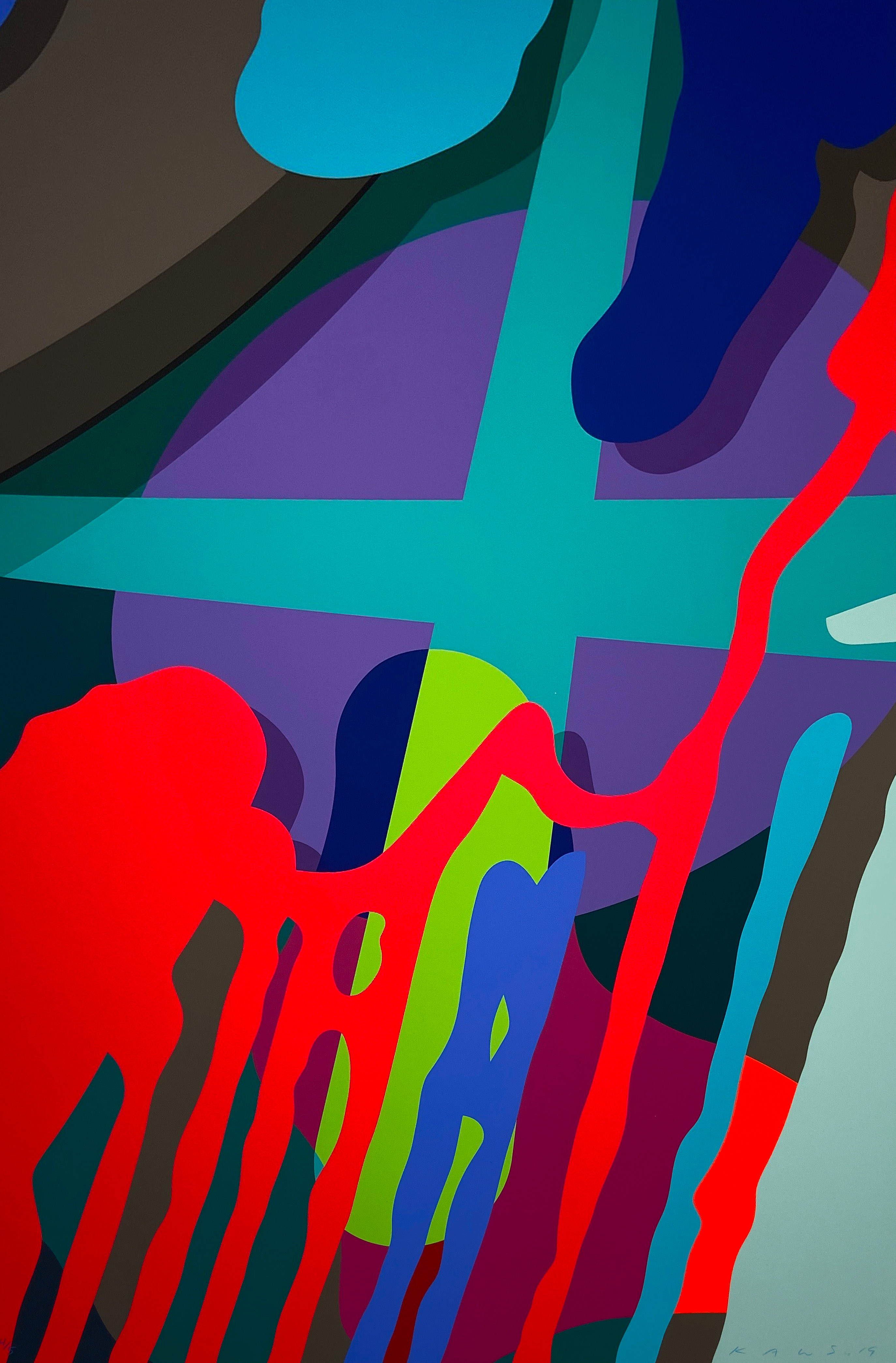
KAWS
Tension #6, 2019
Those early interventions established the foundation of everything that followed. KAWS traveled to Japan in the late 1990s and found in Tokyo's Harajuku district a culture uniquely primed to receive his sensibility. The Bape store and the underground toy scene offered him a new canvas entirely. In 1999, working with the Japanese company Bounty Hunter and later with Original Fake, he began producing limited edition vinyl figures of his Companion character, a cartoonish figure with crossed out eyes derived loosely from Mickey Mouse.
“I never thought about doing just one thing. I always wanted to see how far the work could go.”
KAWS, Artforum
These objects sold out immediately and were traded with the intensity of blue chip art. The line between collectible and artwork had been productively blurred, and KAWS leaned into that ambiguity with full intention. The Companion is arguably the most important character in contemporary sculpture outside of Jeff Koons's balloon animals, and the comparison is instructive rather than reductive. Both artists understand that popular iconography carries enormous emotional weight, and both have built careers on transforming that weight into something that rewards sustained looking.
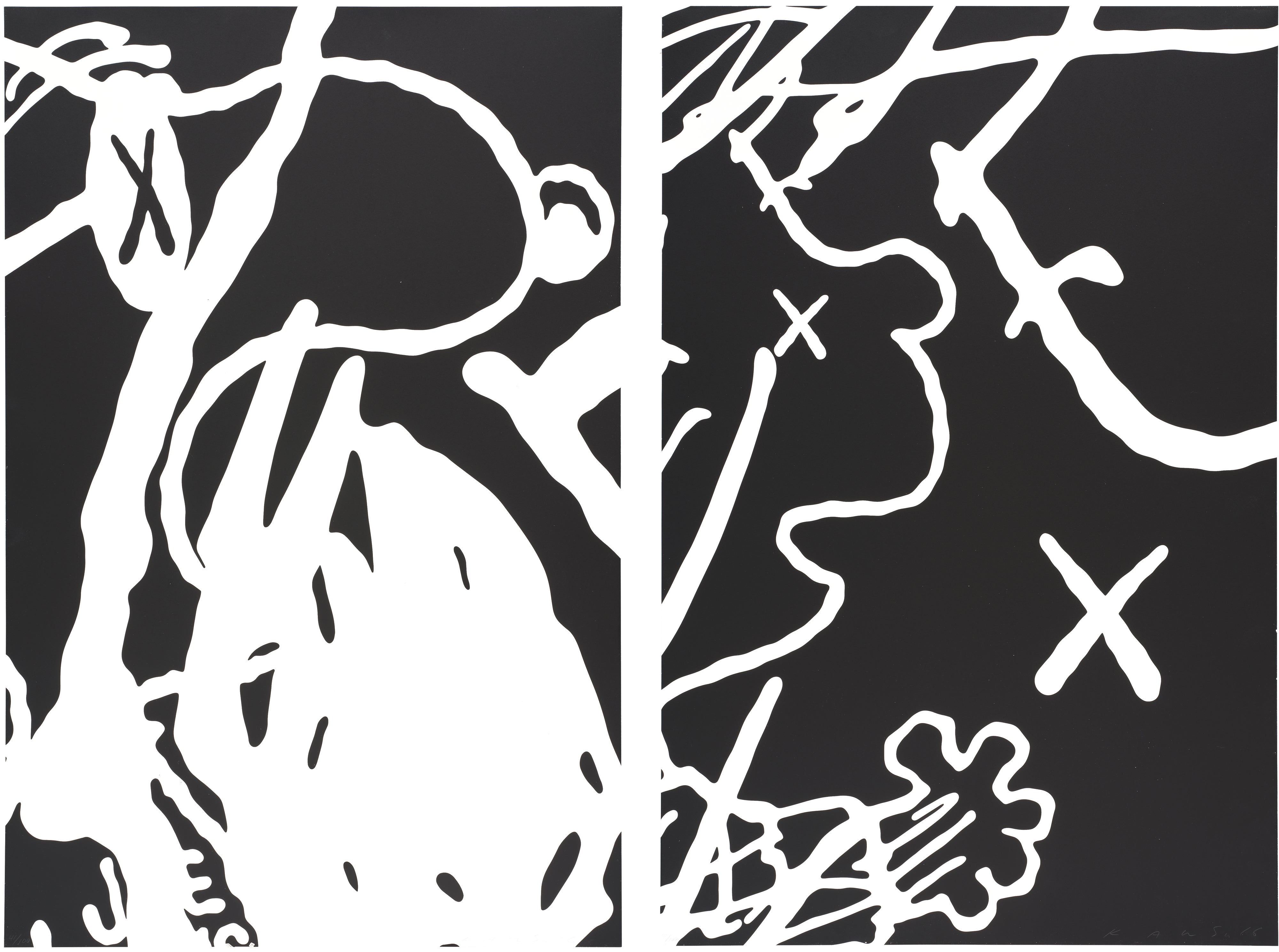
KAWS
MAN'S BEST FRIEND: two prints
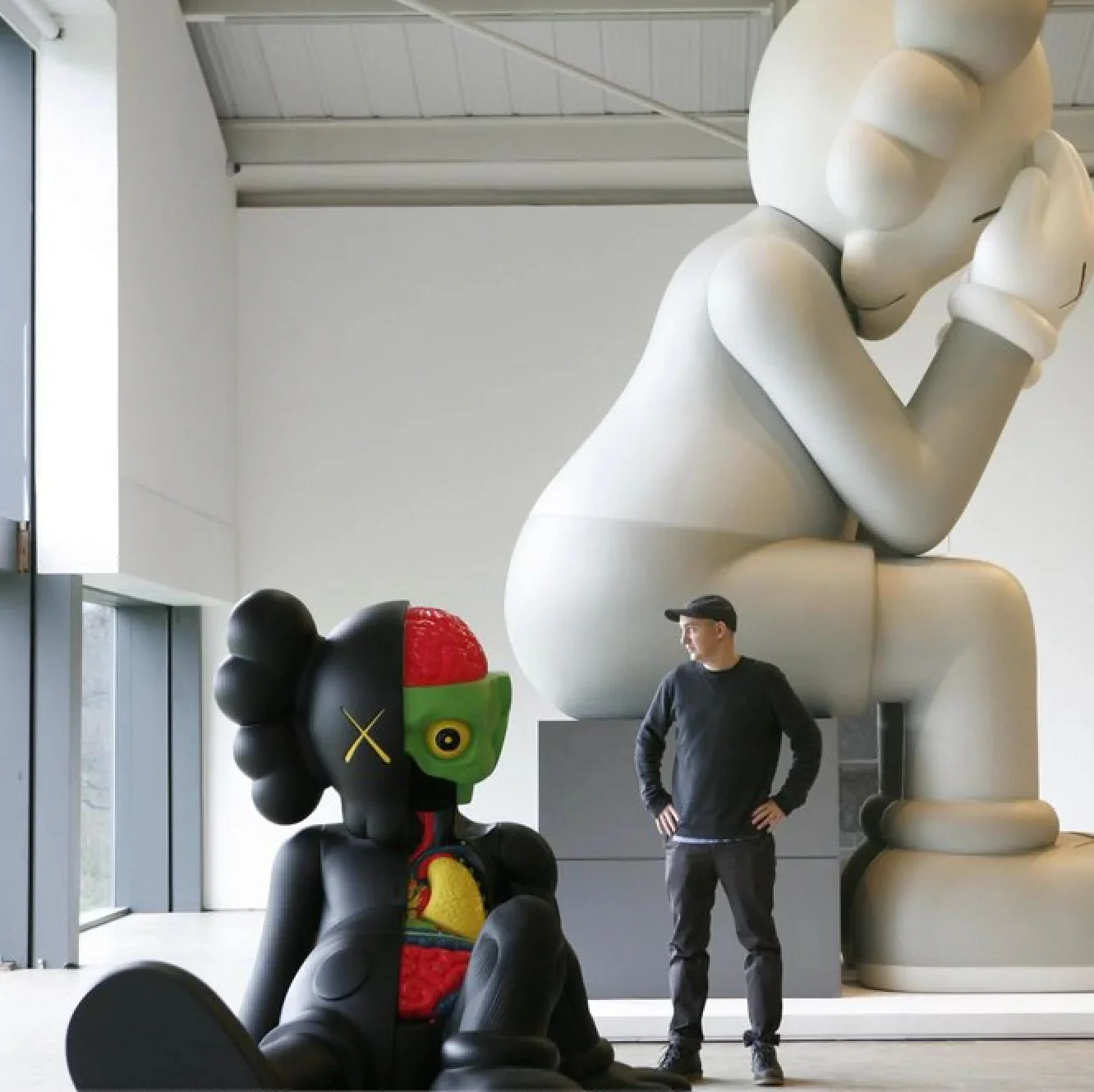
KAWS's figures, whether cast in vinyl or rendered at monumental scale in fiberglass and bronze, carry a surprising emotional charge. Their poses, often forlorn, covering their faces or slumping in solitude, speak to a kind of tender vulnerability that cuts through the irony. Works like "Companion (Original Fake)" from 2006 and the various iterations of "Dissected Companion" reveal an artist as interested in pathos as in play. The dissected works in particular, exposing the internal anatomy of his characters, nod to classical traditions of anatomical study while maintaining the visual grammar of cartoon culture.
As a painter, KAWS has evolved considerably from his early canvas works. His "Tension" series, represented in strong form through works on Saunders Waterford paper, demonstrates a growing command of color relationships and compositional tension that rewards close attention. "Separated" from 2021, a screenprint on Stonehenge steel grey paper, exemplifies his ongoing interest in emotional states communicated through simplified figuration. The grey ground gives the work a coolness and restraint that makes its central image, two figures apart from one another, land with quiet force.
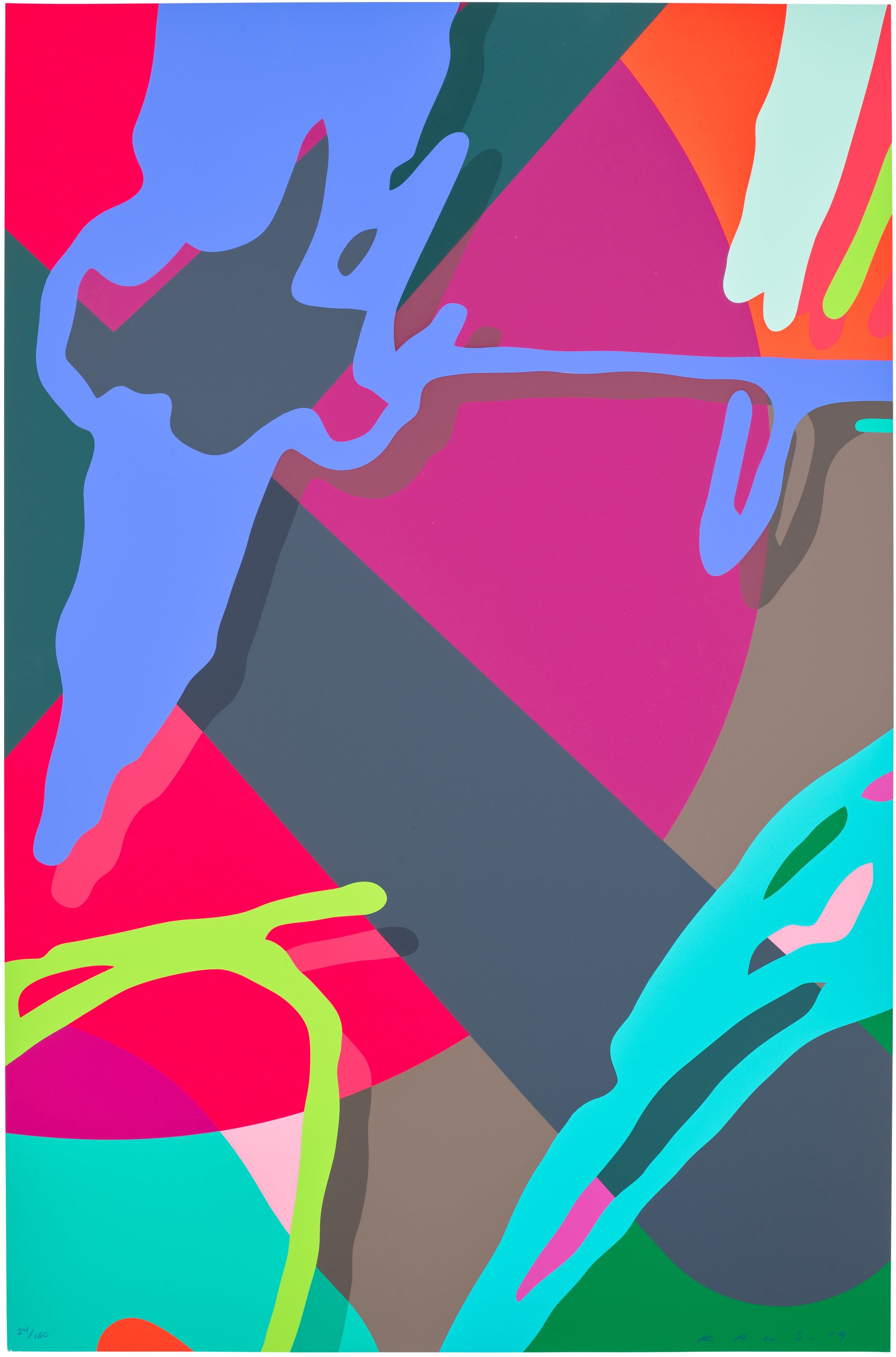
KAWS
Tension: one print
His 2016 acrylic on canvas works, brimming with chromatic intensity, show a painter genuinely experimenting with how much feeling can be held within a flat, cartoon derived surface. These are not prints made to look like paintings. They are paintings in full conversation with the history of figuration, from Philip Guston's late cartoonish works to the flat affect of Roy Lichtenstein. For collectors, KAWS presents one of the most coherent and legible narratives in the contemporary market.
His work exists across multiple formats and price points, from limited edition prints and plush objects to major canvas paintings and bronze sculptures, which means there is a genuine path into the practice for collectors at many stages of their journey. The prints, particularly the screenworks on fine paper that have become a hallmark of his output, offer an accessible entry point into a body of work that has shown consistent market strength. Works from his collaborations with publishers like Pace Prints are well documented and rigorously editioned. Major auction houses including Christie's, Sotheby's, and Phillips have all seen sustained demand across his categories, and secondary market prices for sought after editions and vinyl works continue to reflect his crossover appeal.
Placing KAWS within art history requires taking seriously a tradition that the fine art world once dismissed. His lineage runs through Andy Warhol's fascination with consumer imagery, through Keith Haring's populist figuration, and through the Japanese superflat movement championed by Takashi Murakami, with whom he shares a deep mutual respect and a commitment to dissolving hierarchies between fine art and commercial culture. Like Murakami, KAWS understands that operating across multiple registers, art, fashion, music, and design, is not a dilution of an artistic identity but an expansion of it. His collaborations with Dior, Uniqlo, and Jordan Brand have introduced his visual language to millions of people who may never enter a gallery, and rather than cheapening the work, these projects have amplified the emotional resonance of the studio practice.
What secures KAWS a place in the longer arc of art history is the sincerity beneath the spectacle. In an era of ironic detachment, his figures mourn, they rest, they reach for one another. His 2019 installation "KAWS: HOLIDAY" brought a 42 meter reclining Companion to the summit of Changbaishan in China, a gesture that was simultaneously absurd and genuinely moving. The fact that his work can operate at that scale while retaining intimacy at the scale of a print or a small figure is a mark of genuine artistic intelligence.
For collectors and institutions alike, engaging with KAWS is to engage with an artist who has spent thirty years making the case that popular culture deserves the full attention of serious art, and who has made that case more persuasively than almost anyone of his generation.
Explore books about KAWS