Kaari Upson
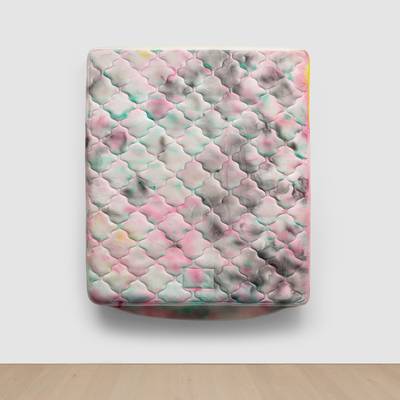
Kaari Upson: The Body Remembers Everything
Artist Spotlight · The Collection Editorial
When the New Museum mounted its survey of Kaari Upson's work, visitors encountered something that felt less like an exhibition and more like an exhumation. Objects that resembled furniture, skin, and domestic debris were suspended in states of collapse and becoming, pressing hard against the boundary between the psychological and the physical. Upson, who passed away in 2021 at the age of fifty, left behind a body of work so singular in its materials and emotional intelligence that the art world is still absorbing its full implications. Her legacy is not merely that of an artist who made difficult things beautifully.
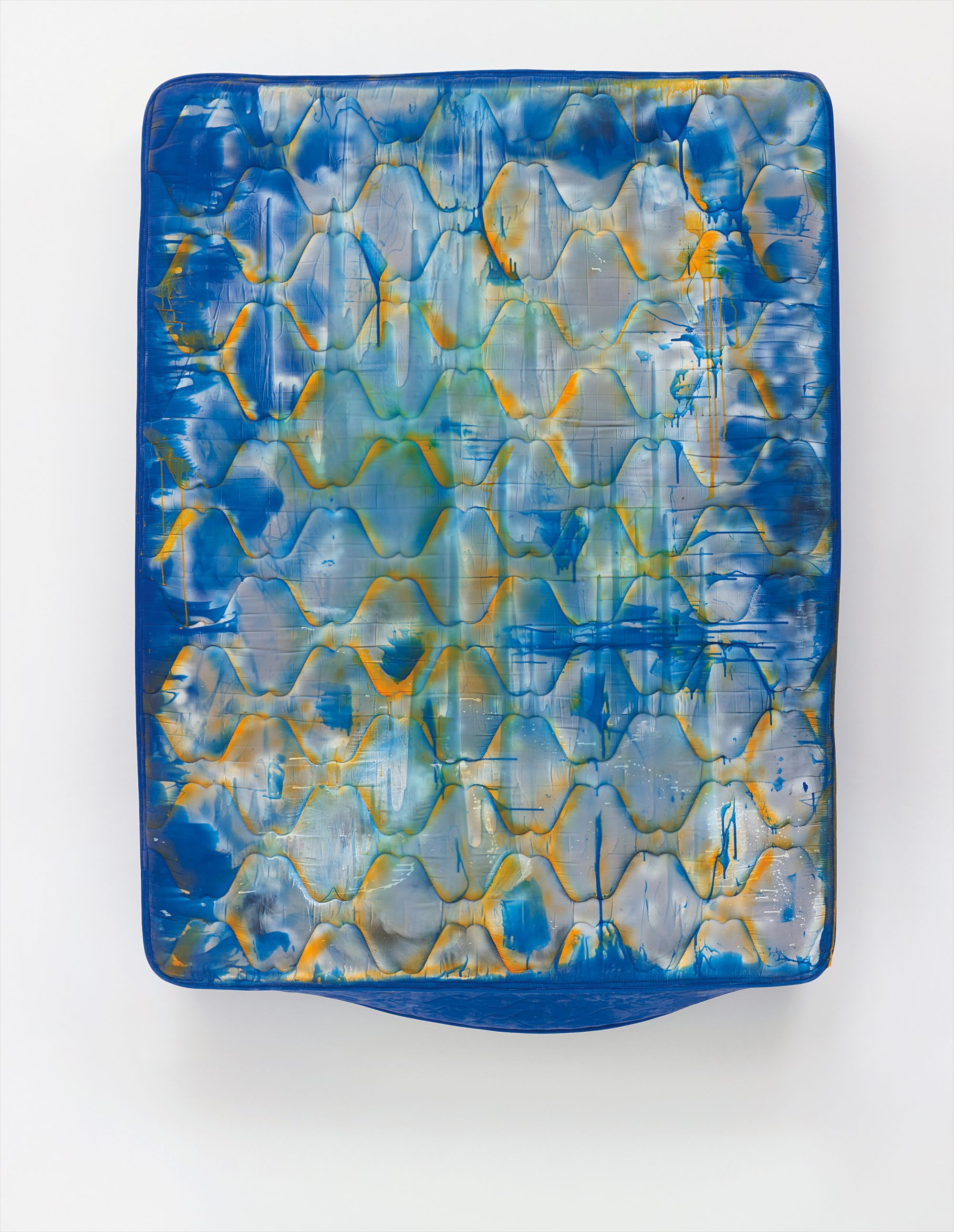
Kaari Upson
Horizon
It is the legacy of someone who understood that the unconscious has a texture, and that texture can be cast in silicone, stretched over fiberglass, and hung on a gallery wall. Upson was born in 1970 and came of age in the American Southwest, a landscape whose particular quality of heat and sprawl would find its way into the atmosphere of her work even when her subjects turned inward. She trained in Southern California, where a rich tradition of finish fetish sculpture and conceptual art coexisted with a culture of psychological extremity that she absorbed deeply. Los Angeles gave her permission to be both rigorous and unruly, both conceptually grounded and viscerally immediate.
The city's contradictions, its glamour laid over anxiety, its surfaces that conceal enormous interior lives, became a kind of grammar for everything she would make. Her practice developed through an intense engagement with found objects, personal mythology, and the forensic possibilities of industrial materials. Early in her career she became fascinated by a neighbor's abandoned house, spending years gathering objects from the property and using them as the raw material for an extended body of work that examined obsession, trespass, and the way desire attaches itself to things that do not belong to us. This project had the quality of a long novel, unfolding across multiple exhibitions and mediums, and it established Upson as an artist capable of sustaining a complex conceptual narrative while never losing contact with the raw, bodily feeling that gave her work its power.
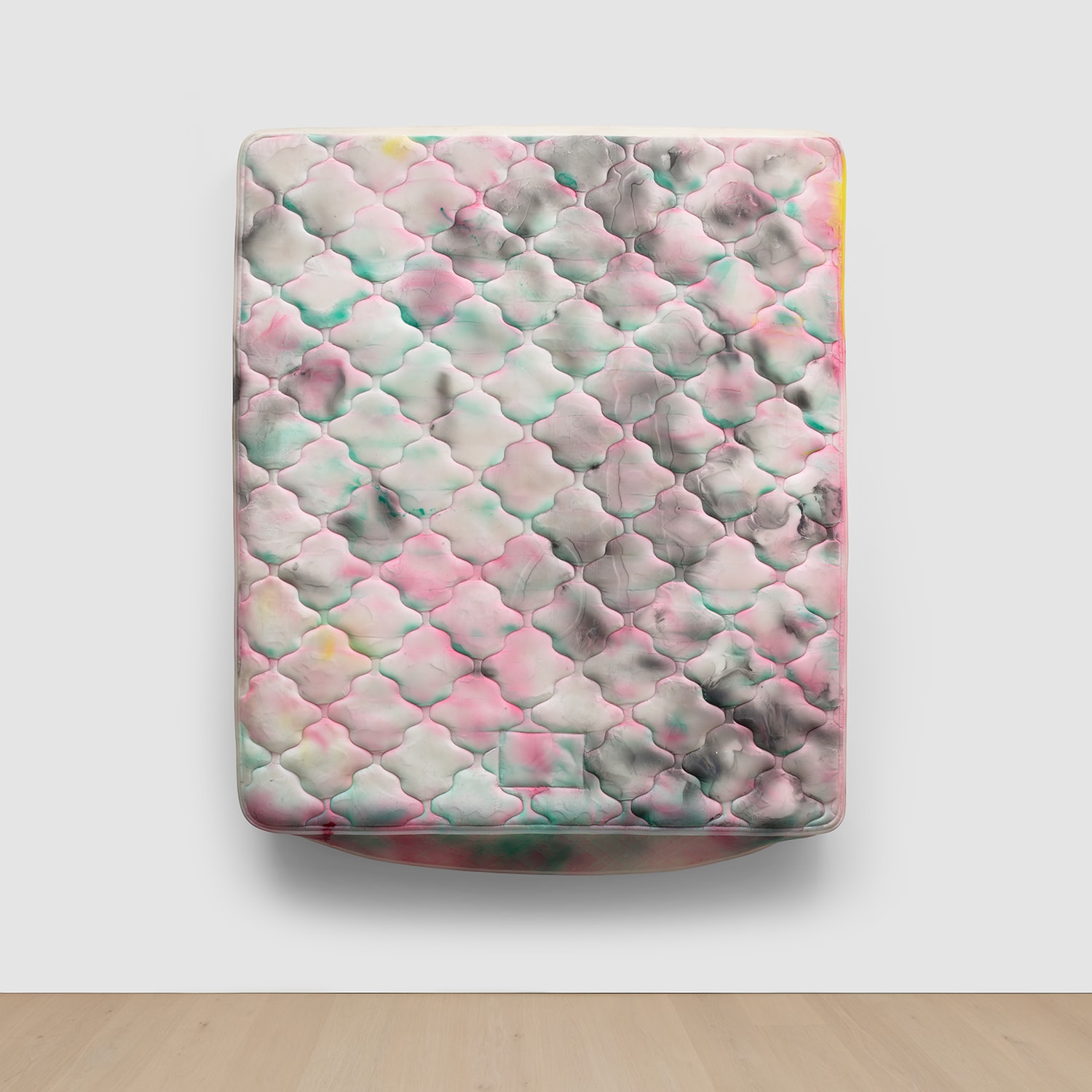
Kaari Upson
168, 2013
She worked in painting, sculpture, video, and installation, moving between them with the confidence of someone who understood that no single medium could hold everything she needed to say. The sculptures for which Upson is most celebrated occupy a space that is almost impossible to describe without recourse to the body. Works like "168" from 2013, made from silicone, spandex, and fiberglass, propose themselves as both objects and organisms, suggesting deflated or distorted human forms that have been pressed, compressed, or stretched by forces we cannot see but can absolutely feel. "Trashole" from 2014, rendered in urethane and pigment, carries a title that announces its own aesthetic transgression, fusing the abject and the architectural in a way that forces the viewer to reckon with what we exclude from our idea of beauty.
"Horizon" in silicone and pigment achieves something different, a kind of terrible stillness, as if the work is holding its breath. "Crib (Clean)" returns to the domestic object but transforms it into something haunted, a container for absence rather than presence. Across all of these works, the materials are chosen with extraordinary precision. Silicone in particular became central to her vocabulary because of its uncanny relationship to human skin, its capacity to hold color in a way that suggests bruising, warmth, or the aftermath of touch.
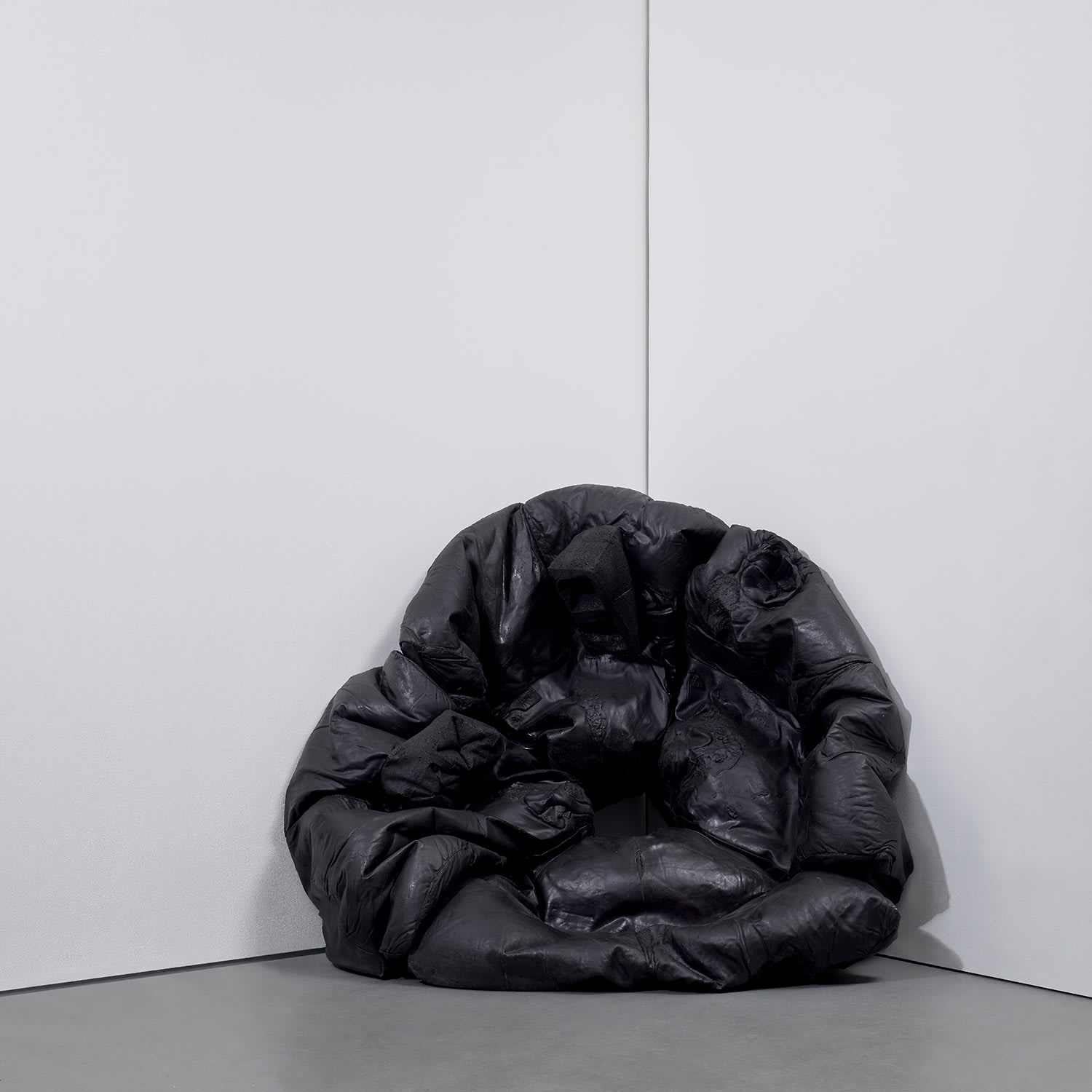
Kaari Upson
Trashole, 2014
Upson exhibited at the Whitney Museum of American Art, the New Museum in New York, and showed with prominent galleries whose programs emphasized conceptually rigorous and physically ambitious work. She was a significant presence in major group exhibitions that mapped the terrain of American sculpture in the early twenty first century, regularly placed alongside artists working at the intersection of the body, psychology, and material culture. Her work entered important institutional collections, a recognition of the fact that what she was doing had lasting significance beyond any single moment or movement. Critics consistently noted that her practice occupied its own space, resisting easy categorization while drawing on a broad range of influences from feminist body art of the 1970s to the psychoanalytic investments of artists like Louise Bourgeois.
For collectors, Upson's work presents a rare opportunity. She was prolific but not indiscriminate, and each work carries the evidence of intense material research and personal investment. Collectors drawn to artists who work in the space between the psychological and the sculptural, those who have followed figures like Bourgeois, Sarah Lucas, or Marlene Dumas, will find in Upson a sensibility that is entirely her own while speaking fluently to those traditions. Her use of industrial materials such as silicone, urethane, and fiberglass means that works require thoughtful installation and care, but they reward that attention with a physical presence that is impossible to overlook.
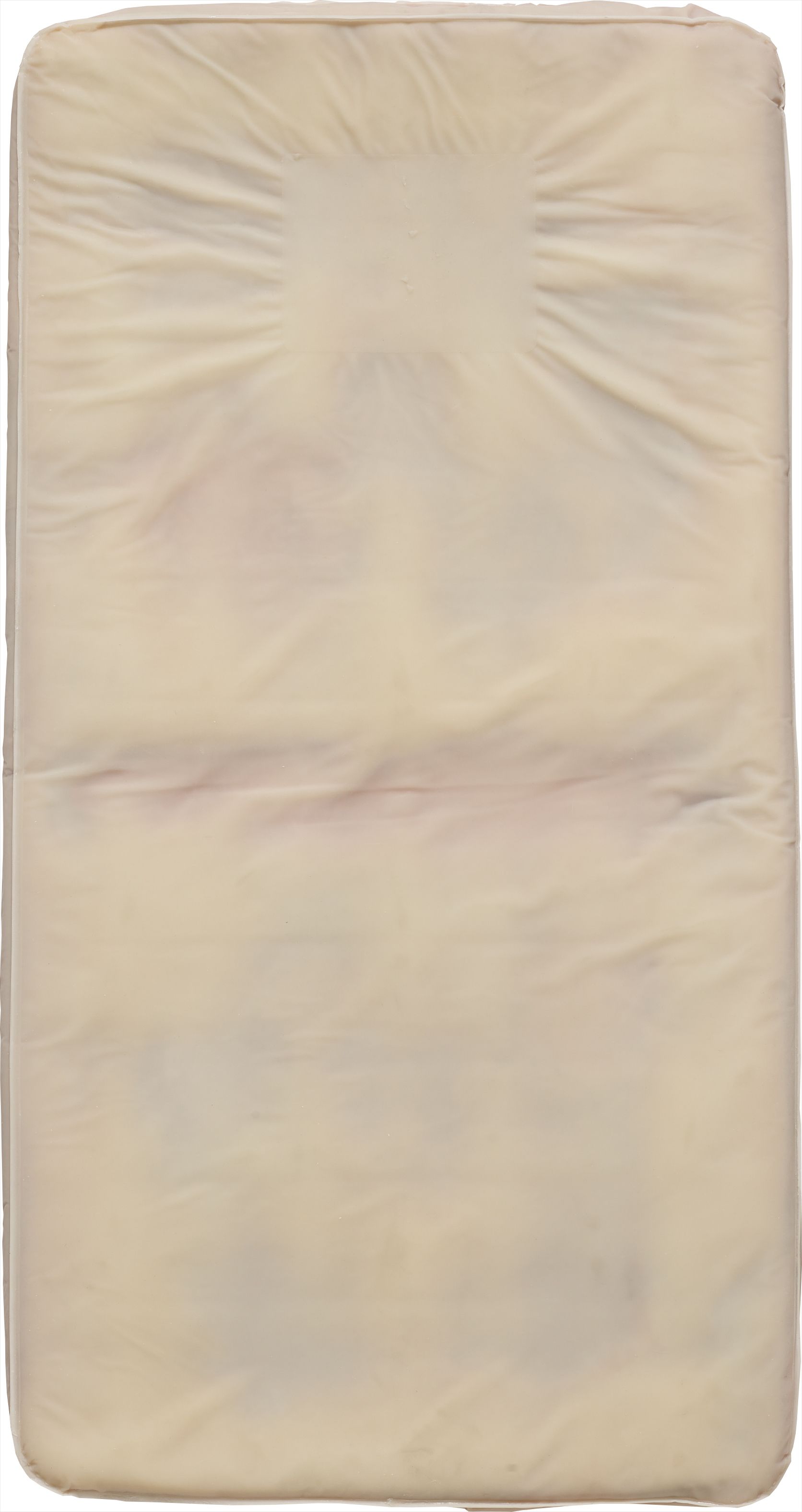
Kaari Upson
Crib (Clean)
The works hold a room in the way that only truly committed art can, demanding not just attention but a kind of full bodily reckoning from anyone who stands before them. The conversation around Upson's place in art history has deepened considerably since her death, as curators and critics have worked to situate her practice in relation to both her peers and her predecessors. She belongs to a lineage of artists who insisted that intimacy is a legitimate subject for serious art, that the private life of the body and the unconscious is as worthy of sustained investigation as any grand historical or political theme. In this she is a vital inheritor of Louise Bourgeois's lifelong project, while bringing to it the specific anxieties and material possibilities of her own generation and moment.
She also shares something with artists like Paul McCarthy, whose Southern California roots and interest in abjection overlap with hers, though Upson's work is ultimately more interior, more concerned with the individual psyche than with cultural spectacle. What Kaari Upson gave us is a way of thinking about desire and the body that does not flinch. Her sculptures ask what happens when longing becomes physical, when obsession takes on weight and texture and color. They are not comfortable objects, but they are extraordinarily generous ones, offering viewers the rare experience of having their own interior life reflected back to them in three dimensions.
As institutions continue to acquire her work and scholarship deepens, it becomes increasingly clear that she was one of the essential voices of her generation. To encounter her work now, in a collection or a museum, is to understand that some art does not merely represent feeling. It is made of it.
Explore books about Kaari Upson